
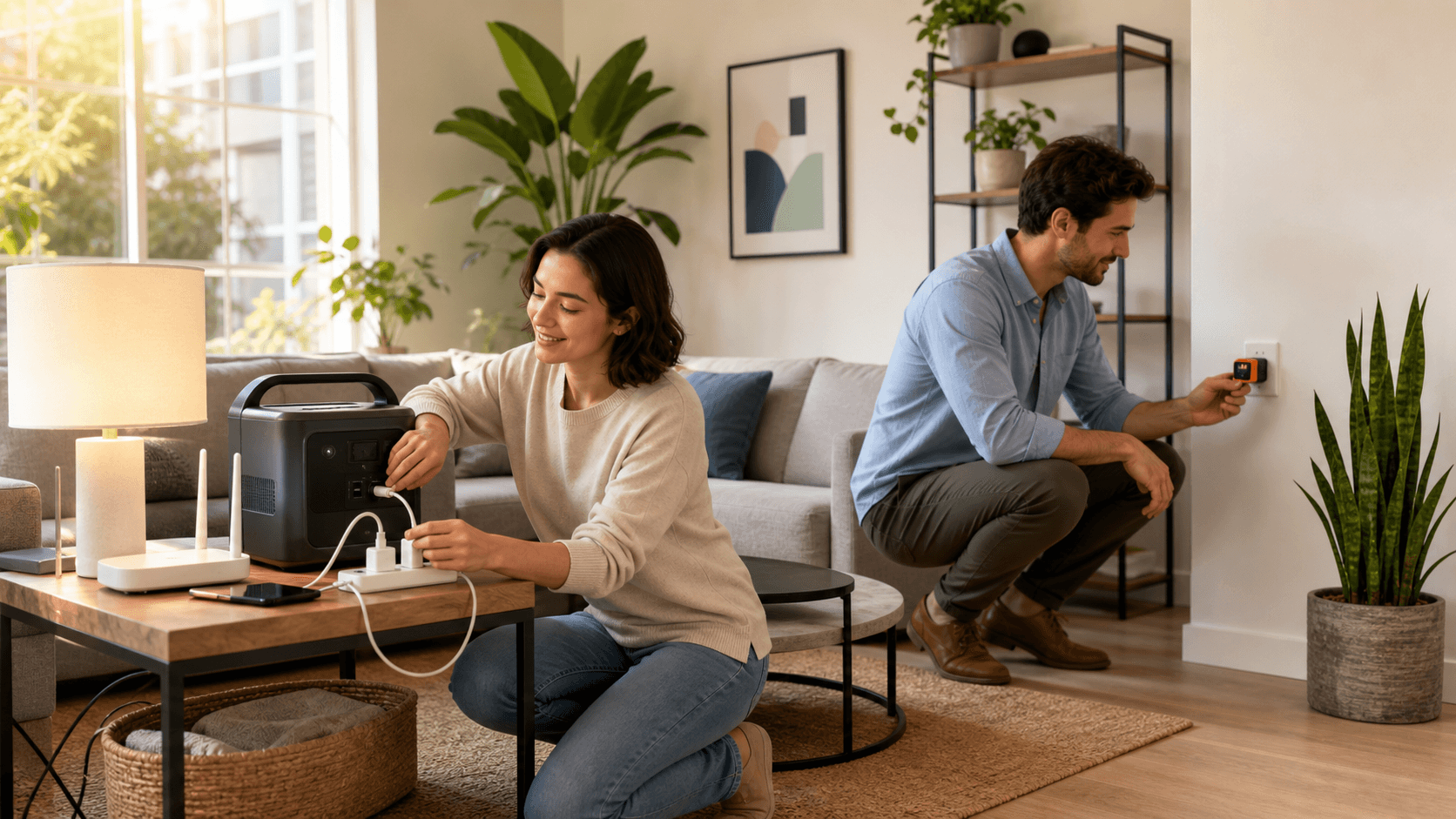
Power outages feel different in an apartment. The lights go out, the stairwell is dark, the elevator stops, and the quiet feels heavy. Wi-Fi drops, food in the fridge starts warming up, and anyone with a medical device or work laptop starts stressing. Portable home battery backup gives renters a way to keep the most important things running without breaking building rules or needing an electrician.
In this guide, we will walk through what these systems can do, how to use them safely indoors, what circuit limits mean for you, and how to build a simple plan for storms and heat waves. Our team at Green Vista Living works with a lot of off-grid and small-space setups, so we think a lot about renters too, not just people with big backyards.
Power Outage Peace of Mind for Apartment Living
Night storms and early summer heat can knock out power almost without warning. In a city apartment, that can mean:
- No lights in hallways or elevators
- No Wi-Fi for news or work
- Fridge slowly warming up
- Fans and AC going silent
Traditional backup options like gas generators and whole-home systems usually do not work for renters. Most buildings will not allow gas units on balconies, and there is no safe way to run them indoors. Whole-home batteries need electrical upgrades and a transfer switch, which landlords rarely approve.
Portable home battery backup fits apartment life much better. These units are:
- Quiet enough for shared walls
- Safe for indoor use, with no fumes
- Plug-and-play, no wiring changes
- Easy to pack up when you move
We will focus on how to use them in a smart, realistic way, so you know what to expect before the next blackout.
What Portable Home Battery Backup Can and Can't Do
A portable home battery backup is basically a big rechargeable power station. Inside, it has a battery and an inverter that turns stored energy into regular household AC power. On the outside you get outlets like:
- Standard wall-style AC outlets
- USB ports for phones and tablets
- DC ports for some fridges and lights
It is more powerful than a small power bank, which usually only charges phones. It is less complex than a whole-house battery that ties into your main panel.
In an apartment, a good portable unit can usually handle:
- Wi-Fi router and modem
- Phones and laptops
- LED lights or small lamps
- A small or midsize fridge
- CPAP or similar medical devices
- One or two small fans
Things that are usually too much include central AC, electric space heaters, big ovens, or clothes dryers. Those pull a lot of power, very fast.
Key specs you will see:
- Battery capacity, measured in watt-hours (Wh). This tells you how much energy is stored.
- Inverter output, measured in watts (W). This shows how much power it can give at once.
- Surge rating, to handle short bursts when appliances start.
A simple rule of thumb: take the watt-hour number and divide by the watts of your device. For example, a 1,000 Wh unit running a 100 W device can roughly go for about 10 hours. In real life, it will be a bit less, but this gives you a quick way to plan for 4- to 24-hour outages.
Safe Indoor Use in Small Spaces and Shared Buildings
One big reason we like portable battery backup for renters is safety. Unlike gas generators, these units have:
- Zero fumes, so no carbon monoxide risk
- No gasoline to store in tiny closets
- Very low noise, good for close neighbors
To use them safely indoors, treat them like a small appliance:
- Place on a hard, flat surface, not on a bed or couch
- Keep vents clear on all sides
- Avoid direct heat or tight closets
- Do not block the cooling fans
If you have kids or pets, try:
- Setting the unit where it is visible but not easy to climb on
- Using cable clips or ties so cords do not become chew toys or trip hazards
Battery safety matters too. Look for units with clear safety certifications. Follow these habits:
- Use the cords that come with the unit or quality replacements
- Avoid plugging cheap power strips into each other
- Keep the unit away from sinks, tubs, and wet balconies
- Do not leave it baking in a sunny window or sitting in the rain
Treat it with the same care you would give a nice laptop or TV.
Understanding Circuit Limits in Rental Homes
Even with a portable unit, your apartment wiring still matters. Most rental homes have 15 or 20 amp breakers. Several outlets can share one breaker, so if you run too many high-draw items at once, the breaker trips.
With a portable home battery backup, you are not feeding power into the wall. You are plugging things directly into the unit. That keeps you away from panel work, which is good. Still, you want to think about loads the same way.
There are two easy ways to connect:
- Plug key devices straight into the power station
- Create a small power strip labeled "Emergency Only" for low-draw essentials, like router, modem, and one lamp
What you should never do is back-feed power into a wall outlet or your main panel. That is unsafe for you and for line workers, and it is not allowed in typical rentals.
Before storm season, take a little time to:
- Find which outlets are on which breakers, by turning one off at a time and seeing what goes dark
- Label cords or plugs for "high priority" items like fridge, CPAP, or work laptop
- Note any older outlets that feel warm or trip easily, and avoid loading them heavily
Older buildings can have more sensitive wiring, so gentle loads are better.
Building a Practical Emergency Charging Plan
Late spring storms, wildfire smoke events, and early hurricanes can all bring outages. A simple 24- to 72-hour power plan makes those times less stressful.
Think in four groups:
- Communication: phones, Wi-Fi, maybe a small radio
- Food safety: fridge, maybe a small cooler with ice
- Comfort: fans, LED lights, maybe a low-power air purifier
- Medical and work: CPAP, chargers, laptop, hotspot
Recharging is where apartment life feels tricky, but you have options:
- Wall charging: keep the unit topped off when storms are in the forecast
- Work or friends: charge during the day if their power is on
- Car charging: use a 12V port if it is safe to access your vehicle
- Solar panels: small foldable panels can sit on a balcony rail or inside a sunny window
Solar will charge slower than a wall outlet, but it can keep phones, Wi-Fi, and small loads going longer when the grid is down.
To stretch every watt:
- Use DC and USB ports when you can, they waste less energy
- Turn off fridge power for short breaks if doors stay closed
- Run fans on low instead of high
- Charge phones and laptops in "windows" during the day, then turn the unit off at night except for medical needs
With a 1,000, 2,000 Wh unit, many renters can keep a router, phones, one laptop, a couple of LED lights, and a small fridge cycling on and off going for a full day or more.
How to Choose the Right Backup System as a Renter
Picking the right portable home battery backup starts with your space and your must-haves.
For a studio or small one-bedroom with basic needs, like phone charging, Wi-Fi, a laptop, and a few lights, many people are fine with a smaller unit in the 500 to 800 Wh range. If you have a family, multiple devices, a CPAP, or want to run a fridge and fans more often, you might look at 1,000 to 2,000 Wh or higher.
Features that work well for renters include:
- Compact shape that fits in a closet or under a desk
- Strong handles or wheels for easy moving
- Quiet operation for shared walls
- Multiple charging methods, including AC, car, and solar
- The option to add extra batteries later
At Green Vista Living, we focus on off-grid and outdoor solutions, so we pay close attention to what actually works in small homes and apartments, not just cabins and RVs. Before you choose anything, make a quick list of your devices, find the watt numbers on their labels, and compare that to the specs on the unit you are considering.
Take Control of Your Power Before the Next Storm Hits
Apartment living does not have to mean sitting in the dark every time the grid goes down. With the right portable home battery backup and a simple plan, you can keep food safer, stay connected, and keep critical devices running, even when the elevator and hallway lights are out.
At Green Vista Living, we like to keep it simple: know what you need to power, pick a battery size that fits those needs, charge it before storms, and practice using it on a calm weekend. That way, when the next round of spring storms or summer heat waves rolls through, you are not scrambling in the dark, you are just flipping on a small lamp and getting on with your night.
Secure Reliable Power For Every Room In Your Home
If you are ready to protect your home from outages and keep your essentials running, explore our portable home battery backup options today. At Green Vista Living, we help you choose the right system for your space, budget, and energy needs. If you have questions or want personalized guidance, simply contact us and we will walk you through your best next steps.