Turn Sunshine Into Shelf-Stable Meals All Year
Using a freeze-dryer machine for home with solar power is one of the simplest ways to turn summer sunlight into food security all year. Instead of stuffing your freezer or racing to eat fresh produce before it spoils, you can turn garden harvests and bulk buys into light, dry, long-lasting meals that sit calmly on a shelf.
In this article, we will walk through how freeze drying works, how to power it with solar, and how to plan your meal prep from spring through fall. We will also touch on what to look for in both a freeze dryer and a solar setup so everything works smoothly together and fits your home and routine.
At Green Vista Living, we care about helping people live more comfortably with off-grid and outdoor-ready systems. Pairing a freeze-dryer machine for home with a smart solar kit is one of our favorite ways to cut waste, boost resilience, and keep tasty meals ready for busy days or power outages.
Why Freeze Drying Is a Game-Changer for Home Meal Prep
Freeze drying is different from canning, dehydrating, or simple freezing. The process first freezes your food solid, then slowly removes the ice as vapor under a vacuum. What you get is food that is dry, light, and can bounce back when you add water again.
Some reasons many families and off-grid users love freeze drying are:
- Long shelf life when stored correctly
- Lightweight food that is easy to carry or stack
- Meals that rehydrate quickly for fast dinners
- Simple portion control for snacks and meal kits
A freeze-dryer machine for home is flexible enough to handle:
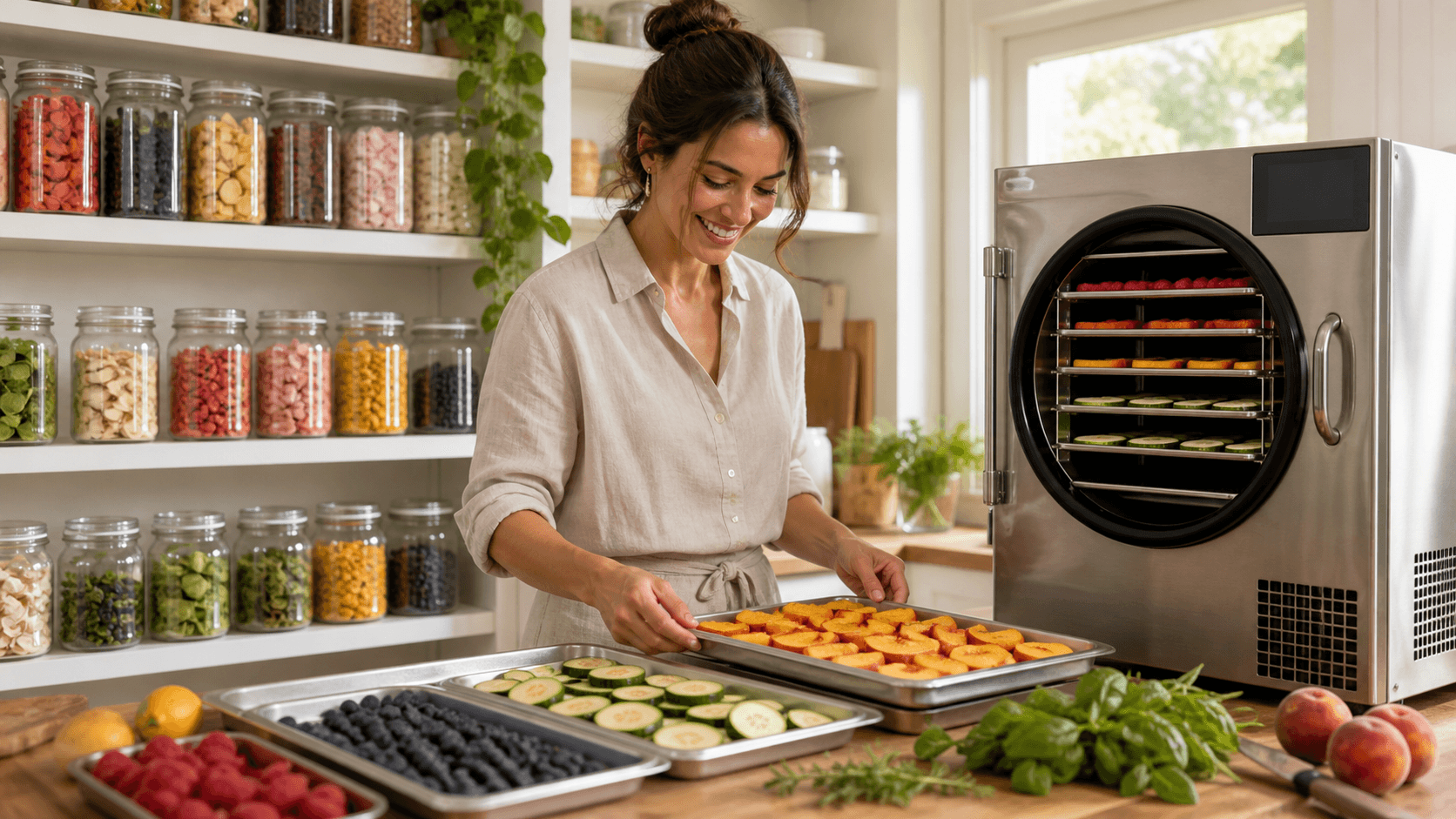
- Summer fruits like berries, peaches, and cherries
- Garden vegetables like tomatoes, peppers, and zucchini
- Herbs for cooking and teas
- Eggs, dairy, and cheese
- Full cooked meals like pasta, stews, and rice dishes
- Kid-friendly snacks like yogurt drops or fruit pieces
Since you are not adding extra sugar, salt, or chemical preservatives, you stay in charge of what goes into your food. That is a big help for people with allergies, special diets, or anyone who just wants cleaner ingredients on the pantry shelf. When stored in proper containers, the risk of spoilage is much lower than with many other home methods, and you get a steady supply of ready-to-use ingredients whenever you need them.
Powering Your Freeze Dryer with the Sun
A freeze-dryer machine for home uses more energy than a basic kitchen appliance because each batch runs for many hours. A single cycle often includes a freeze stage, a long dry stage, and then a final warm stage. That means planning your solar capacity is important so the system stays stable and stress-free.
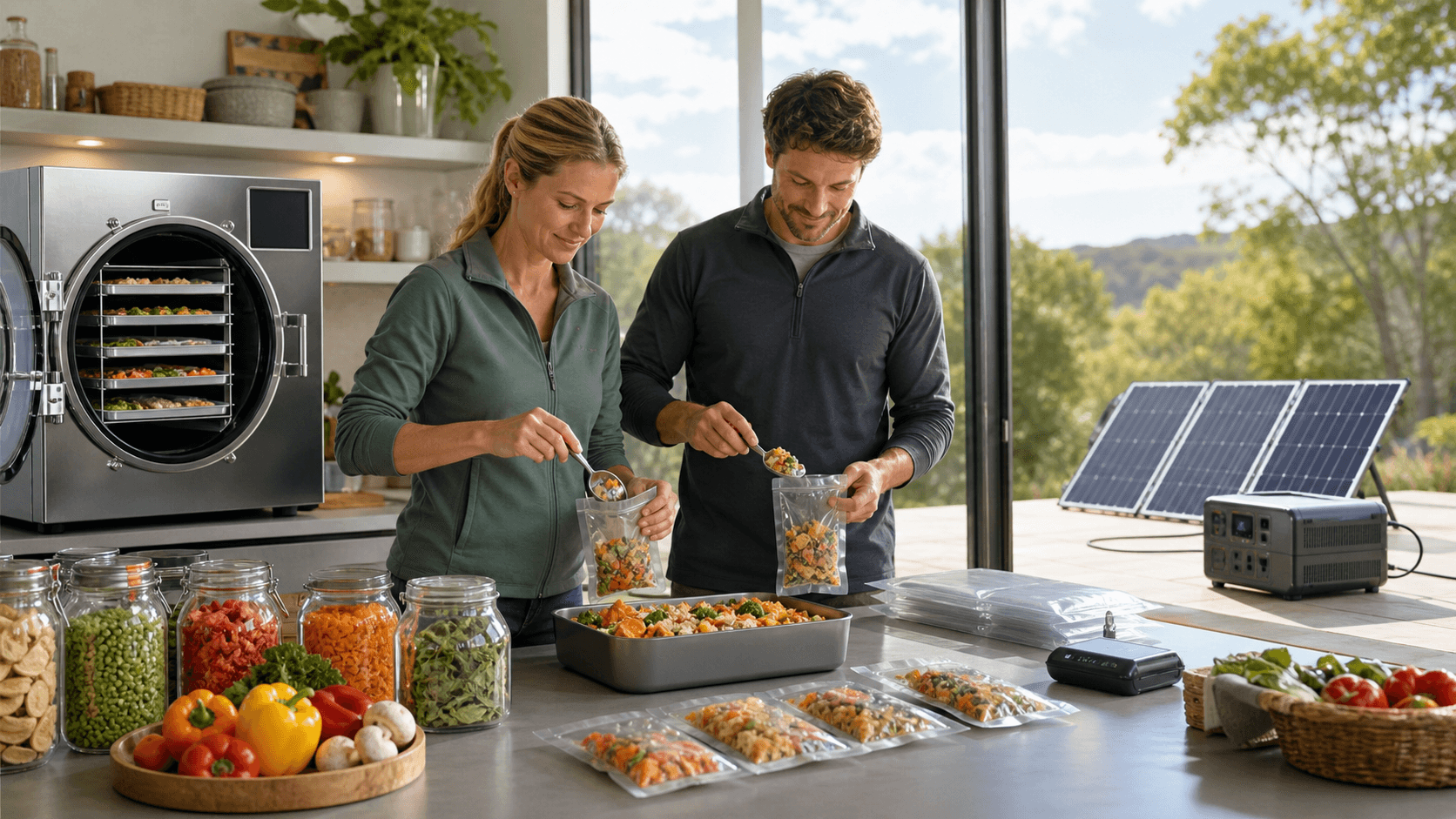
A solar kit with battery backup is a natural partner here. During long spring and summer days, solar panels collect energy while the sun is strong. That power can:
- Run the freeze dryer through the daytime
- Charge a battery bank for overnight drying
- Support other household loads when planned carefully
A simple setup often includes:
- Rooftop or ground-mounted solar panels
- A charge controller to protect the batteries
- An inverter to power standard household outlets
- A battery bank sized for long-running appliances
- A dedicated circuit or outlet for the freeze dryer
For daily use, a few habits help everything work better:
- Start batches in late morning so the heavy drying stage hits peak sun
- Avoid starting several big loads of other high-draw appliances at the same time
- Watch your battery levels and learn how many cycles your system can handle in a row
With a little planning, you can let the sun do the heavy lifting while your freeze dryer quietly turns fresh food into shelf-stable meals.
Seasonal Meal Prep Strategies From Spring Through Fall
When we think about freeze drying with solar, it helps to plan by season. Each part of the year brings different foods and different amounts of sunlight.
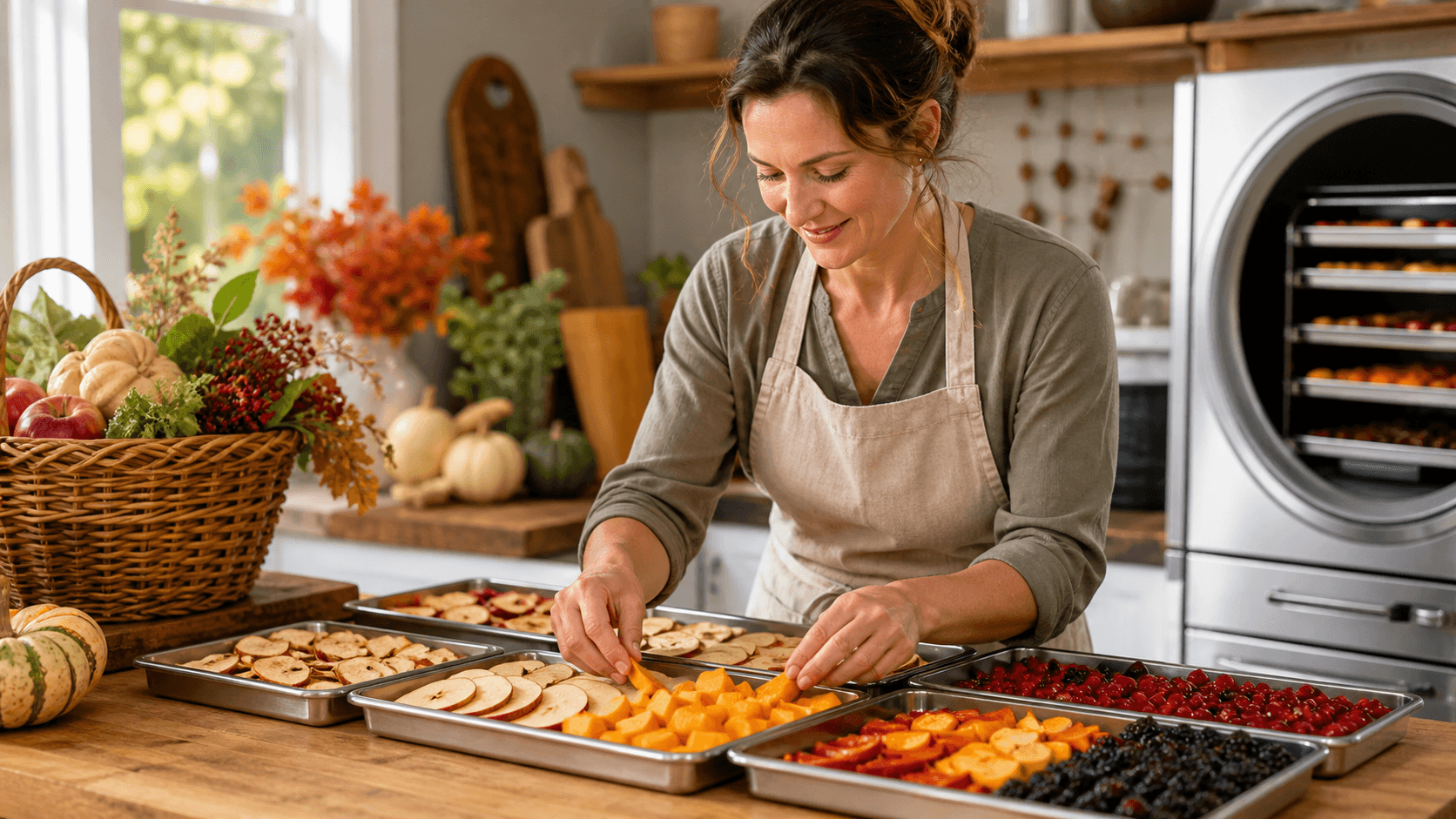
In spring, solar production starts picking up and early harvests begin. Good projects for this time include:
- Herbs for soups, teas, and seasoning blends
- Leafy greens for smoothie mixes or “emergency greens” powder
- Early strawberries or rhubarb for quick snacks and desserts
As days get longer and warmer, you can build pantry basics like soup starters and smoothie boosters. Light batches in spring also give you time to learn your machine before peak harvest hits.
Summer is when both the garden and the sun go all out. This is the perfect time to run back-to-back batches of:
- Berries and stone fruits
- Tomatoes, peppers, and squash
- Cooked meals for camping, road trips, or school lunches
- Quick protein add-ins like cooked chicken or beans
Late summer and fall are prime time for hearty, cool-weather foods. Think about:
- Apples, pears, and late berries
- Root vegetables like carrots and potatoes
- Stews, chili, and thick soups
- Ready-to-cook meal kits with sauces, veggies, and proteins
To keep your pantry organized, try a simple workflow:
- Plan 1 or 2 freeze-dry batches per week while harvest is strong
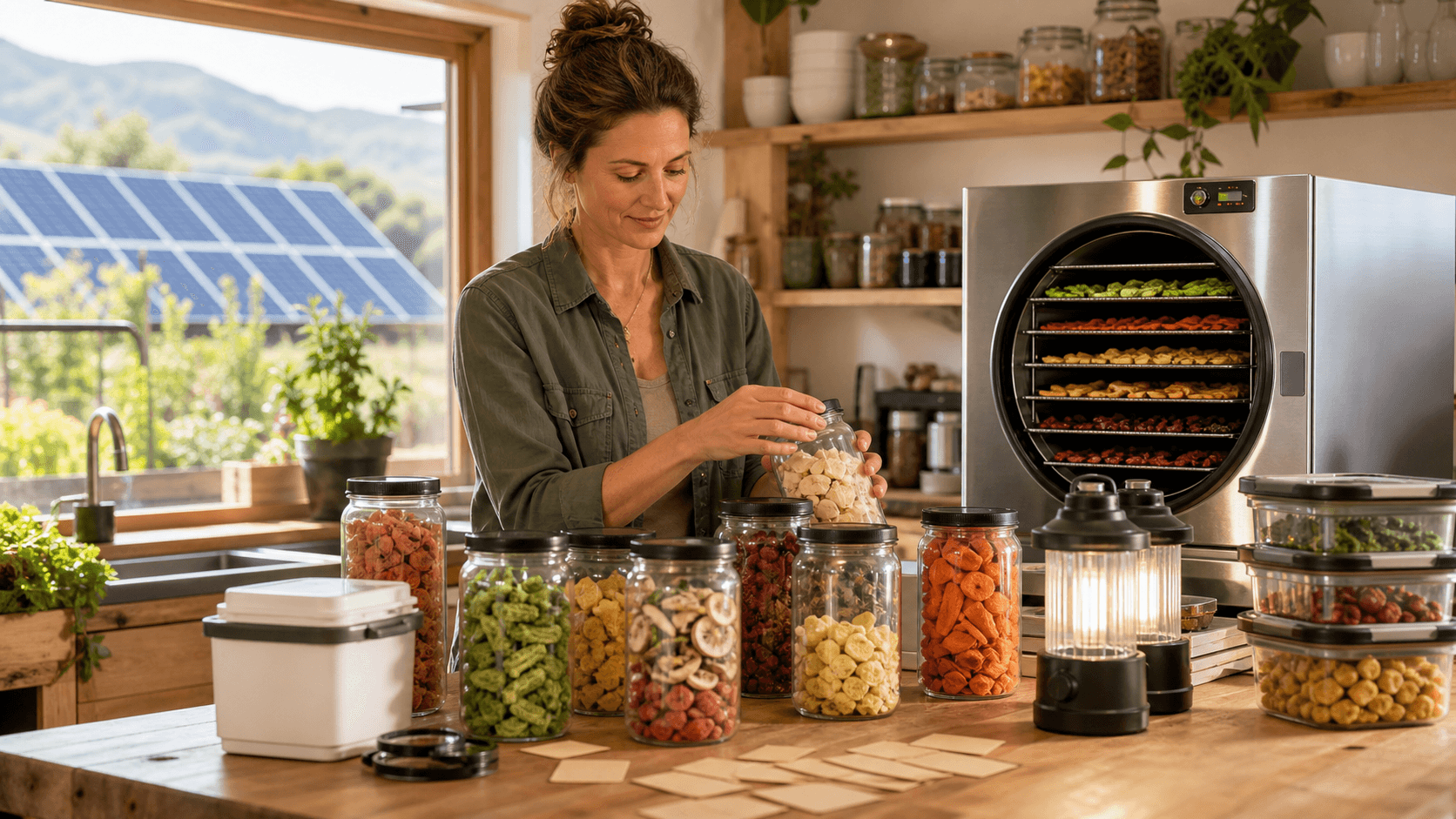
- Label every bag or jar with contents and date
- Use clear containers or mylar bags with oxygen absorbers for long storage
- Keep newer batches at the back so you use older food first
Over a few months, those small habits turn into shelves full of easy meals and snacks that were powered by your own solar setup.
Choosing the Right Freeze Dryer and Solar Setup
Picking the right freeze-dryer machine for home starts with household size and goals. In general:
- Small units work well for couples, small households, or tight spaces
- Medium units fit most families that cook at home often
- Large units suit homesteads, bigger families, or serious meal preppers
Helpful features to look for include:
- An efficient compressor and well-designed vacuum system
- A vacuum pump style that matches your comfort with upkeep
- Simple, clear controls and cycle settings
- Easy access for cleaning and basic maintenance
Your solar planning should match the size of your freeze dryer. Larger units usually need more panel capacity and a bigger battery bank so you can run full cycles without stress. Smaller units can often run on more modest systems, especially if you time your batches for sunny days and avoid running them during long cloudy stretches.
Location inside your home also matters. Placing the freeze dryer in a cool, dry spot with good airflow helps it run more efficiently. Avoid tight closets or hot garages where heat can build up around the machine. A clean, well-ventilated space means smoother cycles and less overall energy use.
At Green Vista Living, we focus on sustainable, off-grid and outdoor living gear, so we pay close attention to how freeze dryers and solar kits work together as a whole system. When both are sized and set up thoughtfully, you can turn seasonal abundance and daily sunshine into a steady, low-stress pantry that keeps your household ready for whatever comes next.
Preserve More Of What You Love With Home Freeze Drying
If you are ready to cut food waste, save money, and build a long-lasting pantry, we can help you get started with a reliable freeze-dryer machine for home. At Green Vista Living, we guide you in choosing the right size and setup so you can preserve meals, snacks, and seasonal produce with confidence. If you have questions about models, power requirements, or setup in your space, reach out through contact us and we will walk you through your options.