Food keeps getting more expensive, and the weather feels less predictable every year. Many of us are paying closer attention to how we store food and how much we throw away. Canning and dehydrating are still great tools, but there is another option that can take long-term food storage to a different level: a freeze dryer at home.
In this guide, we will talk through how home freeze dryers work, when they make sense, what you can preserve, and how they fit into an off-grid or wellness-focused lifestyle. Our goal at Green Vista Living is to help you decide if this fits your home, your budget, and your long-term plans.
Rethinking Food Storage for an Uncertain World
Grocery shelves do not always feel as steady as they once did. Storms, heat waves, and supply hiccups can make simple items harder to find. At the same time, fresh food can go bad fast, especially in hot or humid climates.
Traditional methods still have a place:
- Canning locks food into jars with heat and seals
- Dehydrating removes water with warm air
- Root cellars and freezers extend freshness for a while
Freeze drying is like a third lane for serious food security. It can keep food shelf stable for a long time while holding on to color, flavor, and texture in a way that feels closer to fresh. A freeze dryer at home is not for everyone, but for some households it can lower waste, stretch every harvest, and add a calm sense of backup.
How a Freeze Dryer at Home Actually Works
The science sounds fancy, but the process is simple once you see it a few times. A home freeze dryer:
- Freezes your food quickly until it is rock solid
- Pulls a strong vacuum around the food
- Gently warms the trays so ice in the food turns straight into vapor
- Pumps that vapor out of the chamber
That ice skip from solid to gas is called sublimation. Because the water leaves without melting first, the food keeps its shape. The result is very dry, crunchy food that weighs much less but keeps its original look.
Compared with dehydrated food:
- Dehydrated food is often chewy, darker, and more intense in flavor
- Freeze-dried food is light, airy, and rehydrates close to its original state
- Dehydrated food still has some moisture, so shelf life is shorter
- Freeze-dried food has very low moisture, so it keeps longer when stored well
A home freeze dryer is about the size of a small laundry appliance. It makes some noise, needs power, and each batch can take many hours. You also use accessories like oil for the vacuum pump, storage bags, and oxygen absorbers. Once it becomes part of your weekly rhythm, many families run it overnight or while they are at work.
When a Freeze Dryer Delivers Real Value
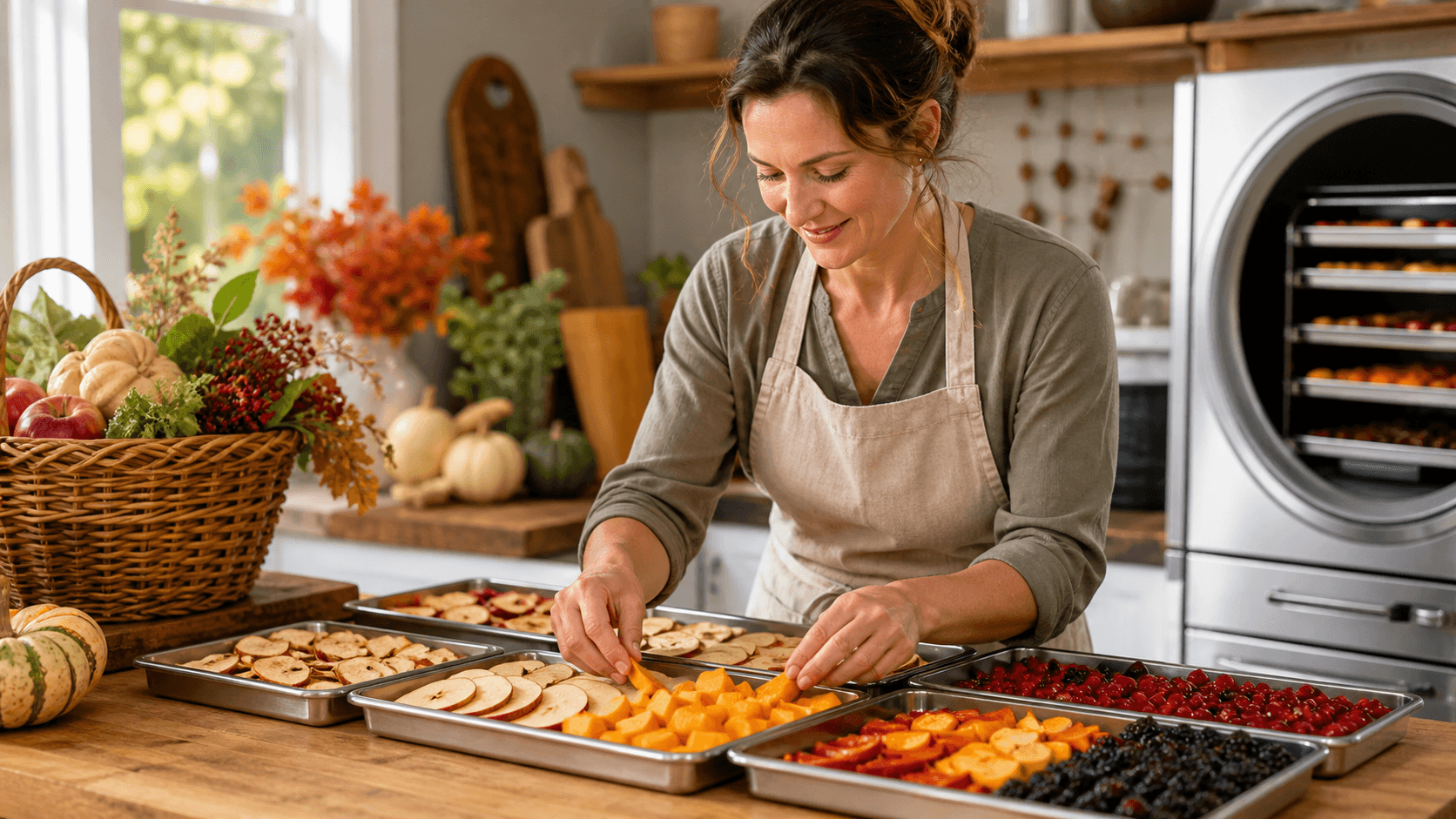
Late summer and early fall are big food months. Gardens explode with tomatoes, peppers, herbs, and berries. Farmers markets are full, and CSA boxes can feel bottomless. A freeze dryer at home can turn that rush into calm shelves for winter.
It tends to make the most sense if you:
- Buy in bulk or shop big warehouse-style stores
- Have a large family or feed many people
- Plan meals ahead and care about ingredient quality
- Live in rural, off-grid, or in places with frequent outages
Real-world uses often include:
- Long-term pantry staples like fruits, veggies, and cooked meats
- Emergency food storage that is light and easy to pack
- Camping and backpacking meals that only need hot water
- Kid snacks like fruit pieces, yogurt dots, or crunchy peas
- Allergy-friendly or special-diet meals where you control every ingredient
When you line it up with your habits, it can become less of a gadget and more of a weekly tool.
What You Can Preserve Beyond Canning and Dehydrating
Each method shines in different ways. Think of them as tools in the same toolbox.
Canning works best for:
- Sauces, salsas, and soups
- High-acid foods like tomatoes and pickles
- Recipes where you want a cooked, ready-to-eat feel
Dehydrating is great for:
- Jerky and fruit leather
- Simple sliced fruits like apples or bananas
- Herbs that do not mind some heat
A freeze dryer at home opens up more options:
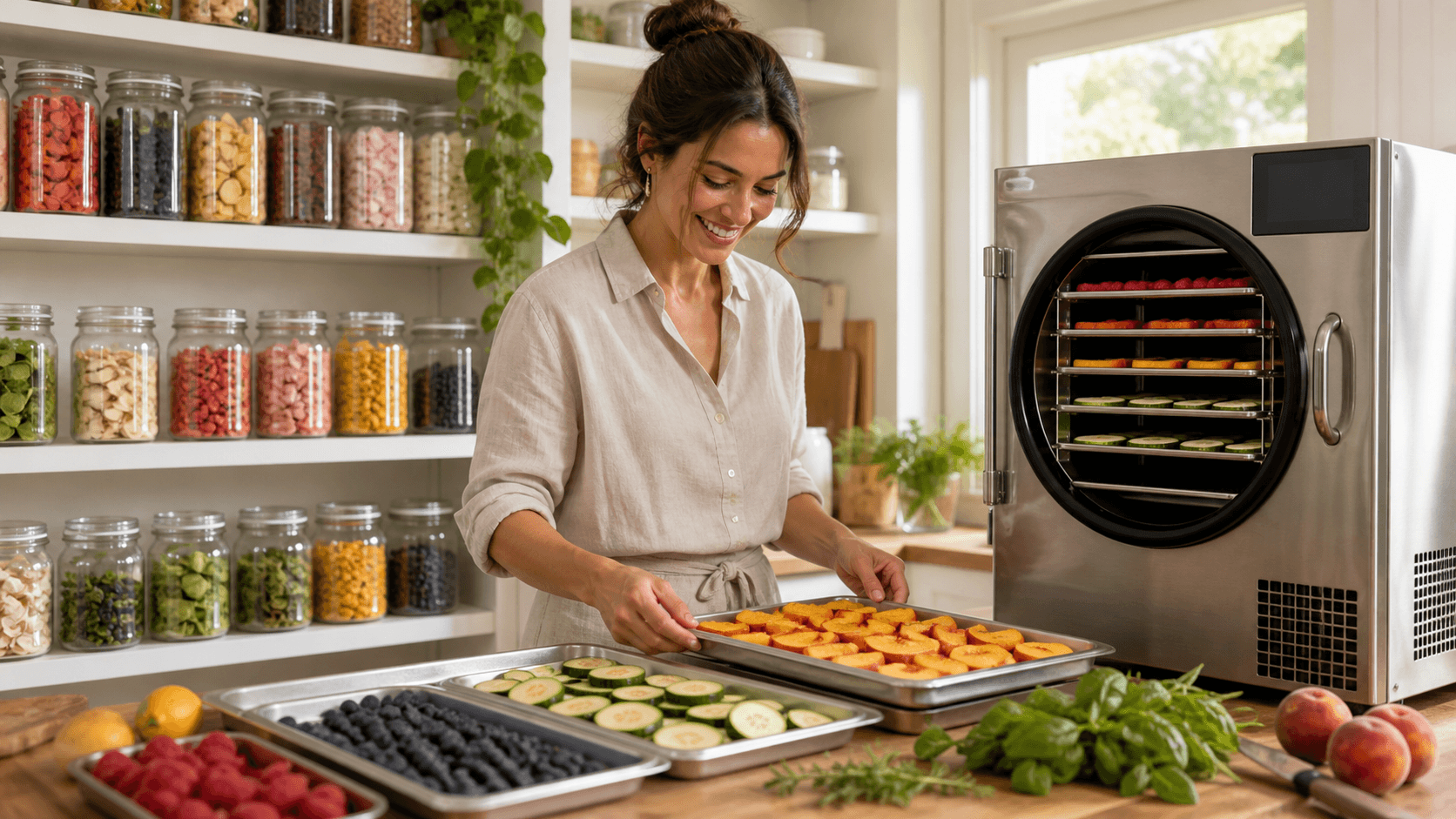
- Soft summer berries that crush in jars but stay whole when freeze-dried
- Delicate veggies like zucchini, peas, and green beans
- Fresh herbs that keep their bright color
- Full meals like stews, pasta dishes, or casseroles
- Leftovers that would normally get tossed
- Dairy, such as cheese bits or yogurt drops
- Sweet treats like ice cream bites
Because the process keeps nutrients, color, and flavor close to fresh, those jars or Mylar bags can still taste good after a long time if stored in a cool, dark place with oxygen absorbers.
Cost, Convenience, and Daily Life
A freeze dryer is a real piece of equipment, not a small kitchen gadget. It has a purchase cost, uses power, and needs oil changes and filters. You also invest in storage supplies like Mylar bags, jars, and labels. A quality machine, cared for, can be a long-term part of your home setup.
When you compare it with store-bought freeze-dried foods, the picture changes. Buying ready-made meals and snack pouches adds up fast. Processing your own garden harvests, bulk meats, and sale produce can be more friendly to your wallet over time, especially if you are often tossing wilted greens or old leftovers.
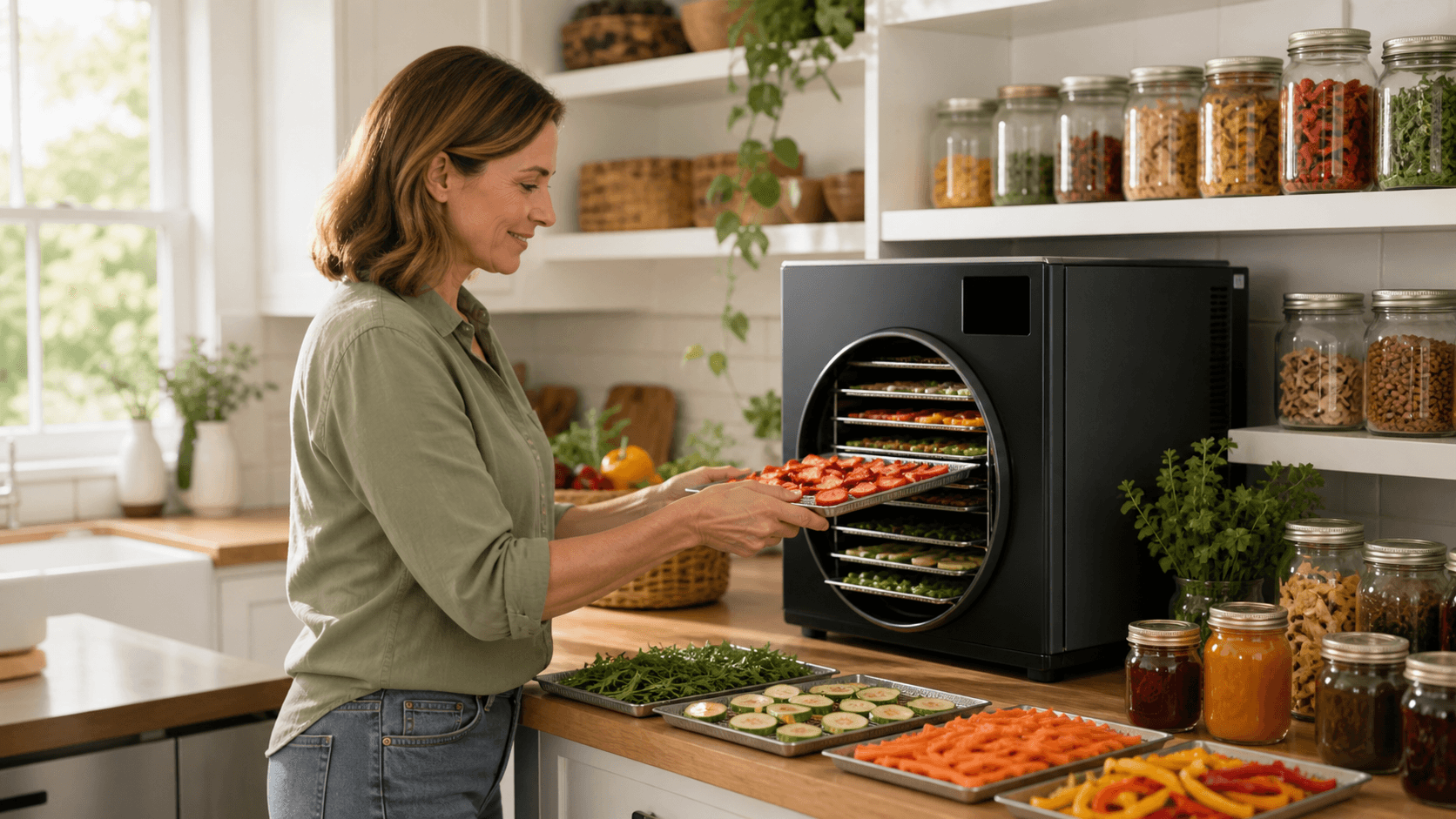
Time-wise, you load trays, start the cycle, and then the machine does the work. Your main hands-on time is:
- Washing, chopping, or pre-cooking food
- Loading and unloading trays
- Packing and labeling finished food
For busy households, this can actually make meal prep easier. You can freeze dry full dinners on slow weekends, then rehydrate them for quick weeknight meals or power outages.
Off-Grid, Wellness, and Sustainability Benefits
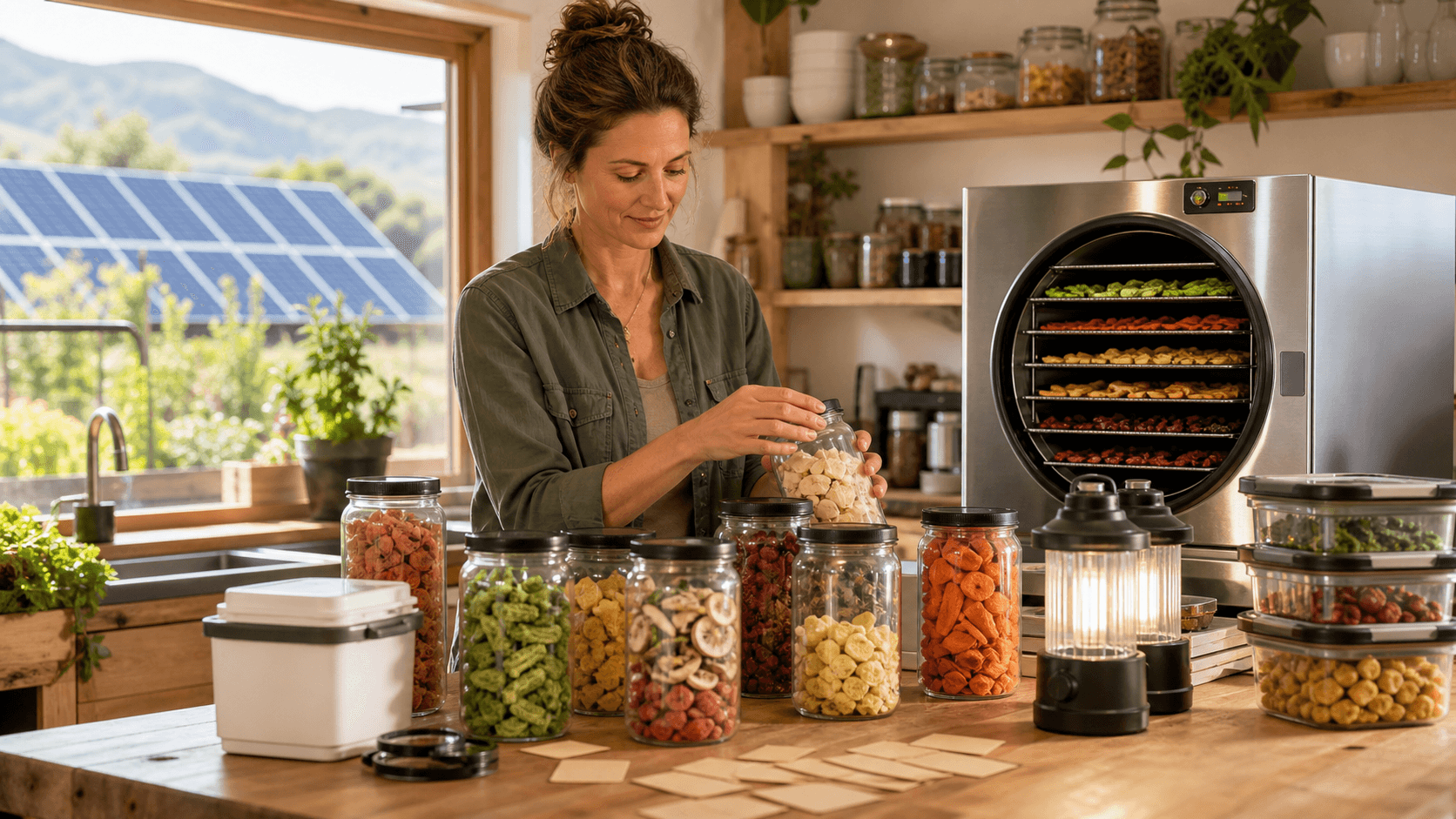
For off-grid or semi-off-grid homes, a freeze dryer pairs well with solar power and battery systems. It lets you turn fresh food into shelf-stable meals that do not need a freezer or constant power. That can be a big comfort when storms roll through or lines go down.
Freeze drying also fits well with a home wellness mindset. By processing your own food, you can:
- Choose organic or homegrown produce
- Skip added sugar, dyes, and preservatives
- Create meals that fit gluten-free, low-sodium, or other special diets
- Store broths, bone broth, and nutrient-dense meals for later
Sustainability fans often like how it cuts food waste. You can buy in-season when produce is at its best, store it for later, and depend less on highly processed packaged foods that travel long distances.
At Green Vista Living, we care about that bigger picture of resilient, thoughtful living, from off-grid power to clean water and air to smart food storage tools like a freeze dryer at home.
Preserve More Of What You Love With Home Freeze Drying
Ready to make your harvests and favorite meals last for years instead of days? Explore how a freeze dryer at home can help you cut waste, build a reliable food reserve, and enjoy real ingredients anytime. At Green Vista Living, we are here to answer questions and help you choose the right setup for your kitchen. If you would like one-on-one guidance, please contact us and we will walk you through your options.