How to Diagnose Harvest Right Pump Problems Before Winter Batches
A dependable Harvest Right pump helps keep winter food plans on track. Before holiday meals, garden produce, hunting-season foods, and pantry staples start filling the queue, we recommend checking your freeze dryer for small problems that could turn into a failed batch.
Late October is a smart time to inspect the system because colder weather and heavier use can make vacuum issues more noticeable. A few safe checks now can help you spot warning signs, protect valuable ingredients, and know when qualified service or replacement parts may be needed.
Spot Early Harvest Right Pump Warning Signs
Most pump troubles do not begin with a complete shutdown. They often start as changes in how the freeze dryer sounds, how long it runs, or how easily it reaches vacuum. Paying attention to those changes can save you from discovering a problem after loading a full batch of food.
Watch for these common signs:
- The unit struggles to reach vacuum or displays recurring vacuum-related errors
- Freeze-dry cycles take much longer than usual
- The pump becomes louder or sounds different during operation
- Pump oil looks dark, cloudy, wet, or contains visible debris
- The pump vibrates excessively, knocks, grinds, or makes a sharp mechanical sound
A steady operating hum may be normal for your setup. What deserves attention is a sudden change, especially grinding, knocking, heavy vibration, or noise that grows louder from batch to batch. We also recommend noting the error code, room temperature, batch type, cycle time, and what the pump was doing when the issue appeared. Those details make troubleshooting clearer and give support personnel a better starting point if help is needed.
Test Your Harvest Right Pump Before Cold Weather
Before you load large amounts of seasonal food, give the freeze dryer and Harvest Right pump a careful visual inspection. Start with the simple areas that can affect vacuum performance without requiring any internal work.
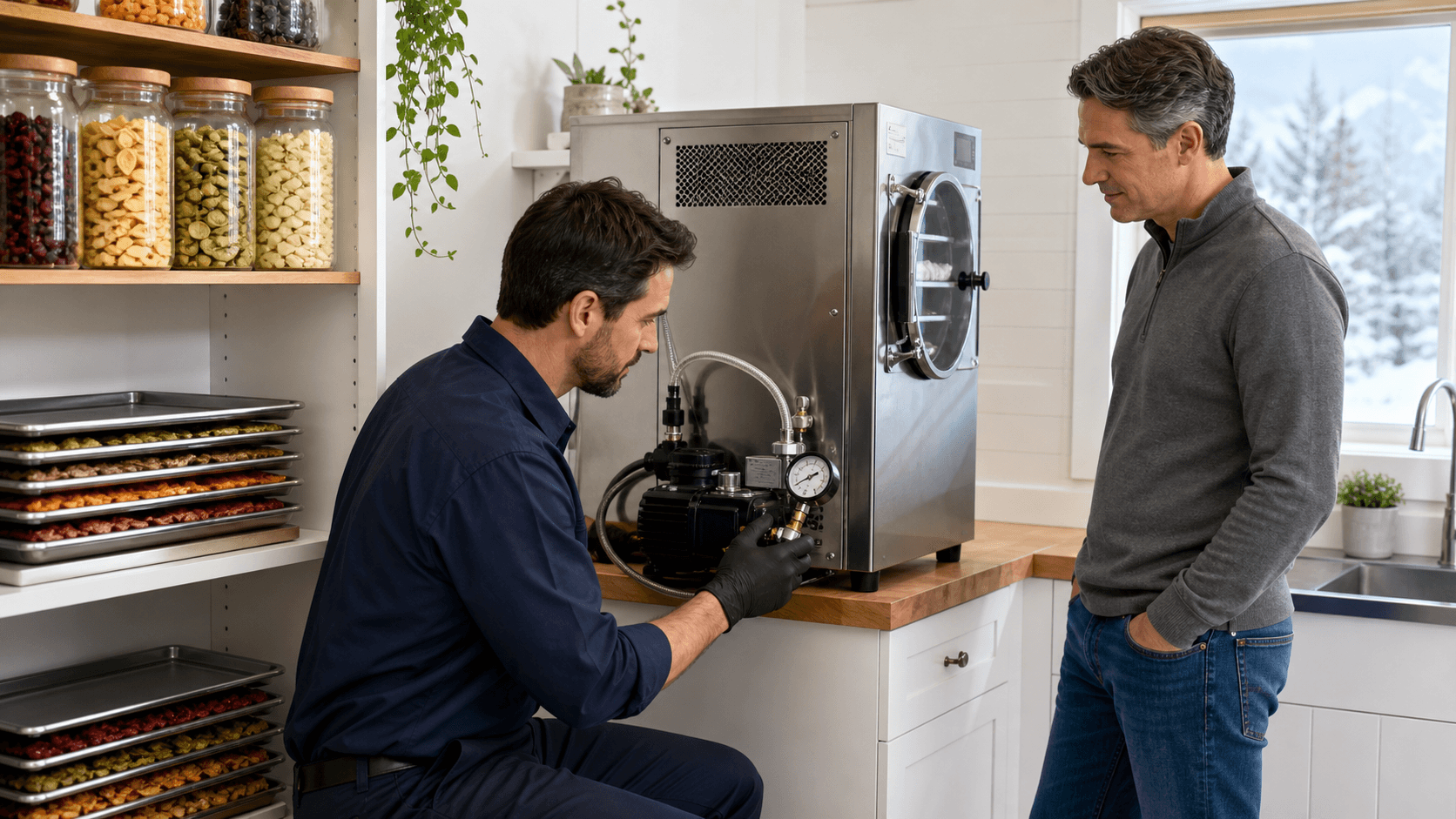
Check that power connections are secure and that the vacuum hose is firmly attached at both ends. Look closely at fittings for cracks, looseness, dirt, or damage. Confirm the drain valve is fully closed before starting a cycle, since an open or poorly sealed valve can prevent the chamber from reaching vacuum.
For oil-based pumps, oil condition matters. Oil that appears cloudy may contain moisture. Dark oil, food particles, or other contamination can also affect how the pump performs. Follow the guidance for your specific model before filtering or changing oil, and use only the maintenance steps approved for that equipment.
A controlled test batch or vacuum test is a helpful way to find concerns before a busy preservation weekend. Rather than discovering a slow vacuum issue with trays full of holiday leftovers or garden harvests, you can monitor the unit in a lower-pressure situation and compare its behavior with your normal cycles.
Fix Common Pump Issues Without Guesswork
When a vacuum problem appears, the pump may not be the only cause. Air leaks at the door gasket, drain valve, vacuum hose, or chamber fittings can create symptoms that look like pump failure. That is why we suggest starting with clean, basic checks instead of assuming the pump itself is damaged.
Safe preliminary steps may include:
- Reseating the vacuum hose and checking both connection points
- Cleaning around the door gasket, drain valve, and accessible seals
- Confirming the drain valve closes completely
- Changing or filtering pump oil only as directed in the equipment manual
- Keeping the freeze dryer and pump in a clean, dry area
Avoid taking apart electrical parts or internal pump components unless you have qualified guidance for that repair. Severe mechanical noise, overheating, repeated power trips, heavy leaks, or a pump that will not run are signs to stop using the unit and seek professional support. Continuing to run equipment with those symptoms can make diagnosis harder and may put a high-value batch at risk.
Build a Winter-Ready Harvest Right Pump Maintenance Routine
A simple routine is easier to follow than a long checklist you only remember after something goes wrong. Before each batch, take a moment to inspect the hose, fittings, drain valve, and door seal. During regular use, monitor oil condition when applicable and pay attention to changes in cycle length or operating sound.
Keep a small maintenance area nearby with the supplies approved for your specific Harvest Right model. Useful items can include pump oil for compatible oil-based models, filters, clean cloths, replacement seals, and your equipment documentation. Having these items ready can prevent a minor concern from stopping your winter food-preservation plans.
Cold-weather setup matters, too. We recommend maintaining a stable indoor environment and avoiding damp storage spaces. Leave enough room around the freeze dryer and pump to inspect connections and clean the outside surfaces. If the machine is tucked into a crowded corner, a loose hose or oil leak can be easy to miss.
Prepare Now for Reliable Winter Freeze-Drying
Before your next high-value batch, listen for unusual pump noise, inspect fittings and seals, confirm the drain valve is closed, and review oil condition where applicable. Slow vacuum performance, changing sounds, and recurring errors are easier to address before they interrupt a full season of food preservation.
Use the manufacturer's instructions for your specific model, and do not push through serious warning signs. A careful pre-winter inspection helps protect the food you worked hard to grow, gather, buy, and prepare.
Keep Your Freeze Dryer Ready for Winter
For dependable equipment and practical guidance, Green Vista Living can help you choose the right setup for your home food preservation goals. Explore a Harvest Right pump solution designed to support consistent freeze-drying performance. If you have questions about your options, contact us and our team will be glad to help.