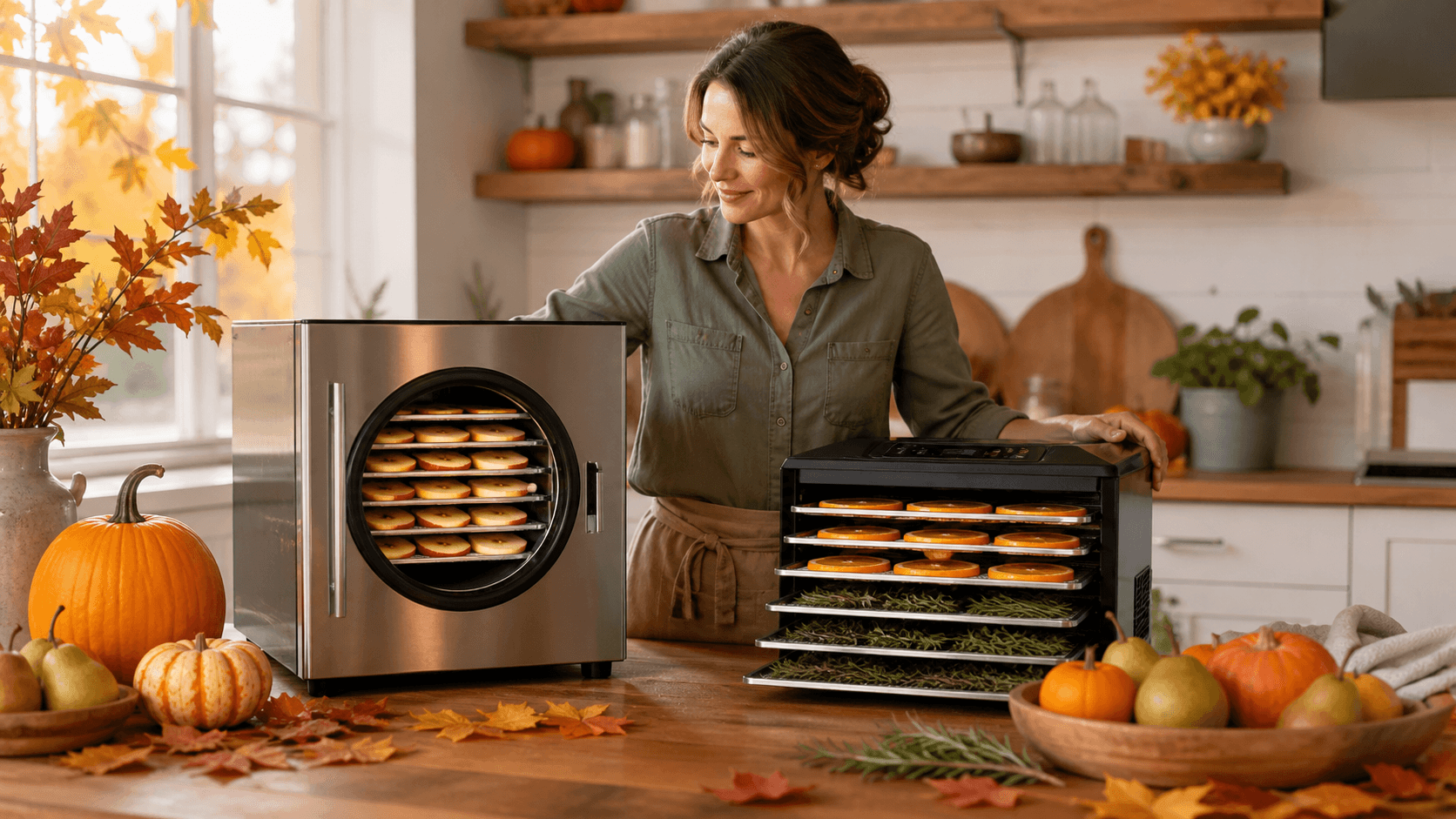
Fall harvests can fill a kitchen fast. When apples, squash, herbs, green beans, and leftover soups start competing for refrigerator and freezer space, we recommend choosing a preservation method before food goes to waste. Dehydrators and Harvest Right freeze dryers can both help you save seasonal food, but they create very different pantry results.
For many of us, preserving food is about more than getting through the next few weeks. It can mean building an emergency supply, preparing a cabin pantry, making camping meals easier, or keeping garden-grown food ready long after frost arrives.
Make Your Fall Harvest Last Beyond the Season
Autumn is one of the best times to think seriously about food storage. Gardens are producing their last big crops, farmers markets are full, and seasonal cooking often leaves us with extra ingredients and leftovers. Freezing works well, but freezer space is limited, especially when we are storing meals for a home, cabin, or remote property.
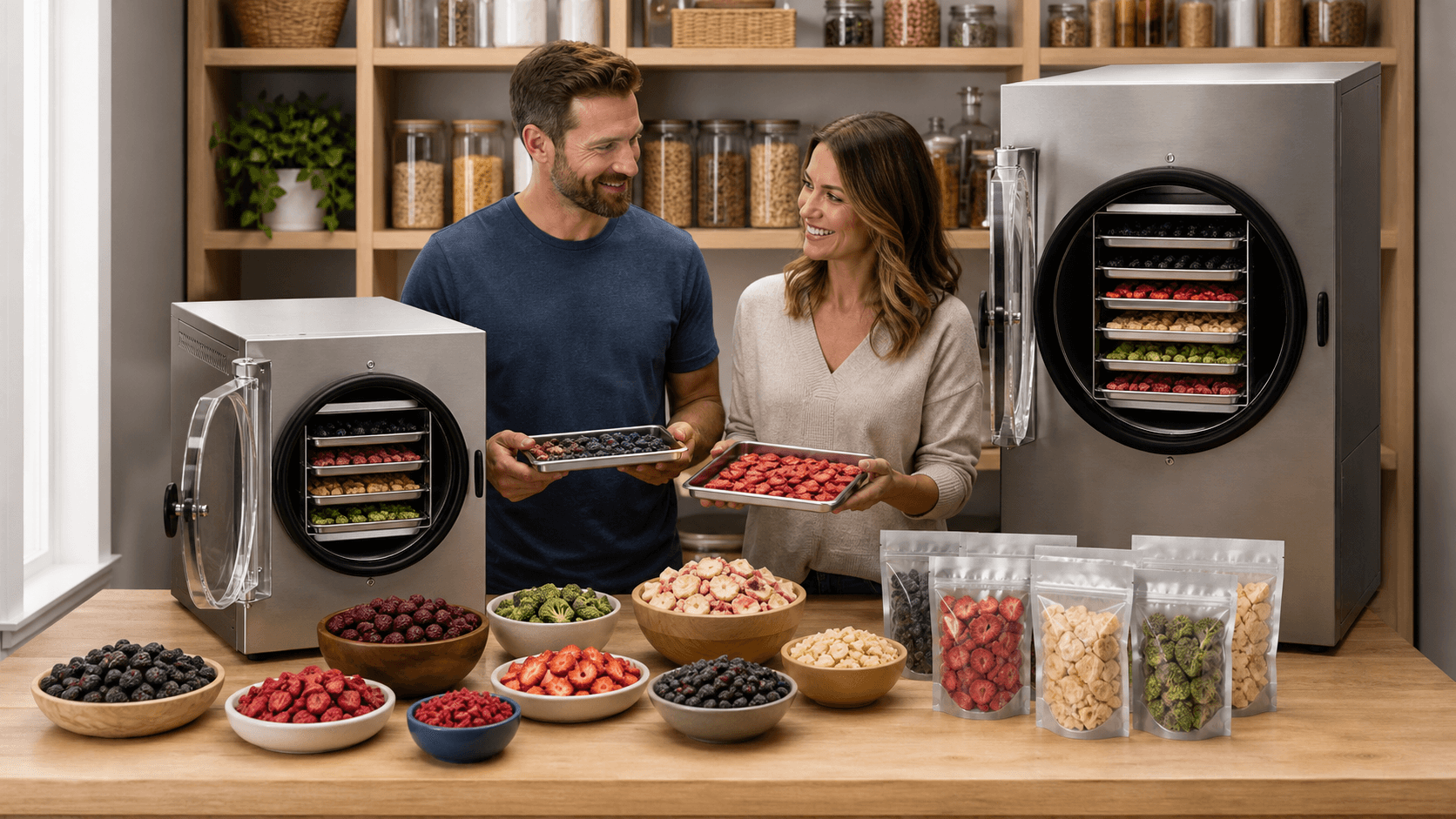
Shoppers searching for freeze-drying machines for sale often want food that stores in less space and stays ready when they need it. A Harvest Right freeze dryer is built for households that want to preserve more than apple chips or dried herbs. It gives us a way to save ingredients, full meals, and practical pantry foods for later use.
Fall foods that work well for preservation include:
- Apple slices, berries, and other fruit
- Squash, green beans, peppers, and mushrooms
- Fresh herbs from the garden
- Soups, chili, and hearty seasonal leftovers
- Holiday-style meals and prepared side dishes
Even so, a dehydrator still has a place in many kitchens. The better choice depends on whether you want simple snacks and ingredients for near-term use, or a wider food-storage plan with more meal options down the road.
How Harvest Right Freeze Drying Protects Fall Flavor
Harvest Right freeze dryers preserve food by freezing it and then removing moisture in a vacuum drying process. This approach helps many foods keep much of their original shape, color, flavor, and texture. Instead of becoming leathery or shrunken, freeze-dried foods are usually light and crisp when dry.
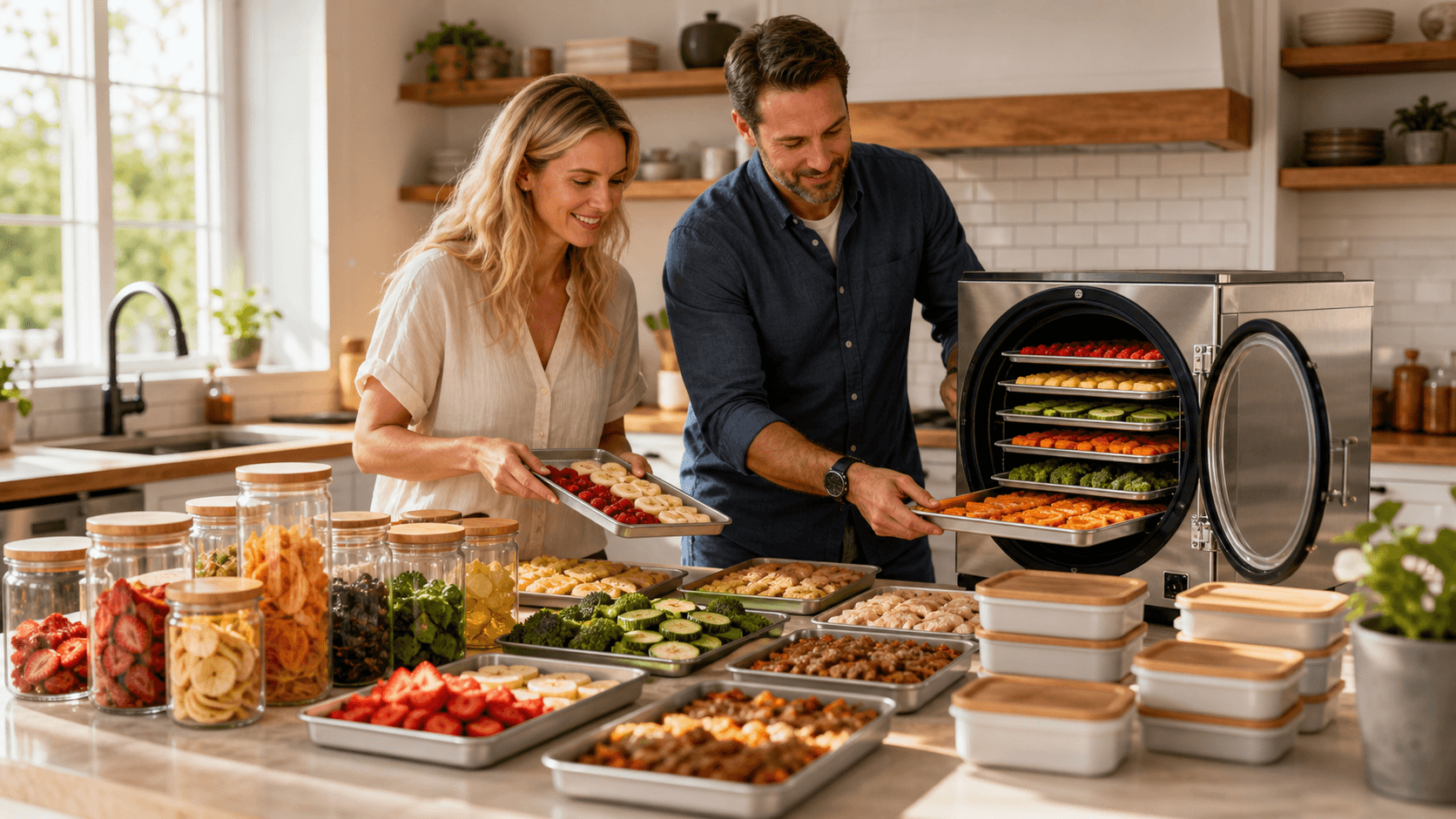
That difference matters with fall cooking. Apple slices can stay light and snackable. Green beans, berries, and squash can be stored for future meals. Soups and chili can become shelf-stable meal components when packaged correctly. Even complete meals can be freeze-dried, giving us more variety than a pantry filled only with dried fruit and jerky.
Rehydration is another big advantage. Many freeze-dried foods can take on a more familiar cooked texture when water is added. That makes them useful for everyday dinners, cabin meals, camping supplies, and emergency meal planning. Dehydrated foods can also be rehydrated in some recipes, but they are often best for snacking, baking, or long-cooking dishes.
We also like the flexibility Harvest Right machines bring to a self-sufficient pantry. You can preserve individual ingredients, garden harvests, leftovers, herbs, pet food, and prepared meals without limiting your storage plan to one type of food.
Where Dehydrators Still Fit in a Fall Pantry
Dehydrators use low heat and airflow to remove moisture. They are familiar, straightforward tools for turning fresh food into dried snacks and cooking ingredients. If your fall goal is a batch of apple rings, dried mushrooms, jerky, or herbs for the next several months, a dehydrator may be all you need.
The finished texture is the easiest way to spot the difference. Dehydrated food is often chewy, leathery, or crisp, depending on the ingredient and drying time. Freeze-dried food is generally lighter and airier. It can be eaten dry, packed for travel, or rehydrated when you are ready to cook.
A dehydrator can make sense when your focus is:
- Drying herbs, peppers, and mushrooms
- Making apple rings and other snacks
- Preparing jerky or trail-food ingredients
- Preserving small batches with a simple routine
- Adding dried ingredients to baking and slow-cooked meals
For a larger pantry plan, freeze-drying machines for sale may be a better match. Harvest Right units support a broader range of foods, including complete meals, and they are especially appealing when long-term readiness matters as much as snack-making.
Compare Storage and Everyday Convenience
Both methods need thoughtful packaging. Dry food should be kept in clean, food-safe, airtight containers that protect it from moisture. For longer storage, freeze-dried foods are commonly packaged with oxygen absorbers in suitable containers or mylar bags. Good packaging is not an afterthought, it is part of protecting the food you worked to preserve.
Dehydrators can feel simpler for small batches. Load the trays, set the drying process, and wait for herbs, fruit, or jerky to finish. They work nicely for routine food projects that do not require a large storage plan.
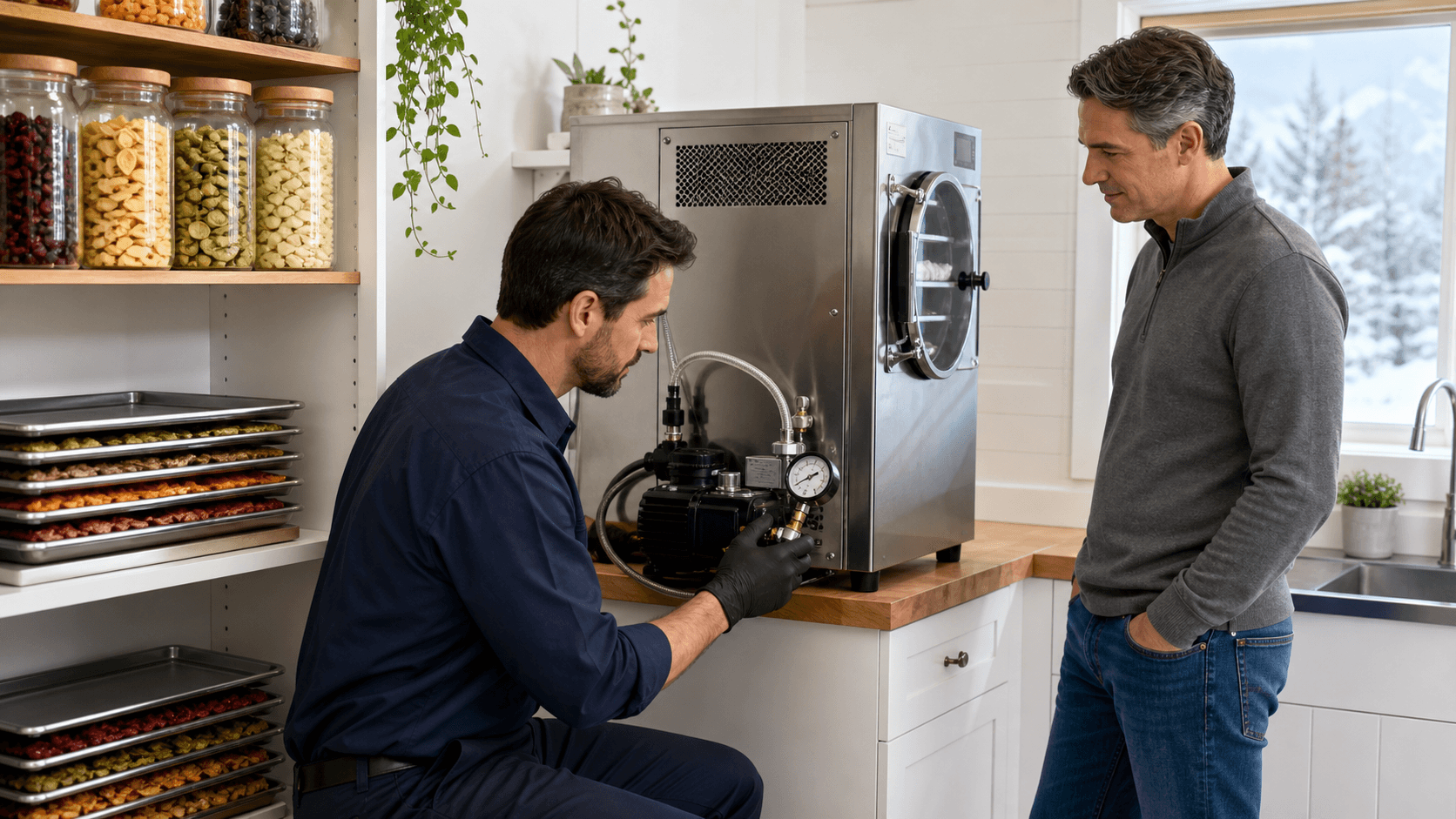
Harvest Right freeze drying takes more planning. You will need room for the machine, time for each cycle, and a packaging setup once the batch is complete. Still, that extra preparation can feel worthwhile when we are preserving seasonal produce in larger amounts or turning leftovers into pantry-ready meals. A home that relies on stored food during outages, winter weather, or time away from town may appreciate having more meal choices on hand.
Choose a Freeze Dryer That Fits Your Goals
Before selecting a Harvest Right unit, we encourage you to think about how preservation fits into your real routine. A machine that sounds impressive is not always the right one if it does not fit your available space, electrical setup, batch needs, or storage plans.
Helpful questions to consider include:
- How many people will eat from your stored food?
- Where will the machine sit during harvest season?
- How much garden produce or bulk food do you expect to preserve?
- Do you want ingredients only, or complete meals too?
- Will the food support home use, a cabin, camping, or emergency supplies?
It also helps to look beyond fresh produce. A Harvest Right freeze dryer can help us save bulk grocery purchases, leftovers, prepared meals, pet food, and foods packed for remote properties. That wider range of uses is often what turns a seasonal appliance into part of a year-round self-sufficient lifestyle.
When comparing Harvest Right models and accessories, we recommend matching the equipment to your household's food-preservation rhythm. Green Vista Living focuses on equipment for off-grid, backup-power, and self-sufficient living, so we understand that a pantry plan often connects to bigger goals for home and cabin readiness.
Start Building a Pantry That Outlasts Fall
For simple dried snacks, herbs, jerky, and cooking ingredients, a dehydrator is a practical choice. Harvest Right freeze drying is better suited to households that want longer-term storage potential, more flexible rehydration, and the ability to preserve a wider mix of ingredients and complete meals.
Before the last fall produce disappears, take stock of what you grow, cook, and store most often. The right preservation method should fit your space, your food habits, and the kind of pantry you want available when the season has changed.
Preserve More of What You Harvest
At Green Vista Living, we can help you choose a Harvest Right model that suits your household's storage goals and favorite fall foods. Browse our freeze-drying machines for sale to compare options for creating shelf-stable meals, snacks, and ingredients. If you have questions about capacity or features, contact us for guidance from our team.