Choosing a Freeze Dehydrator for Off-Grid Food Security
Food security gets very real when store shelves look thin, prices keep creeping up, and delivery trucks do not always show up on time. If you live in a rural area, spend time off grid, or just like being ready for the unexpected, relying on big grocery runs can feel risky. That is where a freeze dehydrator can become one of the most useful tools in your cabin, homestead, or home.
With the right setup, you can turn short summer harvests into long-term, shelf-stable meals. Garden produce, bulk meat, wild game, and foraged berries can all be turned into light, dry food that stores for years. In this guide, we will walk through how freeze dehydration works, what to look for in a machine, and how to match it to your off-grid power and food security goals.
Preserve Your Harvest and Your Independence
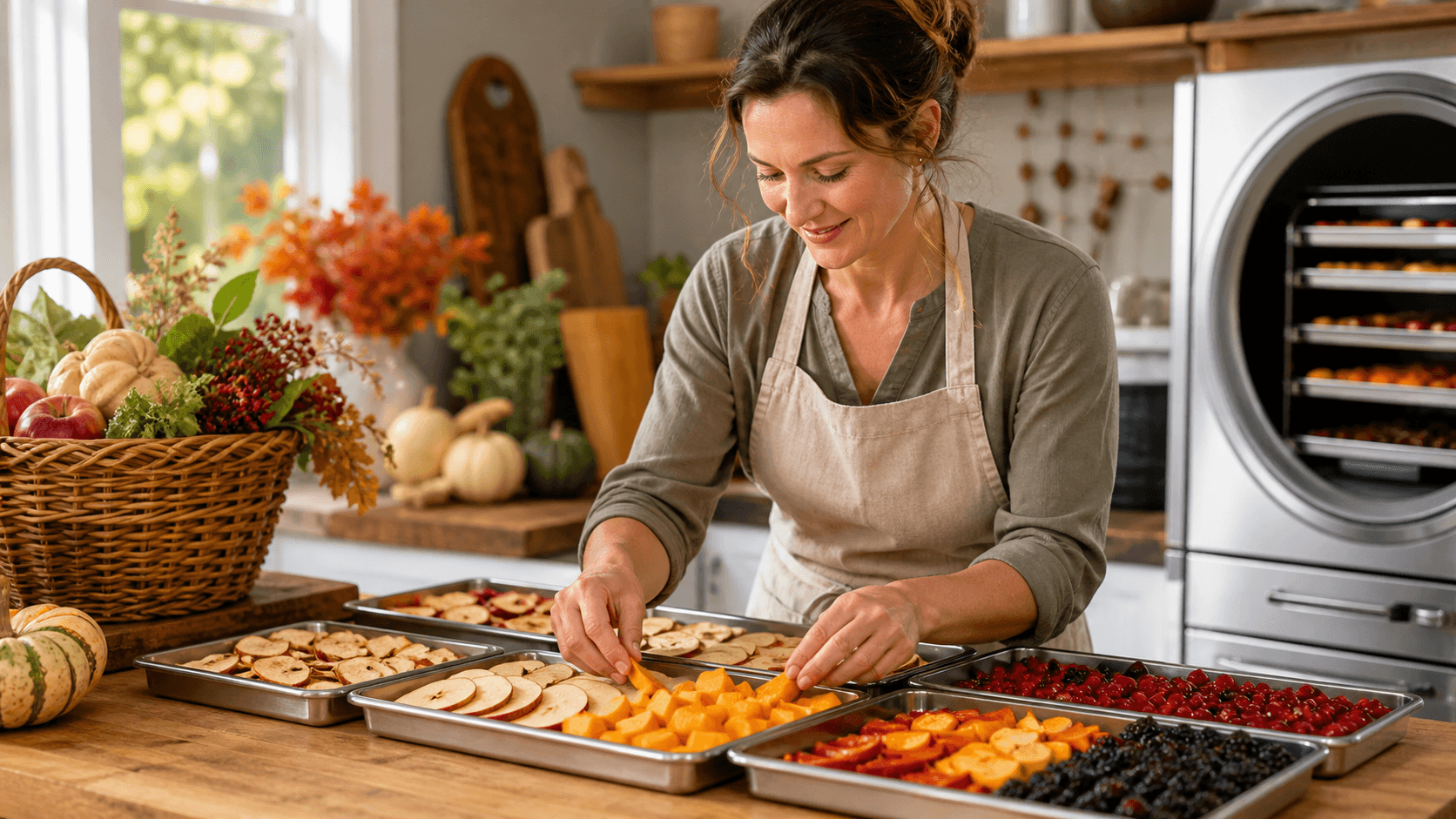
Midsummer is the perfect time to think about long term food storage. The garden is exploding, local farms are full of fresh produce, and it is easier to find bulk buys of meat. Instead of letting extra food go to waste or cramming one more bag into a freezer, a freeze dehydrator lets you bank that abundance for later.
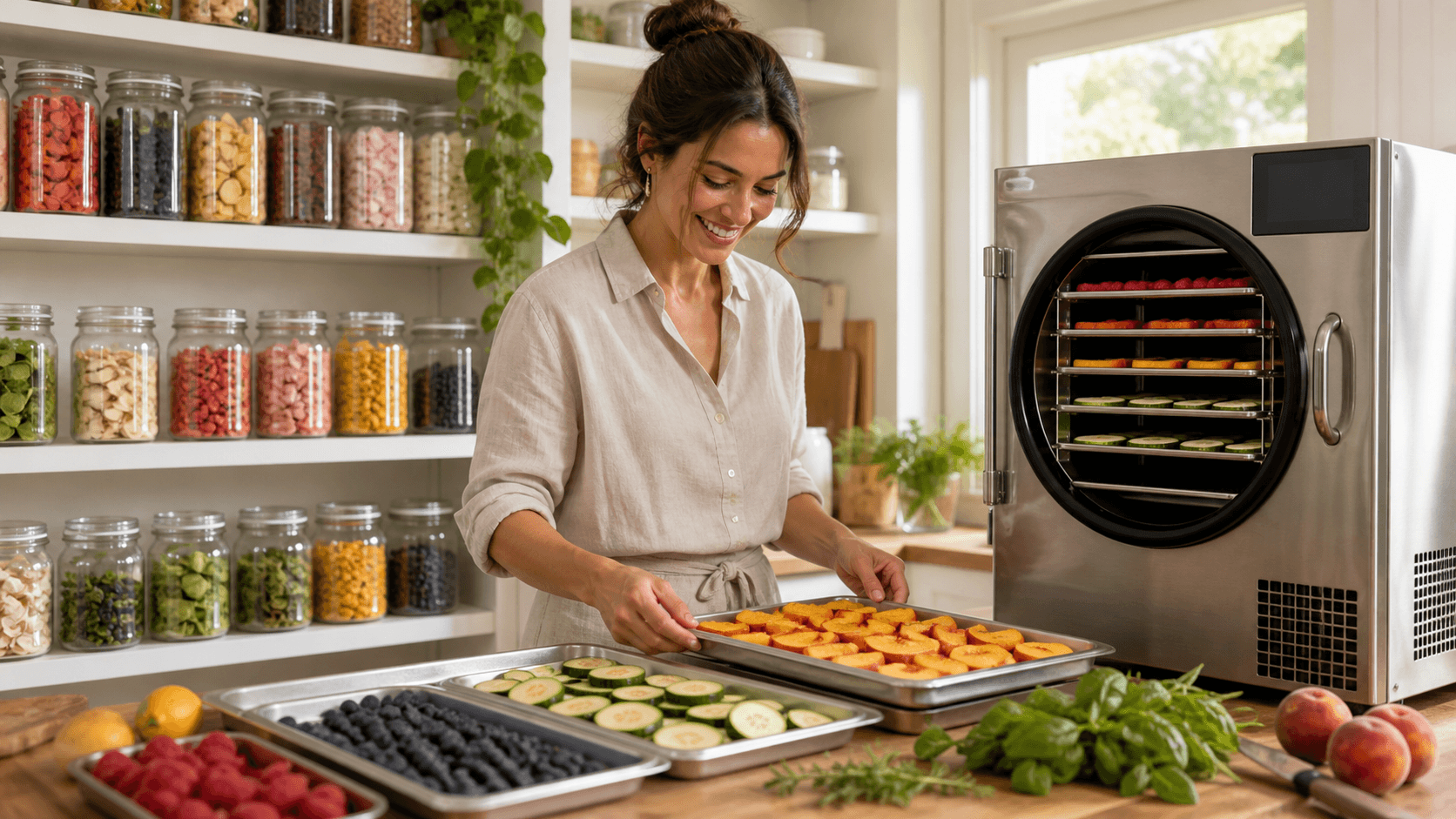
A freeze dehydrator can help you turn:
- Extra garden vegetables into ready to cook soup mixes and side dishes
- Fruits into sweet snacks and smoothie ingredients
- Bulk meat and wild game into stew meat, taco fillings, and trail food
- Leftovers and home cooked meals into quick just add water dinners
Planning in the middle of summer means you can run steady batches while the days are long and solar power is strong. By the time cold weather hits, shelves can be lined with jars or Mylar bags full of light, nutrient dense food, ready for daily use or emergencies.
Why a Freeze Dehydrator Beats Traditional Preservation
Many of us grew up with canning jars on the counter and chest freezers humming in the garage. Those are still good tools, but a freeze dehydrator solves some problems that canning and freezing do not.
Here is how it compares in simple terms:
- Canning: Shelf stable but hotter processing can soften texture and change flavor
- Freezing: Great quality but depends on steady power and plenty of freezer space
- Air dehydration: Energy efficient but can be harder on flavor, color, and some nutrients
- Freeze dehydration: Long storage life with more natural taste, texture, and nutrition
The process itself is simple to understand. The machine freezes the food very hard. Then it pulls a vacuum and gently warms it. The ice inside the food turns straight into vapor and gets pulled out, instead of melting first. This keeps the food structure mostly intact while removing the moisture that would cause spoilage.
For off grid life, this has big advantages. You do not need a giant freezer running all the time to protect your investment. Once food is sealed and stored, it just sits quietly on a shelf. If the grid goes down or the generator fails, your freeze dried food is still safe and ready to eat.
Key Features That Matter for Off-Grid Use
Not every freeze dehydrator design is friendly to cabins, small homes, or solar setups. When you live off grid or in a remote place, the details really matter.
Power use is one of the first things to look at. A freeze dehydrator will usually:
- Draw higher power at certain stages of the cycle
- Run for many hours per batch, not just a quick on and off
- Need a steady, clean power source from an inverter or generator
Knowing the average watt draw and peak usage helps you line it up with your solar array, batteries, or generator so you are not overloading your system.
Capacity is the next key point. A small unit may be perfect for a couple or weekend cabin, while a larger one can serve a family or full homestead. Think about:
- How much produce or meat you harvest in a typical week at peak season
- How many trays you can load per cycle
- Whether you would rather run frequent small batches or fewer big ones
Also pay attention to how the machine behaves in real life. Freeze dehydration cycles are not quick, so you want to know:
- Typical run times for mixed loads
- Noise level if it will be in a small cabin or shared living space
- Recommended ambient temperature range so it can live in a utility room, basement, or outbuilding
These details make a big difference when you are trying to sleep in the next room or when your workspace gets hot or cold with the seasons.
Powering Your Freeze Dehydrator with Solar and Storage
Once you have a sense of the machine size, you can think about how it fits into your power system. A freeze dehydrator has a very different pattern than something like lights or a fan, because it runs long and steady.
To size solar support, look at:
- How many hours a typical batch takes
- The average watt draw during the main part of the cycle
- How many batches you want to run in a typical week in summer and shoulder seasons
From there, it is easier to plan how many panels you need to cover daytime use, especially during strong sun months.
Battery storage is the next piece. Some off grid owners prefer to run a freeze dehydrator's cycles only during peak sun. Others want the freedom to run overnight or across cloudy days. That choice guides how many kilowatt hours of storage you need to set aside for food processing without draining power from lights, water pumps, and other needs.
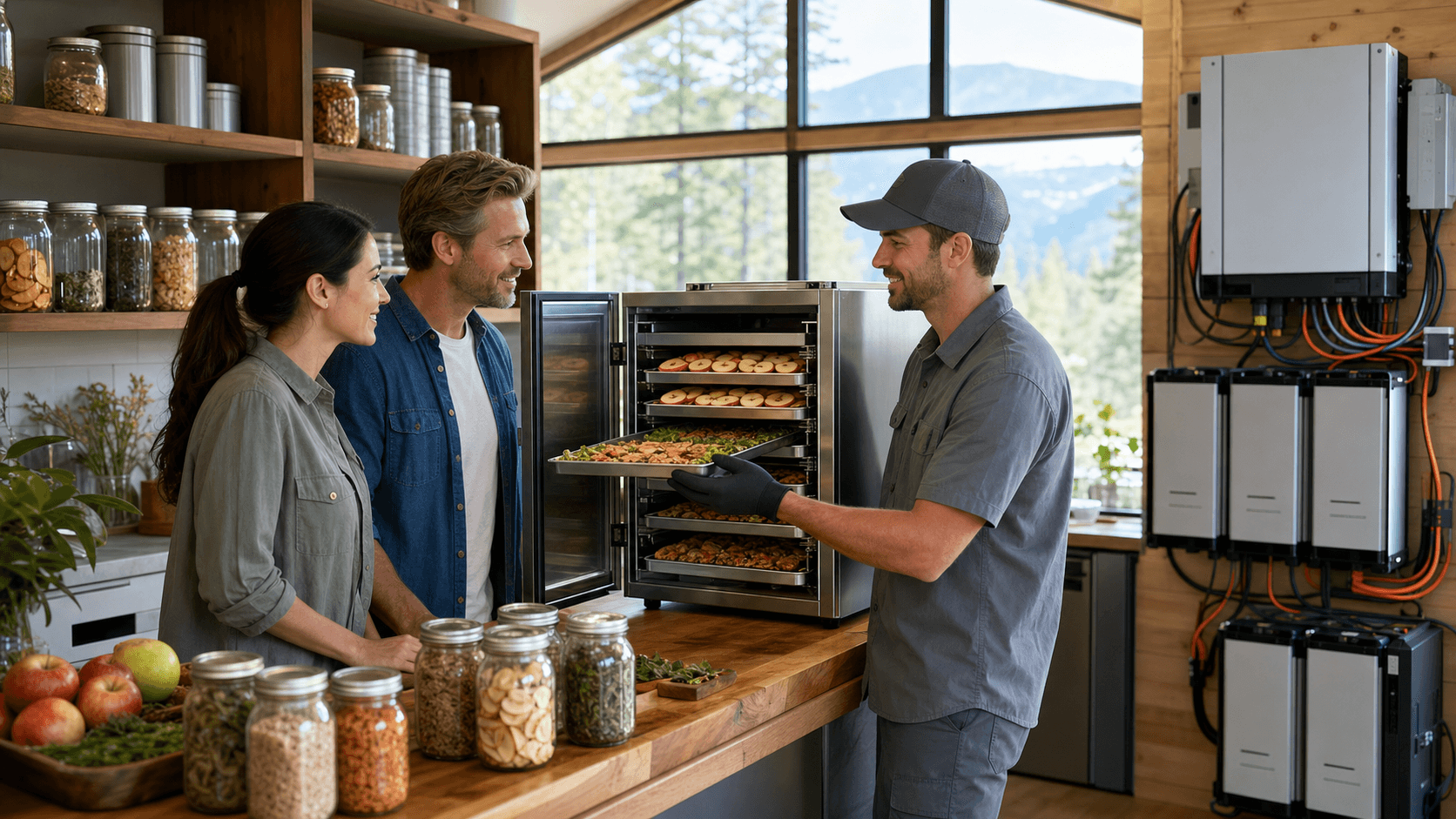
Good integration with the rest of your system also matters. A freeze dehydrator will usually run on household AC through an inverter. Many people pair it with:
- A main inverter sized to handle its peak load
- Backup generator support when the weather is poor
- Energy management tools to stagger high draw appliances
This way, you do not trip breakers or stress batteries every time you start a cycle.
Matching a Freeze Dehydrator to Your Food Security Goals
Before you pick a model, it helps to be clear about what you want your stored food to do for you. Off grid owners often fall into a few groups:
- Emergency-focused, wanting a safety net for long outages or storms
- Everyday-pantry-focused, eating freeze dried food every week
- Outdoor-adventure-focused, building light meals for hiking or travel
- Homestead-focused, preserving homegrown and wild food in bulk
Different goals lead to different choices in machine size and storage planning.
Most people find that a wide range of foods work very well, including:
- Meat, poultry, and fish
- Garden vegetables like peas, corn, carrots, and potatoes
- Fruits like berries, apples, and bananas
- Herbs and some dairy-based dishes
Some very high fat or very oily foods are trickier and may not store as long, so it helps to learn what fits best in your own kitchen.
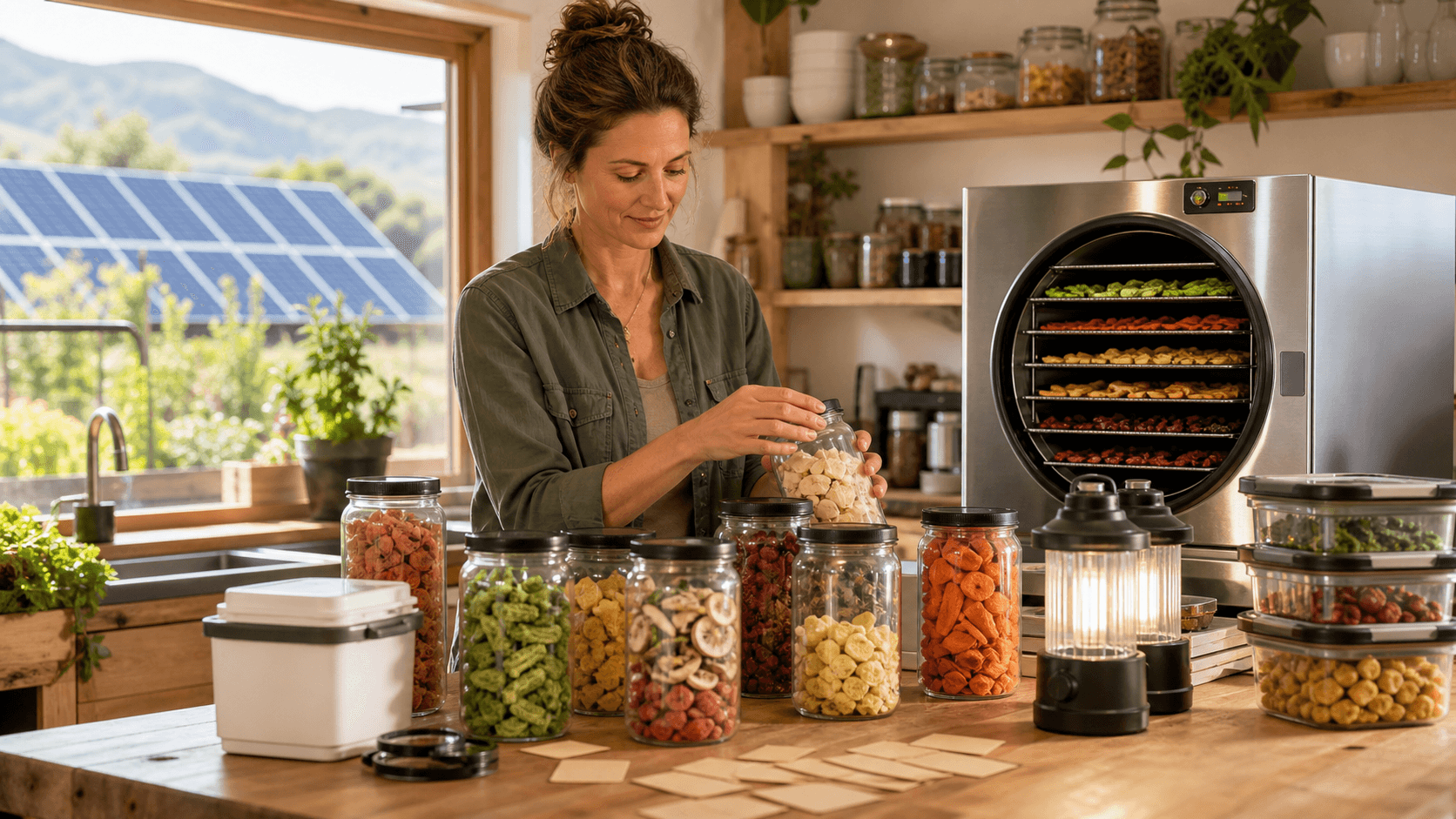
For storage, you have a few simple options. Many off grid families like:
- Mylar bags with oxygen absorbers for long-term storage
- Glass jars with tight lids for everyday use
- Clean, cool, dark storage areas such as pantries or interior closets
When moisture, heat, light, and oxygen are kept low, freeze dried food can stay good for many years, which is a big comfort when the power flickers or supply chains get shaky.
How Green Vista Living Helps You Build a Resilient Pantry
At Green Vista Living, we focus on tools that support off grid and outdoor life, including solar power systems, energy storage, and comfort products for cabins and remote properties. Freeze dehydrators fit naturally into that picture, because they turn today's harvest into tomorrow's security without needing constant electricity.
We pay close attention to how different machines work with solar arrays, battery banks, and generators, and how they fit into real spaces like cabins, utility sheds, and small homestead kitchens. Our goal is to help you match the right freeze dehydrator to your harvest plans, power capacity, and storage space so your pantry becomes a steady, reliable backup in uncertain seasons.
Bring Long-Lasting, Fresh Food Storage Into Your Home
If you are ready to preserve your harvest and favorite meals with more control and less waste, our freeze dehydrator makes it simple to get started. At Green Vista Living, we help you choose the right setup so you can confidently store food for months or even years. Have questions about batch sizes, maintenance, or setup in your space? Just contact us and we will walk you through every step.