Ride Farther Off-Grid with Folding Electric Bikes
Folding electric bikes can turn a good camping trip into a great one. They help us ride farther from camp, save energy for the fun parts, and skip burning extra fuel just to run a quick errand. When late summer days start to cool off and fall colors show up, a compact e-bike can make it easy to explore more without packing a full-size bike rack.
A folding electric bike is exactly what it sounds like: a bike with an electric motor and battery that folds down into a smaller package. Compared to standard e-bikes or regular bikes, these models are easier to store, carry, and charge at an off-grid site. For people who like boondocking or dispersed camping, that combination of power and packability is hard to beat.
At Green Vista Living, we focus on off-grid and outdoor gear that fits this kind of lifestyle, including solar power systems, portable power stations, and other camp-ready tools that work well with folding electric bikes. In this guide, we will walk through what to look for in a folding e-bike, how to match it to your terrain and riding style, how to keep it charged off the grid, and some real-world packing and safety tips for your next trip.
Why Folding Electric Bikes Shine on Camping Trips
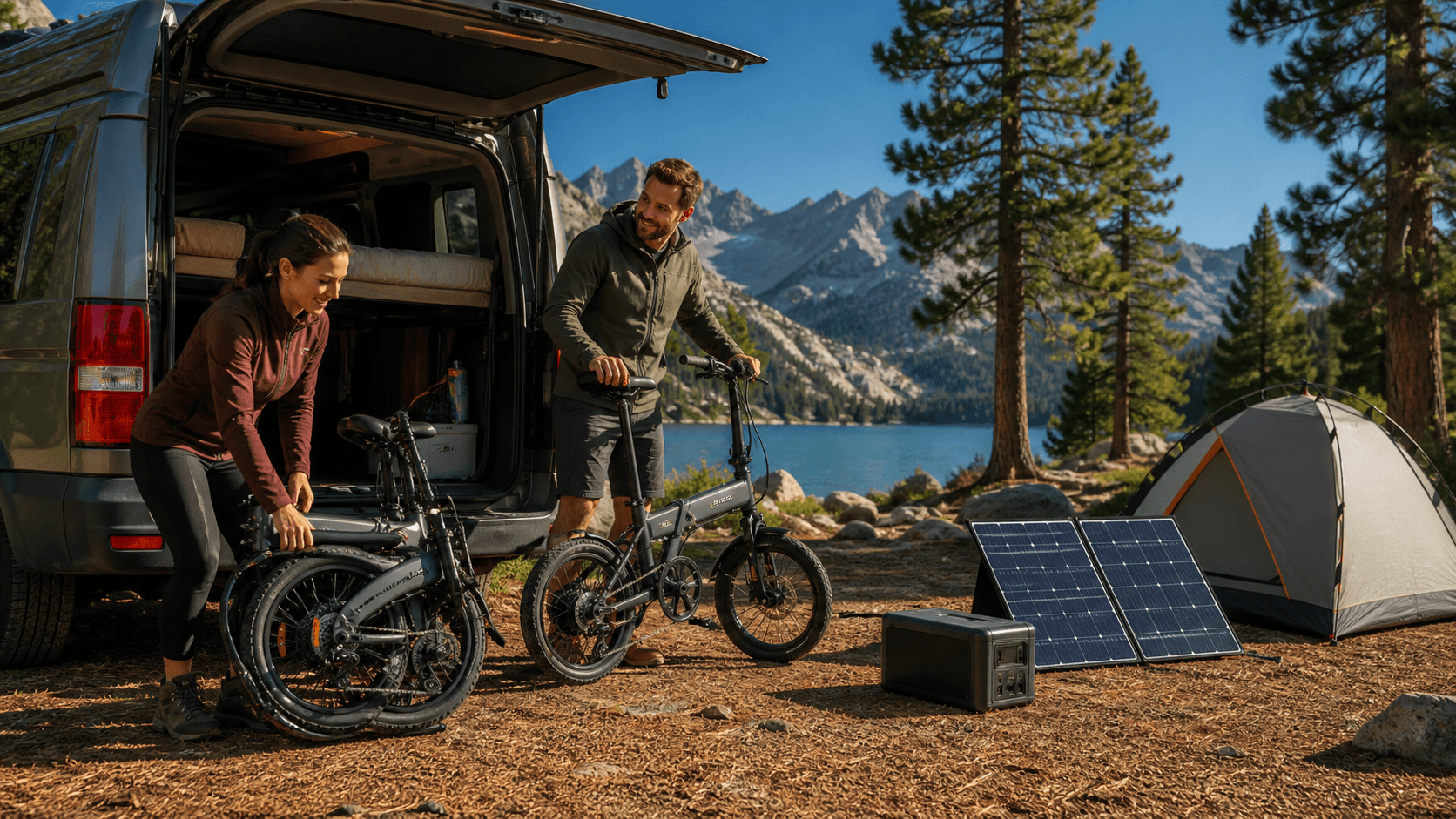
Folding electric bikes make camping logistics a lot easier. Instead of wrestling a big bike onto a roof rack, we can fold the frame and tuck it inside a van, RV, truck bed, or small SUV. At camp, that same small size lets us slide the bike into a tent vestibule, under an awning, or inside a geodesic dome to keep it out of the weather.
They also add a lot of flexibility to off-grid days. Once we park the big vehicle, we can leave it there and use the bike to:
- Explore nearby forest roads
- Cruise campground loops and day-use areas
- Ride into town for ice, snacks, or a forgotten item
- Reach viewpoints that feel too far to walk from camp
Security is another big plus. A folding frame lets us quickly bring the bike inside at night, which can feel better than leaving it locked to a tree when campgrounds are busy. That simple step can help deter casual theft at trailheads or rest areas.
Late summer and fall are perfect for folding e-bikes. Days are a bit shorter, temps are cooler, and we often want to see more in less time. With pedal assist, we can cover more ground before dusk, enjoy crisp evening rides, and still roll back into camp with enough energy to set up a fire and relax.
Key Features to Look for in Folding Electric Bikes
Not all folding electric bikes feel the same, especially when we leave paved roads behind. A few key details make a big difference when we are lifting, riding, and folding the bike every day.
Frame material, overall weight, and the fold mechanism come first. Aluminum frames are common because they are lighter and do not rust as easily as steel. If we know we will be lifting the bike into a van or trunk often, the total weight matters a lot. A good folding hinge should:
- Lock solidly with no wiggle
- Open and close without tools
- Have a clear safety latch we can see and feel
Motor and battery choices affect how the bike feels on hills and rougher ground. Many campers like motors with enough wattage and torque to handle mixed terrain and light climbs while carrying some gear. For the battery, it helps to think in terms of real rides, not perfect conditions. A removable battery is especially handy off-grid, because we can bring it inside an RV, cabin, or dome for charging while the bike stays outside.
Tire size and suspension also shape the ride. Fat tires give more traction and a softer feel on gravel, forest roads, and light trails, though they add some rolling weight. Standard-width tires roll faster on pavement and hardpack. Front suspension, and on some models, full suspension, can make washboard roads and small rocks much more comfortable.
Last, comfort and fit matter more than most people expect. We like to see:
- Adjustable seatposts and folding or telescoping handlebars
- A saddle that feels good after an hour, not just five minutes
- Grips that do not dig into hands on bumpy stretches
If the bike does not fit, long days exploring around camp will not feel as fun.
Matching Folding Electric Bikes to Your Terrain and Style
The best folding e-bike for paved campground loops is not always the best for sandy roads or steep grades. It helps to think honestly about where we will ride most.
For mostly pavement and town roads, smoother tires and a slightly lighter frame can work well. For gravel, forest service roads, and the kind of rough tracks we see around off-grid sites, we may want:
- Wider or fat tires with some tread
- A motor tuned for low-speed climbing
- Stronger racks for cargo and gear
Range planning is important too. Before buying, we can estimate a typical day: how many miles we want to ride from camp and back, how many hills, and how much cargo we might carry. More weight and more climbs usually mean less range, so a larger-capacity battery, or space for a second one, can be worth it.
Cargo capacity turns the bike into a real camp tool. Many folding electric bikes can take rear racks, front baskets, and panniers. That makes it easier to haul:
- Small water containers from a spigot to camp
- Firewood bundles from a camp store
- Fishing gear to a lake or river
- A compact cooler with drinks and snacks
Weather also needs a spot on the checklist, especially for late summer thunderstorms and muddy fall trails. Water-resistant components, simple fenders, and bright built-in lights or easy-to-add LED lights help keep rides safer when daylight fades earlier and surfaces are wet.
Off-Grid Charging and Power Solutions for E-Bike Camping
Keeping a folding electric bike charged away from hookups is very doable with some planning. Portable solar panels and folding solar kits can refill a battery between rides, especially on clear days. The key pieces are:
- Enough solar wattage to match our typical daily use
- A charge controller or power station that works with the battery charger
- A safe, shaded spot to store the battery while charging
Power stations fit in nicely here. We can charge the power station from solar during the day, then use it to charge the e-bike battery later, even after the sun drops. Many RVs already have power setups that can be expanded with solar to support bike charging without running a generator as often.
Battery care matters a lot off-grid. It is best to keep packs out of direct sun, away from standing water, and away from extreme heat or cold where possible. Keeping the charge somewhere between low and full instead of running it to empty every time can help the battery last longer through multiple trips.
We like to think of the whole campsite as a small system. Folding electric bikes pair well with thoughtful solar power, reliable water filtration, and efficient cooking and shelter gear. At Green Vista Living, we focus on this type of off-grid setup, where each item helps the others work better.
Real-World Packing, Safety, and Trail Etiquette
Packing folding electric bikes gets easier with a simple routine. Many campers:
- Fold and cover the bike before loading
- Use soft pads or blankets between multiple bikes
- Strap frames to tie-down points in vans or truck beds
- Use RV storage bays for one bike and keep another inside the main space
On the safety side, we always recommend the basics: helmets, front and rear lights, and a small mirror to check for cars on shared roads. A compact flat repair kit, multi-tool, and mini pump can turn a big problem into a quick stop. Before each ride, it helps to check:
- Tire pressure
- Brake response
- Folding hinges and latches
- Battery attachment and charge level
Respect on roads and trails keeps access open for everyone. That means learning local e-bike rules for public lands, keeping speeds low around hikers, kids, and pets, and staying on marked routes so we do not damage plants or spook wildlife. Quiet motors already keep noise low, and a friendly greeting goes a long way.
For trip planning, it can help to start with shorter shakedown rides closer to home. That gives us a feel for real range, comfort, and packing tricks before a long off-grid stretch. Offline maps or printed maps are smart backups when cell service drops. We always like to have one more way back to camp, whether that means extra juice in the battery, a second route, or a simple plan to walk a short final stretch if needed.
Discover How Easy Commuting Can Be Today
If you are ready to simplify your daily ride and save space at home, explore our selection of folding electric bikes tailored to your lifestyle. At Green Vista Living, we help you compare models, features, and real-world performance so you can choose with confidence. Have questions about sizing, range, or storage options for your unique situation? Just contact us and we will walk you through your best options step by step.