Off-grid solar wiring mistakes do not just waste a little power; they can slowly damage your gear and leave you in the dark when you really need electricity. Summer is a busy time for installs and upgrades, but when work gets rushed in the heat, small wiring errors often get baked into the system. Those problems can show up later as weak charging, tripped breakers, and worn-out batteries.
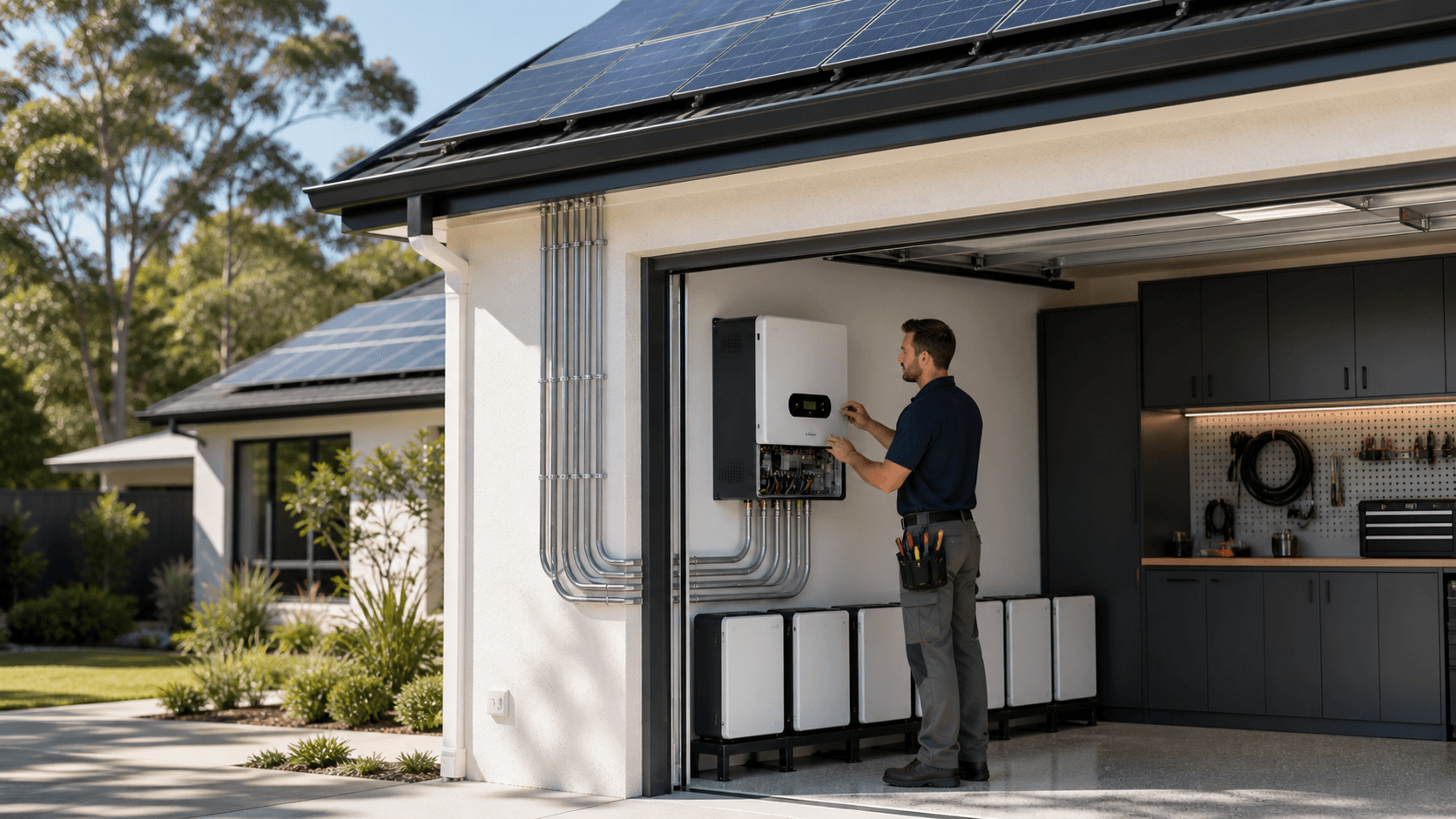
When we talk about wiring in an off-grid solar system, we mean all the cables and protective parts that tie the system together: panels, combiner boxes, fuses and breakers, charge controllers, batteries, inverters, and load centers. Off-grid, you do not have the safety net of the utility. If something is wired poorly at a cabin or homestead, it is harder to get help, and the system has to ride through long sunny days, storms, and outages on its own. Here are common wiring mistakes we see with off-grid solar systems, and what to do instead for safer, more reliable power.
Stop Wasting Power Before You Even Flip the Switch
In an off-grid setup, every watt matters. When wiring is wrong from day one, you can lose power before it ever reaches your batteries or loads. Problems often start with rushed planning in hot summer weather, guesswork on wire sizes and breaker ratings, and using whatever cable is sitting in the garage.
Off-grid systems work harder than a small backup grid-tied system. Long wire runs to a barn, pump, or remote cabin, high daytime temperatures, and heavy evening loads all put real stress on wiring. If you are building energy independence, taking time to get the wiring right protects both your comfort and your equipment.
Undersized Wire That Chokes Your Solar Power
Using wire that is too small is one of the most common mistakes. When current flows through undersized cables, two bad things happen: voltage drops and wires heat up. That can lead to:
- Hot cables that break down faster
- Wasted solar power that never reaches the batteries
- Nuisance shutdowns of charge controllers and inverters
- Increased fire risk, especially in hot weather
People often mis-size wire by ignoring the length from panels to charge controller, guessing instead of using ampacity charts, and using old extension cords or indoor cable outdoors.
To size wire correctly, you want to think about:
- Current (amps) on that run
- System voltage
- Length of the wire run
- Acceptable voltage drop, often around 2 to 3 percent on the DC side
- Insulation temperature rating for your climate
For outdoor solar runs, use solar-rated PV wire or outdoor-rated cable like THHN in conduit, and move up to larger gauge wire for long runs to outbuildings or wells. The payoff is real. When voltage drop is lower, charge controllers can grab more useful energy from your panels, especially on long sunny summer days. That can feel like free extra power, without adding a single new panel.
Skipping Overcurrent Protection and Proper Disconnects
Fuses and breakers are not only about protecting people. They protect your wiring and your equipment, which is especially important in high-current DC circuits found in off-grid solar systems. Skipping protection is a serious mistake.
Common problems include:
- Running panel strings straight to a charge controller with no combiner box and no fuses for each string
- No breaker or fuse between the charge controller and battery bank
- No protection between the battery bank and inverter
- Leaving out visible, lockable disconnect switches for safe service
A safer layout typically includes:
- PV string fuses or breakers that match both panel specs and wire ratings
- DC disconnects between major parts: arrays, charge controllers, battery banks, and inverters
- An AC load center with correct breakers for your household circuits
- Components clearly marked for DC use, like DC-rated breakers and touch-safe fuse holders
Summer storms, wind, and heat can all increase stress on your system. Proper overcurrent protection and disconnects give you a fighting chance when a surge or short shows up during a heat wave or thunderstorm.
Poor Battery Wiring That Kills Bank Life Early
Your battery bank is the power tank of your off-grid solar system. Even if your panels and electronics are perfect, bad battery wiring can cut your runtime and shorten the life of your bank.
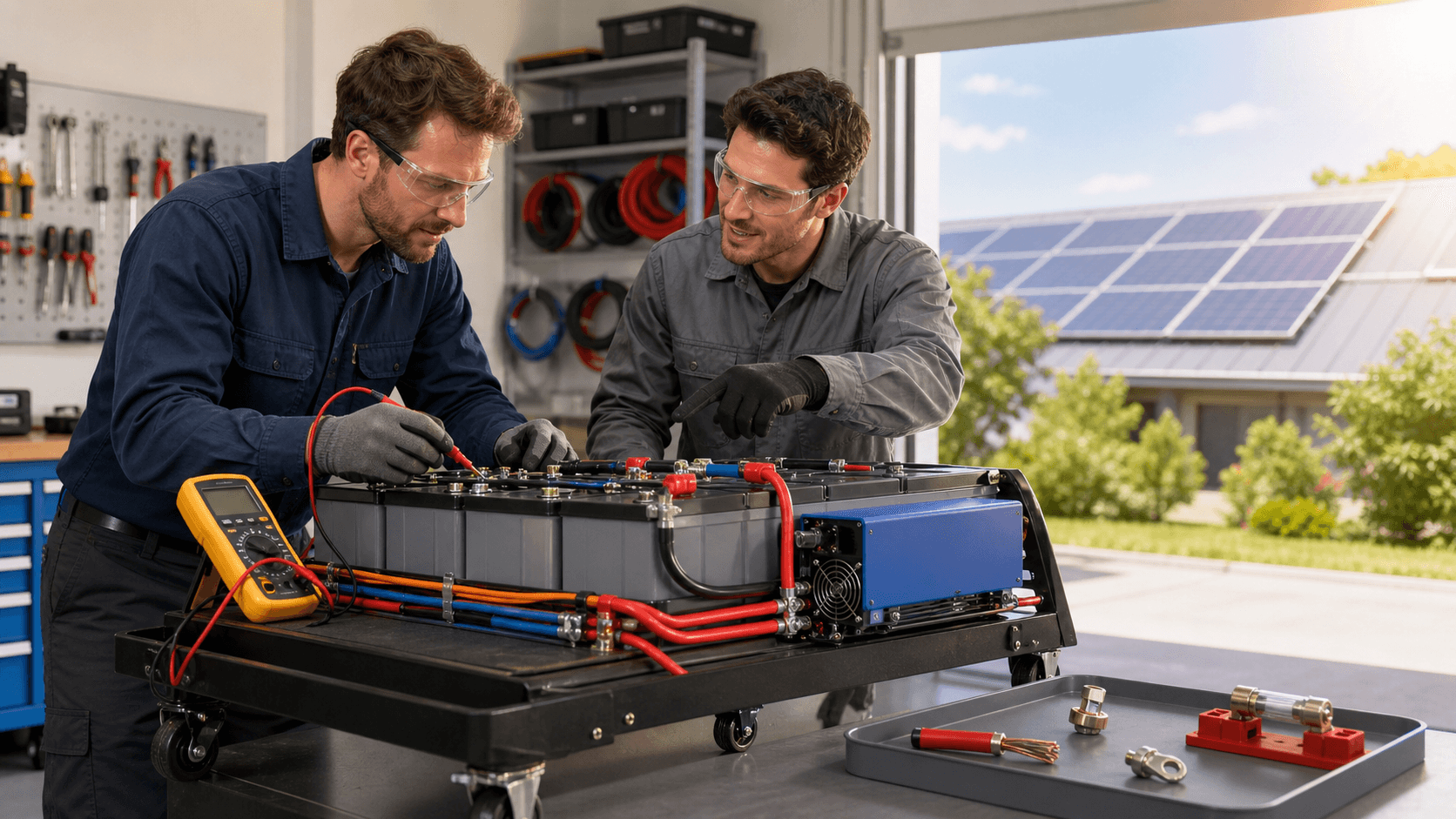
Typical battery wiring mistakes include mixing cable sizes and lengths between parallel strings, daisy chaining series and parallel batteries so the first pair does most of the work, using cheap automotive jumper cables instead of proper battery cables, and leaving loose or corroded lugs (especially in humid cabins, RVs, or sheds).
Better battery wiring habits look like this:
- Use equal-length, properly sized cables for all parallel connections
- Take the main positive from one end of the bank and the main negative from the opposite end to balance charging and discharging
- Torque lugs to the battery manufacturer's specs
- Add anti-corrosion compound and strain relief where it makes sense
- For lithium batteries, follow the exact wiring diagrams, including communication cables and fuses
Balanced battery wiring gives you more usable capacity on hot summer evenings and helps your bank last longer. That means fewer surprise blackouts on weekend trips when you show up at the cabin and want lights, fans, and a cold drink.
Neglecting Grounding, Bonding, and Weather Protection
Grounding and bonding are often misunderstood, but they matter a lot for safety. Grounding sends fault current to earth. Bonding ties all metal enclosures and frames together so they sit at the same electrical level and reduce shock risk.
Common mistakes with off-grid systems include skipping a proper ground rod at a remote site, reusing an old, unknown ground without testing or upgrades, forgetting to bond metal panel racks, combiner boxes, and enclosures to the system ground, and ignoring surge protection on long outdoor runs to well pumps or separate buildings.
Weather is another big factor. Summer lightning storms, heavy rain, and strong sun can break down weak wiring. Try to:
- Use UV-resistant cable jackets outdoors
- Install weatherproof junction boxes with correct fittings
- Add drip loops and strain reliefs so water does not run straight into connectors
- Use conduit that is rated for outdoor and underground use where needed
A proper grounding electrode system, DC and AC surge protection devices, and regular visual checks before and after summer can catch small issues like cracked insulation or loose fittings before they grow into bigger failures.
Ignoring System Layout and Future Expansion Plans
Many wiring problems actually begin during layout and planning. If the system is squeezed into a hot corner, or if there is no room for growth, you are more likely to end up with messy, unsafe wiring.
Common layout and planning errors include mounting inverters, charge controllers, and batteries in hot, stuffy spaces like tiny closets or unventilated sheds; running "temporary" wires across walkways or driveways that never get fixed; putting low-voltage and high-voltage wires in the same conduit; and forgetting to plan space for a bigger array, a second charge controller, or more batteries.
Better layout habits include:
- Choosing a cool, dry, easy-to-reach spot for core gear, with enough room to work safely
- Keeping AC and DC wiring separate where possible
- Labeling all circuits so troubleshooting is less of a guessing game later
- When trenching or building in summer, installing extra conduit for future cables
- Picking combiner boxes, load centers, and inverters that can support realistic expansion plans
A thoughtful layout makes your off-grid solar system easier to live with, easier to service, and far safer over time, whether the system is at your main home or a simple cabin tucked away off the main road.
Get Started With Your Project Today
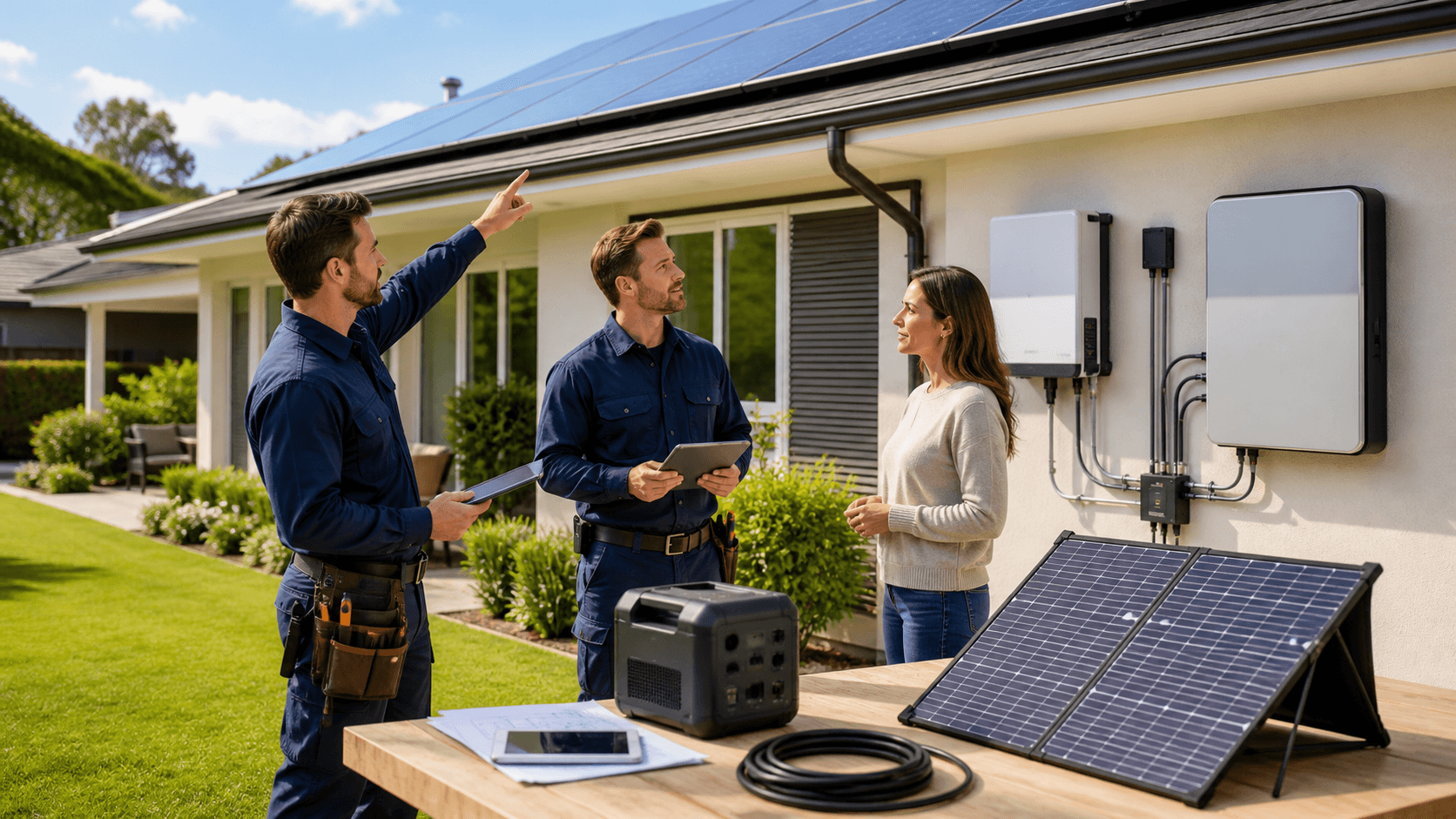
If you are ready to take control of your power and reduce your dependence on the grid, we can help you design the right off-grid solar system for your property. At Green Vista Living, we walk you through sizing, components, and setup so your investment works the way you expect. Have questions about your specific energy needs or site conditions? Reach out to us directly through our contact page and we will help you move from planning to installation with confidence.