Make Autumn RV Trips More Independent with Flexible Solar
Flexible solar panels can help you keep your RV's everyday power needs covered while you enjoy cooler October travel. Crisp mornings, quieter campgrounds, and scenic back roads can make fall a great time to stay off-grid a little longer, without leaning as heavily on hookups or generator fuel.
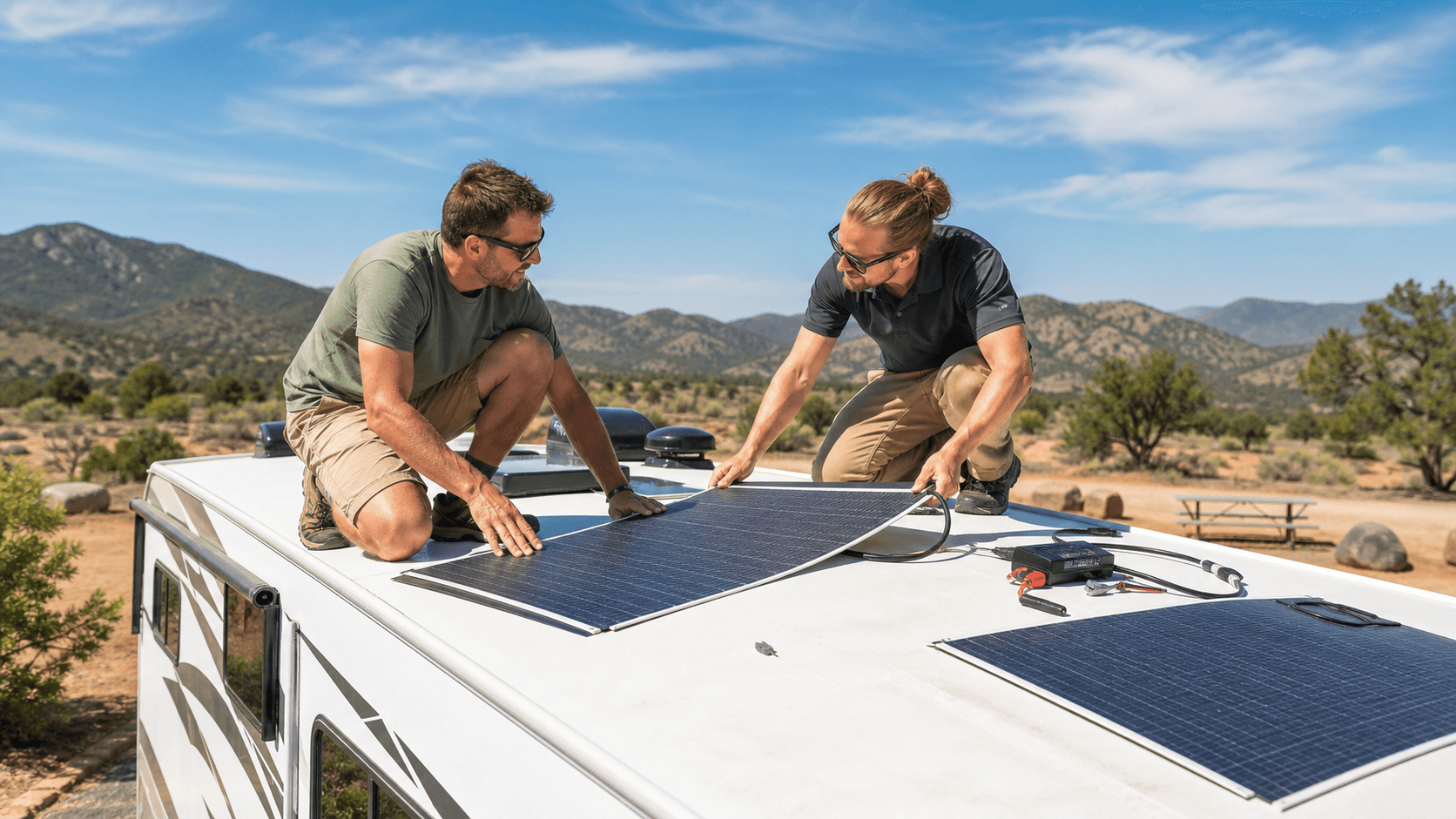
At Green Vista Living, we see Eco-Worthy flexible panels as a practical option for rigs where weight, roof shape, or available space matter. They can be worth considering for curved RV roofs, pop-up campers, vans, and compact setups. Still, flexibility does not remove the need for careful planning. Before comparing flexible solar panels for sale, we recommend looking at your roof, power habits, weather exposure, charging equipment, and installation plan as one system.
Confirm Your RV Roof Can Support Eco-Worthy Panels
Your roof should be the first thing you evaluate. A flexible panel may be lightweight, but it still needs a clean, sound surface and a mounting method that fits the panel and roof material. Older roofs, loose seams, worn sealant, soft spots, or existing water damage should be addressed before adding any solar equipment.
Take time to look around every rooftop feature, including vents, skylights, antennas, air conditioners, and roof racks. A panel that technically fits in an open spot may still make future cleaning or service work harder than it needs to be.
Before choosing an Eco-Worthy panel, we suggest reviewing the product details for:
- Panel dimensions and weight
- Cable and connector locations
- Approved mounting options
- Allowable bend or curve limits
- Clearance needed around roof equipment
A panel should not be forced to bend farther than the manufacturer allows. That can put stress on the panel and make mounting less secure. Cable routing matters, too. Before placing an order, identify a weather-protected path for wiring that respects your RV roof warranty when one applies. Leave enough open space to clean the panel surface and allow a qualified technician to access rooftop equipment later.
Size Solar Around Your Real RV Power Use
Solar sizing starts with how you actually camp, not with the biggest wattage number on a product page. A small battery-maintenance setup may work well for an RV that spends most nights on shore power. A remote-work rig with internet equipment, fans, refrigeration, and regular device charging will need a much more capable plan.
We recommend making a daily list of the loads you use during a normal trip. Include both small and larger items, because several small loads running throughout the day can add up.
Your list may include:
- Interior and exterior lighting
- Water pump and vent fans
- Refrigerator and device charging
- Television, router, or internet equipment
- Small kitchen appliances and other occasional loads
Runtime matters just as much as wattage. A device that runs briefly may use less energy than a lower-watt item that stays on all day. Once you understand your daily use, you can better match Eco-Worthy panel capacity with your battery bank, charge controller, inverter, and travel style.
Fall sunshine also deserves a realistic look. Cooler temperatures can be favorable for panels, but October days are shorter. Low sun angles, tree cover, cloudy conditions, and shaded campsites can all reduce your usable solar harvest. We suggest planning around average conditions, not the best possible sunny afternoon.
Check Fall Weather Readiness and Overall System Fit
When comparing flexible solar panels for sale, look beyond the panel's listed output. Review Eco-Worthy product information for weather-resistance details, operating temperature ranges, connection protection, mounting guidance, and warranty terms. A weather rating is helpful, but it does not replace correct installation and routine inspections.
Autumn RV travel can bring steady rain, wind, wet leaves, falling branches, road debris, and quick temperature changes. Flexible panels need to sit securely against the roof so their edges do not lift or create spots where dirt and moisture can gather. Loose edges and poorly protected wiring can turn a promising solar setup into a recurring maintenance problem.
A quick seasonal check can help you spot concerns early. After storms or long drives, we recommend looking for changes such as scratches, cracks, lifted panel edges, worn cable insulation, or loose connectors. Remove leaves and debris when the roof can be accessed safely, and pay attention to unexpected drops in charging performance.
It also helps to compare the whole equipment list, not only the panel. Different Eco-Worthy models may have different voltage, current, connector types, flexibility limits, panel construction, and warranty coverage. Included hardware and cable length can affect what else your RV setup needs.
Rather than buying too little or adding more equipment than your travel habits call for, build around the loads you expect to use. Light weekend camping may call for a different arrangement than several days away from shore power or regular remote work from the road.
Build a Safe Eco-Worthy Charging System
Panels are only one part of dependable RV solar power. For safe charging, your Eco-Worthy panels need compatible charge controllers, batteries, wiring, connectors, fuses, disconnects, and, when needed, an inverter. Each part has to suit the planned array and the way your RV electrical system is set up.
Wire gauge and circuit protection deserve close attention. Long cable runs, undersized wire, loose connections, and missing fuses can reduce charging performance and create avoidable safety concerns. Because RV electrical systems can vary widely, we recommend having a qualified RV or solar professional review any installation that goes beyond your comfort level.
Before heading out for a fall trip, test the system while parked at home. Confirm that the panels are producing power, the charge controller settings match the battery type, the batteries are charging as expected, and the inverter operates properly with your planned loads. It is much easier to find a mismatch in the driveway than at a shaded campsite.
Get Your RV Ready for Cooler Off-Grid Miles
Eco-Worthy flexible panels can be a useful addition when your roof condition, daily energy use, weather exposure, and charging components are considered together. Treat flexible solar panels for sale as part of a full RV power plan, not as a stand-alone purchase.
A careful roof review, realistic fall energy estimate, and safe system design can help you head into cooler-season travel better prepared. Check your setup before leaving, keep an eye on charging performance during the trip, and give yourself enough power margin for the way you truly like to camp.
Choose Panels That Fit Your RV Roof
At Green Vista Living, we can help you compare flexible solar panels for sale based on your roof layout, energy needs, and preferred camping style. Our selection makes it easier to find Eco-Worthy options suited to curved surfaces and space-conscious installations. If you have questions before choosing, contact us for guidance.