Keep Your Backup Power Ready for Winter
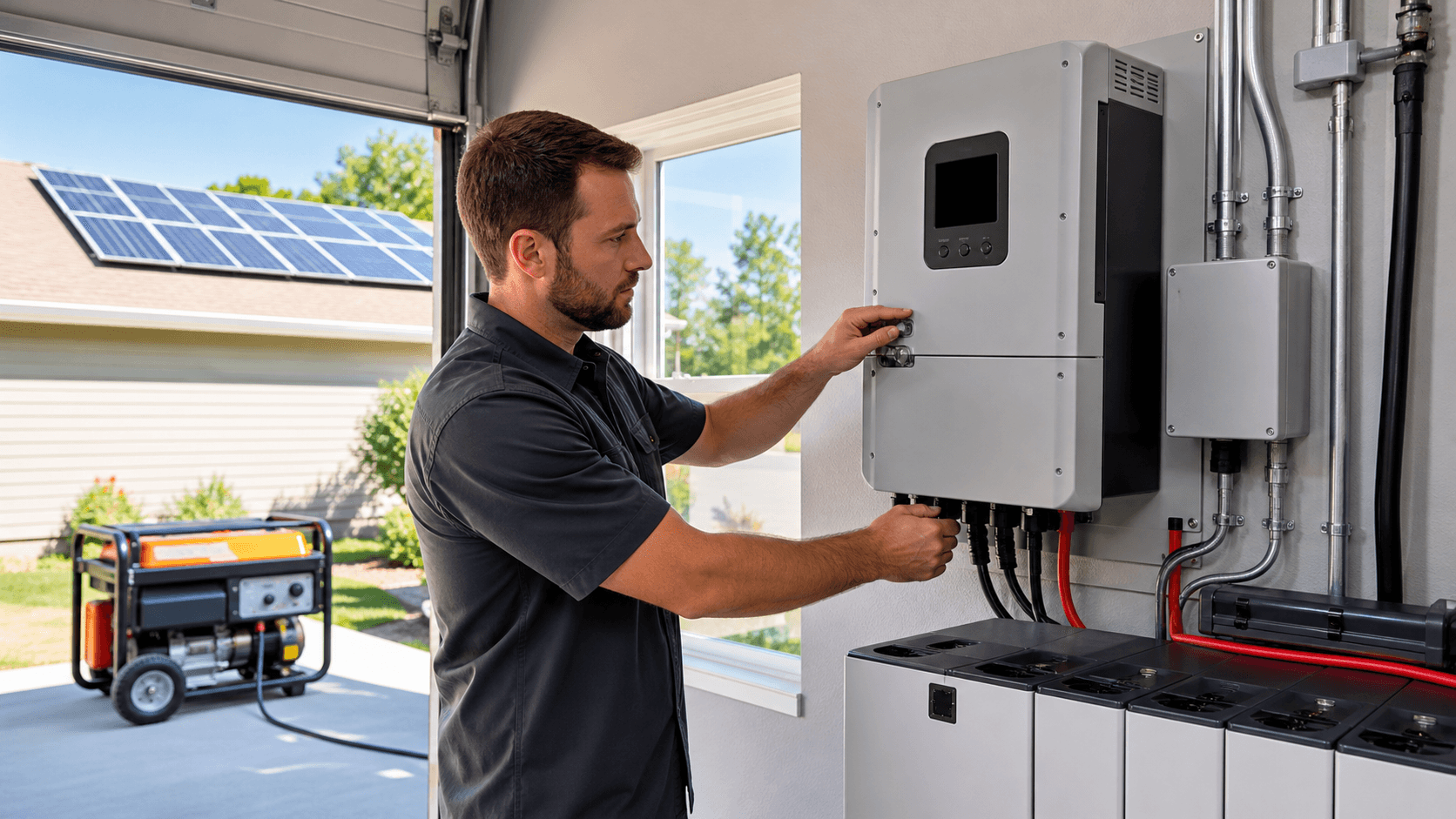
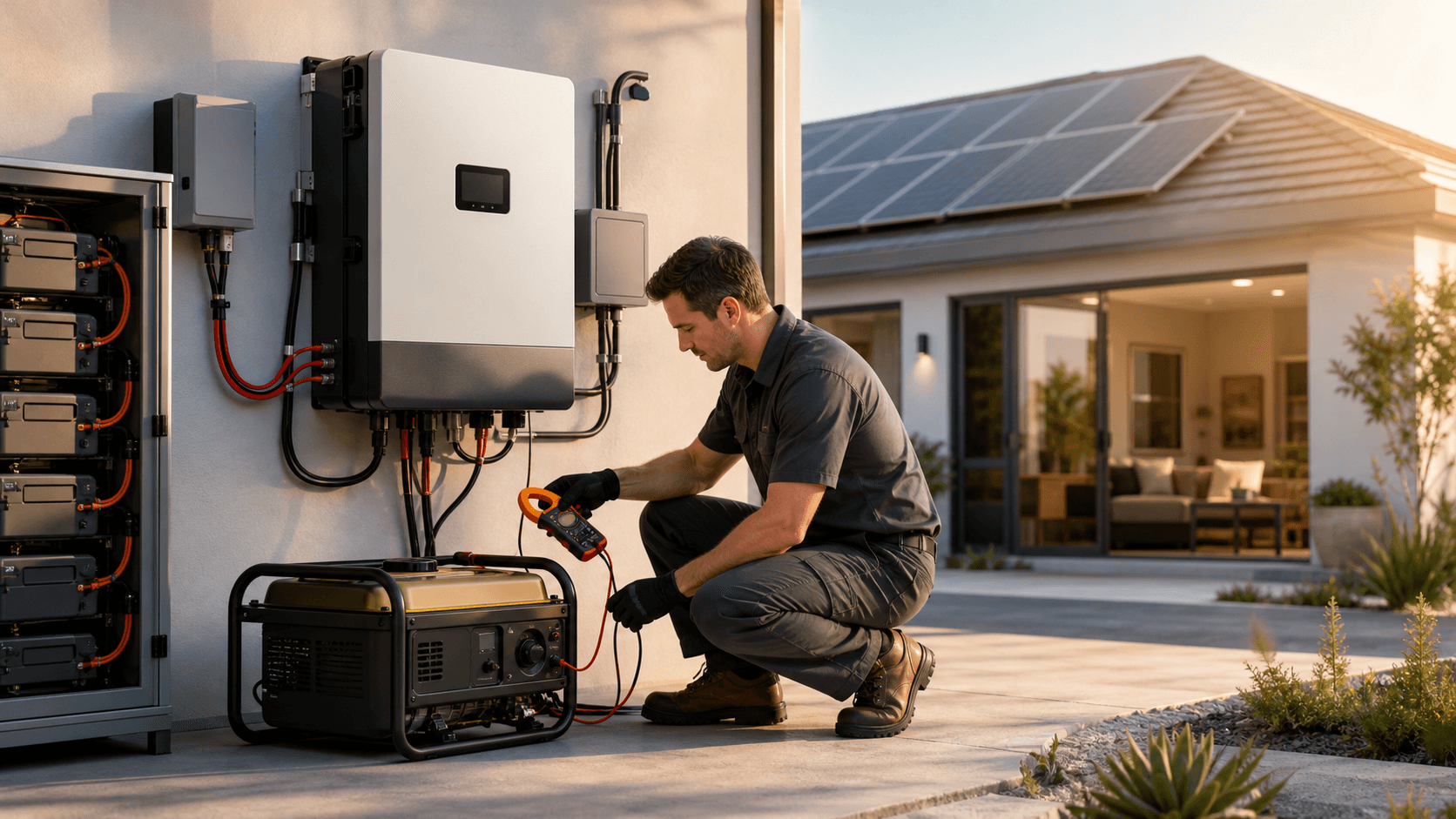
An EG4 off-grid inverter can make generator backup far more useful when October brings shorter days, colder weather, and a higher chance of storm outages. Solar production may dip just as heating needs, lighting, and indoor appliance use rise. We recommend treating a generator as a secondary battery-charging source, but only when its output stays inside your inverter's approved AC input limits.
Compatibility is more than plugging one machine into another. Voltage, frequency, waveform quality, amperage, charging settings, and generator capacity all affect whether the system accepts power reliably. Before winter demand arrives, we suggest confirming your exact EG4 documentation, matching the generator to real loads, and testing the setup under safe conditions.
Find the EG4 Off-Grid Inverter Limits That Matter
Every EG4 off-grid inverter has model-specific limits. System voltage, inverter size, and configuration can change what the unit will accept from a generator. We encourage you to use the owner's manual, product label, and approved installation documents for your exact model, not a setting or limit shared for a different EG4 inverter.
Start by locating these generator-related specifications:
- Accepted AC input voltage range
- Accepted frequency range
- Maximum AC input current
- Maximum battery charging current
- Any listed generator-input or utility-input restrictions
One point often causes confusion: an inverter's load output rating is not automatically its generator input rating. Your system may be able to power a certain amount of household equipment from the batteries while accepting a different amount of AC power from a generator. Pass-through operation and battery charging can have their own limits, so we recommend checking each value before connecting backup power.
A generator that looks large enough on paper can still be a poor match if its voltage or frequency falls outside the inverter's accepted range under load. The manual for your exact unit should always guide the final settings and installation decisions.
Match Your Generator to Real Loads and Charging Needs
Generator sizing starts with what you expect it to do. Add the household loads that may run during generator use to the battery-charging demand you plan to set in the inverter. Selecting a generator based only on the inverter's maximum output rating can leave you with a unit that struggles when charging and household loads happen at the same time.
Keep continuous watts and surge watts separate in your planning. Refrigerators, pumps, well equipment, power tools, and other motor-driven loads may need a brief burst of power when starting. A generator might handle the normal running load yet overload when a motor starts, especially while the batteries are charging hard.
Leaving room between expected demand and the generator's continuous capability can help the system run more smoothly. With operating headroom, we are less likely to see a generator bog down, wander in voltage or frequency, or get rejected by the inverter.
Consider the full picture before setting a charging target:
- Which appliances need to stay on during charging
- Which motor loads may start unexpectedly
- How low the battery state of charge may be
- How much continuous output the generator can truly provide
- Whether the generator can hold stable power under load
Set Safe Generator Input Values Before Startup
The highest setting available in an EG4 off-grid inverter menu is not always the right setting for your generator. Set the AC input current limit and battery charge current around the generator's actual continuous ability, with room for the loads you intend to keep running.
Battery charging can become the biggest load on the generator. When batteries are low, aggressive charging may ask for more generator power than expected. Add household loads, and the generator may no longer maintain stable voltage and frequency. That can lead to an input fault, an overload alarm, or an interrupted transfer.
Generator quality matters as much as generator size. Reliable operation depends on steady voltage, stable frequency, enough fuel, and regular maintenance. An inverter-generator may provide suitable output when it meets the requirements listed for your EG4 model, but the manual still has the final word.
Electrical safety is not a trial-and-error project. We recommend qualified installers handle wiring, grounding, neutral-bonding choices, transfer equipment, and code compliance. Those details can affect both safe operation and whether the inverter recognizes the generator input correctly.
Prevent Cold Weather Trips and Charging Problems
Cold weather can expose weak points that stayed hidden during mild months. Batteries may accept charging differently in lower temperatures, while space heating, water pumps, and indoor appliances can raise demand. Generator oil, fuel condition, and maintenance needs also become more noticeable when temperatures drop.
Watch for signs that incoming generator power is not staying in a stable range:
- Inverter AC input faults or warnings
- Generator overload alarms
- Charging power that rises and falls repeatedly
- Frequency or voltage warnings
- Failed or repeated transfer attempts
When something goes wrong, start simple. Reduce battery charging current and turn off nonessential loads. Then verify generator voltage and frequency while it is carrying a load, inspect cords and connections, and confirm fuel and maintenance status. Finally, compare all inverter settings with the manual for the exact EG4 off-grid inverter model in your system.
Build a Safer Winter EG4 Off-Grid Inverter Plan
A short winter-readiness checklist can prevent a long night of troubleshooting during a storm. Confirm the exact inverter model, review its generator input limits, check fuel reserves, and record the charge-current setting that has worked reliably in testing. Run the system before severe weather, when there is still time to identify unstable power or load conflicts.
The safest approach balances generator capacity, household demand, battery needs, and manufacturer-approved limits. A calm test run can show whether your generator and EG4 off-grid inverter are working together as intended before winter conditions put the system under pressure.
Choose Equipment That Fits Your System
Green Vista Living offers a selection of EG4 off-grid inverter options to help you build a dependable power setup around your energy needs. We can help you compare inverter capabilities, generator compatibility, and battery requirements before you make a purchase. If you would like guidance for your configuration, contact us for practical support.