Stretch Your Harvest and Your Budget All Year Long
A home freeze dryer machine sounds fancy, but at its heart, it is about one simple thing: keeping good food from going to waste. Late summer hits, gardens explode, farmers' markets are overflowing, and it can feel impossible to use everything before it spoils. That is where this tool steps in.
A freeze dryer chills food very cold, then pulls water out as vapor. It is different from canning, dehydrating, or tossing things in the freezer. Foods often keep more of their shape, color, and flavor, and they can store for many years when packed the right way. The tradeoff is clear, though: you trade a higher upfront cost and some learning time for long-term savings, convenience, and food security.
For people who care about off-grid living or just a more sustainable life, this choice matters. At Green Vista Living, we focus on tools that support that kind of self-reliant lifestyle, from solar power to water filtration to freeze dryers and the gear that works with them.
What a Home Freeze Dryer Machine Really Costs
When people think about a freeze dryer, they often think only about the sticker price. There is more to it.
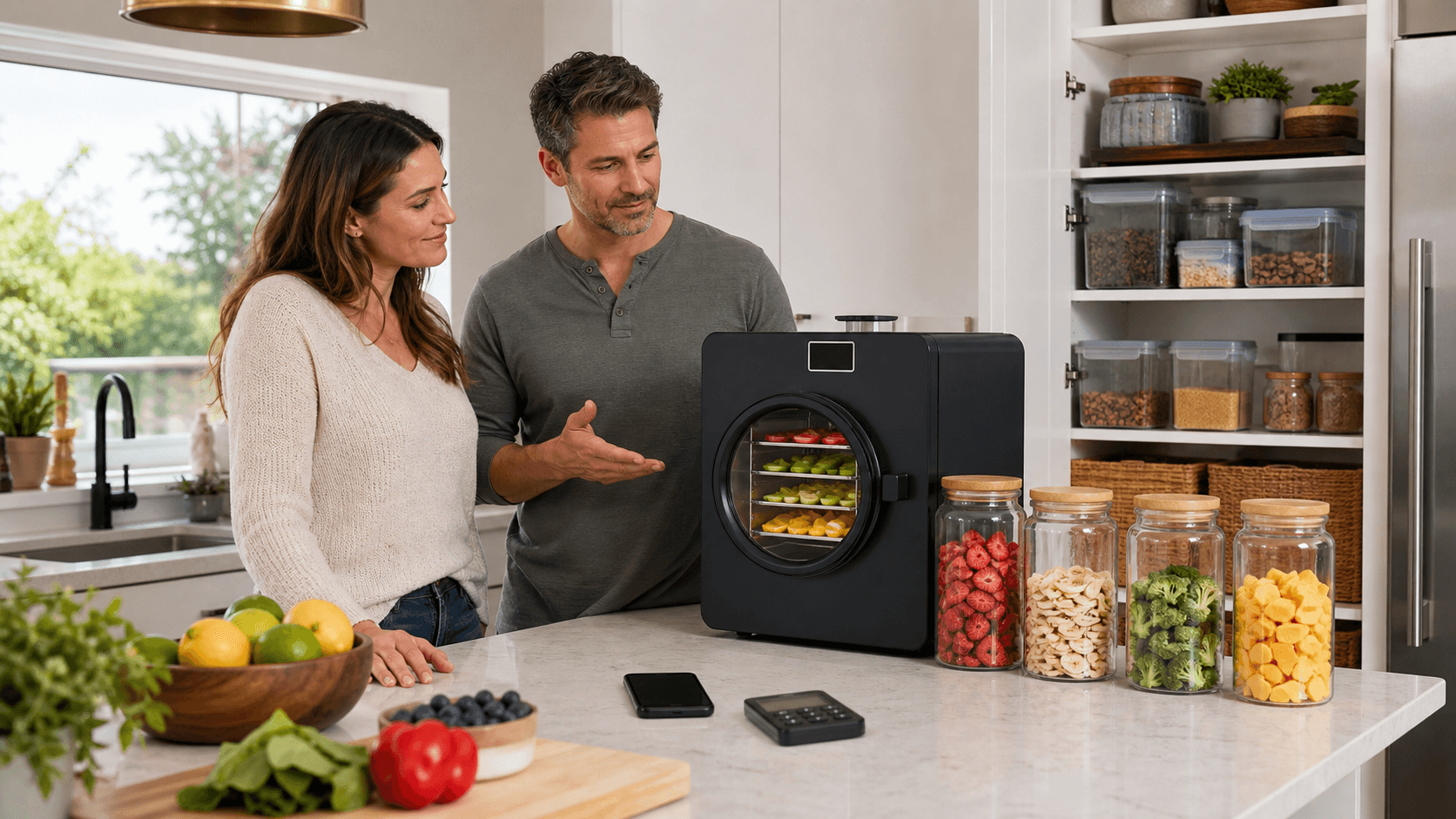
You will usually see a few size-group options for home units, like small, medium, and large. Bigger machines hold more trays, which means more food per batch. Standard packages may come with trays and a basic pump, while things like oil-free pumps, extra trays, or special racks may be upgrades.
Other one-time costs can include:
- A dedicated electric line or small electrical work
- A strong surge protector
- A cart or shelf that can hold the weight and handle vibration
- Storage gear, like Mylar bags, oxygen absorbers, or jars with tight lids
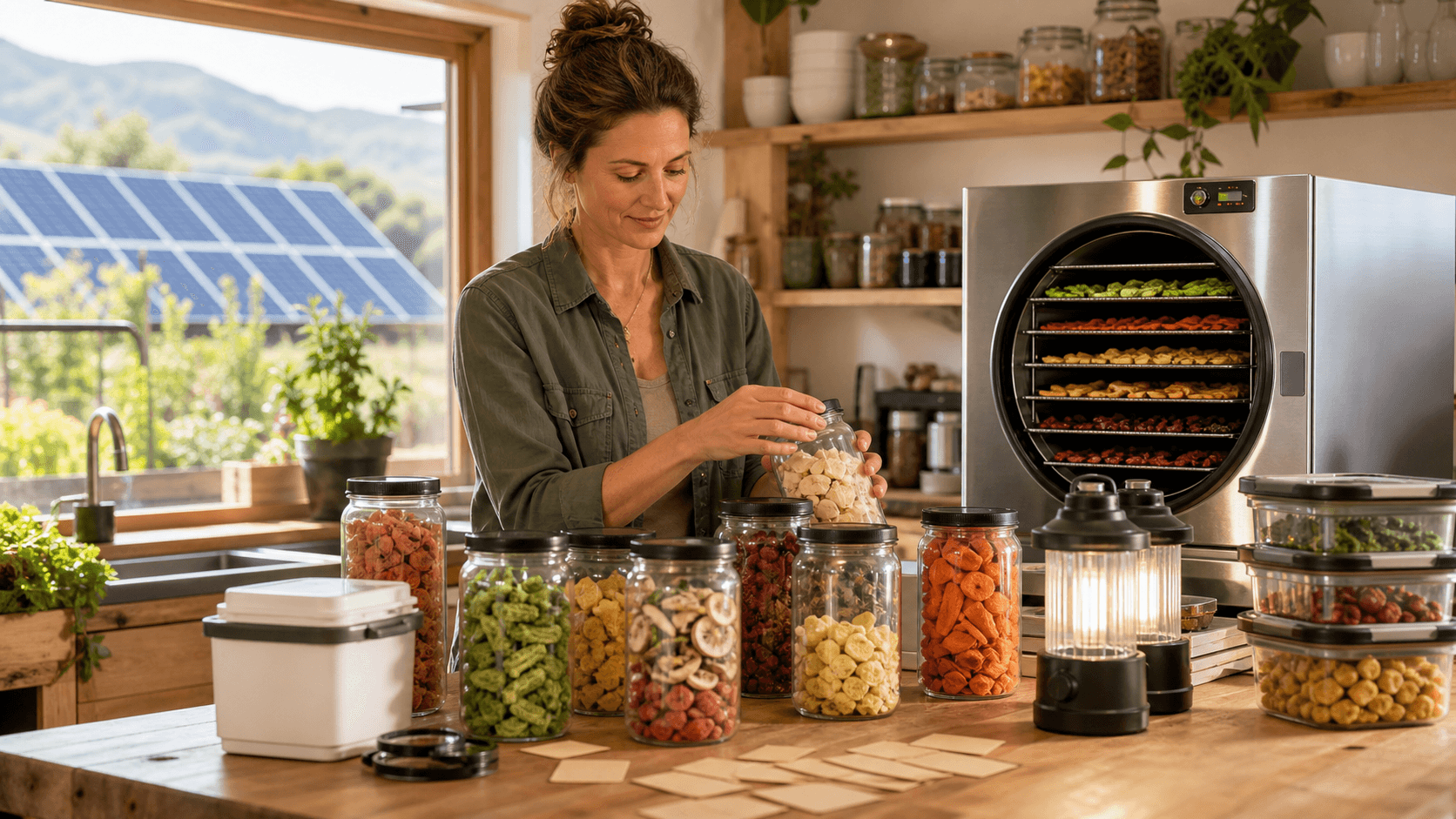
There are ongoing costs too. A freeze dryer draws power over a long cycle, often a full day or more. Actual cost per batch will depend on your local power rate and how you run the machine. Some households pair a freeze dryer with solar, so much of that power is covered without extra strain on the grid.
Maintenance is part of the picture:
- Oil changes for standard vacuum pumps
- Occasional gasket or seal replacements
- Simple cleaning of trays and chamber between batches
These tasks are not daily, but they do add small costs through the year.
Then there is the space, sound, and time side. A freeze dryer is not tiny. Many people put it in a garage, utility room, or basement where air can move around it and temperatures stay in a reasonable range. It makes noise similar to a loud dishwasher, and it can run for 20 to 40 hours per batch. That means you will hear it during part of your normal day, so placement matters.
The Real Convenience of Freeze Drying at Home
So why put up with the cost and hum of a home freeze dryer machine? Convenience is a big part of the answer.
First, think about everyday food. With a freeze dryer, you can preserve:
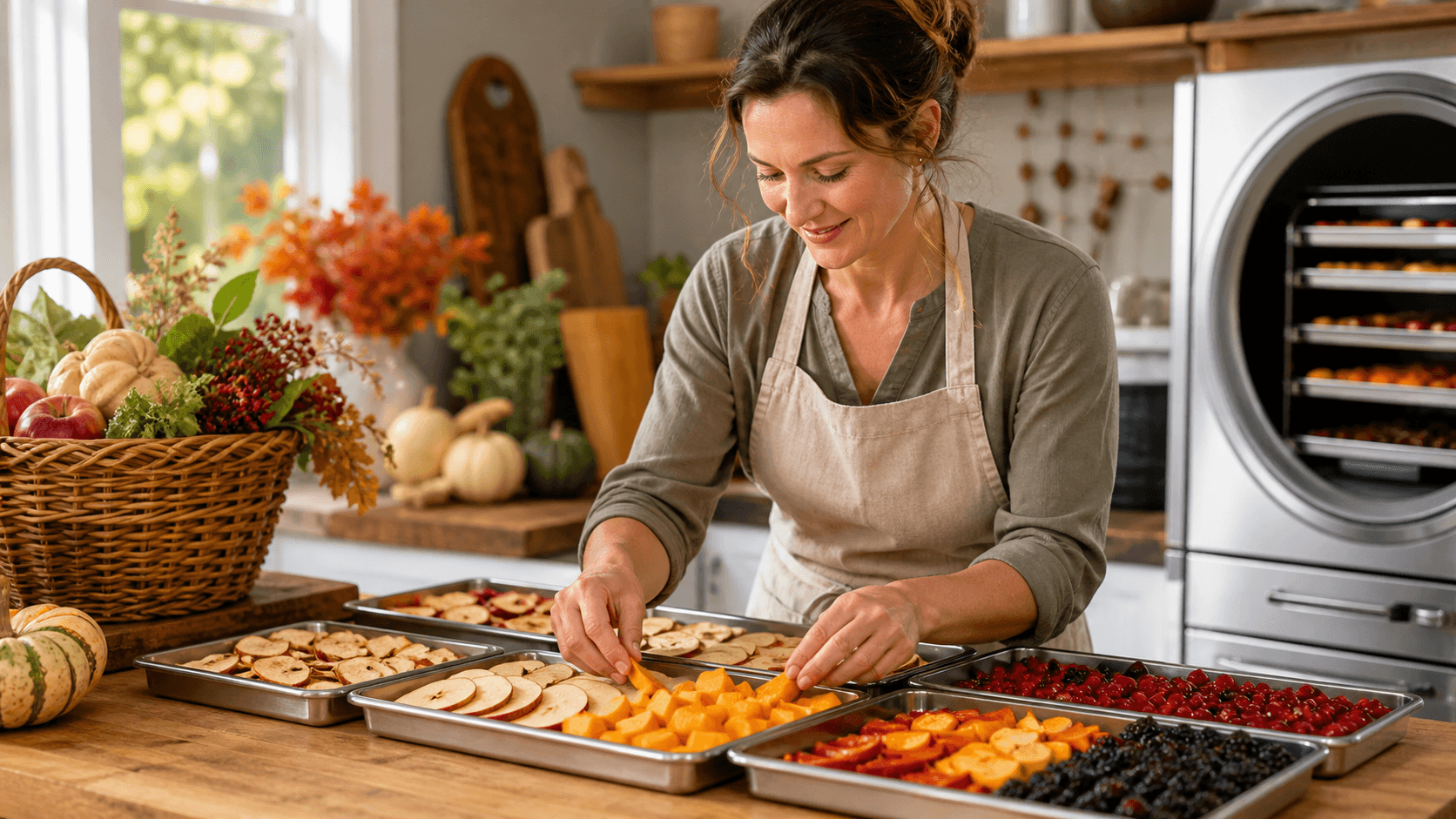
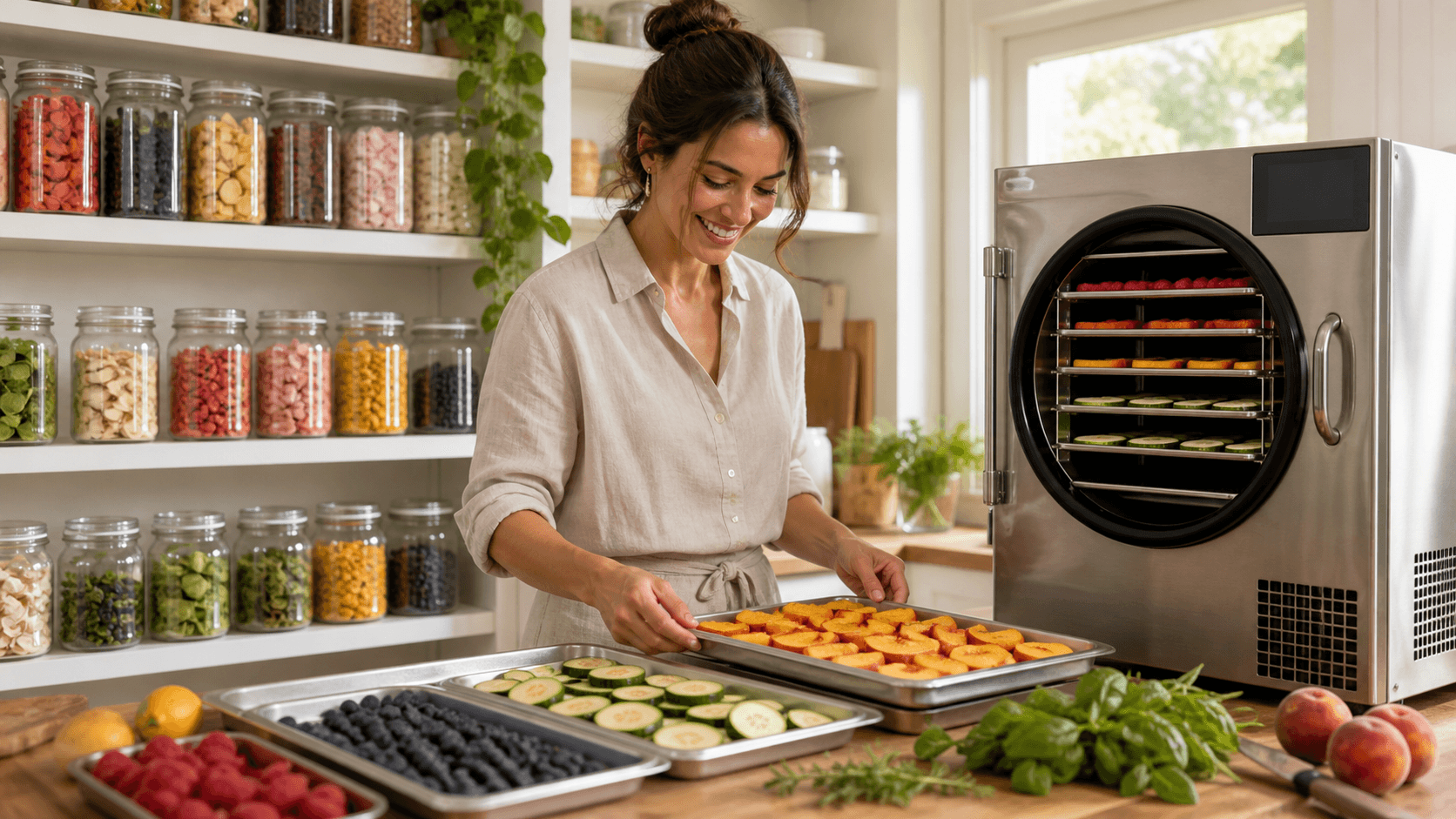
- Seasonal fruits and veggies at peak ripeness
- Herbs before they wilt
- Eggs when your hens are overachieving
- Full meals like soups, stews, chili, and casseroles
Those foods can stay shelf-stable for a very long time when sealed and stored in a cool, dark space. That late-summer produce becomes year-round pantry staples. On a busy night, you can grab a home-cooked meal from the shelf, add hot water, and eat in minutes.
It is also a powerful tool if you have special diet needs. You can freeze-dry:
- Low-salt recipes
- Gluten-free meals
- Allergy-friendly dishes
- Favorite snacks that you already trust
For outdoor life and emergency use, the benefits grow even more. Lightweight, shelf-stable meals are great for camping, hiking, RV trips, or go-bags. You get the ease people like about pre-made food buckets, but when you dry your own meals, you keep control of ingredients, serving sizes, and flavors your family will actually eat.
Time savings come from how the machine runs. You load trays, start the cycle, then walk away. While you sleep or head to work, the machine is quietly turning fresh food, leftovers, or near-spoiling produce into long-lasting pantry goods. That helps cut food waste and reduces last-minute grocery runs.
Running the Numbers on Savings and Payback
A big question always comes up: does a home freeze dryer machine really save money over time? The answer depends on how you use it.
Store-bought freeze-dried meals and snacks are handy but can be pricey per serving. When you dry your own food, you are paying for ingredients you may already be buying in bulk, plus power and some supplies. For people who camp often, keep a large pantry, or have busy weeks where instant home-cooked meals keep them away from takeout, those savings add up.
Think about three common patterns:
- A family that camps and hikes often and wants trail-ready meals
- A small homestead with a big garden and maybe backyard chickens
- A household focused on preparedness that likes a deep, varied pantry
All three can swap many store-bought freeze-dried items with their own versions. Over time, that shift can offset a large part of the machine cost.
Another piece of the math is food waste. Many homes toss food that sat too long in the fridge, or produce that turned soft before anyone ate it. When you send that food to the freeze dryer instead of the trash, you keep more of your grocery spending working for you. Buying seasonal produce at low prices, or stocking up during meat and egg sales, then preserving it, also helps protect your food budget from rising prices and empty shelves.
Payback timing is not the same for everyone. Someone who runs the machine often will usually see faster value than someone who only uses it a few times a year. But financial return is only part of the story. Food quality, peace of mind, and being able to support an off-grid-friendly pantry all matter too.
When a Freeze Dryer Makes Sense for Your Home
A home freeze dryer machine is not right for every kitchen, and that is okay. It tends to fit best when:
- You garden or buy from farms often
- You live on a small homestead or rural property
- You have a large family or buy in bulk
- You spend time camping, on the road, or planning for emergencies
Late summer and early fall are smart seasons to begin. Fresh produce is everywhere, prices are often better, and there is still time to build up your shelves before cold and storms move in. In many places, including where we are based, that also lines up with long, sunny days that work well with solar power systems.
On the other hand, a freeze dryer may not be a good fit if you have very little space, very high power costs without any way to offset them, or if you rarely cook or eat at home. In those cases, other methods like canning, dehydrating, or making better use of your freezer might be more practical. Each option has tradeoffs in cost, time, flavor, and shelf life.
If you do decide a freeze dryer belongs in your home, planning helps you get the most from it. Many people like to map out the first six months around:
- Local produce seasons
- Farm stand and market deals
- Sales on meat, dairy, and pantry basics
- Family favorite meals that are easy to rehydrate
At Green Vista Living, we see how well a freeze dryer pairs with other off-grid tools like solar systems, backup power, and water filtration. Together, they support a food system that is steady, flexible, and ready for surprise storms or simple busy weeks, so your pantry keeps working for you all year long.
Preserve More Food At Peak Freshness Starting Today
If you are ready to take control of your food storage, our home freeze dryer machine makes it simple to get started. At Green Vista Living, we help you freeze dry seasonal harvests, bulk buys, and homemade meals so you waste less and save more. Explore which model fits your home and budget, and if you have questions about setup or capacity, just contact us so we can help you plan your ideal system.