Power Your Home Through Any Season with Solar Confidence
Designing a complete solar power kit for a family home is really about one thing: keeping your life running smoothly, no matter what the weather or the grid decides to do. When fall starts creeping in and days get shorter, many families begin to think more seriously about backup power and long-term resilience.
A well-planned solar system with battery storage can keep your lights on, your food cold, and your phones charged during outages, while also trimming your regular grid use. Instead of a pile of random parts, a complete kit brings together solar panels, an inverter, a charge controller, and a battery bank so they work as one dependable system. At Green Vista Living, we focus on off-grid and resilient home setups, so we look at solar as part of a bigger picture that includes water, air, and food security too.
Clarifying Your Family's Energy Needs and Goals
Before picking equipment, you need a clear picture of how your family actually uses power. That starts with your electric bill:
- Average kWh per month
- Highest and lowest months
- Any notes about demand or peak time use
Then think through your daily habits. Do you run laundry in the evening? Cook with electricity? Work from home? Pay attention to when your home is busiest, often early morning and evening.
It also helps to decide what kind of solar life you want:
- Full off-grid: Your home runs only on solar and batteries, with a generator as backup.
- Grid-tied with backup: You stay connected to the grid but have batteries for outages.
- Hybrid: You can operate on or off the grid, giving you the most flexibility.
Family details matter here. A small cabin with two people has very different needs than a larger home with kids, a home office, and maybe an electric vehicle. Well pumps, saunas, and shop tools can all pull a lot of power, and they need to be part of your plan, especially in colder climates where heating and hot water demand can be high.
Next, divide your loads into two groups:
- Critical loads: fridge, freezer, well pump, medical devices, basic lighting, Wi-Fi, furnace controls.
- Noncritical loads: electric clothes dryer, hot tub, big entertainment systems, extra freezers.
Your complete solar power kit for a home with a battery should be designed so critical loads keep running even when the grid is down, while noncritical loads can be shut off if needed.
Choosing the Right Solar Panels and Inverter for Your Home
Panels are the workhorses of your system. The main types you will see are:
- Monocrystalline: higher efficiency, better when roof space or winter sun is limited.
- Polycrystalline: often lower cost, but usually a bit less efficient.
If your roof area is tight, or you live where winters are cloudy and snowy, higher efficiency panels often make more sense. A small, well-performing array can be better than a big, weak one.
To size your array, you look at:
- Your daily kWh needs
- Average sun hours in your region
- Roof or ground-mount options and shading
If you are in a northern state with long winters, focus on how your array will perform in low sun conditions and think about snow shedding on your mounting angle.
The inverter is the brain that turns solar DC power into AC power for your home. Main options are:
- String inverters: groups of panels wired in series.
- Microinverters: one small inverter per panel.
- Hybrid inverters: designed to work with batteries and often include built-in battery management.
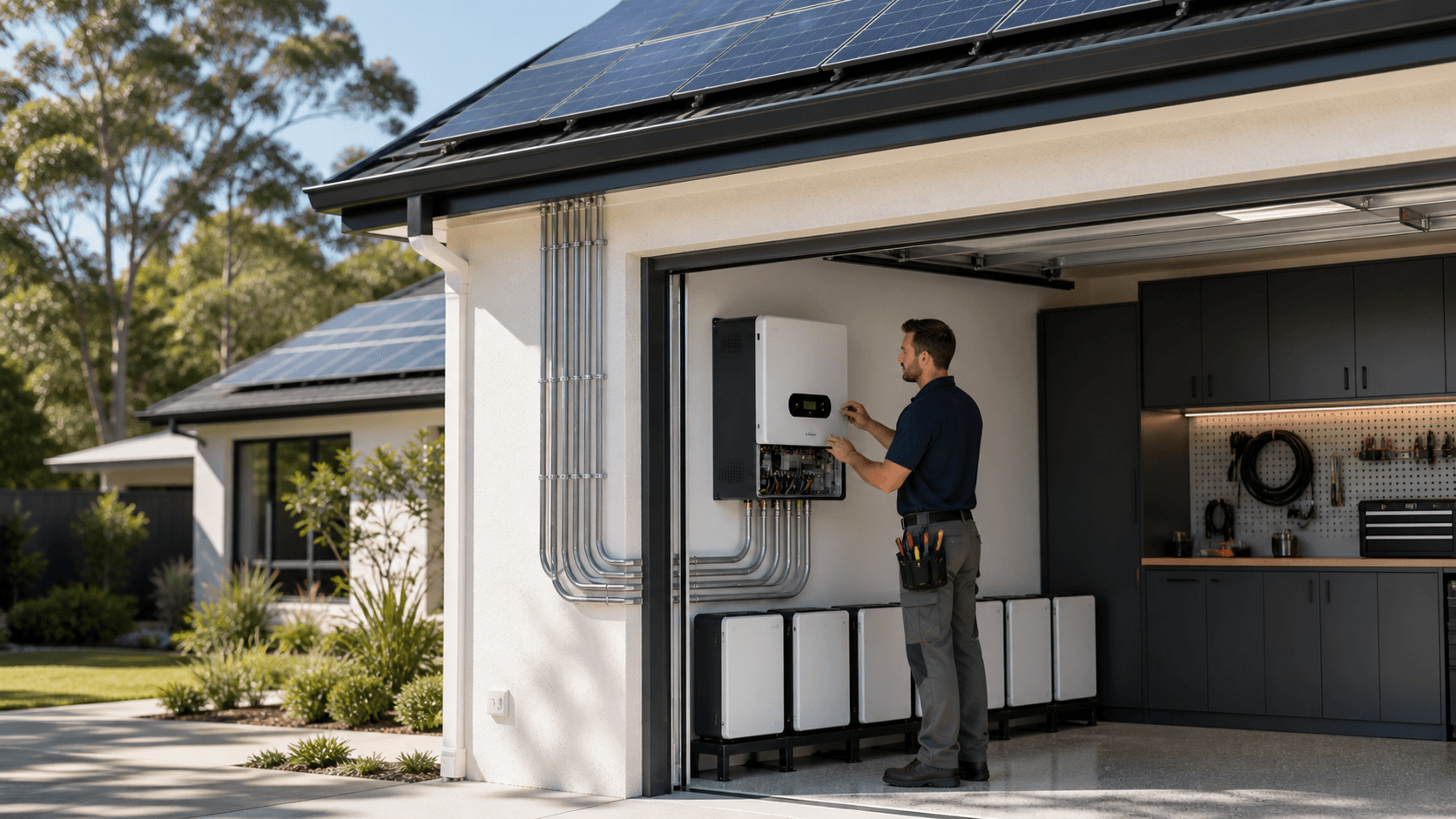
For most complete solar power kits for homes with a battery, a hybrid inverter makes planning easier. It is built with storage in mind, so you get smoother charging, better backup features, and often easier future expansion. When laying things out, consider roof orientation, tilt angle, and shading from trees or nearby buildings. Leave space in your design for extra panels later if you think your needs might grow.
Smart Battery Storage for Round-the-Clock Reliability
If panels are the workhorses, batteries are your quiet safety net. Two big categories show up in most home systems:
- Lithium batteries: higher usable capacity per unit, deeper discharge, long cycle life, low maintenance.
- Lead-acid batteries: tried-and-true, need more maintenance, shallower discharge, often larger and heavier.
Lithium batteries are common in modern home systems because they give long life and easy management, and they pair well with indoor or protected installs. Lead-acid can still work well in certain off-grid setups, but they ask more from the homeowner in terms of care.
To size your storage, think in terms of hours of backup for your critical loads. For example, how many hours of:
- Fridge and freezer cooling
- Well pump operation
- Basic lighting and device charging
- Furnace fan and controls
You can also plan for multi-day resilience if you live where storms can block sun for stretches. Battery management systems and charge controllers protect the batteries, control charging, and give you data. Many integrated systems offer phone apps or wall displays so you can see state of charge, solar production, and home use at a glance.
Seasonal strategy matters too. In summer, you might run more loads directly from solar during the day. In winter, you might keep more reserve in the batteries and be more careful about overnight use. Cold weather also affects battery health, so placement and temperature control are key parts of your design.
Designing a Safe, Code-Compliant, and Future-Ready System
Safety and code compliance are just as important as panel count. Solar and battery systems need proper:
- Disconnects and shutoffs
- Grounding and bonding
- Wire sizing and correct overcurrent protection
Local rules and the National Electrical Code set standards for how your system must be installed. That is why many homeowners choose professional installers, even when working with kits that are billed as ready to go. A skilled installer can also handle permits and inspections.
Inside your home, think about how backup power flows. A common setup uses:
- A main load center for the whole house
- A critical loads subpanel that holds only the circuits you want backed up
- A transfer switch that decides whether those circuits are fed by the grid or by your solar and battery system
Utility policies and incentives can also shape your plan. Net metering, interconnection rules, and tax credits may all affect how you connect to the grid and what equipment makes the most sense. When we design for the long term, we also leave room for extra battery modules, more panels, or future loads like an electric vehicle charger, well pump upgrades, or air quality equipment.
At Green Vista Living, we see solar as one piece of a full resilience plan that can also include water systems, air quality tools, and food preservation gear, all working together to support your home through every season.
Get Started With Your Project Today
If you are ready to cut your energy bills and gain more control over your power, explore our complete solar power kits for homes with a battery tailored for real-world home use. At Green Vista Living, we design our bundles so you can move from planning to installation with fewer surprises and clearer costs. If you have questions about sizing, compatibility, or next steps, contact us and we will help you plan the right setup for your home.