Build Freedom Into Every Mile of Your Off-Grid Escape
Designing a folding electric bike setup for off-grid trips starts with one clear goal: more freedom with less stress. Late summer and early fall are perfect for this, when mornings are cool, afternoons are warm, and dirt roads call you away from crowded spots. A well-planned folding e-bike lets you leave your rig parked and still roam far.
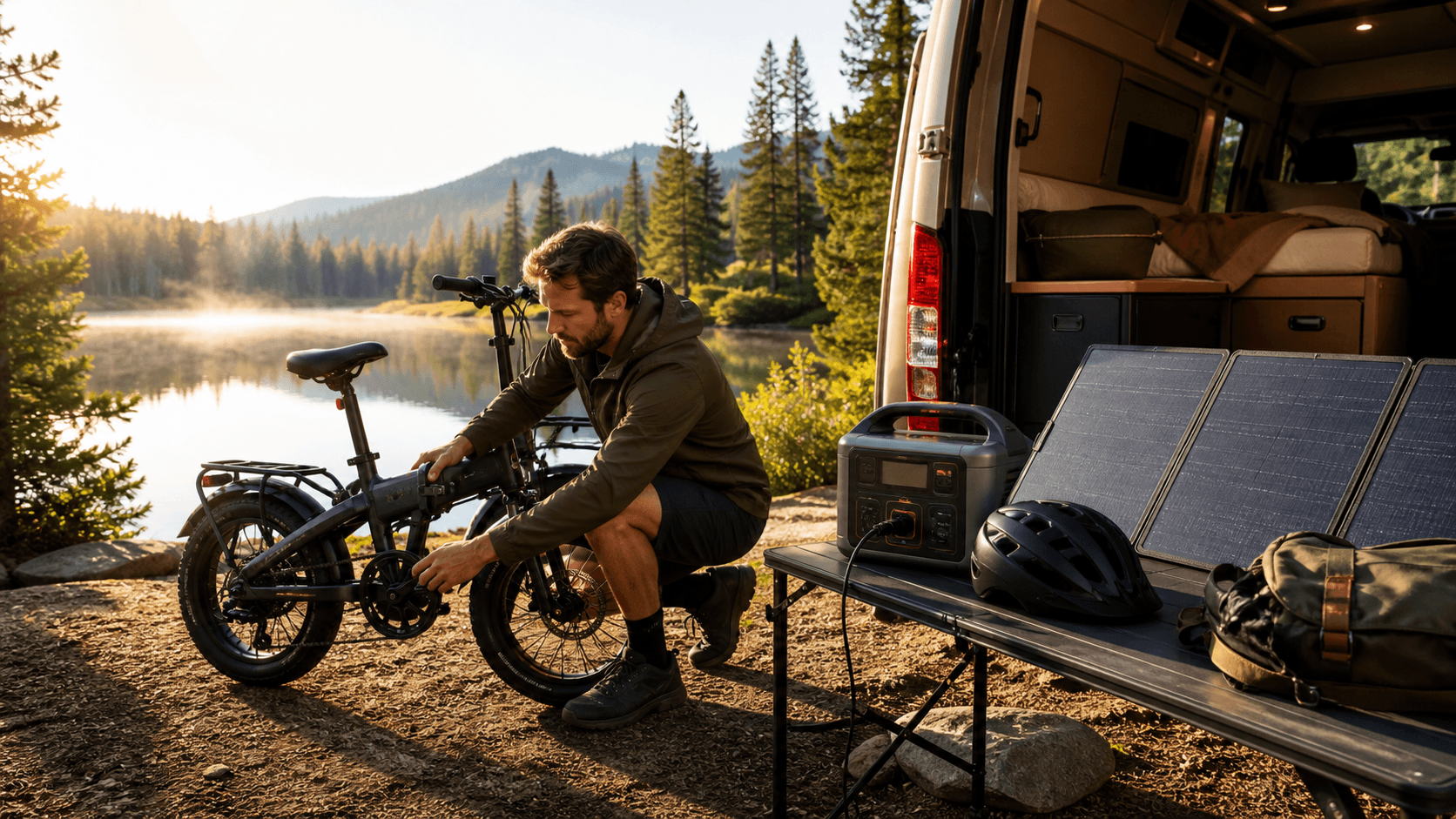
Think of your compact, high-torque folding electric bike as a mobile extension of your basecamp, RV, van, or small cabin. It carries you to trailheads, swim spots, and quiet viewpoints without burning fuel or fighting for parking. In this guide, we will walk through how to pick the right bike, power it with off-grid solar, carry gear comfortably, and tie everything into a resilient setup that works together.
Choosing a Folding Electric Bike Built for Real Off-Grid Use
Not every folding bike is ready for forest roads or long weekends off-grid. Many are built for short city errands, not dusty climbs or surprise rain. For off-grid use, we want strength, range, and simple systems that are easy to live with.
Focus on a few key specs and features:
- Motor wattage and torque for hills and gravel
- Battery watt-hours for real-world range
- Strong frame and hinges that will not wiggle or flex
- Weight and folded size so it fits your actual space
For motor power, look for something that can pull you up moderate hills on loose surfaces without bogging down. Higher torque matters more than a big top speed, especially when you are loaded with water, food, or camping gear. A mid or high capacity battery with solid watt-hours gives you enough range to ride out and back with a buffer, instead of rolling in on empty.
The folding mechanism is a big deal off-grid. You want:
- Thick, well-made hinges
- Clear locking points that are easy to see and feel
- Latches that do not pinch fingers when your hands are dusty or cold
- Folded dimensions that fit your RV bay, truck bed, or cabin corner
Season and terrain matter too. Late summer usually means dry, loose dirt, with early fall bringing more mud and wet patches. Fat tires give more float on sand and mud, while hybrid tires roll faster on hardpack and pavement. For mixed conditions, a slightly wider hybrid tire with some tread can be a smart middle ground. Good water resistance, bright front and rear lights, and strong brakes help when days get shorter and you ride at dawn or dusk. Quality folding electric bikes from trusted brands often balance these needs without a lot of trial and error.
Powering Your Folding Electric Bike with Off-Grid Energy
Once you pick the bike, the next step is power. The battery on your e-bike is one more load in your off-grid system, just like your fridge, water filtration, or lights. We want a plan so you are riding, not hunting for power every evening.
Start by looking at the battery size in watt-hours and your normal riding style. Ask yourself:
- How many miles do you expect to ride in a typical day off-grid?
- Will you use the highest assist all the time, or mostly low and medium?
- Do you want spare power for a second ride or side trip?
From there, you can match daily charging needs to your solar setup. There are a few common ways to feed a folding electric bike away from the grid:
- Rooftop panels on vans or RVs, tied into your house batteries
- Portable folding solar kits that you can tilt toward the sun
- Compact solar generators that focus mainly on the e-bike and small devices
In our experience at Green Vista Living, August sun is usually strong enough in many regions to support at least one full e-bike charge per day, as long as the solar array and battery bank are sized with that in mind. Pure sine wave inverters help your charger run smoothly, and a quality charge controller keeps your house batteries healthy while you top up the bike.
Smart charging habits make everything easier:
- Plug in as soon as you roll back into camp
- Charge during the brightest sun hours when you can
- Rotate between two batteries if your bike supports it
- Keep one small backup plan, like a separate solar generator, for cloudy stretches
When your solar power system, bike charger, and storage are chosen as a set, they fit neatly into a compact rig and feel simple day to day.
Carrying Gear and Staying Comfortable on the Trail
A folding electric bike can do more than carry you. With the right setup, it can haul a surprising amount of gear without feeling awkward or unsafe. The trick is keeping the weight centered and low so the bike still handles well on rough roads.
Useful cargo options include:
- Rear racks for dry bags or small crates
- Low-profile panniers that keep weight close to the wheel
- Frame bags for tools and heavy items like locks
- Handlebar packs for lighter things like snacks or gloves
For comfort, small changes make long rides far more fun. A supportive saddle, adjustable handlebars, and a suspension fork or suspension seat post can smooth out washboard roads. Tire pressure matters too: slightly lower pressure gives more grip and comfort on dirt, while higher pressure rolls faster on pavement. It is worth taking time near home to test different setups before a big off-grid trip.
Packing for resilience is just as important as comfort. At a minimum, keep:
- A compact multi-tool with the bits your bike actually needs
- Spare tubes and tire levers that fit your tire size
- A small but solid hand pump
- A quick patch kit and a few zip ties
- A tiny first-aid kit for scrapes and blisters
Since late summer days can start cool, heat up, then cool down again after sunset, pack layers that are easy to add or peel off. A light wind shell can turn a chilly ride back to camp into a pleasant one.
Integrating Your Bike Into a Complete Off-Grid Basecamp
The best setups treat the folding electric bike as one part of a whole off-grid system. At Green Vista Living, we love seeing bikes parked beside portable solar, compact water filtration, and even small sauna or shower zones at basecamp. Each piece supports the others and gives you more comfort with less noise and fuel use.
Some smart basecamp layout ideas:
- Keep a dedicated parking and charging spot for the bike out of direct rain
- Use a small mat or tray under the bike to catch dirt and keep your space tidy
- Hang a simple hook or shelf nearby for helmet, lock, and basic tools
- Store the charger in a labeled bin so it never gets buried under gear
When everything has a place, the bike is always ready to roll. You can ride to a nearby water source, filter it on site or back at camp, carry firewood in panniers, or scout new camp spots without moving the whole rig. The bike becomes a quiet, low impact way to move around instead of idling an engine for every little errand.
Test, Tweak, and Hit the Road with Confidence
Before you head deep into the backcountry, it helps to do a few shakedown trips closer to home. Use these to test real range on your normal assist level, try different cargo setups, and practice your charging routine. Adjust tire pressure, saddle height, handlebar angle, and where you store tools until everything feels natural.
Once you have a setup that works, planning an end of summer or early fall escape gets a lot easier. Your folding electric bike becomes the flexible core of how you move, while your solar power, water filtration, and other gear support camp life. With a bit of thought up front, each mile away from the pavement starts to feel lighter, quieter, and a lot more free.
Power Your Ride and Lifestyle With Smarter Choices Today
Discover how our folding electric bikes can help you travel farther while shrinking your carbon footprint and saving space at home. At Green Vista Living, we focus on practical, sustainable solutions that fit into real life, whether you are commuting, exploring, or running errands. If you have questions or want help choosing the right setup, contact us and we will walk you through your options.