Stay Sanitary Off-Grid When It Matters Most
A remote cabin can feel like the safest place in the world until a storm, wildfire smoke, or washed-out road cuts it off from everything. Power lines go down, pumps stop, and suddenly the simple act of using the bathroom is not so simple anymore. In those moments, staying clean and safe is just as important as staying warm and fed.
A reliable, hygienic toilet setup keeps germs out of your living space and stress out of your mind. It is about health, but it is also about comfort and basic dignity when life already feels hard. That is where a solar-powered toilet or other off-grid emergency toilet can make a huge difference. With its own power from the sun, it does not depend on septic pumps, sewer lines, or a gas generator. At Green Vista Living, we focus on off-grid systems like solar kits, battery backups, and sustainable waste solutions that work together so your cabin stays livable when the grid goes dark.
Why Remote Cabins Need a Backup Toilet Plan
Remote cabins often look simple from the outside, but the plumbing story can be messy behind the scenes. Septic lines can freeze, especially in colder climates. Heavy summer rain can soak leach fields until they can no longer handle the flow. Holding tanks can fill faster than expected. Some cabins do not have any plumbing at all, just old pits or makeshift setups that are not safe long term.
Summer makes all of this louder. There are longer stays, more friends and family, more water use, and more flushes. That extra strain can push a weak system over the edge, right when wildfire season and big storms are also picking up.
A backup toilet plan matters in emergency situations like:
- Wildfire evacuations where a cabin becomes the safe place everyone runs to
- Long grid failures that shut down pumps and treatment systems
- Contaminated water that makes normal flushing risky
- Road closures that delay septic service or tank pumping
Without a plan, people turn to last-minute fixes like random buckets or shallow pits. Those options can leak into soil, create smells, attract wildlife, and spread germs. A thought-out backup toilet avoids that rush and keeps waste contained and managed, even if help takes a while to arrive.
Solar-Powered Toilet Options for Off-Grid Cabins
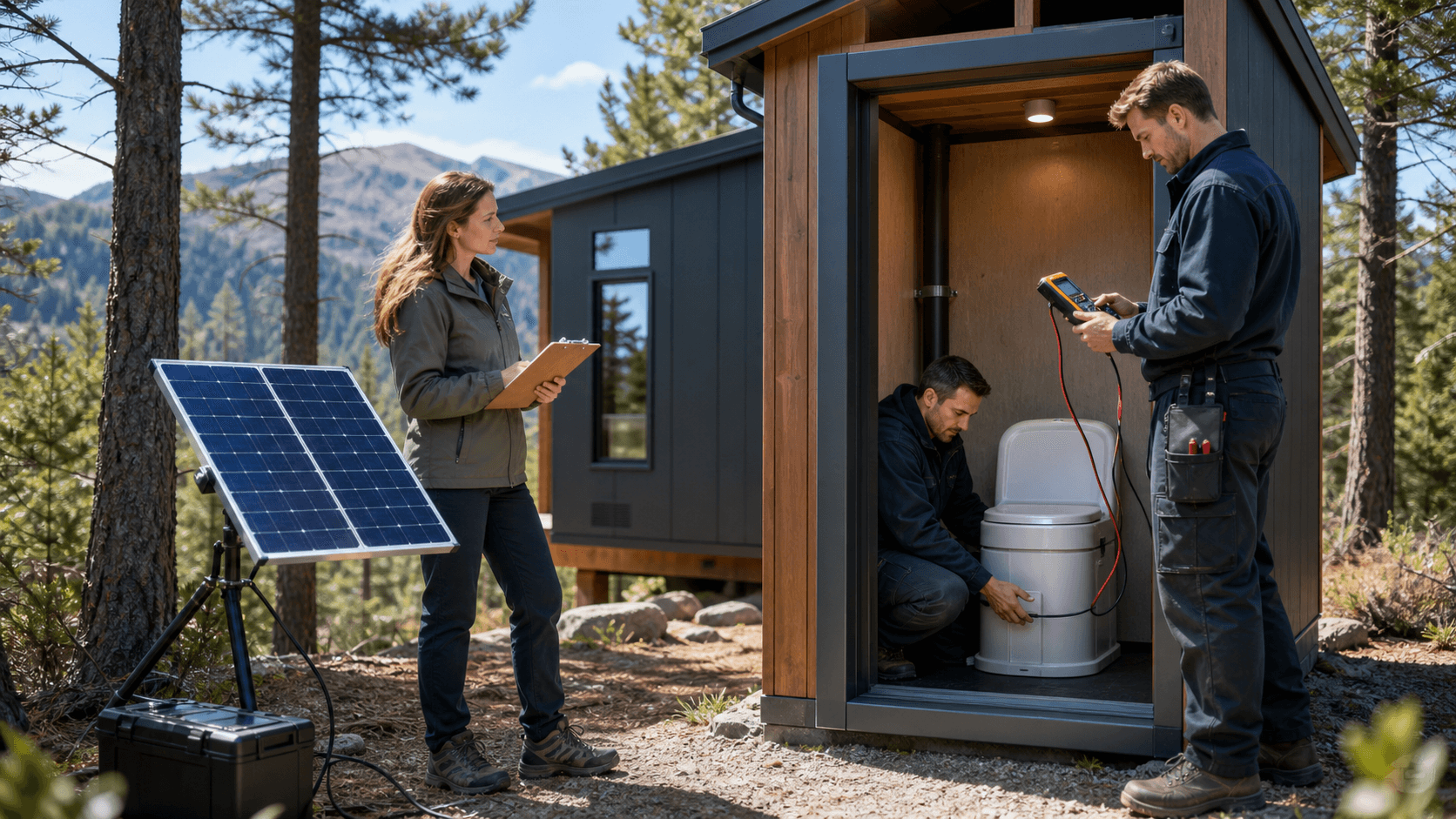
A solar-powered toilet is any toilet system that runs on electricity supplied by a solar kit and battery bank instead of the grid. It might use low-voltage DC power right from the batteries or AC power through an inverter. The sun charges the batteries, the batteries power the toilet, and your cabin stays independent.
Common types include:
- Electric-assisted composting toilets, where fans, mixers, and sometimes small heaters help break down waste faster
- Incinerating toilets that use high heat cycles, powered by solar-charged batteries, to burn waste to a small amount of ash
- Low-power macerating or pump toilets that move waste to a holding tank or treatment unit
Each system has its own energy profile. Electric-assisted composting toilets usually sip power across the day for fans and small motors. Incinerating toilets pull more power in short bursts for each burn cycle. Pump and macerating toilets run only when used. With smart planning, all of these can work well with a compact solar kit.
These setups have clear benefits over generator-only systems. They are quieter, so you are not listening to an engine every time someone uses the bathroom. They avoid storing and hauling fuel, which can be tricky or unsafe during fire season. And as long as the sun keeps rising and the batteries are sized right, you have a steady, low-maintenance source of power for sanitary needs.
Choosing the Right Emergency Toilet for Your Cabin
Picking the right emergency toilet starts by looking honestly at how you use your cabin. Ask a few simple questions:
- Is the cabin for weekend trips or full-time living?
- How many people are there in peak summer weeks?
- Do you already have septic, a holding tank, or nothing at all?
- What solar capacity, battery storage, and inverter size do you have now?
From there, you can compare different backup levels:
- Bucket and bag systems for very short-term emergencies, better than nothing but not ideal for weeks
- Non-electric composting toilets as a basic, low-tech backup if you want to avoid any power use
- Solar-powered toilets for safe, long-term readiness with better airflow, odor control, and waste handling
Climate and site also matter. Cold weather can slow down composting, so some cabins need a unit with a bit of heat or extra air movement. High water tables and rocky soil often make traditional pit toilets a bad idea, both for health and for the environment. Areas with active wildlife, like bears or raccoons, call for sealed systems that keep smells and access under control.
When all parts of the system match, life is easier. That means the toilet, solar kit, batteries, and any pumps are sized to work together. A supplier that understands both solar and sanitation can help you avoid mismatched gear, tripped inverters, and fans that stop running when you need them most.
Building a Simple Solar Setup for Emergency Sanitation
A basic solar layout for a solar-powered toilet can be quite straightforward. You generally need:
- Solar panels to collect energy
- A charge controller to manage charging safely
- A battery bank sized for several days of toilet use
- An inverter if your toilet needs AC instead of DC
Power budgeting starts with the toilet specs. For many electric-assisted composting toilets, the daily use may be low, mostly for fans and occasional mixing cycles. Incinerating toilets use more power, but only during short heat cycles. You add up the expected watt-hours per day, add a buffer for cloudy weather, then size your panels and batteries to cover that.
Summer can be your friend here. Long days and high sun angles give you more charging time. Panels should be placed where they get clear sun for most of the day, angled for your latitude, and kept away from shading trees. The toilet unit itself needs good ventilation, a safe vent path for odors or steam, and enough separation from sleeping spaces to keep noise and smells from becoming a problem.
A complete cabin setup often includes more than just a toilet. Many owners like to pair it with:
- Off-grid water pumps for wells or storage tanks
- Simple greywater solutions for sinks and showers
- Backup battery kits that keep lights and small devices running during outages
When these systems are planned together, you get a cabin that can stay safe, calm, and functional even through long outages.
Make Your Cabin Ready Before the Next Storm Hits
The best time to think about emergency toilets is before the wind, smoke, and rain start limiting your options. Early summer is perfect for testing what you have, making upgrades, and adding a backup plan while access is easy and weather is friendly.
A simple start looks like this: check your current toilet and septic setup, think through how many people might need to use the cabin in an emergency, look at your existing solar and battery capacity, and decide what kind of backup or solar-powered toilet fits your comfort level. At Green Vista Living, we focus on off-grid and outdoor living, so we build solutions that bring toilets, solar kits, and storage together into one reliable off-grid system. When your cabin has a solid emergency toilet plan powered by the sun, you protect your family's health, comfort, and independence for the whole season.
Transform Your Off-Grid Living With Reliable, Clean Sanitation
If you are ready to upgrade your setup with a low-maintenance, eco-friendly solution, explore our solar-powered toilet options designed for real-world off-grid living. At Green Vista Living, we focus on systems that are simple to use, efficient, and built to last in a variety of environments. Our team is here to help you choose the right configuration for your space and energy needs. If you have questions or need personalized guidance, please contact us for expert support.