Turn Garden Harvests Into Year-Round Food Security
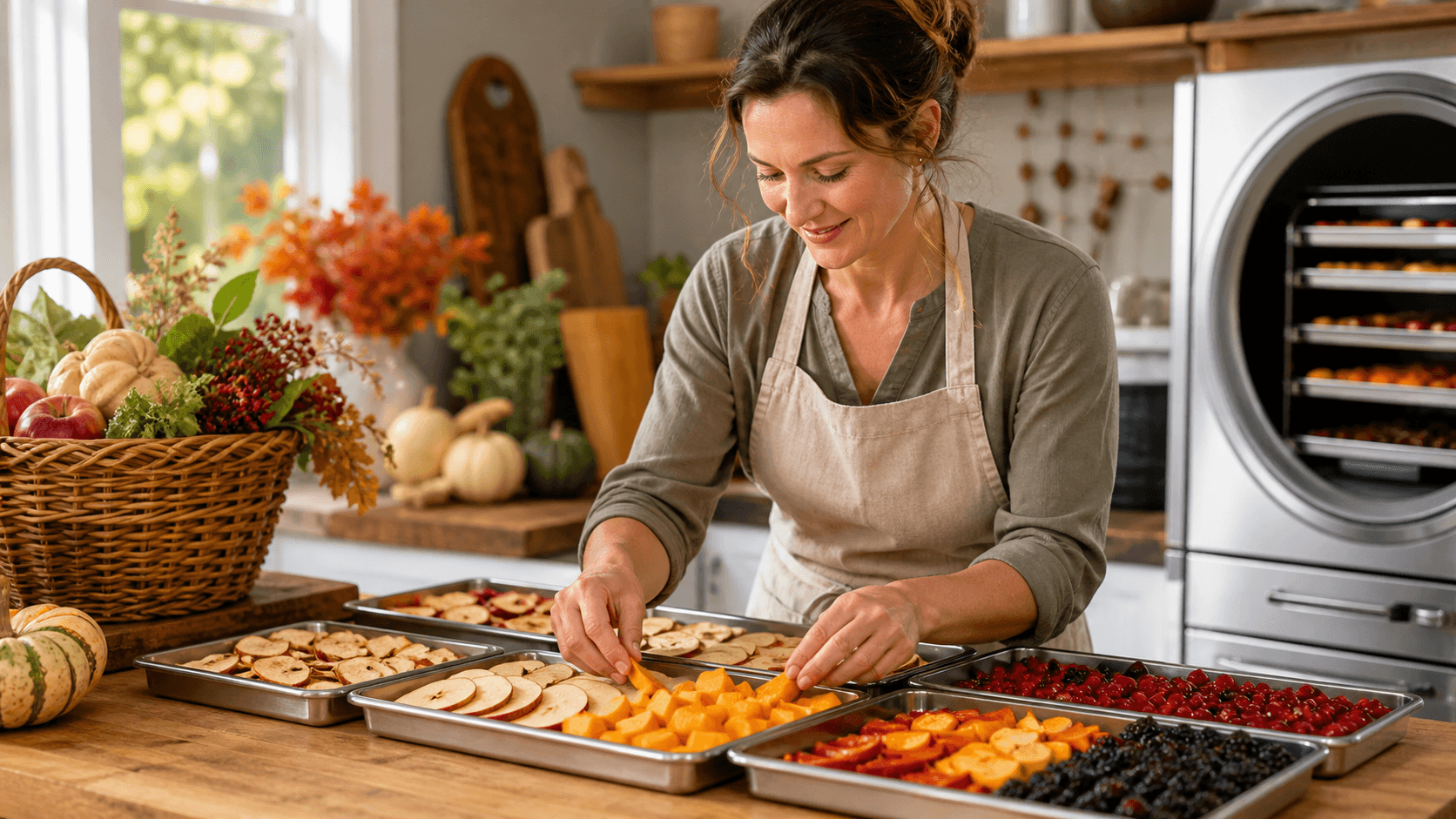
Home gardens explode in late summer. Tomatoes ripen all at once, berries come in fast, and herbs grow faster than we can use them. A freeze-drying machine for home gives us a way to save that peak flavor before it turns limp in the crisper drawer.
More families are thinking about food security right now. Supply chain problems, higher prices at the store, and strange weather patterns make it clear that a full pantry is about more than comfort. Long-term food storage is starting to feel like a smart, everyday habit, not a fringe idea.
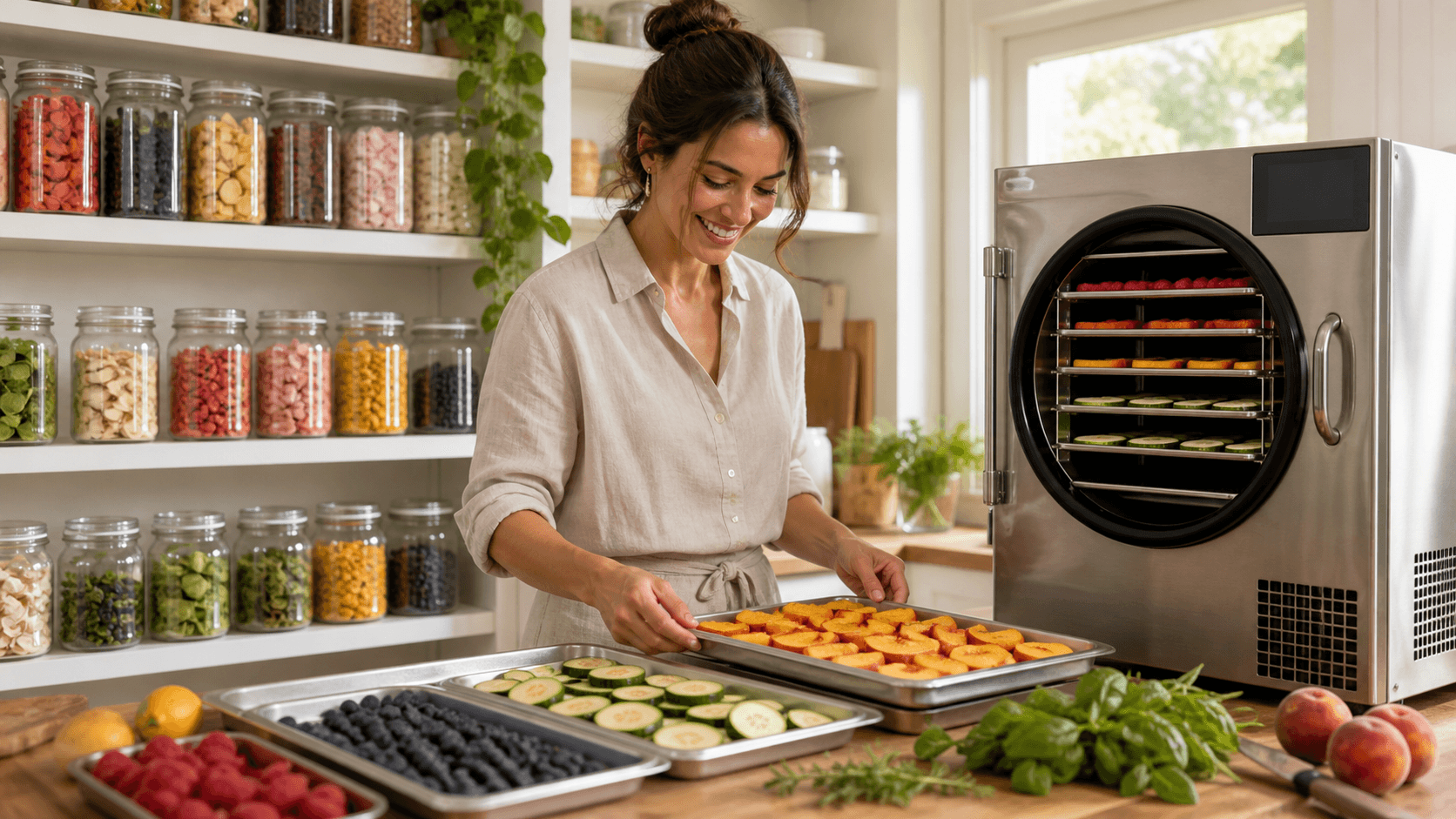
Home freeze drying is different from canning, dehydrating, or freezing. A freeze dryer first freezes the food, then pulls out the ice as vapor in a vacuum. The food keeps its shape and much of its flavor and nutrition, but the water is gone. The result is light, crisp food that can last a long time when packed and stored correctly.
At Green Vista Living, we focus on tools that support off-grid and sustainable living. Freeze dryers fit that goal nicely, helping households turn short harvest windows into steady, year-round food security.
Why Freeze Drying Beats Traditional Home Preservation
Each home method has its place, but freeze drying brings some unique perks.
On shelf life, freeze-dried foods stand out. When sealed with oxygen absorbers in Mylar bags or jars, many foods can stay shelf stable for a very long time. Typical home canned foods are usually best within a much shorter window, and frozen foods depend on steady power and often lose quality if the power goes out or the freezer is packed too full.
Nutritionally, the low temperatures are gentle. Because foods are frozen, not simmered for long periods, more vitamins, color, and texture are usually left in place. Compared to standard dehydrating, which uses higher heat, freeze-dried berries, corn, and cooked meals often taste closer to fresh once rehydrated.
The flexibility is a big win for busy families. Freeze-dried foods are:
- Lightweight, so they store easily and work well for camping or backpacking
- Fast to rehydrate, which makes weeknight meals quicker
- Great for quick snacks, like crunchy fruit or yogurt bites
Safety also plays a part. By taking out moisture, we reduce one of the main things that lets many microbes grow. Still, it only works long term if storage is done correctly. That means:
- Using oxygen absorbers where needed
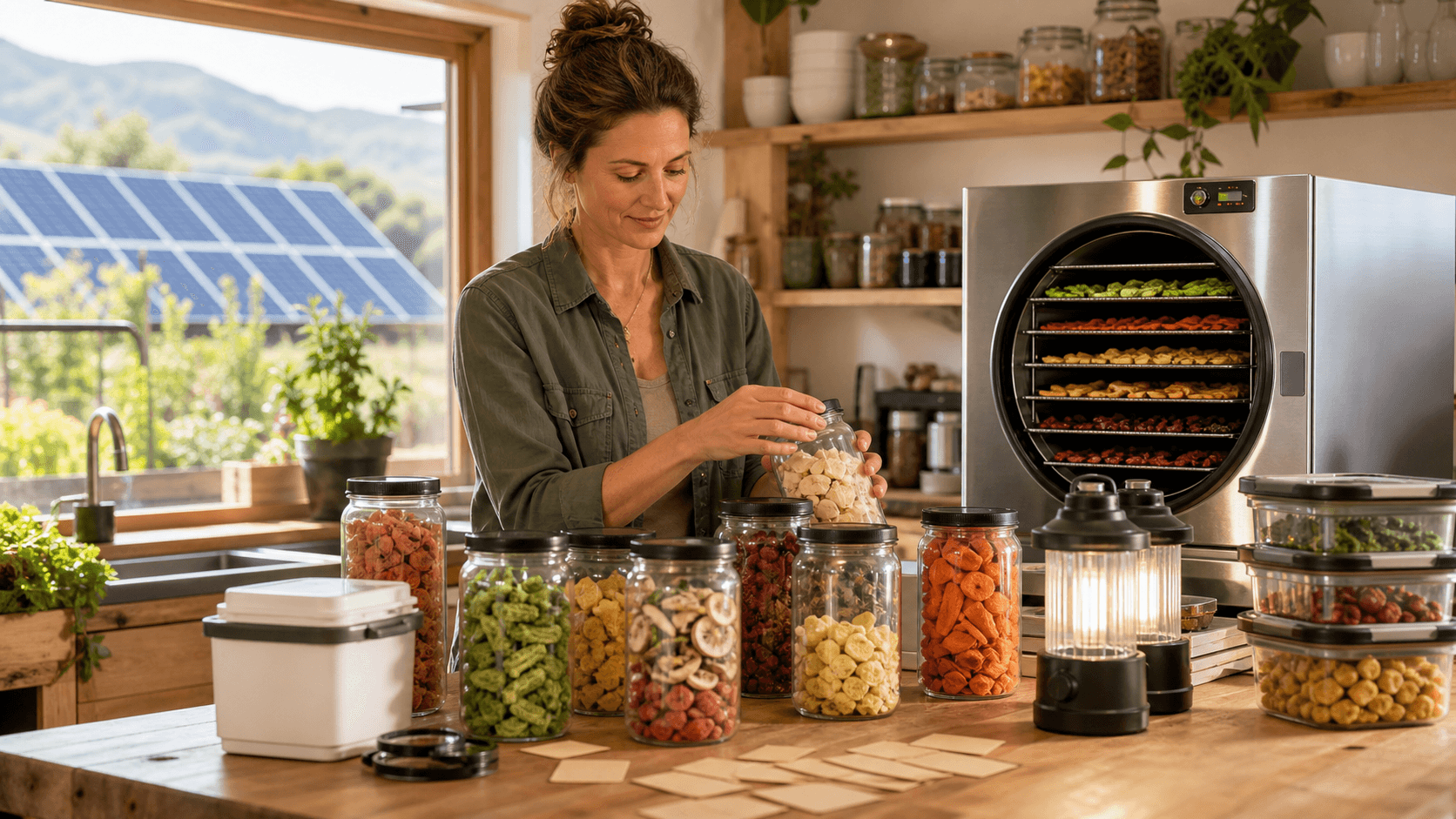
- Sealing in Mylar bags, canning jars, or other airtight containers
- Keeping foods cool, dark, and dry
Handled with care, freeze-dried food gives a strong layer of backup for storms, grid problems, or simple budget stress.
Key Features to Look for in a Home Freeze Dryer
Not every freeze dryer fits every kitchen or lifestyle. A little planning up front makes the investment work harder for you.
Capacity is the first thing to think about. Ask yourself:
- Do we just want to save extra berries, herbs, and leftovers now and then?
- Do we grow a big garden or buy meat and produce in bulk?
- Are we building a serious pantry for long-term storage?
Smaller units fit light use or smaller homes. Larger units help gardeners, homesteaders, and hunters process bigger batches while crops and meat are fresh.
Power use and noise matter too. Freeze dryers run compressors and vacuum pumps for many hours per batch. That means:
- You will notice the machine when it is on
- It is often better in a basement, utility room, or garage instead of a main living area
- Off-grid homes need to think about solar systems, battery banks, and when to run cycles
Automation and controls can make or break daily use. Helpful features include:
- Clear, simple touchscreens
- Preset programs for common foods
- Sensors that track food temperature and cycle progress
- Alerts when a batch is ready or when the machine needs attention
Reliability and upkeep are part of the picture. Look for durable parts, easy access for cleaning, and support when you have questions. Some vacuum pumps need regular oil changes, so it helps if the design makes that simple.
Finally, think about space and setup. A freeze dryer is closer to the size of a small fridge or big microwave than a toaster. It needs:
- Solid, level support
- Good airflow around vents
- A room that stays within the machine's recommended temperature range
For off-grid or solar-powered homes, planning where it fits in the power system is just as important as where it sits in the house.
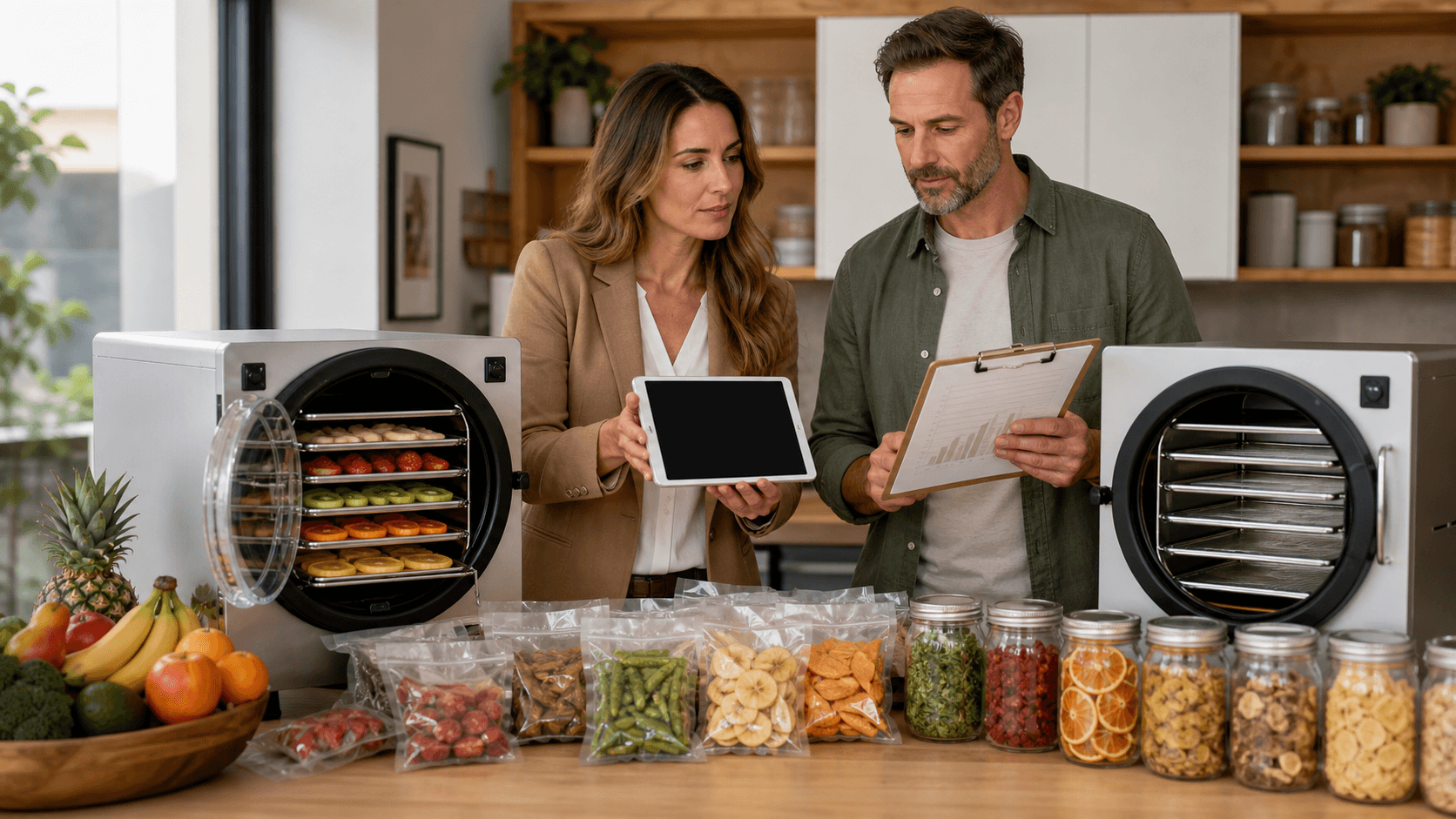
Comparing a Freeze-Drying Machine for Home by Budget
Even without talking about exact prices, we can sort machines into general tiers.
Entry-level machines usually have smaller trays and fit lighter use. They are good for people in apartments or smaller homes who want to try freeze drying without committing to a large footprint. Batch size is more limited, so it can take several runs to work through a big haul of tomatoes or apples.
Mid-range models often become the family workhorse. They balance capacity and features, giving enough tray space for:
- Garden produce from raised beds
- Extra meat from bulk buys
- Cooked meals and leftovers you want to store long term
These machines can help build a respectable pantry over one main harvest season.
High-capacity and homestead units are for serious production. They can handle larger batches that suit:
- Bigger gardens or small farms
- Regular bulk meat processing
- Micro-businesses selling freeze-dried treats or ingredients
The trade-off is more power draw, more space, and often more attention to where and how they are installed.
On return over time, a freeze-drying machine for home can help in several ways. You can save more of what you grow, capture sales on in-season produce, and build your own shelf-stable meals instead of buying pre-made emergency food. Reducing food waste also stretches each dollar.
There are ongoing costs to remember:
- Pump oil and filters, if the pump needs them
- Mylar bags, jars, and oxygen absorbers
- Occasional replacement parts or service
Planning for these from the start keeps the project realistic and stress-free.
Seasonal Strategies to Maximize Your Freeze Dryer
A smart plan follows the seasons.
Late summer and early fall are prime time. You can run back-to-back batches of:
- Tomatoes, peppers, and herbs
- Corn, green beans, and squash
- Apples, peaches, and berries
Working in waves as crops ripen lets you clear the garden before frost while filling shelves with bright, shelf-stable food.
In winter and spring, the machine does not need to sit idle. Many households like to freeze dry:
- Leftover holiday meals for fast future dinners
- Citrus during peak season for long-lasting slices and zest
- Extra eggs in the spring as backyard hens lay more
This keeps your skills sharp and spreads value across the whole year.
As you build a pantry, think about balance:
- Fruits for snacks and baking
- Vegetables for soups, stews, and side dishes
- Proteins like meats, eggs, and beans
- Full meals and simple comfort foods
Having ready-to-eat or quick-cook foods on hand before hurricane season, winter storms, or wildfire risk grows means less last-minute shopping and more calm when forecasts look rough.
Take the Next Step Toward Sustainable Food Independence
If you are considering a freeze-drying machine for home, start with a short checklist. Look at how much garden space you have, how often you buy in bulk, and where a machine could sit with good power and airflow. Decide if you want to focus on snacks, full meals, or deep emergency storage, then match capacity and features to those goals.
For those building a more independent lifestyle, a freeze dryer pairs naturally with solar power, stored water, and other off-grid tools. At Green Vista Living, we see it as one more piece of a steady, resilient home system that turns each season's abundance into long-lasting food security.
Preserve Your Harvest With Easy At-Home Freeze Drying
If you are ready to save more of your garden, leftovers, and bulk buys, our freeze-dryer machine for home makes it simple to get started. At Green Vista Living, we help you choose the right size and setup so you can preserve food with confidence. Have questions about power, space, or capacity options for your kitchen or pantry? contact us and we will walk you through your best options.