Keeping an off-grid solar system running through summer storms is all about planning ahead. Late June through August often brings fast-building thunderstorms, high winds, derechos, and early tropical systems. Those same months are when you depend most on cooling, refrigeration, freezers, well pumps, and lights. If your panels, charge controllers, or batteries go down from a single storm, comfort and food security can disappear in a few minutes.
Many cabins and homesteads sit on hills, ridges, fields, or lake shores, which are great for sun but exposed to wind and lightning. One bad gust or surge can crack a panel, loosen a mount, or fry sensitive electronics. In this guide, we will walk through how to harden your off-grid solar system for summer weather, from panel mounting and grounding to surge protection and disconnects, so you can keep power steady when storms roll in.
Protect Your Summer Power Before Storms Hit
Summer storms can build quickly on a hot afternoon. By the time the sky turns dark, it is usually too late to adjust hardware or check wiring. That is why storm prep needs to happen on clear days, not during a warning.
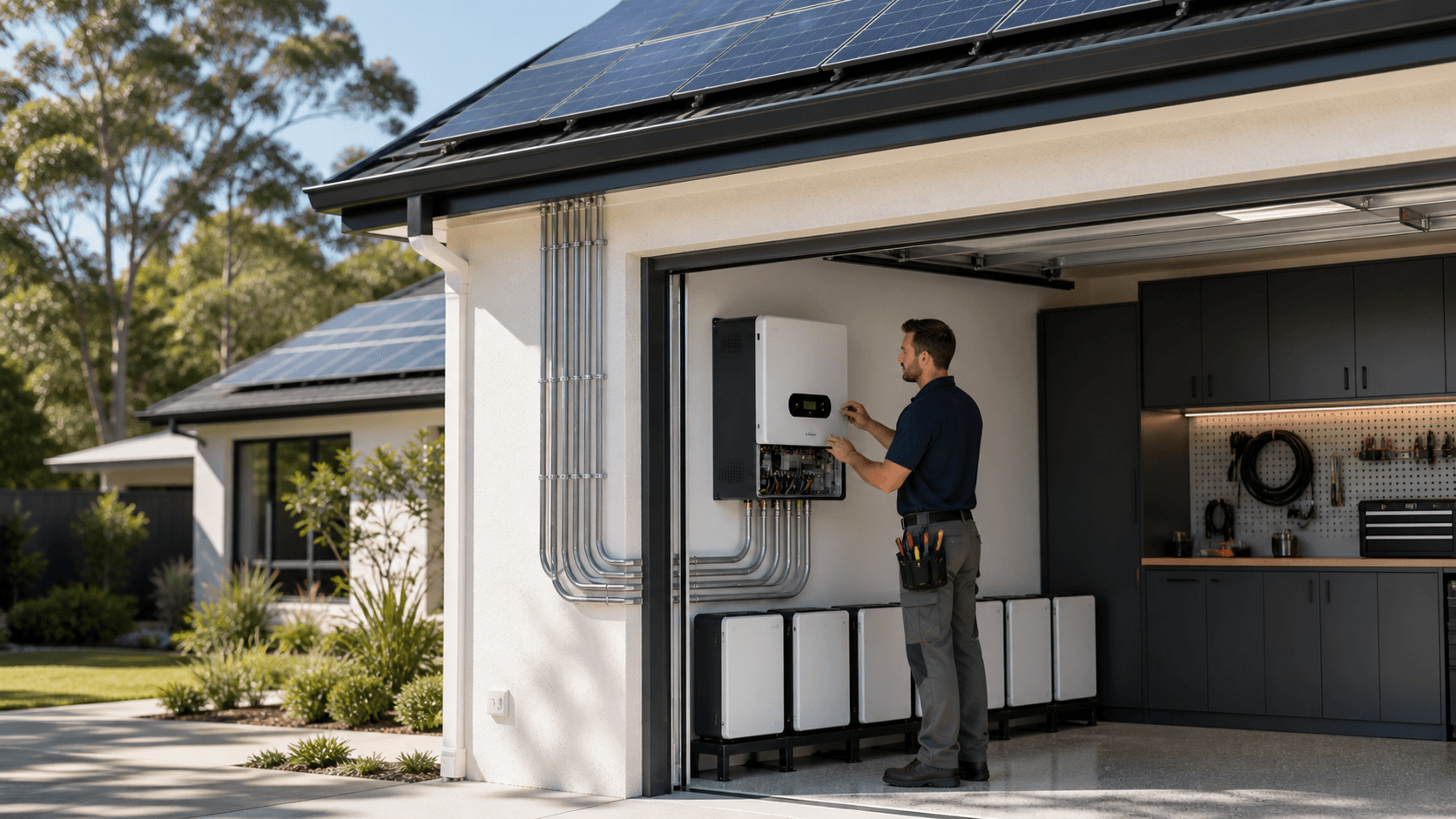
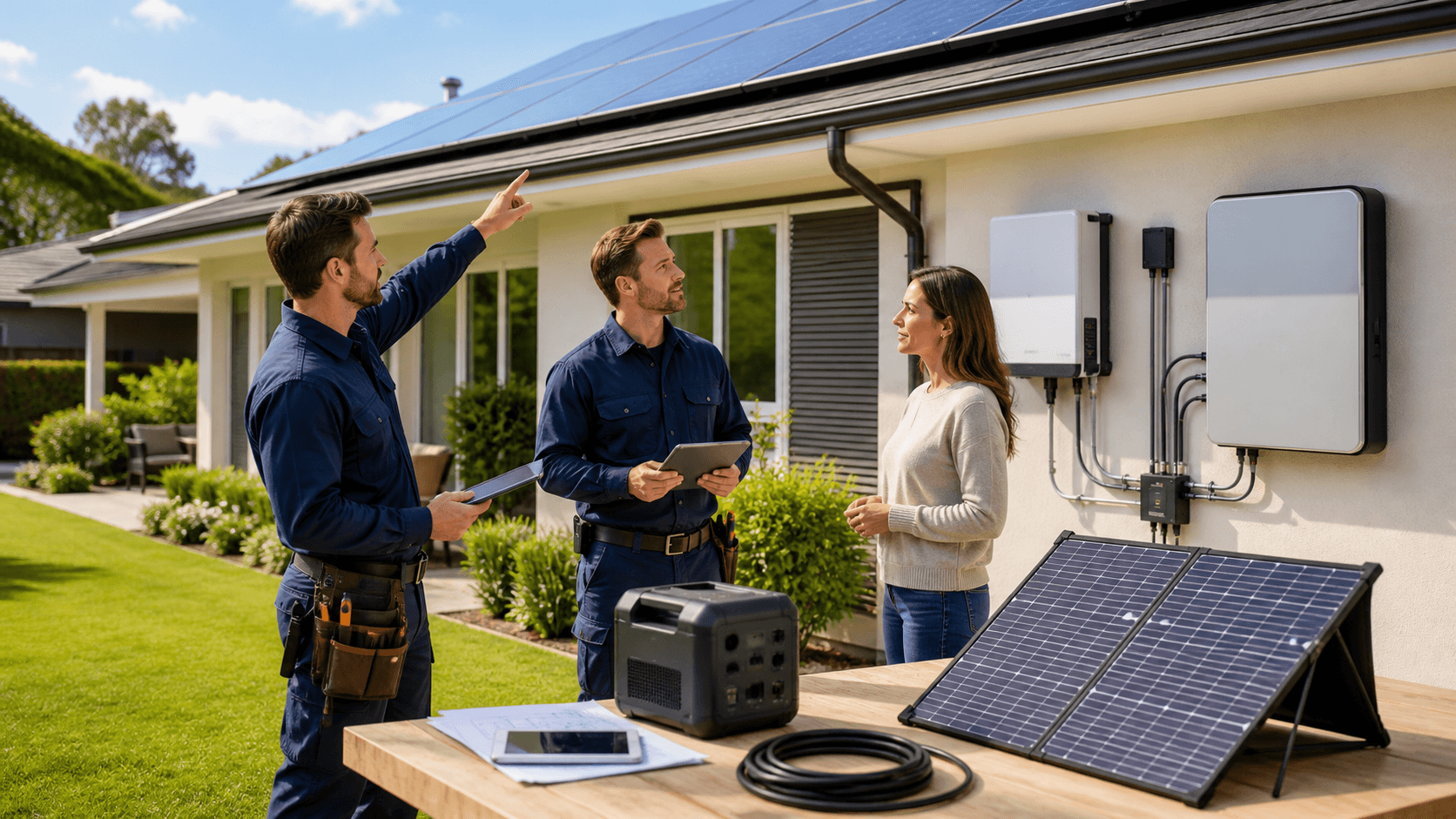
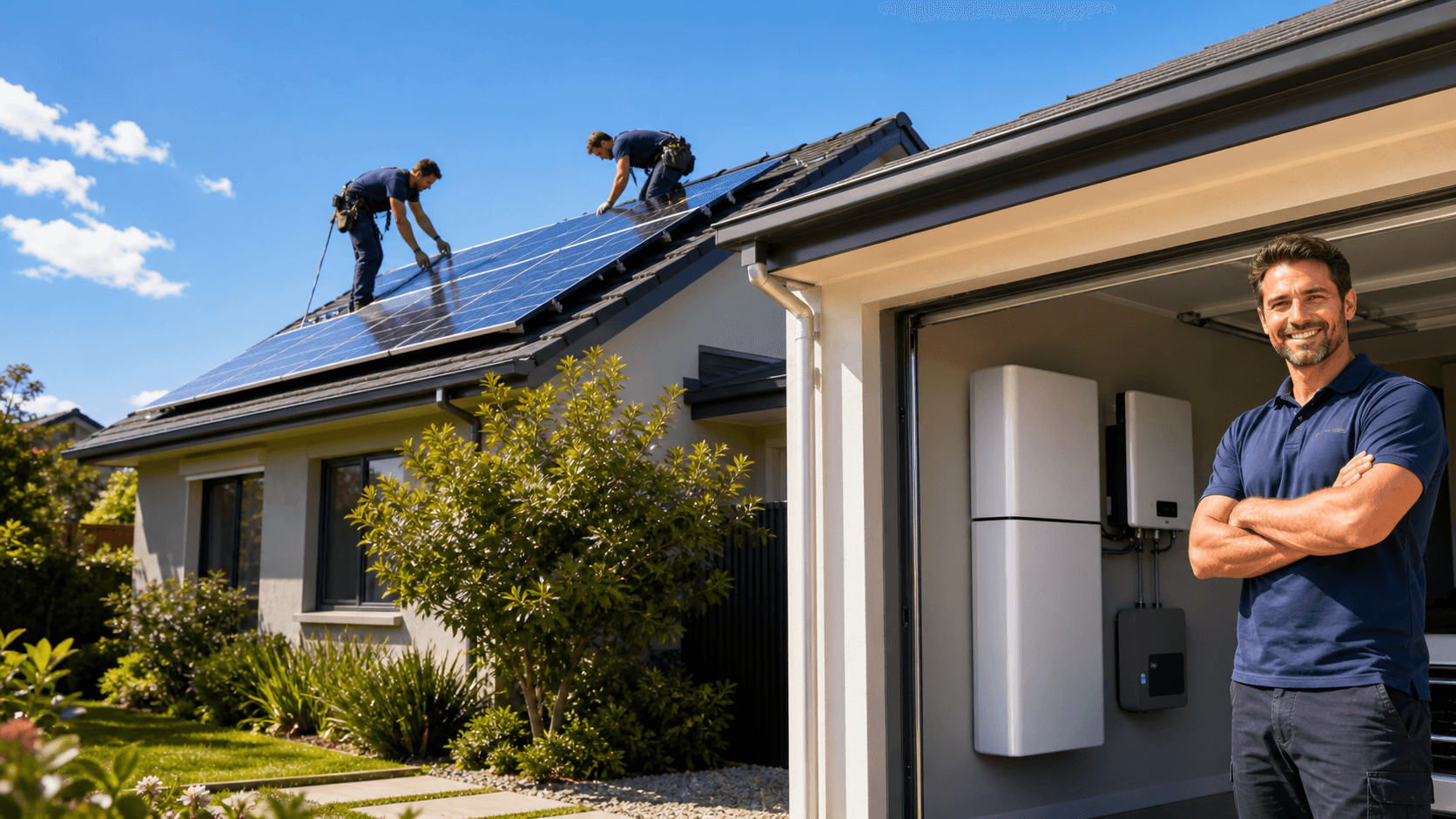
A typical off-grid setup at a weekend cabin or full-time homestead might include:
- Roof or ground-mounted solar panels
- A charge controller and inverter
- A battery bank for backup power
- Water pumps, refrigeration, and maybe a freeze dryer
If wind, hail, or lightning damages any one of those pieces, you may lose cooling, safe food storage, or even water pressure at the worst time. Good news: a bit of planning and the right hardware can greatly lower that risk. Strong mounting, smart grounding, layered surge protection, and clear disconnect points all work together like a safety net for your system.
Secure Your Solar Panels Against Wind and Hail
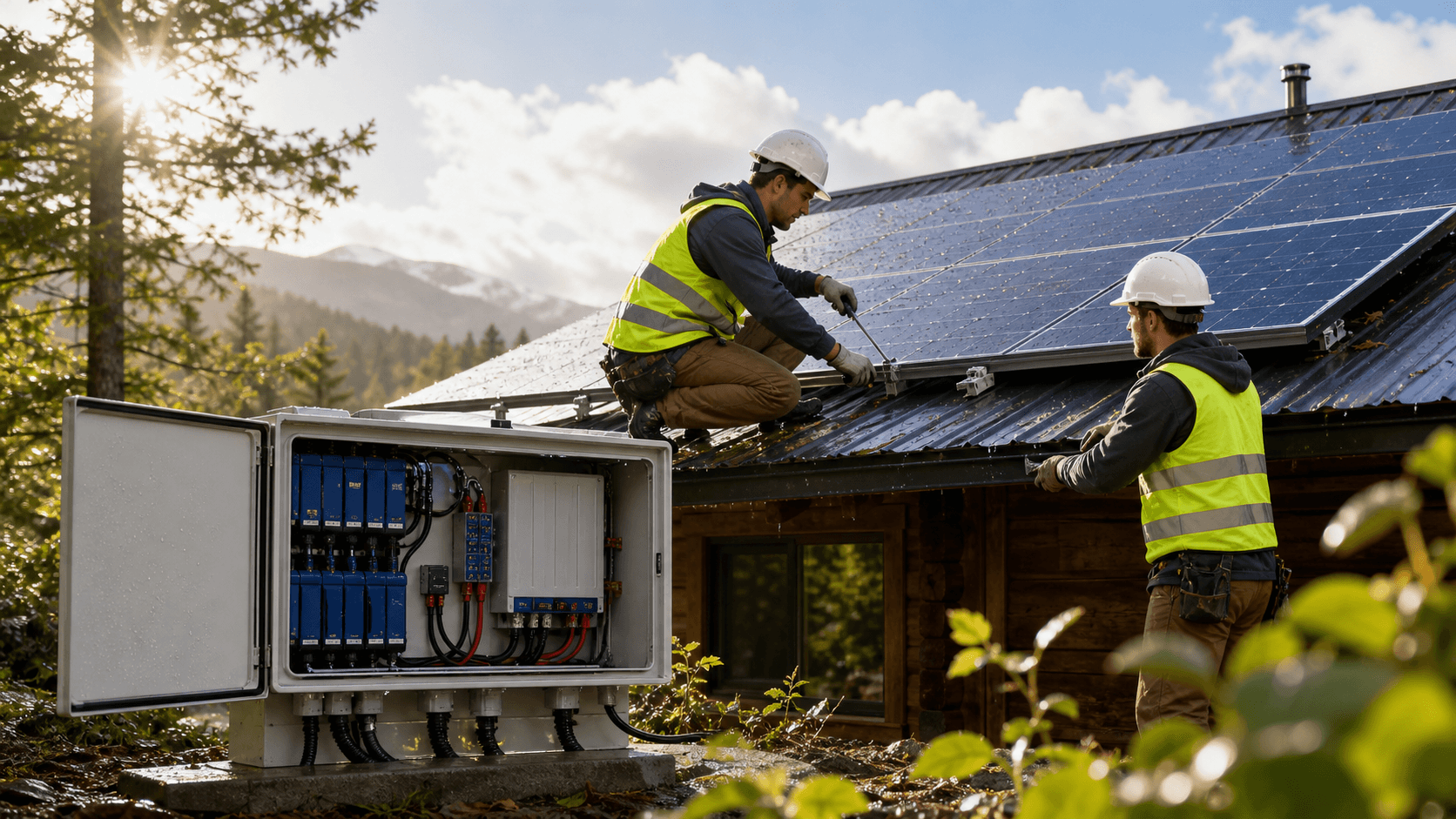
Panels are often the first part of an off-grid solar system to meet strong wind and hail. Mounts need to do more than hold panels in place on a sunny day. They must resist uplift, twisting, and vibration when gusts hit from odd angles.
For storm-ready panel mounting, we generally look at:
- Proper rail spacing matched to your panel size
- Lag bolts or anchors driven deep into rafters, posts, or concrete
- Manufacturer-tested racking instead of improvised brackets
On exposed roofs, pole mounts, and open ground arrays, wind gets a clean shot. Extra bracing, cross supports, and stiffer rails help keep things from flexing and loosening over time. Once hardware starts to loosen, every storm makes it worse, and leaks or broken panels are more likely.
Hardware choice matters too. Stainless steel or hot-dip galvanized bolts, nuts, and washers hold up far better in sun, rain, and humidity. UV-resistant rails and clamps keep plastic from turning brittle. Good flashing at roof penetrations protects your roof structure and keeps water out. Many storm failures come back to small details like a rusted bolt or a missed bead of sealant that slowly lets water and wind reach the structure.
Tilt and layout also play a big part. In summer storm regions, a slightly lower tilt can reduce wind load compared to very steep angles. Compact, well-braced arrays stand up better than tall, scattered panels. To help your system handle wind, focus on:
- Keeping panels close to the roof or rack frame, not high and exposed
- Giving enough row spacing so one row does not funnel wind into another
- Using solid edge clamps so outer panels do not flap like a sail
If you are in a hail-prone area, it can help to choose panels with stronger glass ratings and to have a simple stow plan for adjustable mounts, such as lowering tilt when a major storm is forecast.
Grounding and Bonding to Tame Lightning Energy
Lightning does not have to hit your panels directly to cause trouble. A strike nearby can send energy racing through the ground and through long wire runs. With a good grounding and bonding plan, you give that energy a clear path to earth instead of through your charge controller, inverter, freeze dryer, or battery bank.
A basic grounding system usually includes:
- Grounding electrodes such as ground rods or plates
- Copper grounding conductors sized to your system and codes
- Bonding jumpers that tie module frames, racking, and metal enclosures together
Grounding conductors should be as straight and direct as possible. Sharp bends can encourage side flashes where lightning energy jumps off the conductor onto something else, like a metal pipe or nearby frame. All metal parts of the array and power center should be tied into one grounding network.
Bonding is about getting everything at the same electrical potential. Your solar frames, battery bank negative, metal water piping, and even a metal geodesic dome frame should not be floating at different voltages. A single, unified grounding and bonding system helps energy move where you want it, straight into the earth. Local electrical codes set rules for how this should be done, so working with a qualified professional is always wise when updating or expanding grounding.
Surge Protection That Saves Inverters and Batteries
Surges can come from several directions in summer. A direct strike is obvious, but many systems are hit instead by nearby strikes that induce spikes on long wire runs. Hybrid systems can also see surges coming from generator feeds or from grid backfeed if you are tied in.
A good plan uses layered surge protection instead of just one device. That often means:
- DC surge protective devices at the array or combiner box
- Additional SPDs at charge controller and inverter DC inputs
- AC SPDs at the main off-grid power panel or subpanels
Each layer catches part of the surge, so less energy reaches your sensitive electronics. This is especially important for equipment that is expensive or hard to replace at a remote site, including refrigerators, freeze dryers, water pumps, and battery management systems.
Surge protection works best when paired with solid grounding and good wiring practices. Short, clean runs, neat wire management, and quality disconnect switches or breakers all help SPDs do their job. When we help design complete systems for cabins or off-grid homes, we think through both the power path and the surge path so nothing is left exposed.
Disconnects and Safe Shutdown When Storms Roll in
Even with strong mounting, smart grounding, and SPDs, you still need a way to shut things down fast. Clear, well-labeled disconnects help protect your family and anyone who might work on your system, especially right after a big storm.
Most off-grid solar systems will have several types of disconnects:
- DC array disconnects between panels and charge controllers
- Battery disconnects at the battery bank or between battery and inverter
- AC disconnects on inverter outputs feeding your main panel or subpanels
Each disconnect must be rated for the system voltage and the maximum current it might see. Labels should be easy to read so someone unfamiliar with the system can follow them in a stressful moment.
It also helps to have simple storm procedures written out. For example:
- Before a major storm, turn off noncritical loads to lighten the system
- Know which disconnects to open if you need to isolate the array or batteries
- After the storm, walk around and look for damaged wires, loose panels, or water leaks
- Note any tripped breakers or surge devices so a professional can check them
A printed "storm checklist" near your power center turns all of this into a clear routine that anyone on site can follow with confidence.
Summer-Ready Off-Grid Power You Can Trust
Storm-hardening an off-grid solar system is really about stacking several smart choices. Strong, well-braced panel mounting reduces the chance of wind damage. Solid grounding and bonding guide lightning energy away from your equipment. Layered surge protection shields inverters, batteries, and appliances from fast spikes. Thoughtful disconnect placement and simple procedures give you control when the sky turns ugly.
A mid-season systems checkup is one of the best habits you can build. Take a weekend before peak storm patterns hit to tighten hardware, check flashing, confirm grounding connections, test disconnects, and inspect your SPDs. Many homesteaders and cabin owners snap a few photos of their power center, array, and grounding layout and keep notes on how everything is set up. With a little planning, your off-grid solar system can stay steady and ready, delivering reliable power through long summer afternoons and noisy nights of thunder.
Get Started With Your Off-Grid Energy Upgrade Today
If you are ready to take control of your power and reduce your reliance on the grid, explore the off-grid solar system options we have curated at Green Vista Living. We will help you match the right kit to your energy needs so you can move forward with confidence. Have questions about sizing, batteries, or installation details? contact us and we will walk you through your next steps.