Stop Losing Money on the Wrong Freeze Dryer Setup
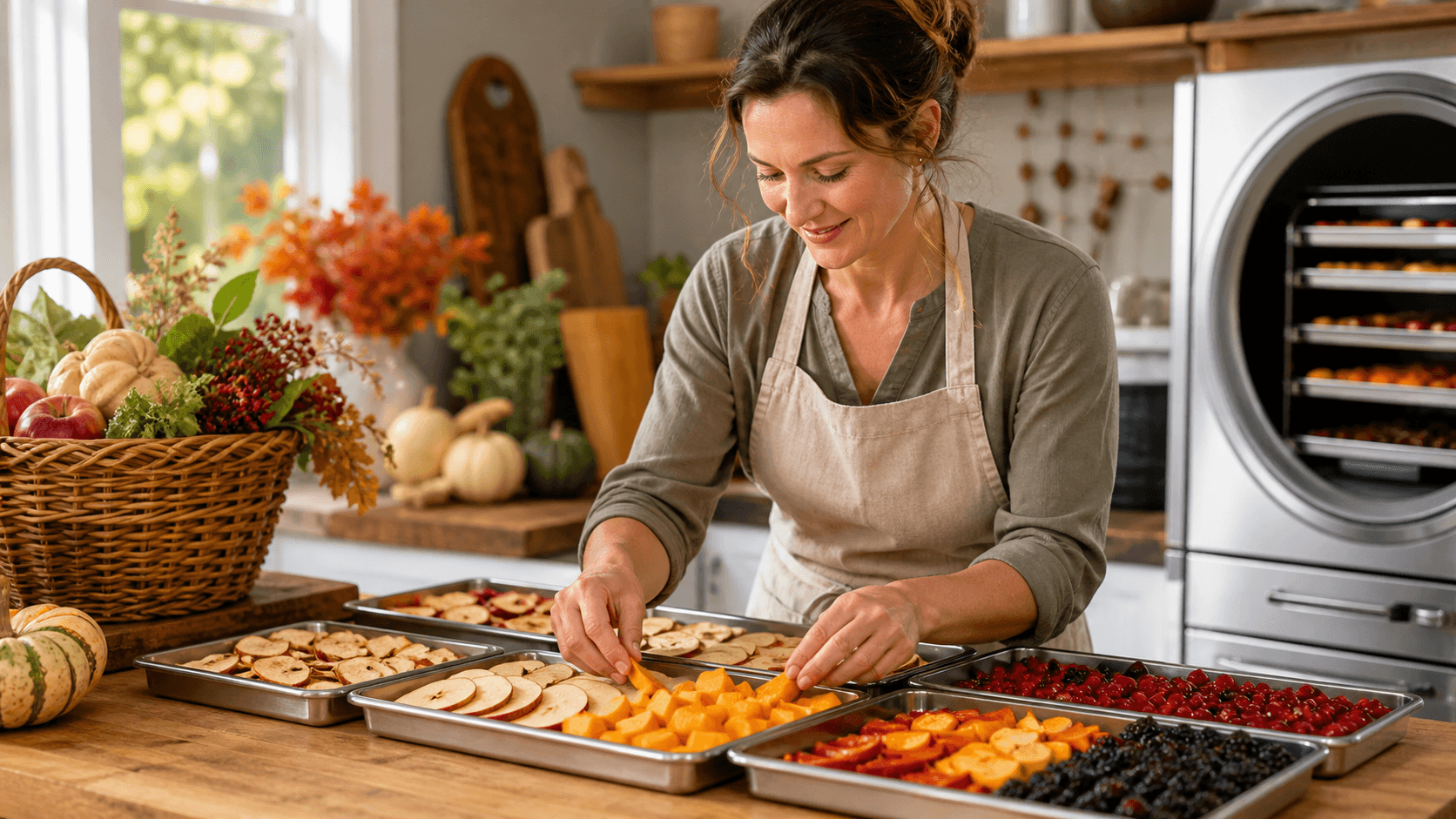
Home freeze dryers can be amazing tools. They let us save garden harvests, bulk meat deals, and sale items so food lasts for years instead of weeks. But the wrong setup quietly eats money through wasted food, energy, and repairs.
Many families buy a machine, plug it into any open outlet, and start loading trays. A few weeks later they are staring at big power bills, half-dried food, and a noisy unit heating up the whole house. The problem is not just picking the wrong model. It is misjudging power needs, climate, space, capacity, and what it really takes to keep a freeze dryer running well during hot late-summer months.
At Green Vista Living, we work with people who care about off-grid living, preparedness, and long-term food storage. We see the same mistakes again and again. So in this guide we are breaking down the hidden costs of a poor setup and how to choose a smarter one before you start shopping for freeze dryers for sale.
When Bigger Is Better Quietly Drains Your Budget
A lot of folks think a bigger freeze dryer will save more food and pay off faster. Sometimes that is true. But often, oversizing is one of the most expensive mistakes.
Here is what happens with a unit that is too large for your household:
- You run partial loads that still use almost the same power as full loads
- The machine racks up wear and tear even when trays are only half full
- Food sits in the fridge or freezer waiting for more to fill the trays and starts to lose quality
If your garden is modest, or you are preserving for two to four people, a big unit can actually slow you down. You wait to gather enough food to fill it. By the time you have a full batch, some produce is already limp or bruised. That food will not freeze dry as well.
Climate plays a big role too. In hot July and August weather, a larger compressor and vacuum pump run longer and harder. If the unit sits inside a conditioned room, your AC now has to fight the extra heat. You pay for the freeze dryer, plus the extra cooling.
A better approach is to match the machine to your real life:
- How big is your average weekly harvest at peak season?
- How much freezer space do you have for staging food?
- How many evenings can you realistically spend prepping trays?
For many families, a mid-sized unit run more often is easier to keep full, gives fresher results, and keeps power use more predictable.
Power, Heat, and Noise You Never Budgeted For
Freeze dryers are not like plugging in a blender. They draw steady power for long cycles and often need a dedicated 20-amp circuit. Plugging into the wrong outlet can trip breakers and may even risk damage to wiring. Some people end up calling an electrician at the last minute when the first batch shuts the power off.
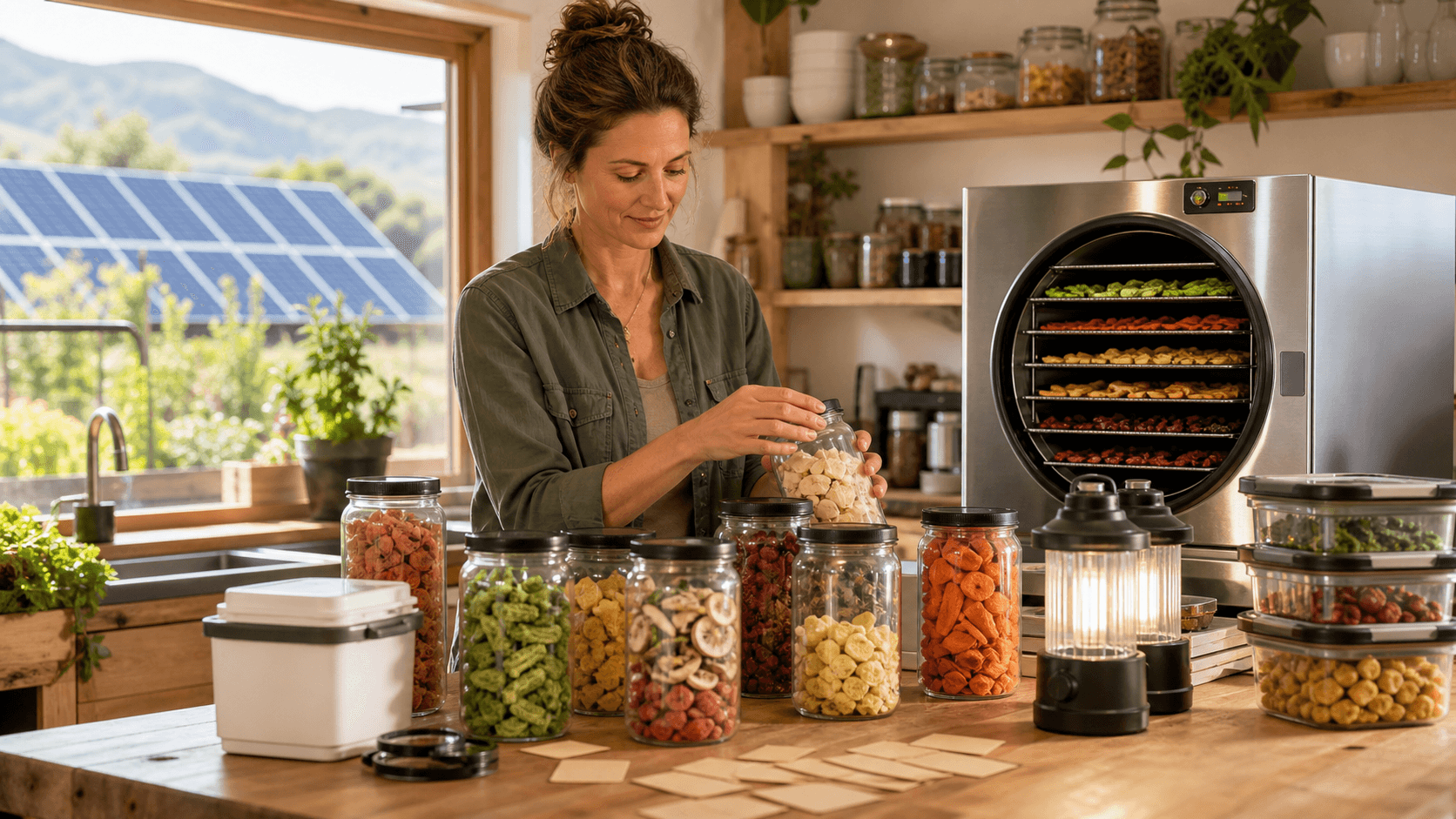
If you are on solar or thinking about going off-grid, planning matters even more. Freeze dryers have:
- Startup surges when the compressor and vacuum pump kick on
- Long run times that can stretch well into the night
- Loads that may not line up with your sun hours
If the system is undersized, your batteries can drain faster than you expect. That can force you back to the grid or to a backup generator more often than you wanted. Pairing the right freeze dryer with the right solar power and storage is key if you want true resilience.
Heat is another surprise. All the cold pulled out of your food turns into warm air in the room. In late summer, that can turn a small space into a sauna and push your AC harder. Humidity can rise too, especially if you are opening the door during defrost.
Noise also matters more than people think. A running freeze dryer is about as loud as a big window AC or a shop vacuum in the next room. In a quiet kitchen or open living space, that gets old fast. It is usually better to:
- Plan a dedicated spot like a utility room, basement, or insulated corner of the garage
- Make sure you can add a proper outlet in that spot
- Give it enough airflow so heat does not build up
Thinking through power, heat, and noise before you buy helps you avoid expensive changes later.
Maintenance Mistakes That Shorten Freeze Dryer Life
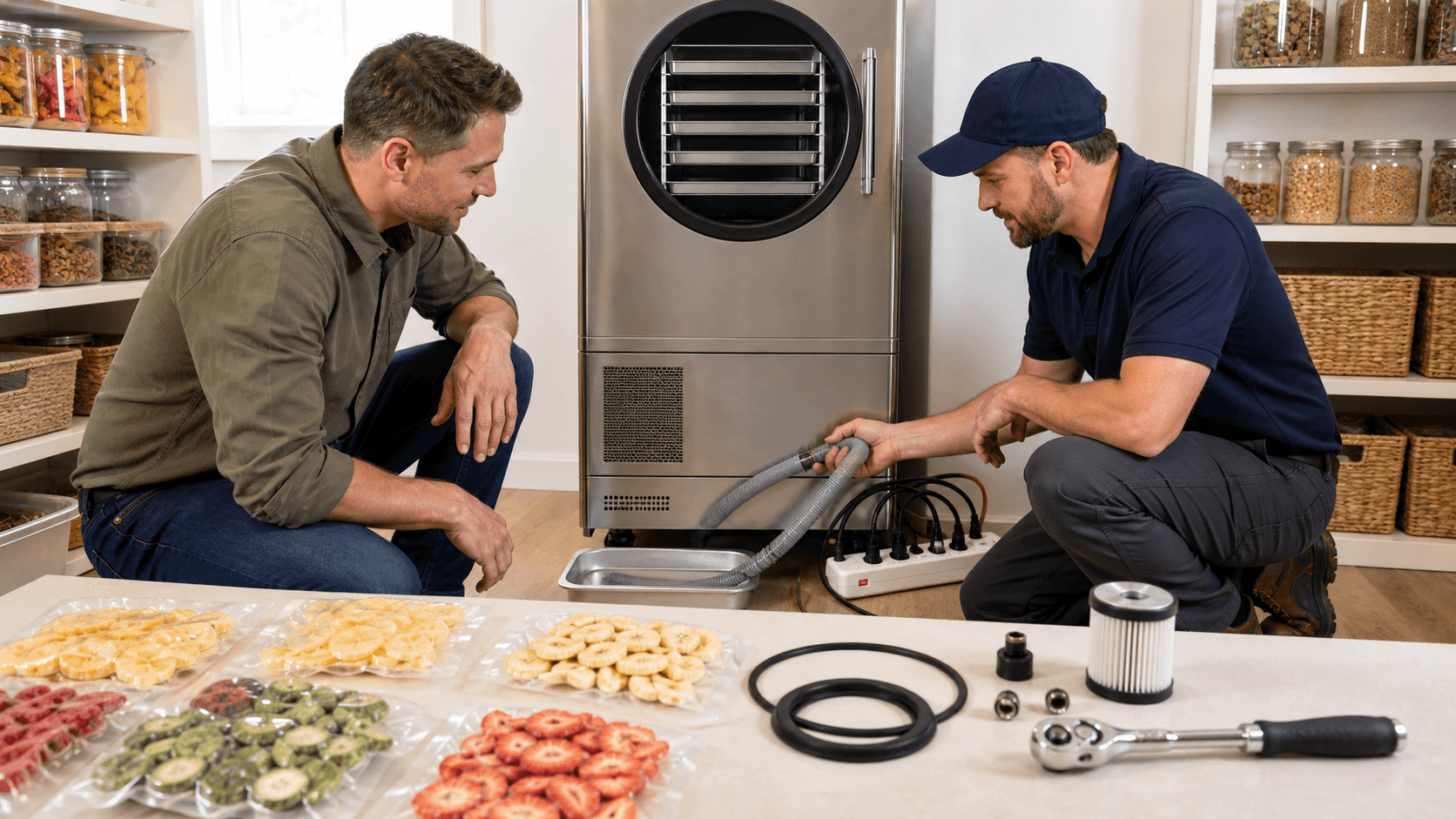
Freeze dryers are hard-working machines. They need regular care to keep running well, especially when you are pushing them during peak harvest.
Everyday maintenance usually means:
- Changing oil on oil-based vacuum pumps at the right intervals
- Checking door gaskets and seals for cracks or crumbs
- Cleaning trays and the chamber so moisture and residue do not sit
- Keeping filters clean so air can move freely
Skipping these jobs can show up as slow dry times, failed batches, and sudden breakdowns. Pump failure, vacuum leaks, and corrosion often appear right when gardens, orchards, and hunting seasons are at their peak, which is the worst possible timing.
Placement also affects lifespan. Running a machine in a dusty corner, a damp shed, or on a wobbly table can cause:
- Extra wear on the pump and compressor
- Vibrations that loosen fittings and seals
- Rust, mold, and lingering odors in the chamber
Pump choice matters too. Oil-based pumps often cost less upfront but need regular oil changes and can be messy if you are running batch after batch. Oil-free pumps usually cost more at the start, but they reduce day-to-day maintenance and downtime. When you compare freeze dryers for sale, think about how often you will run it and how much time you want to spend on upkeep.
Food Quality Failures That Cancel Out Your Savings
The whole point of buying a freeze dryer is to save food and money. But a poor setup can ruin batch after batch and cancel those savings quickly.
Common problems include:
- Food that feels dry on the outside but is still wet inside
- Case hardening where a tough shell forms and locks in moisture
- Off flavors from drying in hot, humid rooms
- Food that will not rehydrate well because it was over-dried or unevenly dried
A few trays of spoiled meat, berries, or garden vegetables can easily erase months of careful shopping and growing. This hits hardest in mid- to late summer when produce is at its peak and you are counting on that stored food for later.
Pre-processing and storage habits matter just as much as the machine:
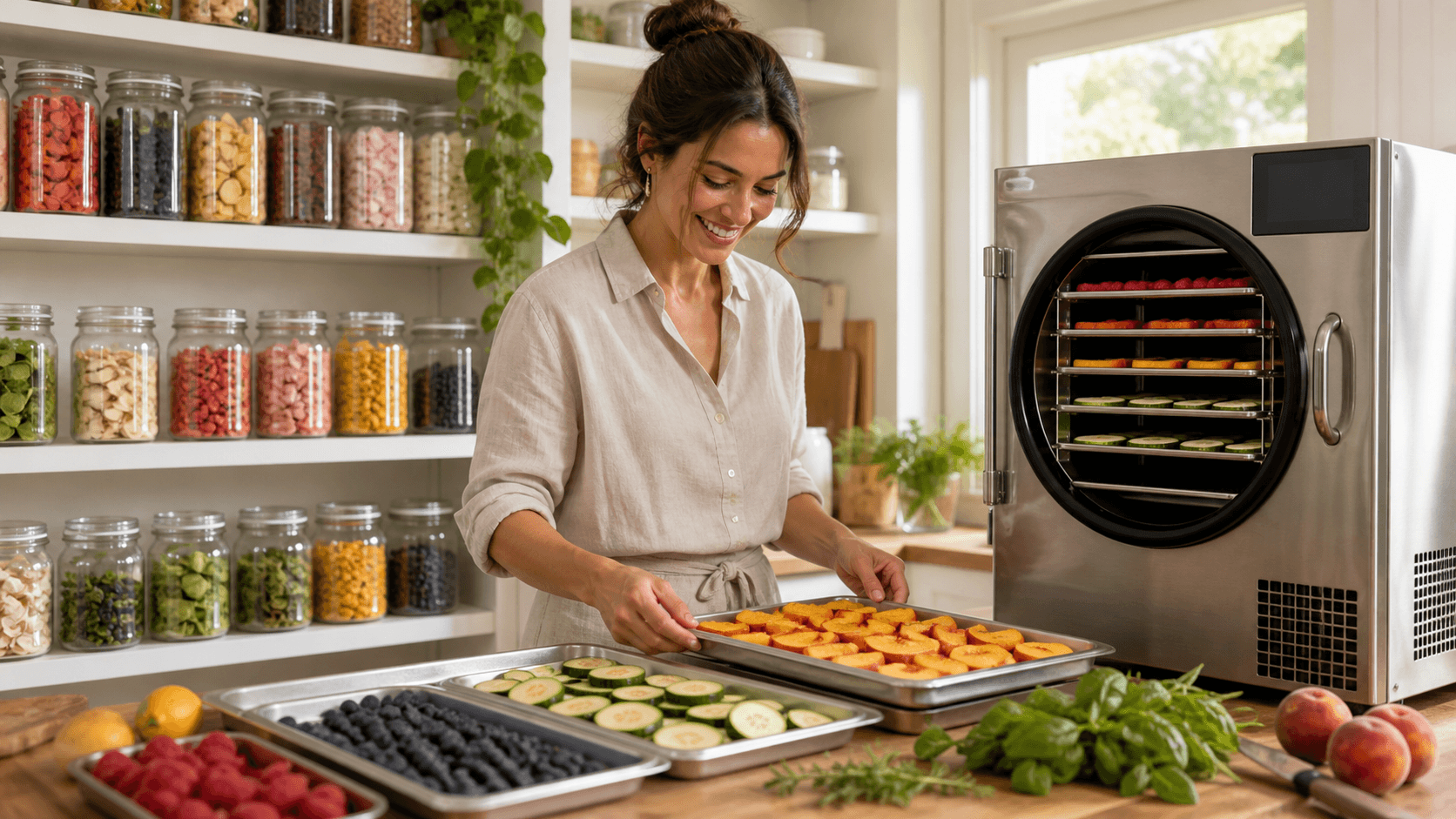
- Pre-freeze food in thin, even pieces so the freeze dryer does not work as hard
- Load trays in a single layer without stacking or crowding
- Store finished food in quality mylar bags or jars with the right oxygen absorbers
- Keep finished packages in a cool, dark, dry place
When your setup supports the whole system from harvest to storage, every batch is more likely to succeed.
How to Choose a Smart Freeze Dryer Setup That Pays You Back
Choosing the right freeze dryer is less about chasing the biggest model and more about building a setup that quietly works with your home, your climate, and your habits.
Here is a simple checklist to guide your planning:
- Capacity that matches your normal harvests and household size
- Electrical service that can support long, steady cycles without surprise upgrades
- If you are on solar, a system sized for the load and timing of freeze drying
- A planned location with good airflow, heat control, and noise tolerance
- A maintenance routine that fits your schedule and comfort level
If you get those pieces right before late summer harvests peak, your freeze dryer can help you put away fruits, vegetables, meats, and full meals with fewer surprises and less waste. At Green Vista Living, we care about helping people build off-grid and resilient setups that actually work in real homes, not just on paper. A smart freeze dryer setup should quietly support your lifestyle for years, cut waste, steady your food costs, and strengthen your self-reliance instead of becoming another loud, awkward machine that never quite earns its space.
Preserve Your Harvest And Cut Food Waste All Year Long
If you are ready to store garden crops, leftovers, and bulk buys for the long term, explore our carefully selected freeze dryers for sale. At Green Vista Living, we help you choose the right size and setup so you get reliable preservation without guesswork. If you have questions about features, capacity, or setup, reach out through our contact page so we can guide you step by step.