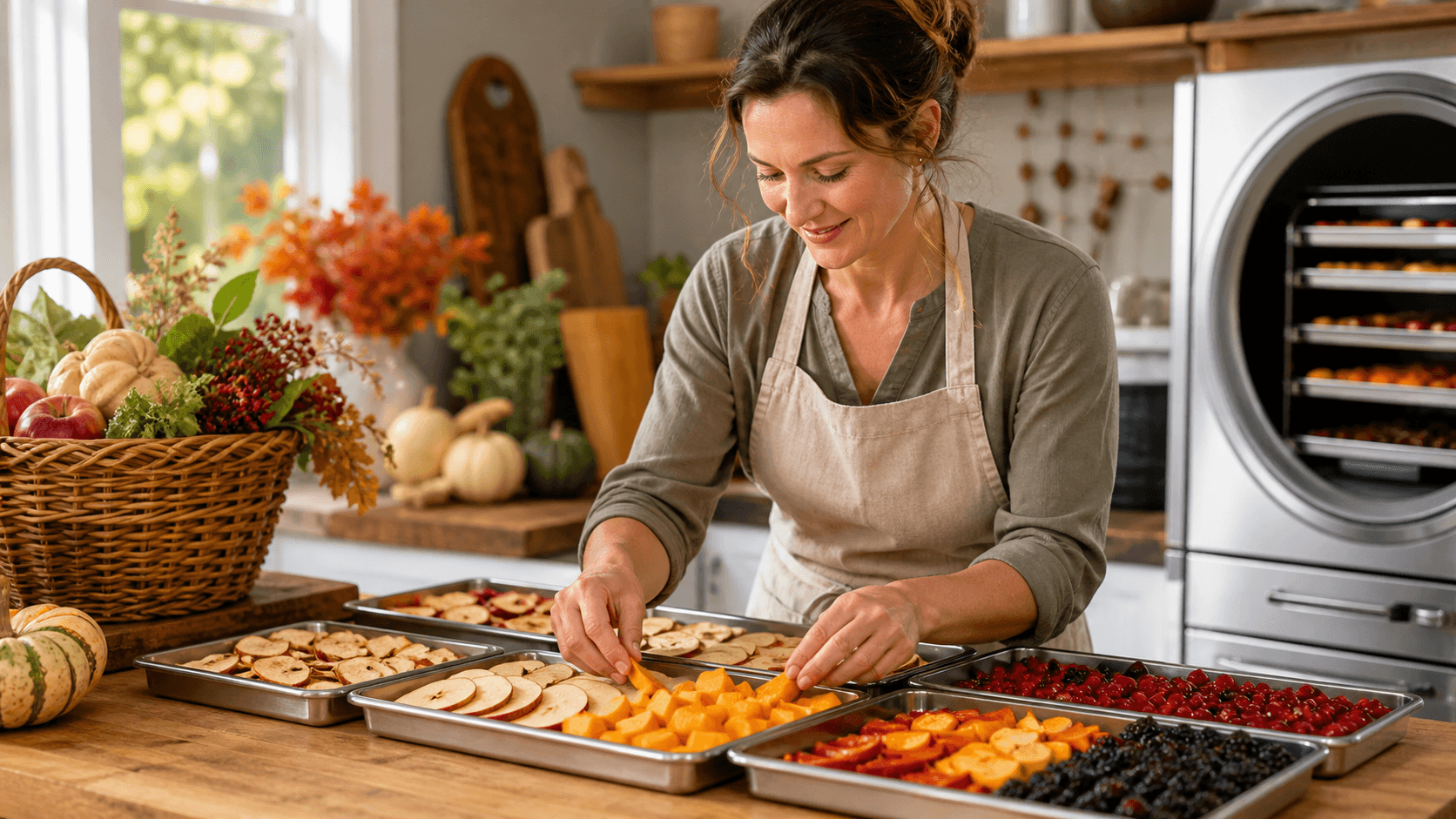
Mid-July is when gardens and farmers' markets explode with color. Tomatoes, berries, herbs, and peppers are everywhere, and it is easy to feel a little pressure to use it all before it spoils. Canning and dehydrating help, but they are not the only options for long-term off-grid food security.
A vacuum freeze dryer lets us take that summer abundance and turn it into shelf-stable food that keeps flavor, texture, and nutrients for the long haul. In this guide, we will walk through how vacuum freeze drying works, what to look for in a machine for off-grid life, how to power it with solar and batteries, and how to turn your summer harvest into a pantry that actually supports you all year.
Why Vacuum Freeze Drying Fits Off Grid Food Security
Right now, gardens, farm stands, and U-pick fields are overflowing. This is the perfect time to think past short-term storage and plan for winter and possible supply hiccups.
A vacuum freeze dryer:
- Freezes your food rock solid
- Pulls a deep vacuum around it
- Gently removes moisture without heating and cooking it
The result is dry, crisp food that keeps its shape and much of its original taste. You just add water later to bring it back to life. For off-grid families, this means we can:
- Store food for the long term without depending on constant refrigeration
- Keep more nutrients compared to many other storage methods
- Build a pantry that does not rely on stores or delivery trucks staying full and on time
Instead of worrying if the power will stay on, we can focus on putting up food when the sun is shining and the garden is giving.
How a Vacuum Freeze Dryer Actually Works
The science sounds fancy, but the process is pretty simple when we break it down.
Step by step, this is what happens:
- First, the food is frozen solid.
- Next, the chamber pulls a strong vacuum around the food.
- Under vacuum, ice turns straight into vapor. This is called sublimation.
Because the water skips the liquid stage, the food does not sit in its own juices, and it does not get cooked by high heat. It keeps much of its original color, shape, and flavor.
Compared to dehydration:
- Dehydrators use warm air to dry food. This can change texture and taste.
- Some nutrients break down with heat.
- Texture gets leathery or crunchy in a different way.
Compared to canning:
- Canning uses heat and jars. It is great for safety, but it changes taste and texture.
- Canned foods are heavier and take more space.
A vacuum freeze dryer used on a homestead is usually a countertop or mid-size unit. It plugs into standard power, which can come from an off-grid solar-plus-battery system. When set up right, you can run regular batches on your own power, far from any town.
Choosing the Right Vacuum Freeze Dryer for Off Grid Life
Picking the right size is a big first step. Think about:
- What you grow or buy in bulk: berries, garden veggies, meats, eggs, leftovers
- How often you harvest: steady small batches or big harvest weekends
- Your goal: a few backup meals or a full year of pantry security
Small units work well for:
- Herbs, small berry harvests, dog treats, kid snacks
Medium units help with:
- Full garden runs, bulk meat buys, whole family meals
Large units are better if you:
- Grow large gardens
- Hunt or raise your own meat
- Want to stock a full year of meals
Power matters too. Freeze dryers pull more power during freezing and vacuum cycles, then less during drying. When planning for off-grid use, think about:
- Peak power draw so your inverter can handle it
- Total run time per batch
- How many batches you want to run each week in busy harvest season
In remote cabins, repair trips are a headache, so look for:
- Solid build quality with durable parts
- Simple maintenance, like oil changes for the vacuum pump if needed
- Clear user support and documentation
Premium units with better components usually pay off when you live far from town and depend on your gear.
Powering Your Freeze Dryer with Solar and Batteries
A vacuum freeze dryer can fit nicely into an off-grid power plan, especially if you plan around sunny seasons.
Think of your setup as three pieces:
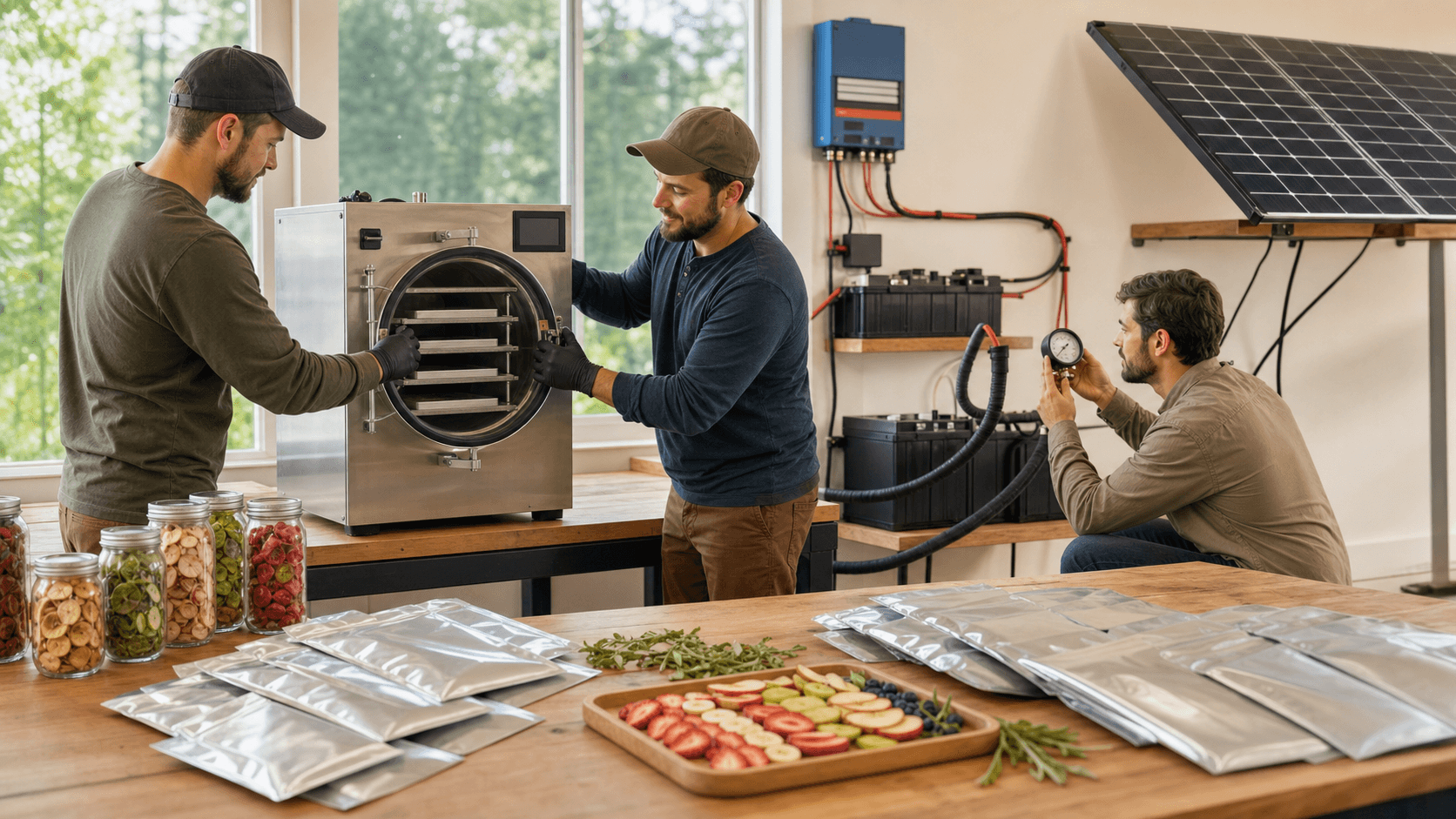
- Solar panels: gather energy during the day
- Battery bank: store that energy for night and cloudy hours
- Inverter: turns DC power into AC for your freeze dryer
For planning, consider:
- Enough panel wattage to cover the freeze dryer plus your normal loads
- A battery bank sized so a full cycle does not drain it too low
- An inverter with enough surge capacity for start-up loads
Helpful strategies include:
- Running most cycles from late spring through early fall when days are long
- Pre-freezing food in a chest freezer so the freeze dryer cycle is shorter
- Staggering cycles so it is not running at the same time as other big loads like well pumps or electric ovens
- Keeping a backup battery or generator ready for long cloudy stretches
At Green Vista Living, we see many off-grid homes in a range of climates plan their systems this way so they can put up food while the sun is generous.
Designing a Practical Off Grid Freeze Drying Station
A little planning for your workspace makes freeze drying smoother and safer.
Good layout ideas:
- Place the freeze dryer in a cool, dry area, not in direct sun
- Leave room around it for airflow and for the vacuum pump
- Expect some noise and vibration, so avoid bedrooms if possible
Helpful supporting gear:
- A chest freezer or standard freezer for pre-freezing trays
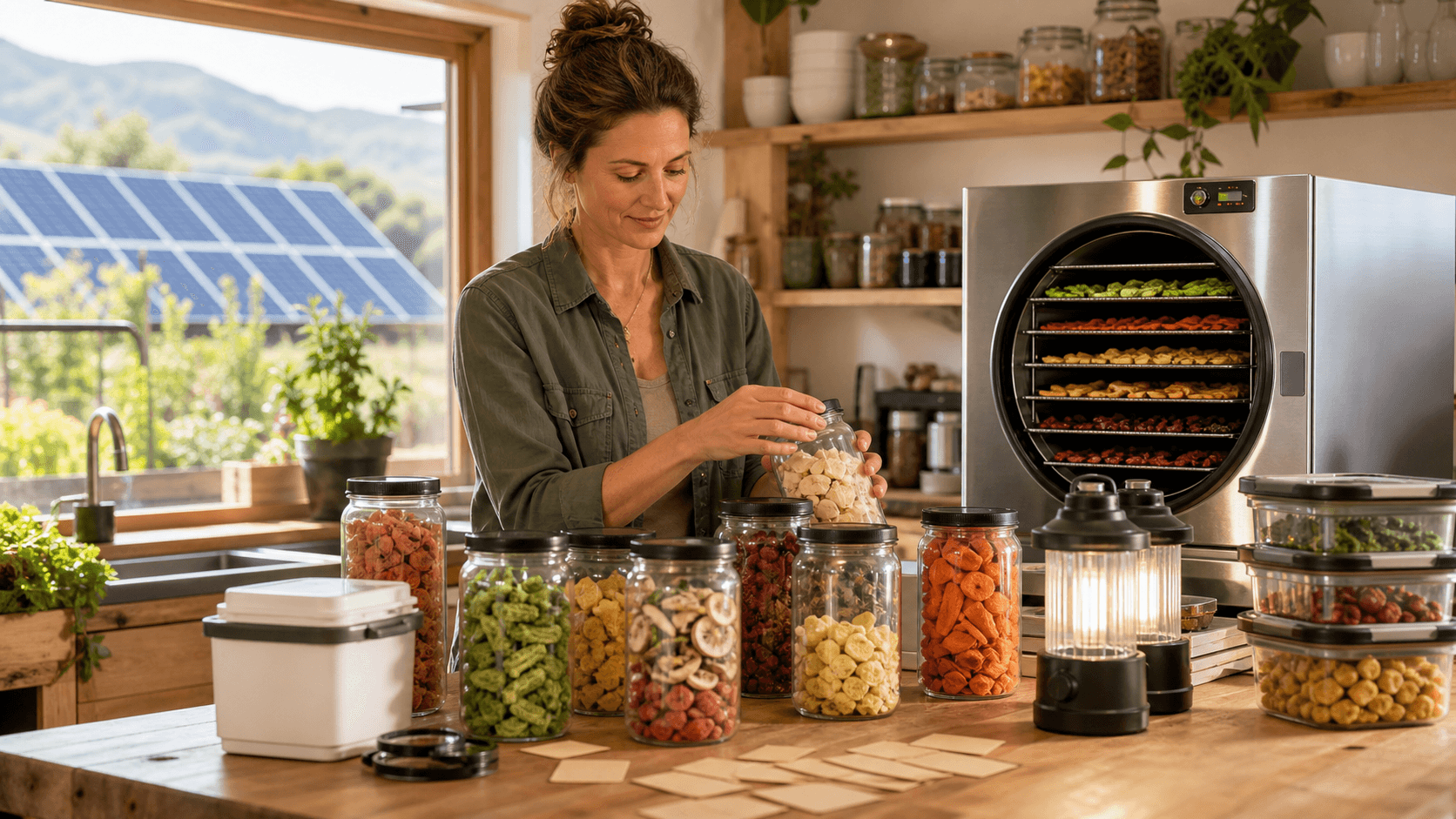
- Mylar bags, glass jars, and quality oxygen absorbers
- A heat sealer or impulse sealer
- Shelving and bins for organized storage
- Labels and markers so you always know what is what
For safe long-term storage:
- Keep finished food in a cool, dark, dry place
- Use clear labels with food type and date
- Rotate older food to the front so it gets used first
- Build a simple inventory list so the whole household sees what is on hand at a glance
A tidy system turns your pantry into a quiet form of security.
What to Freeze Dry First From Summer Abundance
When you are just getting started, it helps to focus on high-value, quick-win foods.
Great first batches in mid-summer include:
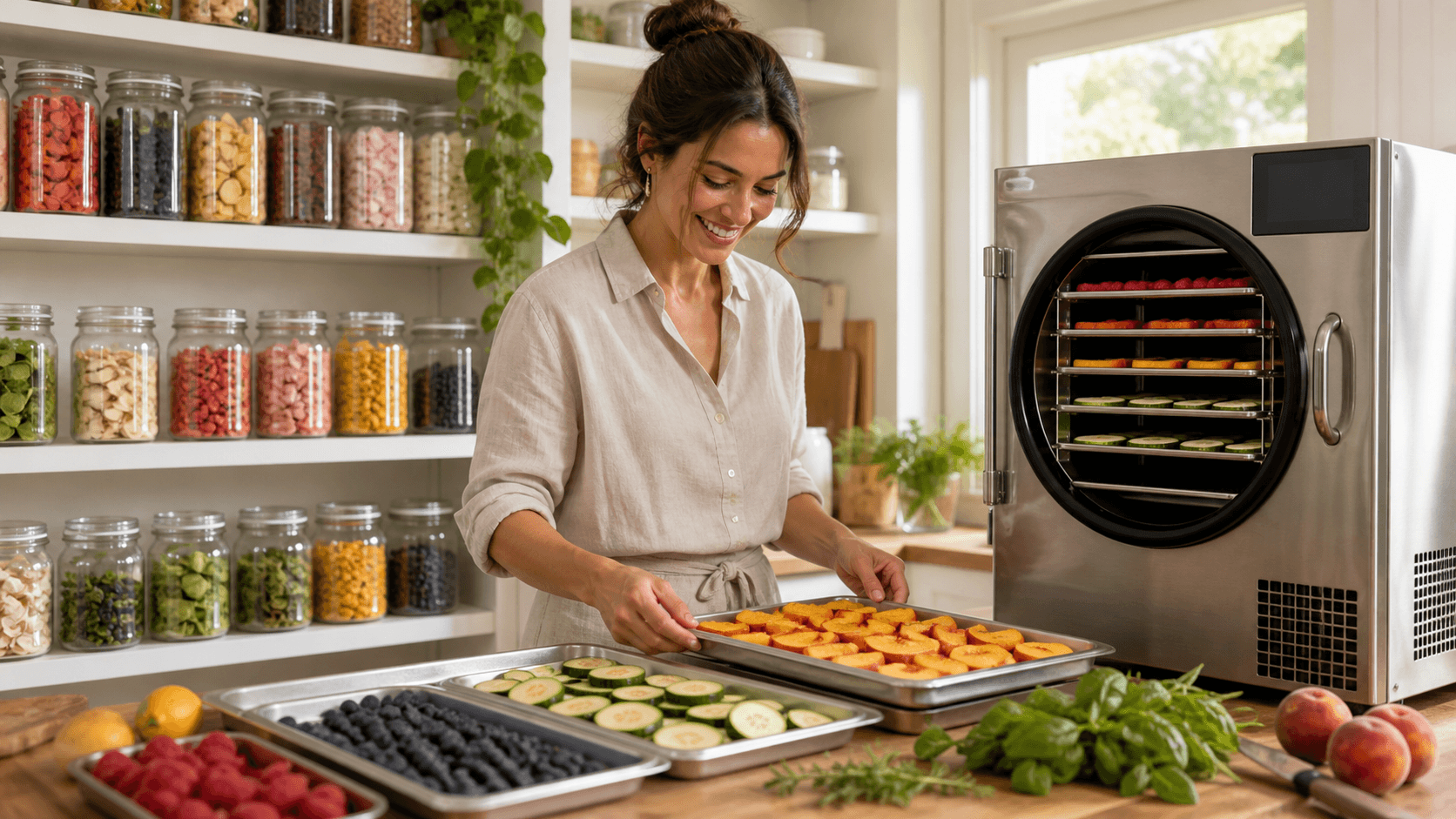
- Garden vegetables like tomatoes, peppers, green beans, and zucchini
- Herbs such as basil, parsley, and cilantro
- Berries and stone fruits at peak ripeness
For more resilience, add:
- Proteins, like cooked shredded meats or crumbled sausage
- Eggs, scrambled and cooked before freeze drying
- Dairy items like shredded cheese or yogurt drops
- Ready-to-eat meals, such as stews, chilis, and casseroles
Think in terms of batch planning:
- Group similar foods together so drying times match
- Build "meal kits" in single bags with meat, veggies, and starch together
- Prioritize what will spoil first, like soft fruit and tomatoes, then move to sturdier crops
Freeze drying some comfort foods and kid-friendly snacks also keeps morale higher during long winters or when the grid has problems.
Building a Resilient Pantry with Smart Next Steps
From here, the next step is to look at what you already have. Check your pantry, freezer, garden plans, and current solar setup. Then decide how much food you want ready to eat without electricity, and how often you are willing to run batches when the harvest is rolling in.
Starting with a modest vacuum freeze dryer is often the easiest way to learn the process, then scale up as your garden, family size, and solar capacity grow. At Green Vista Living, we focus on helping people match quality freeze dryers with reliable solar power systems and backup batteries so their off-grid homes and cabins feel steady, stocked, and ready for whatever the seasons bring.
Transform Your Harvests Into Long-Lasting, Shelf-Stable Goodness
If you are ready to preserve your homegrown foods with maximum flavor and nutrition, our vacuum freeze dryer makes it simple to get started. At Green Vista Living, we help you choose the right setup so you can stock your pantry with confidence all year long. If you have questions or want personalized guidance, just contact us and we will walk you through your options.