Turn Summer Harvests Into Year-Round Security
Long-term food storage matters a lot more when the store is not just down the street. Off-grid families know that a big garden, a good hunting season, or a bulk buy is a blessing, but only if the food lasts. When the sun is shining and everything is growing, it is easy to fill freezers and jars. The real test comes in the cold months, or when the power system is stretched.
A freeze dryer at home promises something powerful: turning fresh food into light, shelf-stable meals that sit quietly on a shelf, ready when you need them, without depending on the grid. It sounds perfect for cabins and homesteads. But is it actually practical once we talk about power draw, space, upkeep, and daily life off the grid?
At Green Vista Living, we spend a lot of time thinking about how real homes work off-grid. So we will walk through freeze drying in plain language, with an honest look at tradeoffs, and how it fits with other methods like canning, dehydrating, and root cellars.
How Home Freeze Dryers Actually Work Off the Grid
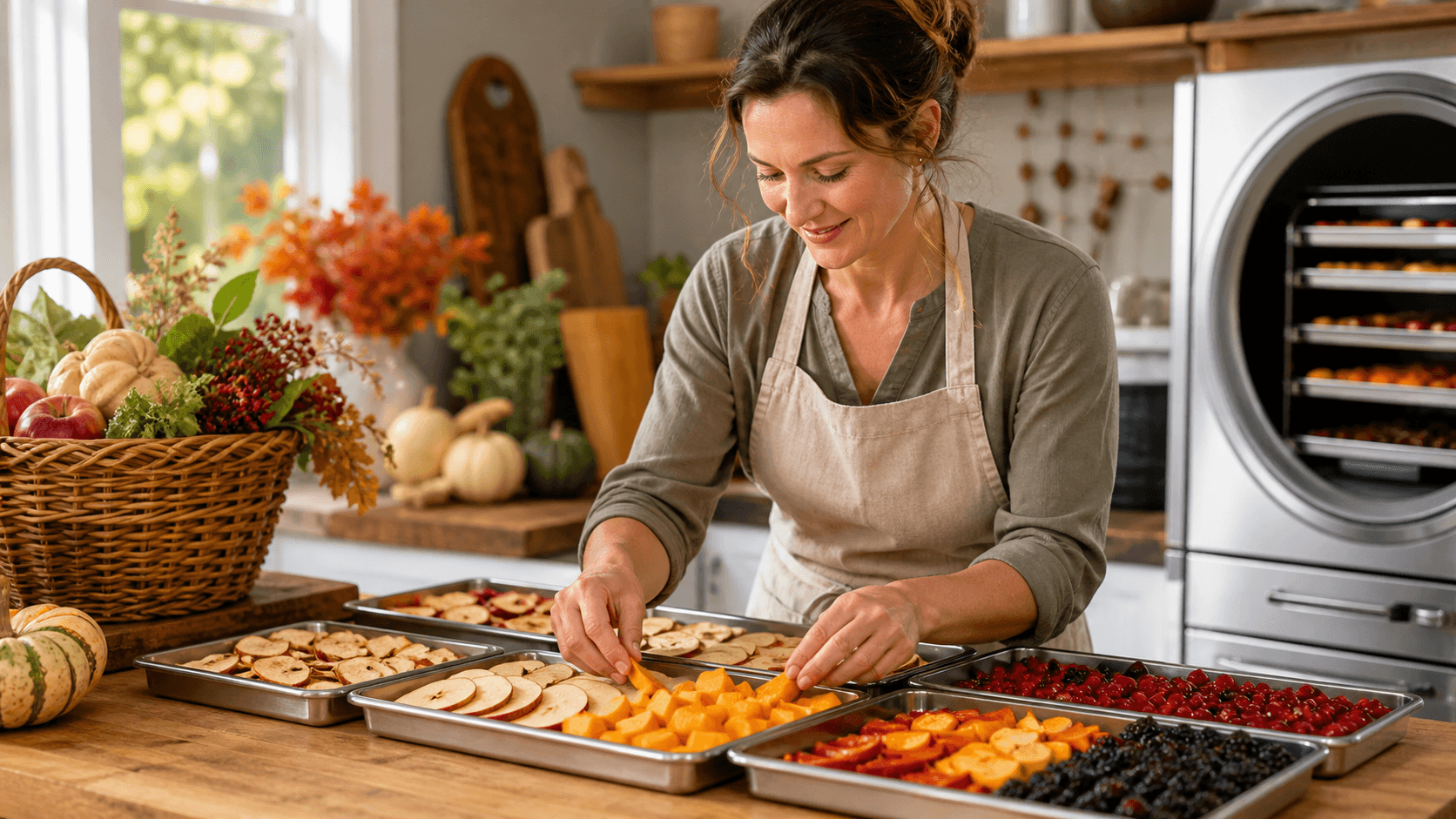
Freeze drying sounds fancy, but the idea is simple. Food is frozen solid, a vacuum pulls air and pressure way down, then gentle heat turns the ice inside the food straight into vapor. The water skips the liquid stage, so the food keeps most of its shape, color, and flavor.
The main parts of a home freeze dryer usually include:
- A compressor that handles deep freezing
- A vacuum pump that pulls pressure down
- Heating elements that warm the trays in a controlled way
- A control panel that runs the cycle and sensors
All of these matter for off-grid power planning, because they turn on and off at different times during a batch.
Typical batches can run from about 20 hours up to around 40 hours, sometimes longer for dense or fatty foods. That long, steady run means you have to think about:
- How much battery storage you have
- When your solar panels make the most energy
- Whether you are willing to fire up a generator to finish a cycle
Compared with canning, freeze-dried food is lighter, often keeps more of the fresh taste, and can last for many years when stored well. Compared with dehydrating, freeze drying usually keeps texture closer to the original and works better for things like full meals, dairy, and eggs. On the other hand, canning and dehydrating can be simpler, use less power, and rely more on heat from gas or wood, which can be easier for some off-grid setups.
Power Demands and Energy Planning for Off-Grid Use
When we talk about a freeze dryer at home off-grid, power is the big question. Different sizes pull different loads. A small unit might be more friendly to a modest solar setup, while a large one asks a lot more from your batteries and panels.
As a rough guide, think in terms like this:
- Small freeze dryer: lower amp draw, smaller batch, fewer trays
- Medium unit: moderate draw, better match for a family garden
- Large unit: higher draw, big batches for serious homesteads
Each batch uses a chunk of energy over many hours. If you know your system can make a certain amount of energy in a sunny day, you can plan how many batches per week make sense without dipping into reserves set aside for lights, well pumps, and other needs.
Good strategies for off-grid use include:
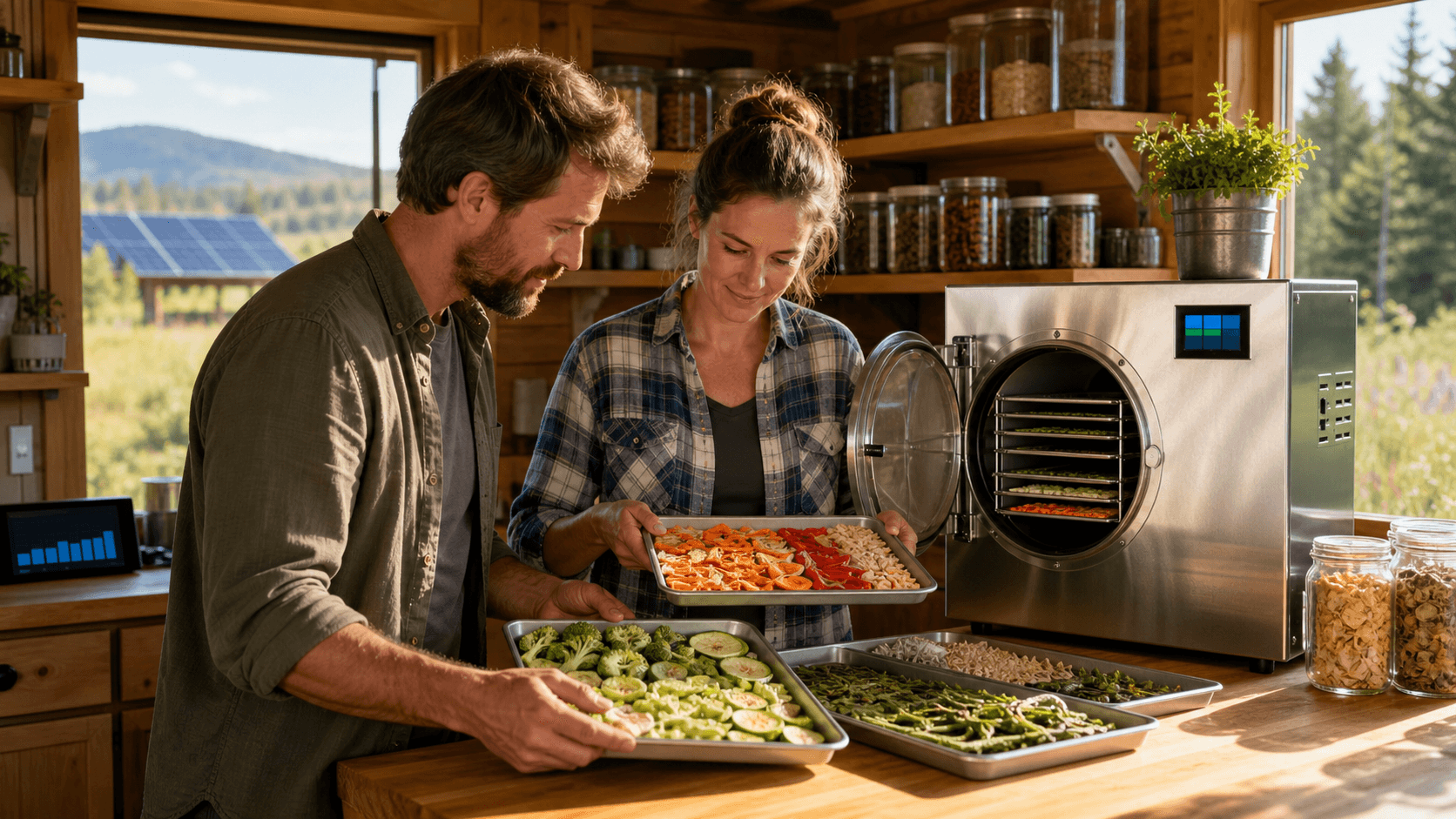
- Running the freeze dryer during strong solar hours
- Aiming big food projects for bright, long summer days
- Using a generator as backup on cloudy stretches or for finishing long cycles
You also want to think about where the machine sits in your cabin. Freeze dryers make noise from the vacuum pump and compressor. They also give off heat, which might be welcome in winter but less fun in a small home in August. Power loss in the middle of a run can leave food only partly dried, which can affect quality once stored, so your system needs to be steady enough to finish what it starts.
Cost, Convenience, and Food Savings Over Time
A home freeze dryer is not a small purchase. There is the unit itself, the vacuum pump, and things like trays, Mylar bags, and oxygen absorbers. Some pumps use oil that needs to be changed, others are oil-free but come with their own care needs. Off-grid, you also consider whatever you spend for extra solar capacity or generator fuel for long runs.
When you compare that to buying pre-made freeze-dried meals, you are trading money for control. With your own machine, you can process:
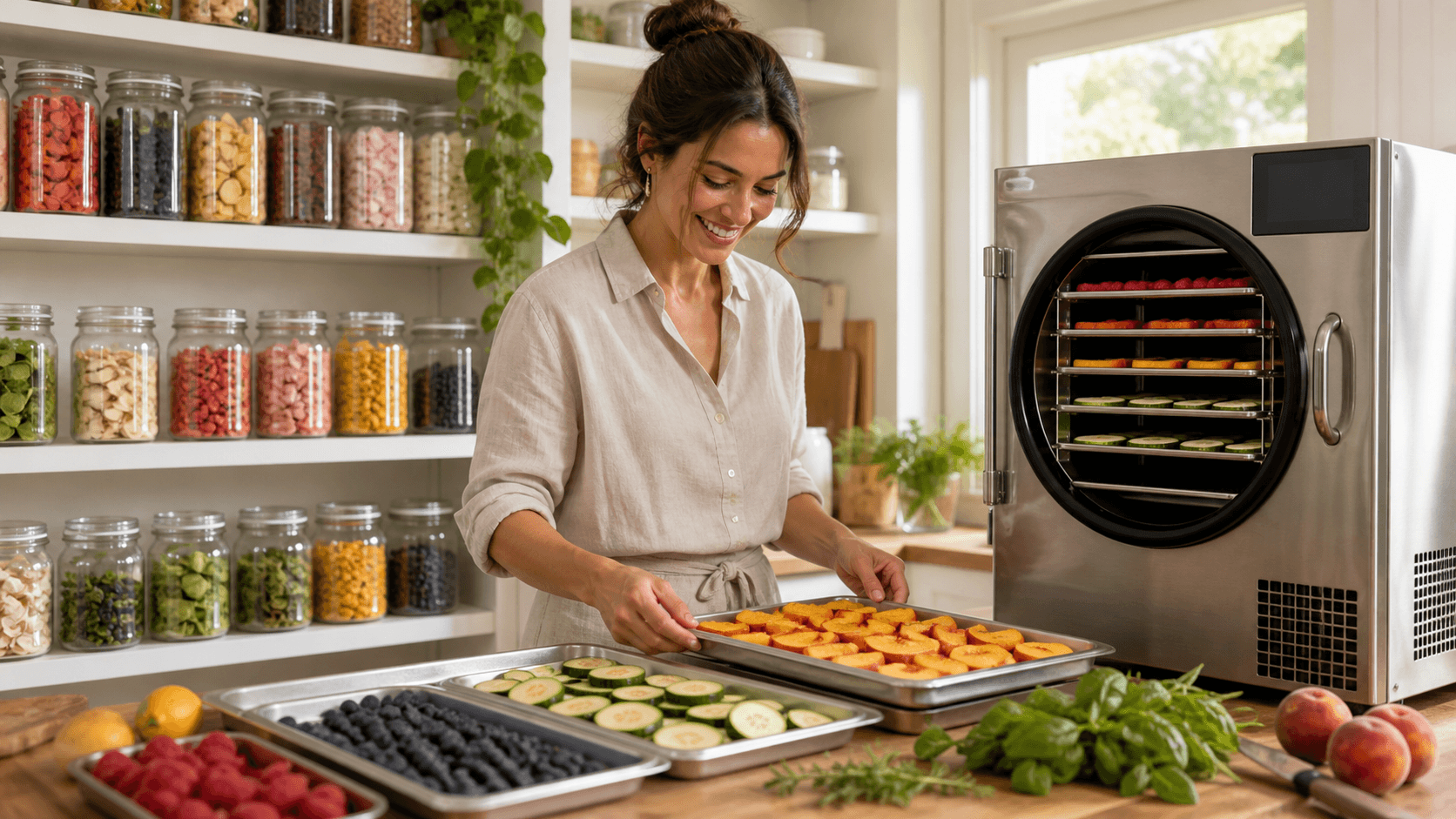
- Garden vegetables at their peak
- Meat from hunting or livestock
- Seasonal fruit in big, messy batches
- Leftovers that would otherwise end up as waste
Over time, this can cut down on spoiled food when the fridge and freezer space are limited. But there is also the time cost. You need to wash, chop, and pre-freeze in many cases, load trays, start cycles, check on the machine now and then, and then package and label finished food. For some off-grid families who already spend many hours tending animals, hauling wood, and minding the power system, that added workload might feel like too much. For others, especially with a big garden rhythm already in place, it can fit nicely into the weekly routine during harvest.
Choosing the Right Freeze Dryer and Setting It Up
Picking the right size matters more off-grid than in a suburban kitchen. A small unit might be better for:
- A couple or small family
- Modest garden beds
- Limited solar and battery capacity
A medium or large unit might make sense if you have:
- A big garden and greenhouse
- Animals, hunting, or bulk buys to process
- A strong solar array and batteries that can handle long draws
Placement should allow for good airflow around the machine, a place for defrost water to drain or be collected, and some distance from sleeping spaces to keep the noise down. Ambient temperature matters too, since very hot or very cold rooms can affect run time and efficiency.
Basic care includes:
- Setting the machine on a level, sturdy surface
- Keeping the vacuum pump oil clean or maintaining filters
- Wiping down the chamber and trays
- Regularly defrosting ice buildup
Supporting tools help the whole system work smoothly. Many off-grid families like:
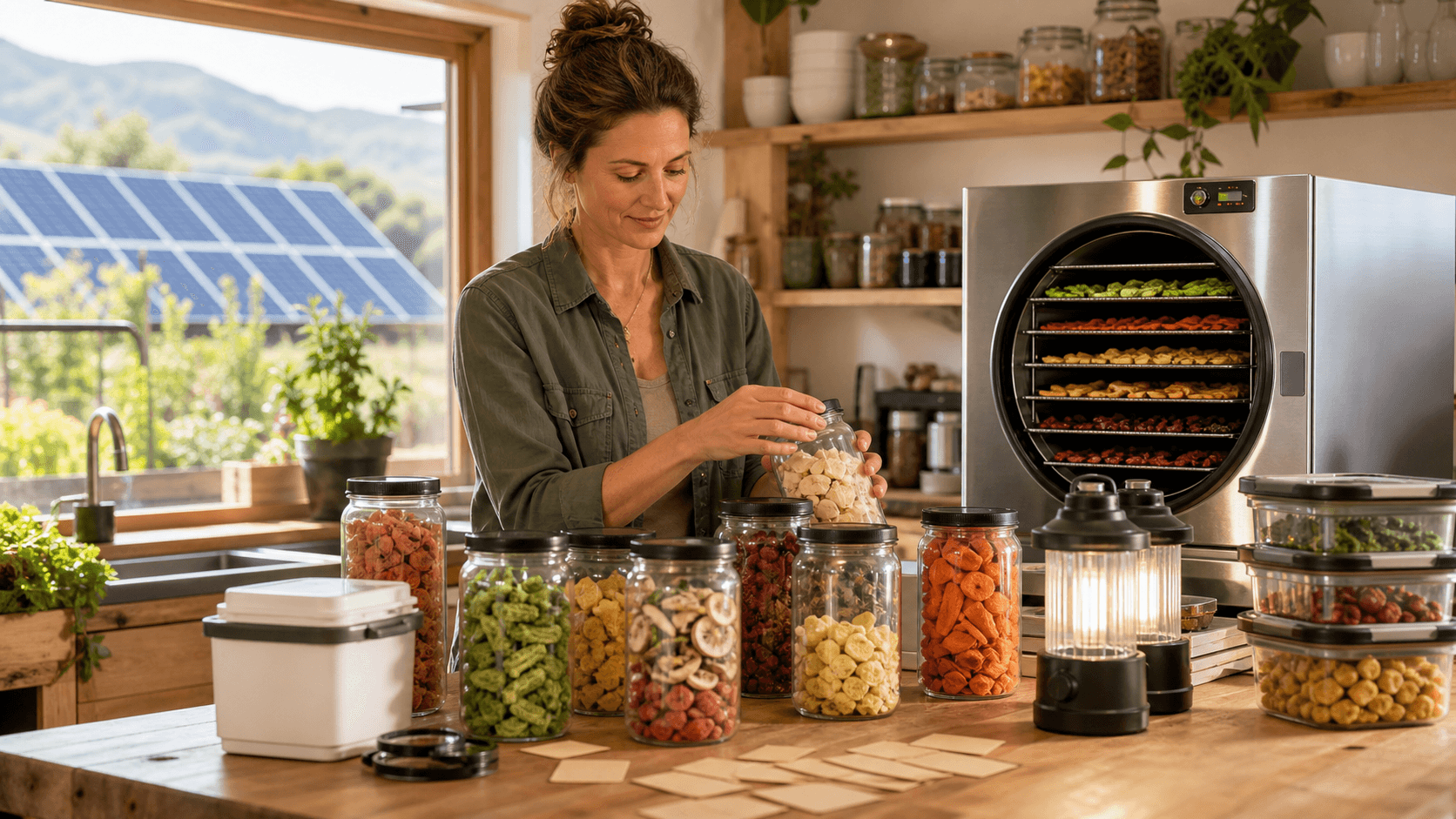
- Mylar bags and oxygen absorbers for long storage
- Jars for things used often
- A clear labeling system with dates and contents
- Storage bins or shelves in a cool, dark space
Using freeze-dried food day to day takes a little habit change, but it can be simple, like tossing vegetables into soups, rehydrating fruit in oatmeal, or keeping ready-to-eat snacks for busy chore days.
When a Freeze Dryer Makes Sense for Your Off-Grid Home
So, is a freeze dryer at home practical for an off-grid family? It depends on your setup and goals. It tends to make the most sense when you have:
- Strong food production from gardens, animals, or hunting
- Some distance from stores or supply that is not always reliable
- A solar and battery system with room to spare
- A focus on long-term food security and varied meals
If your garden is small, you live closer to town, or your power system is already near its limit, then canning, dehydrating, smoking, root cellars, and simple cool storage might cover most of your needs with less stress on your system.
We often suggest making a simple food resilience plan. Map out what you grow, what you hunt or buy in bulk, how often you lose power, what your climate throws at you, and how much energy your system can really give. Then decide which mix of tools fits best. For some homesteads, a freeze dryer at home becomes a key part of that plan. For others, it is something to add later, once solar, batteries, and daily life off-grid feel solid and steady. At Green Vista Living, we design power and off-grid solutions with that bigger picture in mind, so every part of your system, including a freeze dryer if you choose one, can work together smoothly.
Preserve More Of What You Love With Simple At-Home Freeze Drying
Bring long-lasting food storage into your kitchen with a freeze dryer at home that fits your real, everyday lifestyle. At Green Vista Living, we help you keep garden harvests, leftovers, and favorite meals shelf-stable without sacrificing flavor or nutrition. If you have questions about which model is right for you or how to get started, simply contact us and we will walk you through your options.