Remote work only feels free if the power actually stays on. If you are trying to work from a cabin, RV, tiny home, or rural house, a weak power source can turn a dream into a headache. An off-grid solar system gives you your own steady power, so your workday is not ruined by bad hookups, a stressed grid, or summer storms.
In this article, we will walk through how off-grid solar fits remote work, what equipment it uses, and how to plan a setup that keeps your internet, laptop, and cooling running all June long. We will also share simple planning tips so you can build a work-from-anywhere life that truly works, instead of one that only looks good in photos.
Design a Work-From-Anywhere Life That Actually Works
Remote work has opened the door to quieter places, wide views, and more control over how we live. The missing piece is reliable power. Campground hookups can trip, local grids can fail, and a gas generator can be loud, smelly, and distracting when you are on a call.
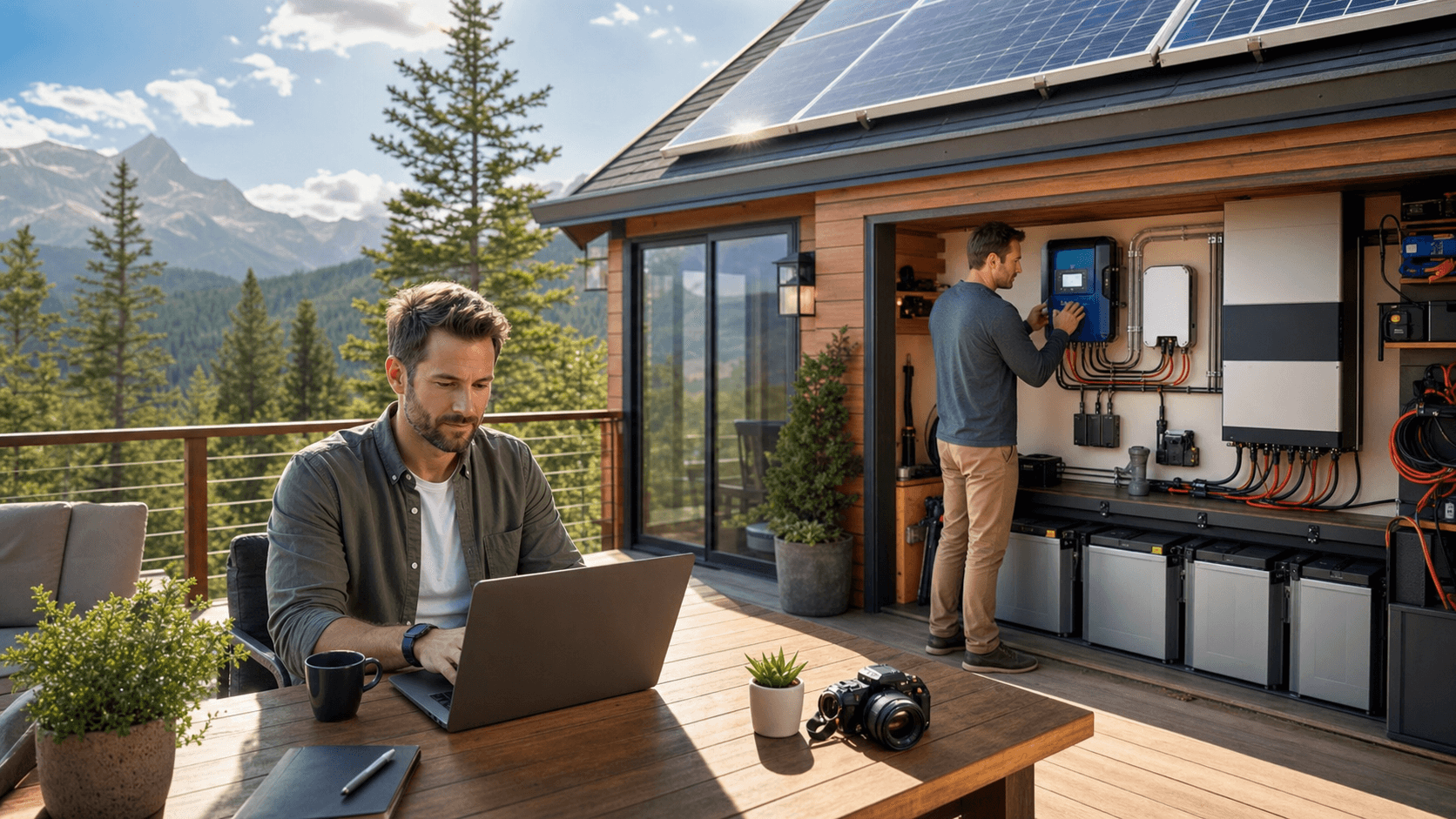
With an off-grid solar system, your office can be almost anywhere there is sun. Picture a June workday like this: cool air from a mini-split or fan, laptop charged, phone topped off, Starlink dish or other satellite system locked in, and your router quietly blinking in the corner. Outside, you might hear birds instead of traffic, and you are not wondering if the power might blink during a meeting.
Our focus at Green Vista Living is helping people build that kind of life. We work with homeowners, homesteaders, and remote workers who want more independence, without giving up comfort or productivity.
Why Remote Workers Are Turning to Off-Grid Power
Remote work depends on a short list of must-haves. At the top of that list is power. If the power goes out, your laptop, router, and satellite internet are just dead weight. Summer can be a trouble spot, with storms, wildfires, and rolling outages making the grid less steady right when many people want to work from cabins, lake lots, or country properties.
Many remote workers are choosing off-grid power because they want:
- Steady power for laptops, monitors, routers, and Starlink
- Less worry about grid outages or campground shutdowns
- Independence from rising utility costs
- A quieter place to think and work
Working in a calm spot away from busy streets can help with focus and stress. It is easier to close the laptop and step outside for a walk when you are already surrounded by trees, fields, or water. Knowing your energy is your own also brings a lot of peace of mind. Your workday is not at the mercy of a far-off power line.
How an Off-Grid Solar System Supports Your Workday
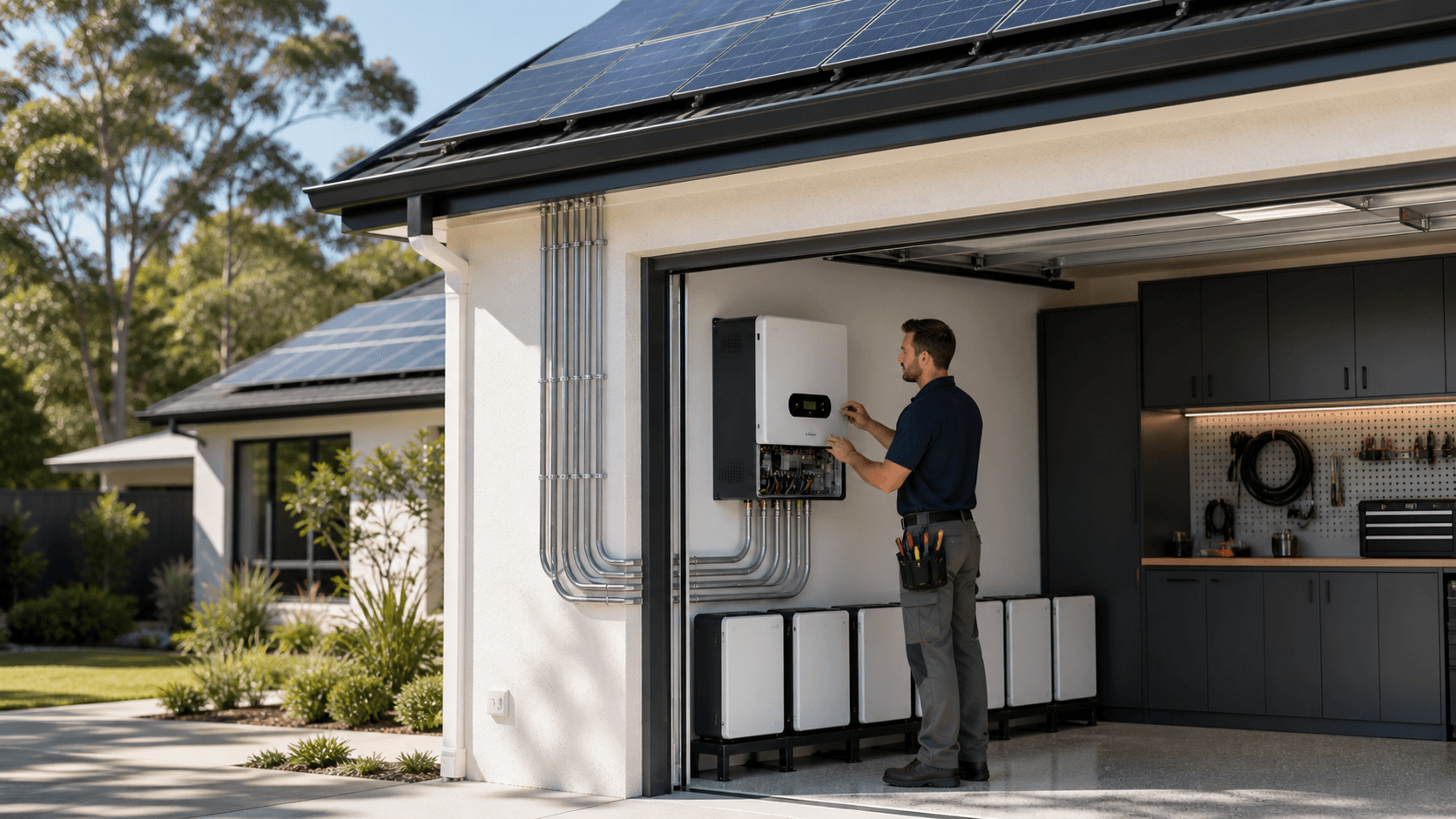
An off-grid solar system is simple at its core. The main parts are:
- Solar panels that collect sunlight
- A charge controller that sends power safely to the batteries
- Batteries that store energy for later
- An inverter that turns battery power into normal household power
On a long June day, the panels feed your batteries for hours. While the sun is high, many loads can run straight off that production, with any extra stored for later. After sunset, your office runs on the energy you banked during the day.
A typical remote work setup might need power for:
- Laptop or desktop and one or two monitors
- Modem/router and a Starlink or other satellite dish
- LED lighting in your workspace
- A small fan, mini-split, or window AC
- Small items like phone chargers and maybe a printer
A well-sized off-grid solar system is planned around those needs, so you can work a full day without watching every watt. June brings long daylight, which is great for solar, but the heat also means more cooling. That is why good battery storage and efficient devices matter. An energy-smart laptop, LED lights, and an efficient mini-split can keep your work area comfortable while keeping battery draw under control.
Building a Reliable Off-Grid Remote Work Setup
Every remote work lifestyle looks a little different, so the power system should match the way you live and work. Some common setups include:
- A full-time off-grid cabin used as a main home and office
- A seasonal vacation place that becomes a summer office
- A mobile office in an RV or van
- A grid-tied home with an off-grid-style backup for outages
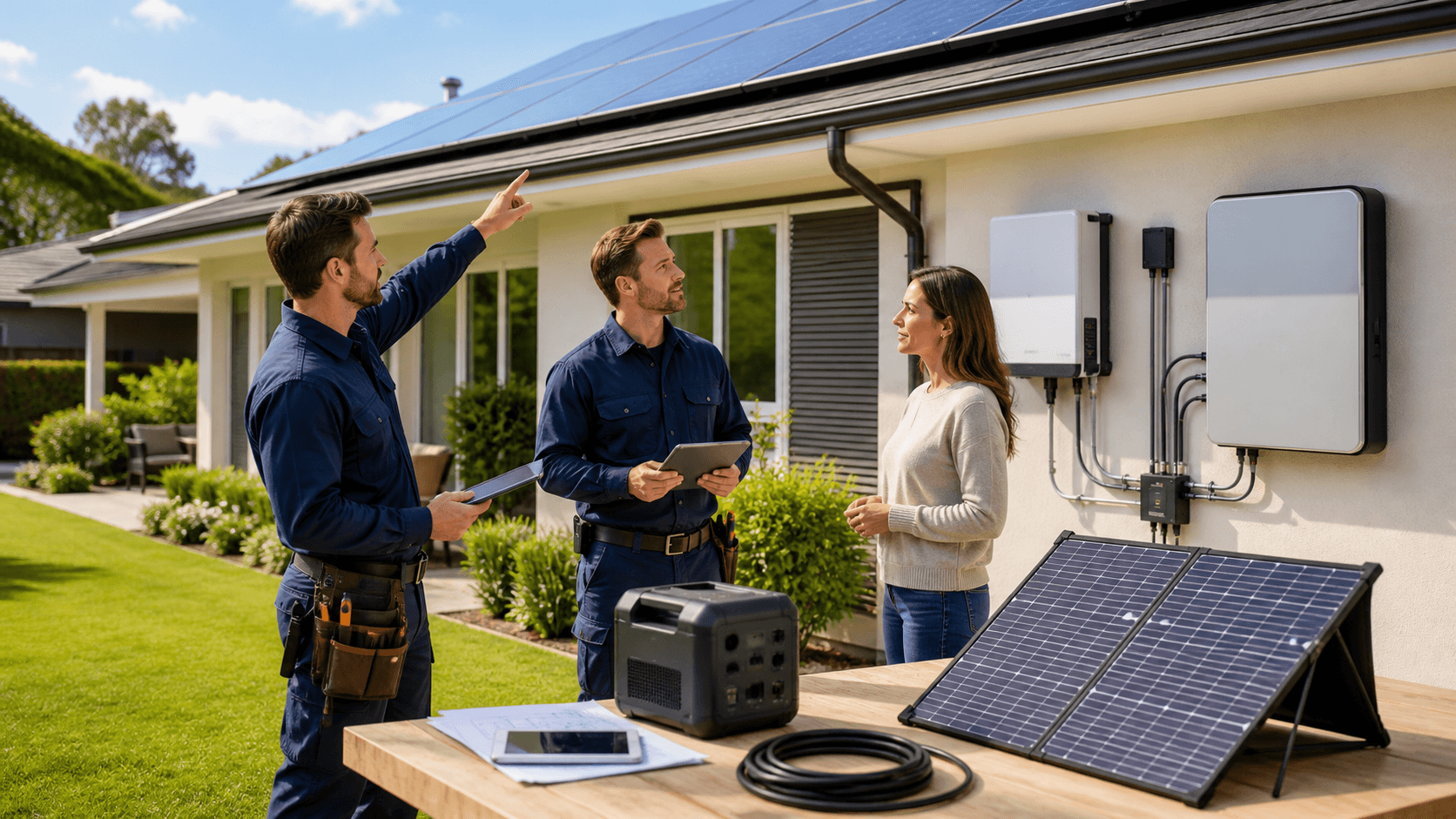
For a small cabin or homestead, roof-mounted panels may make sense if the roof is sunny and open. If you have space and want easier access, ground mounts can be easier to clean and aim. For RVs or tiny homes on wheels, portable or roof-mounted kits give you power that moves with you.
Battery choice also matters. Many remote workers prefer lithium batteries for their longer life, deeper usable capacity, and lighter weight. Others choose AGM batteries for simpler needs. The key is to plan around what must stay on no matter what, like:
- Internet gear and Starlink
- Computers and main work devices
- Some lighting and basic climate comfort
Supporting systems can shift a place from short stay to long stay. Water systems let you stay longer without constant hauling. Air purifiers and good ventilation help keep a small space fresh. For long cloudy stretches or bigger summer workloads, a backup generator can feed the system and keep batteries from dropping too low.
Practical Tips for Powering Summer Remote Work Spots
Good planning starts with your location and your habits. Before you build or upgrade an off-grid solar system, it helps to think about:
- How many sun hours you get in summer
- Where trees cast shade in the morning and afternoon
- How long your workdays tend to run
- How you cool your space in the hottest part of the day
Energy efficiency is your friend. Some simple choices can stretch your system without making life feel tight:
- Use LED lighting in all work areas
- Choose energy-efficient laptops and flat monitors
- Turn off screens and gear when you are not using them
- Run heavier loads, like charging power tools, when the sun is brightest
Redundancy can keep small problems from becoming big ones. Many remote workers like to have:
- A bit more battery capacity than they strictly need
- A small backup power station for laptops and routers
- Simple power management so work gear always gets priority
If the fridge or AC has to pause for a short time, that is annoying. If the internet drops in the middle of a call, that can hurt your work. A thoughtful off-grid solar system is designed around that difference, so your key work tools stay powered even when conditions are not perfect.
Get Started With Your Project Today
If you are ready to design a reliable power setup, explore an off-grid solar system that fits your energy goals and space. At Green Vista Living, we help you choose the right components so you can feel confident in your long-term investment. If you have questions or need a custom recommendation, just contact us and we will walk you through your options.