Eat Well Off Grid All Year with Smart Meal Planning
Eating well off grid does not have to mean basic food or boring meals. With a little planning and the right tools, we can enjoy hearty, colorful plates even when the snow is deep and the road to town is rough. One of the best tools for this is a freeze dryer machine for the home.
As late summer turns into early fall, gardens are full and daylight starts to fade. That is when food storage really matters. A home freeze dryer lets us turn fresh harvests and home-cooked meals into shelf-stable food that sits quietly on a pantry shelf, ready for quick, easy dinners all winter long. At Green Vista Living, we care about helping homeowners and homesteaders build that kind of long-term food security so they can rely less on stores and more on their own land and solar power.
Why Freeze Drying Changes Off-Grid Food Storage
Freeze drying works in a simple but smart way. Food is frozen solid, then placed in a vacuum where the ice turns straight into vapor and leaves the food dry and light. Compared to other common methods:
- Canning uses heat and jars and can change texture
- Dehydrating uses warm air and can make food leathery
- Freezing needs steady power and takes up freezer space
Freeze-dried food keeps much of its color, flavor, and shape. It can stay shelf-stable for many years when stored well. That kind of long life is a big help when we live off grid and want a deep pantry that does not depend on a large freezer.
For off-grid homes, freeze drying brings special advantages:
- Food does not need constant refrigeration
- Jars and bags are light and easy to stack in small cabins
- Extra garden harvests do not go to waste
- Meals can be stored as full dishes, not just ingredients
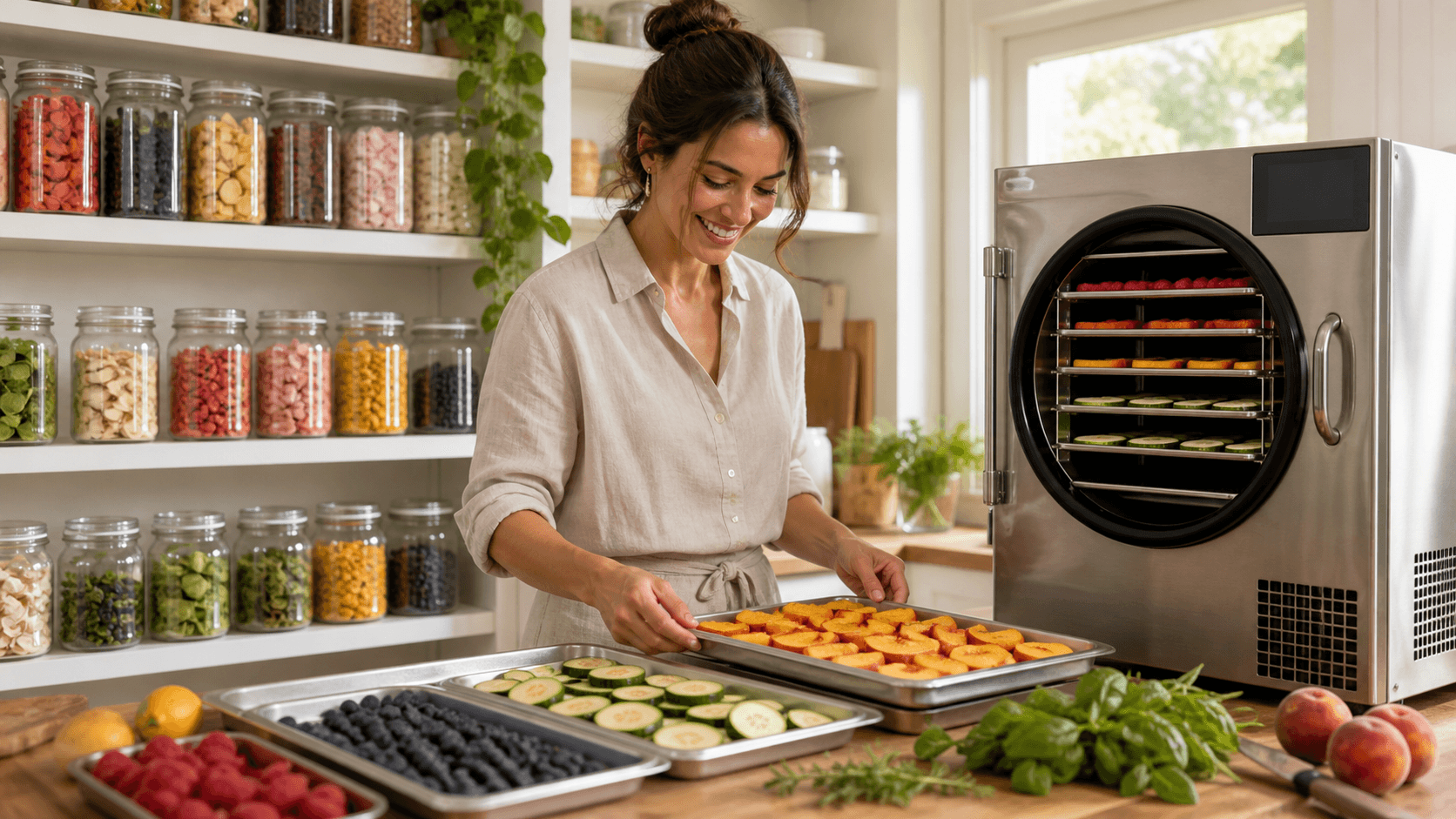
A freeze dryer machine for the home also fits nicely with solar power. Many off-grid households run the machine during bright, sunny hours. By batching loads around peak sun, we can dry a lot of food while keeping our energy use smart and steady, and we can rely less on store-bought goods that need cold storage.
Planning Seasonal Off-Grid Menus Around Your Freeze Dryer
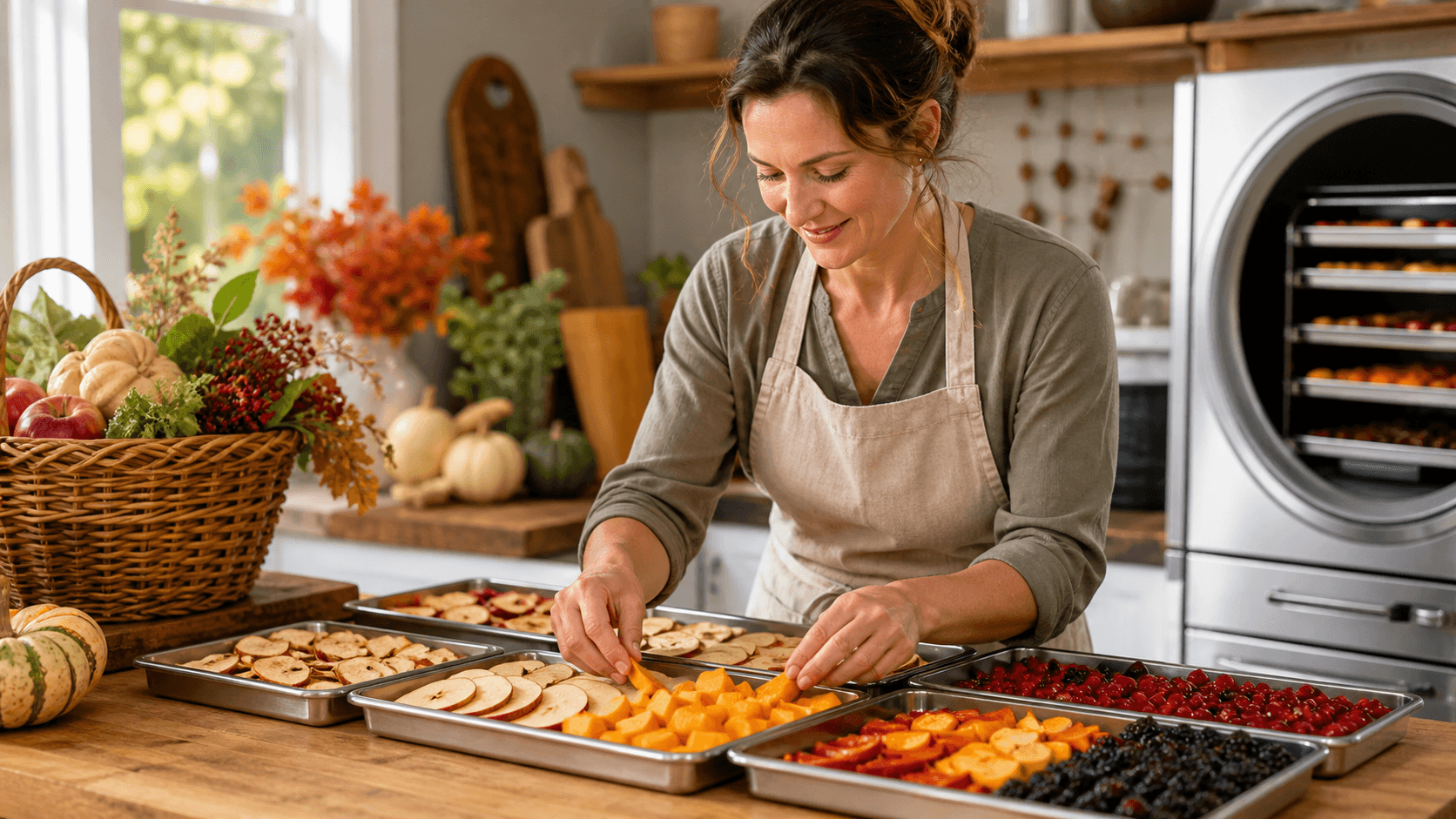
Fall is prime time for filling the pantry. Late summer and early fall produce can become the base for cold-weather meals. Common foods to freeze dry at this time of year include:
- Tomatoes for sauces and stews
- Peppers for chili and casseroles
- Berries for snacks and baking
- Herbs for seasonings
- Root veggies for soups and sides
We can also cook full meals, cool them, and freeze dry them. Some simple ideas are:
- Breakfast: egg scrambles with veggies, breakfast skillets with potatoes, yogurt bites with fruit
- Lunch: hearty soups, chili, simple pasta dishes, beans and rice
- Dinner: casseroles, stews, curries, meat-and-veg skillets
- Snacks: fruit pieces, veggie chips, yogurt drops, tomato slices for quick soups
To keep food fresh over time, it helps to rotate. Place older jars or Mylar bags at the front and newer batches in back. Plan weekly or monthly menus that pull from the oldest food first while you keep adding new trays each week. That way the pantry always moves, and nothing is forgotten.
Using Your Home Freeze Dryer Efficiently Off Grid
A smooth workflow makes a big difference, especially off grid. Many homesteaders follow a simple pattern:
- Prep ingredients in the cool of the morning, washing, cutting, and lightly cooking if needed.
- Pre-freeze foods on trays in a chest freezer if you have one, so the freeze dryer spends less time getting them cold.
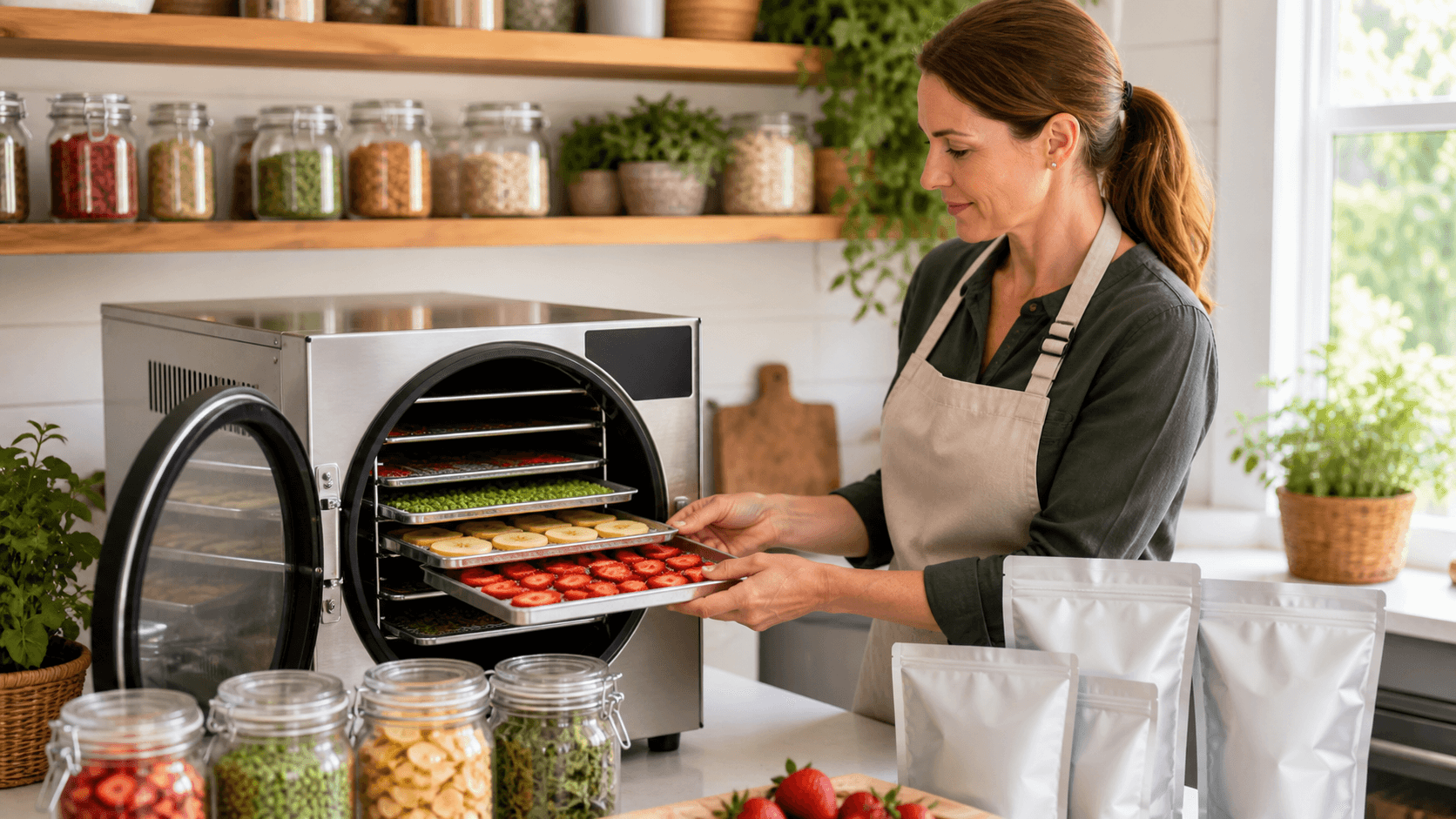
- Load trays with even layers so food dries at a steady rate.
- Label batches with the food name and date as soon as they come out.
Energy management is key. To make good use of solar power, we can:
- Start cycles when solar panels are producing most of the day
- Avoid starting long cycles late at night when batteries are lower
- Prioritize high-value foods in shoulder seasons when sun is less reliable
To get the most from each cycle, combine foods that have similar moisture. For example, run fruits together, or run cooked meals together. Avoid overloading trays, since thick piles take longer to dry. Many off-grid homes line up freeze dryer days with harvest days and big cooking days, so the kitchen and power system both run in a steady rhythm.
Storing, Rehydrating, and Planning a One-Week Off-Grid Menu
Good storage keeps all that work safe. For off-grid homes, common options include:
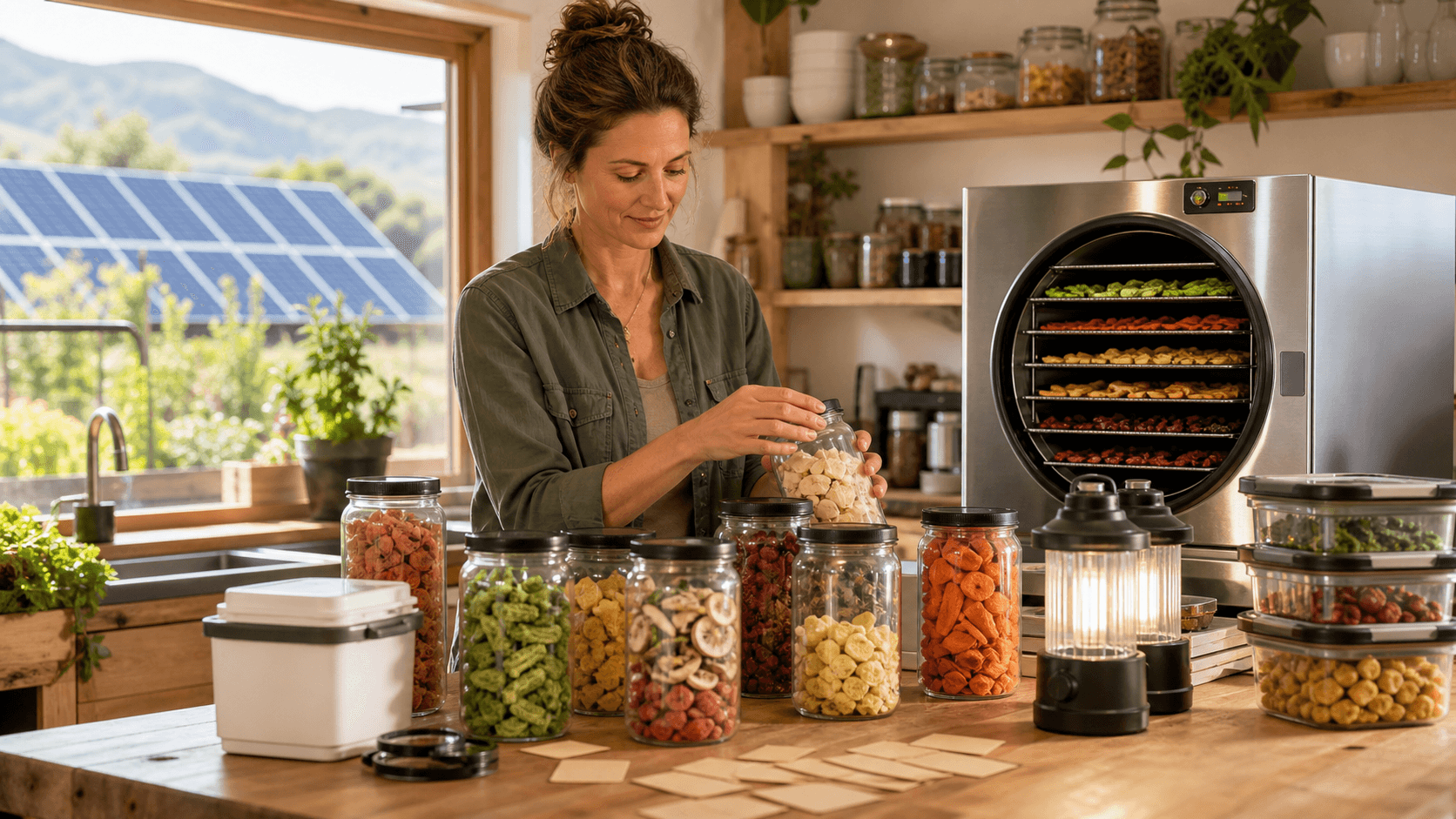
- Mylar bags with oxygen absorbers for long-term pantry storage
- Mason jars with tight lids for foods you reach for often
- Food-grade buckets for bulk items or grouped meals
Store containers away from direct light, heat, and moisture. A cool, dark room or cabinet is ideal. Label each container with the contents and date before it leaves the counter. A simple notebook or shelf map can help you track what you have, which is useful before storms or supply disruptions.
Rehydrating freeze-dried food does not need much energy. Many foods are fine with room-temperature water and a bit of time. Some easy methods are:
- Cold water soak for fruits, herbs, and some veggies
- A thermos with hot water for soups and stews
- A small off-grid cooktop or woodstove for full meals
For safety and peace of mind, check seals before storing and again before using. If a seal has failed or moisture is present, set that item aside. Keeping dates, food types, and locations written down gives a clear view of the pantry at a glance.
Once storage is set, we can build real menus. A simple one-week fall or early-winter plan might include:
- Breakfasts: oatmeal with freeze-dried berries, egg scramble cups, yogurt bites
- Lunches: veggie soup with root veggies, beans and rice with peppers, pasta with tomato sauce
- Dinners: beef or veggie stew, chili with peppers and tomatoes, casseroles with mixed veggies
- Snacks and desserts: fruit pieces, crunchy yogurt drops, berry crumble using pantry grains
To prepare, many people cook several big recipes in one weekend, freeze dry them, then store in portions sized for their household. Over time, that same system can scale from one week to one month, then to full seasonal planning.
Choosing the Right Freeze Dryer Machine for the Home
Picking a freeze dryer for off-grid life means looking at more than just size. Important features include capacity, power draw, cycle options, noise level, and how easy it is to clean and maintain. Smaller units often fit weekend cabins or part-time off-grid setups. Medium machines tend to suit couples or small families. Larger units work well for full homesteads that grow much of their own food and want to put up whole harvests at once.
At Green Vista Living, we focus on gear that supports off-grid and sustainable living, from solar power systems to tools like a freeze dryer machine for the home. We pay attention to reliability and how each piece of equipment fits into a complete energy-independent lifestyle, so that meal planning, storage, and daily living all support each other through every season.
Preserve More Food at Home With Simple, Reliable Freeze Drying
If you are ready to reduce waste and build a long-lasting pantry, our team at Green Vista Living is here to help you get started with a freeze dryer machine for the home. We carefully select equipment that is efficient, user-friendly, and sized right for real households. If you have questions about capacity, setup, or which model fits your goals, just contact us. We will walk you through the options so you can start preserving your favorite foods with confidence.