Build Healthier Off-Grid Water From the Ground Up
Safe water is the backbone of off-grid living. When your home runs on a private well, there is no backup tap down the street if your water turns cloudy, smells odd, or tests positive for bacteria. Your system has to work, even in late summer when the water table drops and storms kick up sediment.
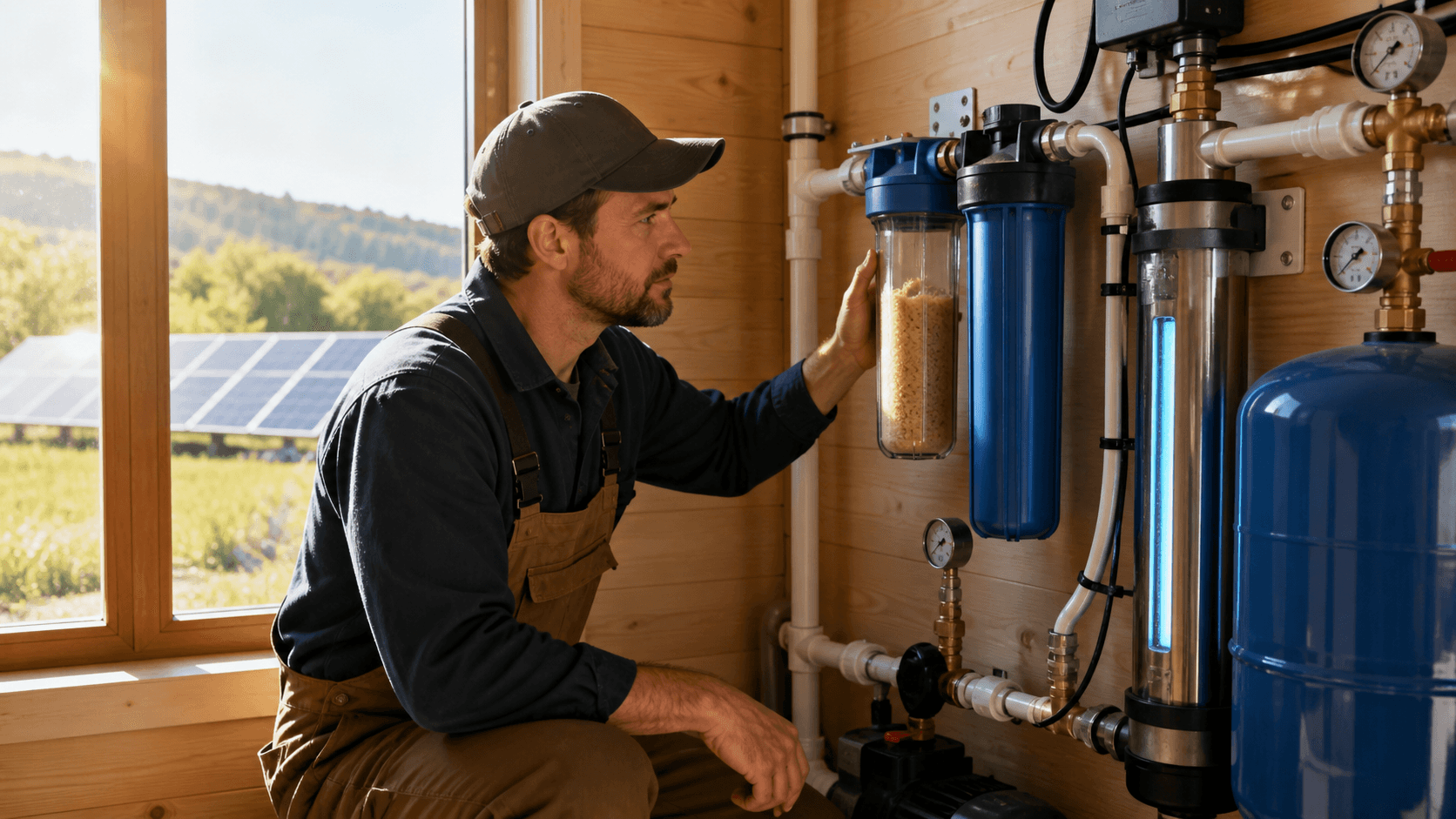
That is why many off-grid homes use a stacked approach to whole-home water filtration systems. We start with sediment filtration, add carbon, then finish with disinfection like UV or chlorination. Each layer does a clear job so your water is cleaner, safer, and easier on pipes, fixtures, and appliances.
Here, we walk through how to design that stack around your actual well, not a guess. We focus on flow rate, water testing, and maintenance so you do not overspend on gear that you do not need or end up with filters that choke your water pressure. At Green Vista Living, we build and curate off-grid-friendly setups that pair well with solar power and real homestead life.
Start with Your Well: Testing, Flow Rate, and Seasonal Shifts
Before picking a single filter, we need two things: real flow numbers and honest water tests.
First, clear up a common mix-up. Well capacity is how many gallons your well can produce over time. Flow rate is how many gallons per minute, or GPM, your pump and plumbing can deliver to the house. Flow rate is what matters for sizing filters and UV units. If your system can only push 7 GPM, a UV rated for 15 GPM is not your problem. Filters that choke at 5 GPM are.
A simple way to measure real flow, especially in late summer when your well is under stress:
- Use an outdoor hose bib or a drain at the pressure tank
- Grab a container with a known volume, like a 5 gallon bucket
- Open the valve fully, time how many seconds it takes to fill
- GPM = bucket size in gallons × 60 ÷ seconds to fill
Do this when lots of water is running in the house on a hot, dry day. This helps you size filter housings and pipe diameters so showers do not turn into a trickle.
Next, testing. A strong base panel usually includes:
- Coliform and E. coli
- Nitrates and basic potability markers
- Hardness
- Iron and manganese
- Tannins, pH, and turbidity
We like to see testing in late summer again, since drought can change water quality. Heavy rain can stir up sediment and runoff, so think in terms of worst-case water, not the nice clear water you sometimes see in spring.
Layered Filtration: Sediment and Carbon That Match Your Flow
Now we build the first layers of your stack: sediment and carbon.
Sediment filtration is your first line of defense. It keeps sand, silt, and grit from tearing up valves, fixtures, and your finer filters. Many off-grid setups do well with this progression:
- A spin-down or screen pre-filter to catch big chunks
- A larger cartridge, like 20 to 50 micron
- A finer cartridge, like 5 micron, before carbon and UV
The idea is to step down slowly so no single filter takes the whole hit. To match flow, we usually look at larger housings, such as 20-inch Big Blue-style filters for higher GPM homes, and low pressure drop cartridges. For big families or homes with many bathrooms running at once, we may place housings in parallel so water splits across two filters and keeps good pressure.
Whole-house carbon filtration has a different job. Carbon helps:
- Remove chlorine if you are chlorinating
- Improve taste and remove many smells
- Reduce many common organic contaminants and VOCs
With carbon, contact time is huge. Water needs enough time in the carbon bed to stick to it. That is why we size carbon units to your measured flow, not a brochure number. For off-grid wells, we balance two common options:
Cartridge carbon filters:
- Simple, no power needed
- Great for lower water use or as a polish stage
- Require more frequent cartridge changes
Backwashing carbon systems:
- Good for higher flows and heavier use
- Rinse themselves on a regular schedule
- Need power and some planning with solar setups
To guess replacement or backwash schedules, we look at daily gallons used, late-summer peak demand, and any known problem contaminants. Then we size for the heavier season so you are not scrambling when water quality is at its worst.
Disinfection Choices: UV vs. Chlorination for Off-Grid Wells
Once sediment and carbon are set, we talk about disinfection. This is where UV and chlorination come in.
UV disinfection uses ultraviolet light to inactivate bacteria and other microbes right as water passes through the chamber. There is no chemical taste, and it works quickly. For UV to work well, the water must be:
- Low in turbidity, so light can pass through
- Low in iron and tannins, which can block UV light
- Filtered to at least 5 microns before the UV unit
We size UV systems to the real GPM we measured at the house. We also pay attention to power draw and startup surge, since many off-grid homes in our region run on solar power and battery banks. UV usually runs full time, so it needs a steady power plan.
Chlorination is another useful tool, especially when you want a residual disinfectant in long pipe runs, storage tanks, or remote taps. Practical choices include:
- A metering pump that doses a chlorine solution
- A contact tank that holds water long enough for chlorine to work
- A carbon filter after chlorination to reduce taste and odor
You aim for a small, steady chlorine residual, not a pool smell. Testing is important so you stay in a safe range.
In some higher risk wells, shallow wells, or short-term rentals where many different people use the water, we may build a hybrid approach: low-dose continuous chlorination, carbon filtration, then UV. Each layer backs up the others.
Sizing for Real Household Use and Easy Maintenance
Good design thinks about real life: kids showering, a washing machine running, someone watering the garden, all at the same time.
Typical flow estimates help:
- Showers often use a few GPM each
- Washers and dishwashers add their own demand
- Outdoor spigots can pull several GPM on their own
We add up what might realistically run at once to set a target peak flow. Then we size pipe, filters, and UV to meet or slightly exceed that number. If filters are too small, you feel it as a drop in pressure and weak showers, especially in summer when guests visit or irrigation ramps up.
For maintenance, small design choices save headaches:
- Clear housings or pressure gauges before and after filters
- Bypass valves so you can service one part without shutting the house down
- Unions on both sides of main gear so it can be removed easily
- Simple labels on each stage: sediment, carbon, disinfection
Seasonal maintenance is part of off-grid life too. Late summer, when wells are most stressed, is a good time to:
- Replace sediment cartridges as pressure starts to drop
- Review UV lamp hours and clean the quartz sleeve
- Test chlorine residuals and bacteria, especially after big storms
- Watch for wildfire ash, drought, or flood effects on taste and clarity
Turn Your Well Into a Safe, Set-and-Forget Water Source
A strong whole-home water filtration system for an off-grid well follows a clear path. Test deeply so you know your water, size to your real flow rate in hard seasons, stack sediment filters to protect your gear, use carbon for taste and organics, then finish with UV, chlorination, or both for full disinfection.
Done well, this kind of system cuts down on emergencies, supports better health, helps your appliances last longer, and lowers stress when late-summer droughts or heavy storms roll through. At Green Vista Living, we focus on off-grid-ready water solutions that fit real homes, cabins, and homesteads, and that play nicely with solar and other independent power setups. With the right stack in place, your well can feel less like a gamble and more like a quiet, dependable part of daily life.
Protect Your Home and Health With Cleaner, Safer Water
Take the next step toward healthier living with our curated selection of whole-home water filtration systems tailored to your household's needs. At Green Vista Living, we help you choose solutions that improve taste, reduce contaminants, and support long-term appliance performance. If you have questions or want guidance before you decide, reach out through our contact page so we can help you move forward with confidence.