Turn Your Detached Garage Into a Reliable Power Hub
Dependable garage power can make a detached space far more useful. Lights, power tools, a door opener, refrigeration, security devices, hobby gear, and workshop equipment all work better when you are not relying entirely on the main house panel.
September is a smart time to plan ahead for shorter days, fall projects, and possible winter outages. At Green Vista Living, we recommend starting with your real power needs, then building a safe system around solar, battery storage, and backup power.
Plan Garage Loads Before Choosing a Sungold Power Hybrid Inverter
A Sungold Power hybrid inverter should fit the work you expect your garage to do. Before selecting equipment, we suggest making a complete list of everything you may run now and later. Include everyday items as well as equipment that only runs once in a while.
Your list may include:
- Lighting, garage door openers, and security equipment
- Freezers, chargers, pumps, and small appliances
- Air compressors, welders, and other shop tools
- Hobby equipment, outdoor gear, and workbench outlets
Pay close attention to the difference between running watts and startup surge watts. A motor-driven tool may pull far more power when it first turns on than it uses while running. That short burst matters when sizing inverter equipment and planning which circuits can operate at the same time.
Voltage also shapes the design. Some garages only need selected 120-volt circuits for backup. Others may need 240-volt power for larger tools or equipment. We encourage you to leave room for future loads, such as battery chargers, a larger compressor, or expanded outdoor equipment. Planning for growth is easier than rebuilding a system after your needs change.
Build a Safe and Code-Conscious Garage Power Design
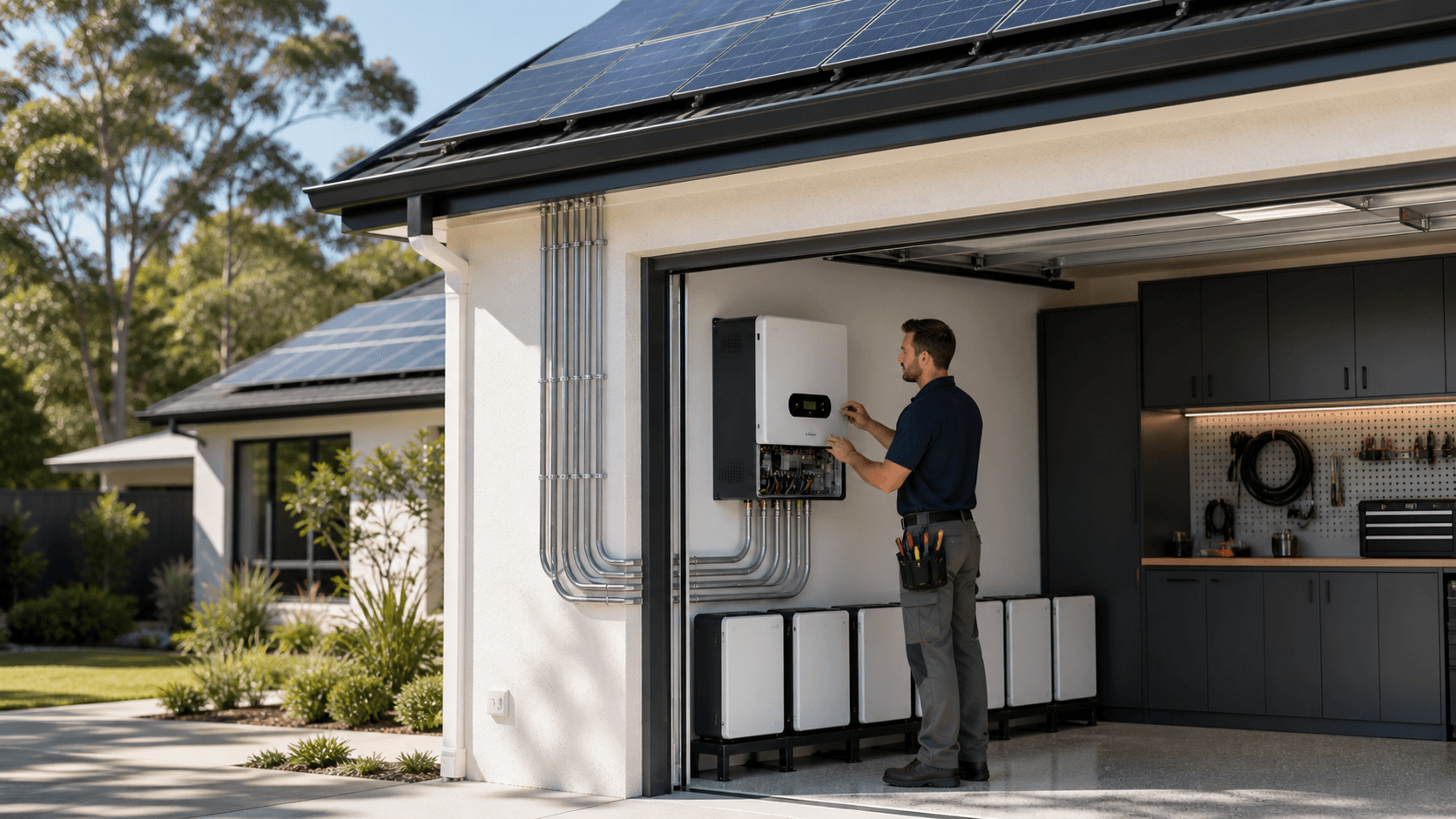
A detached-garage power system is more than panels and batteries. The full design may include solar panels, battery storage, inverter equipment, disconnects, wiring, grounding, overcurrent protection, and a dedicated garage subpanel.
Placement deserves careful thought. Electronics and battery equipment need protection from moisture, dust, extreme temperatures, vehicle impact, and flammable materials. The equipment area should also have the ventilation and service access needed for safe inspection and maintenance.
Because a garage system can involve utility connections and high-voltage equipment, we recommend working with a licensed electrician and following local permitting rules. A qualified professional can confirm that conductors are properly sized, grounding is correctly installed, and transfer equipment is set up for safe backup operation. Those details protect the system, the building, and everyone who uses the space.
Pair a SunGold Power Hybrid Inverter with Solar Backup
A SunGold Power hybrid inverter can be part of a setup that coordinates solar production, battery charging, utility input, and backup power. Available operating modes depend on the selected model and the overall system design, so it is important to match the equipment to your goals.
During daylight hours, solar energy may support garage loads and charge battery storage. When the sun goes down, stored energy can help power selected circuits. During an outage, a well-planned system can focus available battery capacity on the equipment that matters most.
Rather than trying to run every high-demand shop tool at once, we often recommend setting clear backup priorities:
- Lighting and garage door operation
- Security devices and communications equipment
- Refrigeration or freezer circuits
- Selected outlets for chargers and smaller tools
- Equipment needed for a home workshop or remote setup
This approach helps you use stored power with purpose. Large loads may still be part of your normal setup, but they should be considered separately from the circuits you want available during an outage.
Prepare Your Garage System for Fall and Winter
Fall weather is a useful reminder to inspect the system before cold conditions arrive. Solar panels should be clean enough to receive available sunlight, while visible wiring, conduit, and mounting hardware should be checked for wear or damage. We also recommend testing backup operation before you need it.
Shorter days can reduce solar production, especially when garage energy use rises after dark. Reviewing monitoring data can show when power is being used and whether overnight loads need attention. Battery reserve settings may also need adjustment based on the level of outage protection you want.
Keep this seasonal checklist in mind:
- Review inverter and battery monitoring data
- Test critical backup circuits and door operation
- Confirm disconnects remain easy to access
- Inspect panel and equipment mounting hardware
- Keep the equipment area clean and unobstructed
Battery equipment should be protected from freezing conditions or excessive heat according to its installation requirements. A clean, accessible area also makes it easier for a qualified professional to inspect the system when needed.
Map Your Path to Garage Energy Independence
A capable garage power system begins with an accurate load plan, a safe code-conscious design, and equipment that can support both present needs and future expansion. Start by making a garage power wish list, then separate the items you want during normal use from the circuits you need during an outage.
Your priority may be solar savings, backup power, off-grid capability, or dependable workshop electricity. Once those goals are clear, you can make better decisions about inverter capacity, battery storage, solar production, and the circuits that deserve priority when conditions change.
Build a Garage Power System That Fits
At Green Vista Living, we can help you compare a SunGold Power hybrid inverter with the components needed for your detached garage setup. Our team can help you evaluate practical options for batteries, solar panels, and essential-load planning. If you have questions before choosing equipment, contact us for guidance.