Build Real Food Security with Freeze Drying Power
Real off-grid food security is not just about having a garden or a stacked pantry. It is about knowing that the food you grow, hunt, or buy in bulk will still be safe and tasty years from now, even if the power goes out for days. When storms roll through, roads close, and store shelves look bare, that peace of mind matters.
Many people feel the stress most at the end of summer. The garden is loaded with tomatoes, peppers, herbs, and fruit. You are tired from picking and processing, the freezer is packed, and one long outage could put it all at risk. This is where freeze dryers come in. They bridge the gap between short-term storage and real long-term security.
At Green Vista Living, we think of freeze dryers as part of a complete off-grid system, not as a fancy toy on a counter. Food preservation, power, and storage all need to work together. Here, we will rethink how freeze dryers fit into a resilient homestead or cabin, so your harvest does not depend on the grid staying up.
Why Freeze Dryers Beat Canning and Dehydrating
Canning and dehydrating still have their place, but they both have limits. Canned food is heavy, takes space, and can lose texture. Traditional dehydrated food often turns leathery or hard. Freeze drying solves many of these problems by pulling out moisture while keeping the structure of the food.
Some key advantages of freeze dryers are:
- Long shelf life when packed correctly
- Better flavor and texture compared with most dried foods
- Strong nutrient retention
- Very light final weight for easy storage and transport
Freeze dryers work well with almost anything you eat daily. You can process:
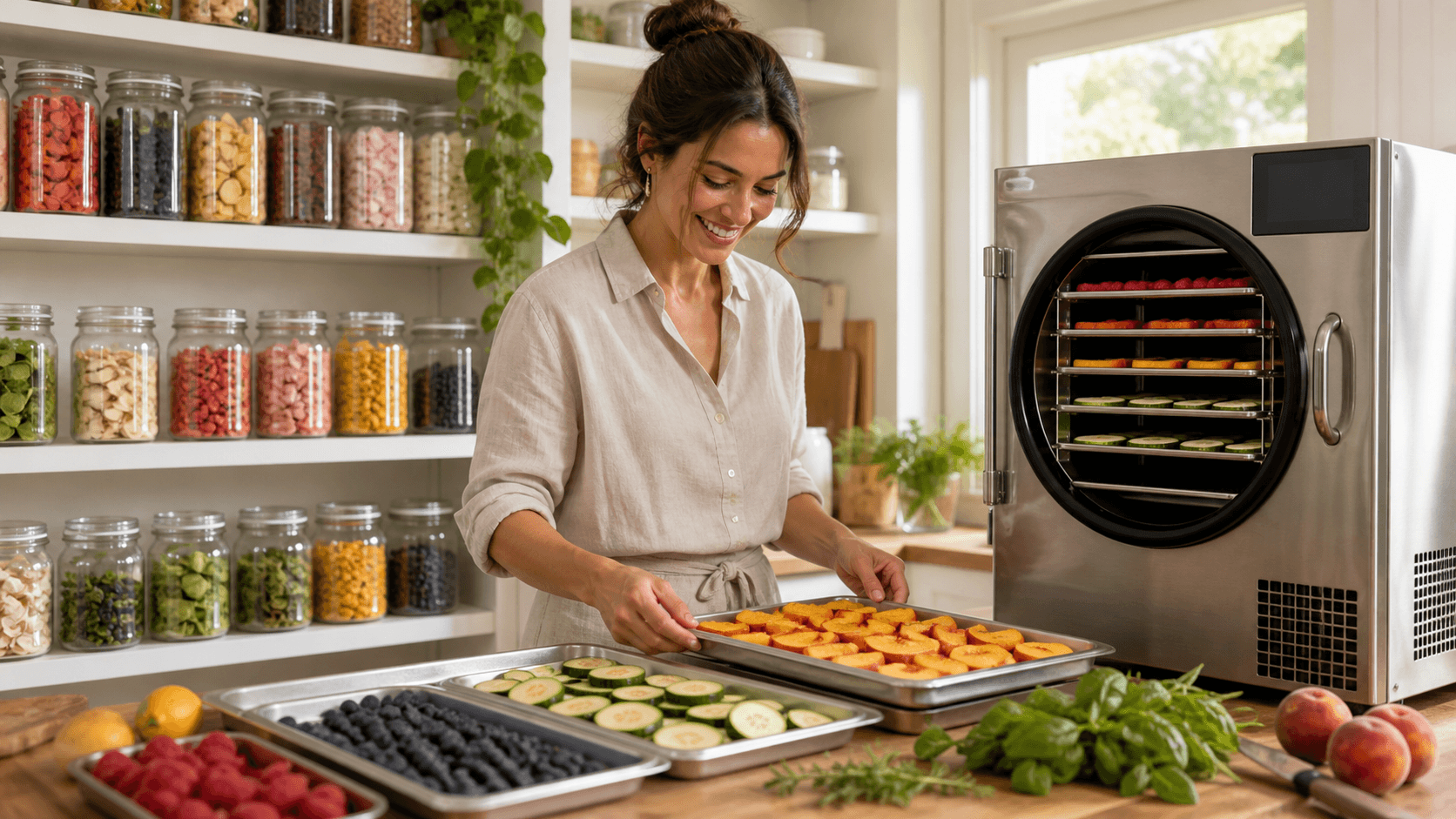
- Garden vegetables and fruit
- Full cooked meals like stews or casseroles
- Meats and fish
- Eggs and dairy
- Leftovers that might otherwise be wasted
Because the food keeps its shape, it often rehydrates close to how it looked and tasted when fresh. You can keep real meals on the shelf instead of only basic ingredients. For cabins, bug-out locations, or remote properties, that light, shelf-stable food is easy to move and store.
Another benefit is ease of use compared with canning. You do not have to hit exact temperatures at exact minutes or worry as much about seal failures. You prep trays, start the cycle, and let the machine handle the freeze and dry stages. There are still safety steps on the packing side, but many people find the process calmer and more repeatable than running a canner all day.
Powering Freeze Dryers in an Off Grid System
Now the honest part: freeze dryers pull a good amount of power. For off-grid life, that can feel like a deal breaker at first. It does not have to be. With smart planning, solar and battery systems can feed your freeze dryer without draining everything else.
Here is how many off-grid owners manage it:
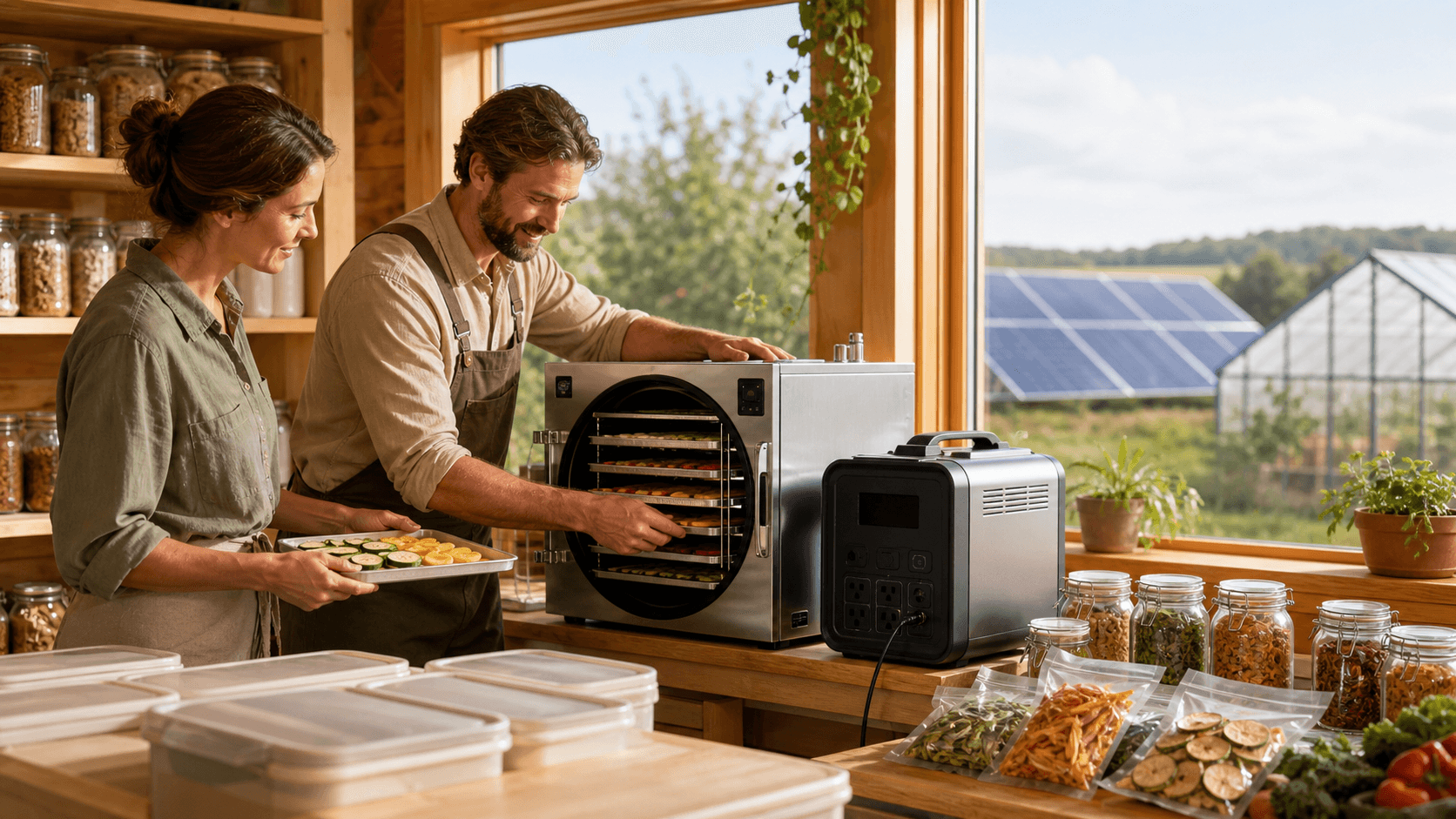
- Run the freeze dryer during hours of strong solar production
- Time big batches for sunny stretches in mid and late summer
- Use battery storage for the overnight part of the cycle
- Avoid running other large loads at the same time
The freeze dryer becomes one more planned load in your system, not a surprise spike. That means choosing the right inverter size, making sure your battery bank can cover longer cycles, and planning for startup surge.
This is where a whole system view matters. At Green Vista Living, we work with solar, battery backup, and off-grid gear every day. Matching a freeze dryer to the right array and storage lets you dry food without giving up your lights, well pump, or fridge. When all the parts are sized together, the freeze dryer turns into a powerful tool instead of a power problem.
Designing a Year-Round Freeze Drying Plan
Owning a freeze dryer is one thing. Using it with a smart plan is what turns it into real food security. It helps to think by season.
For many homesteads, a simple pattern looks like this:
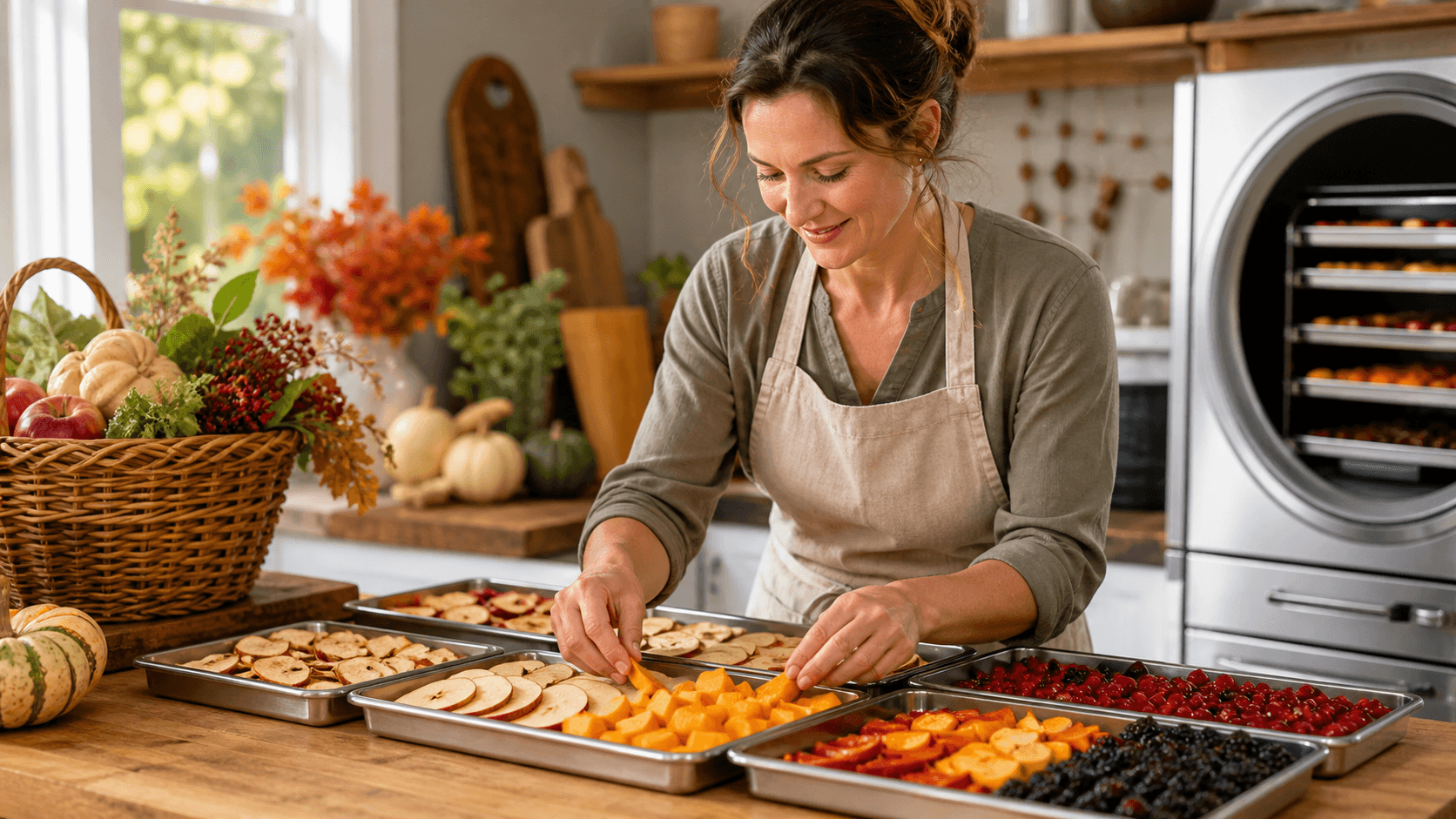
- Summer and early fall: garden produce, berries, fruit, herbs
- Late fall: meat from hunting, final garden runs, soups and stews
- Winter: bulk buys, comfort foods, ready meals
- Spring: eggs, greens, leftovers from busy planting days
Instead of running random trays whenever you feel like it, plan batches. Group similar foods together so cycles run more smoothly. Watch the weather forecast and start big loads when a string of sunny days is coming. That way, your solar system does the heavy lifting.
Storage planning is just as important as drying. You will want:
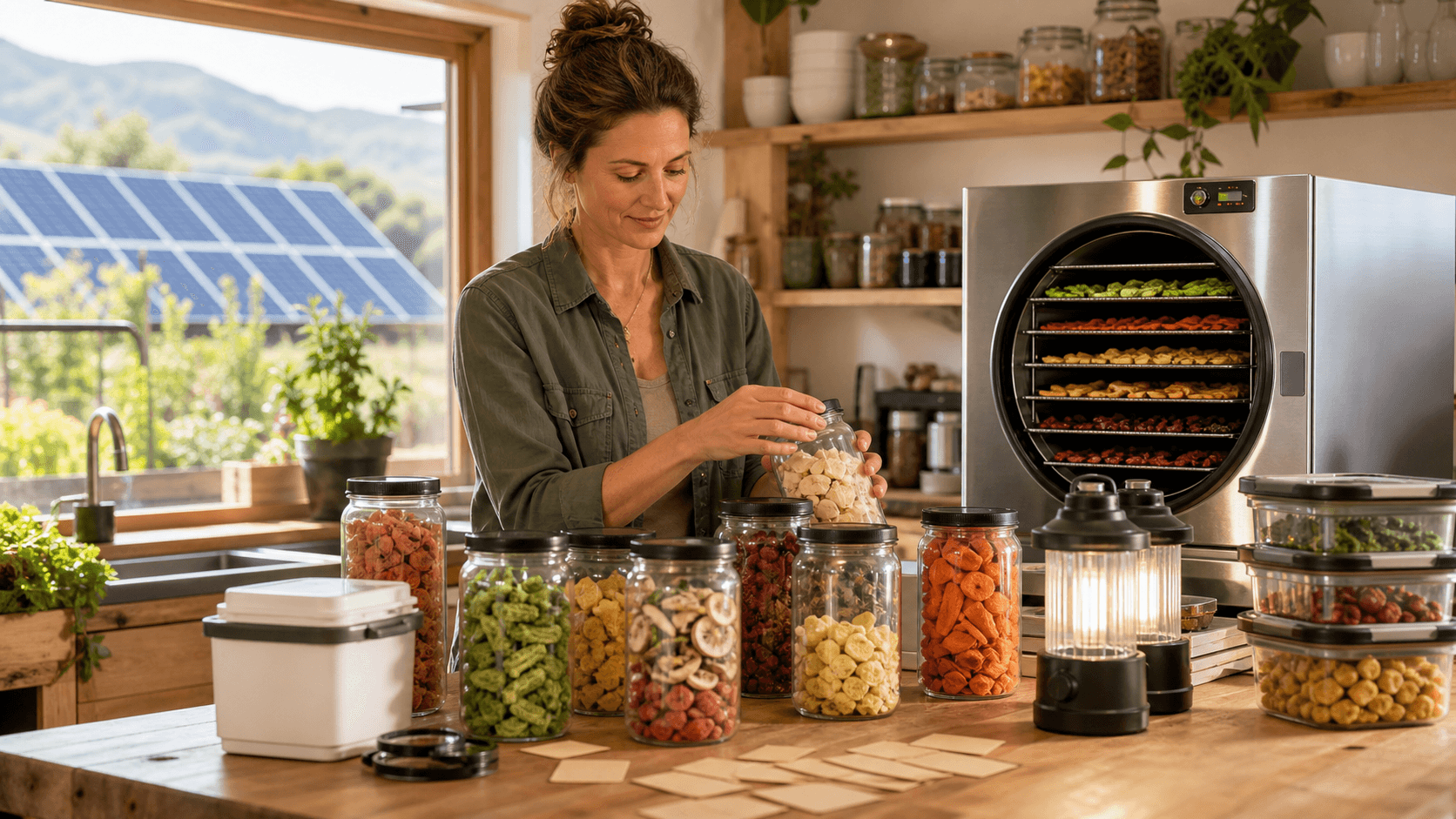
- Mylar bags or quality jars
- Oxygen absorbers
- Food-grade buckets
- Labels with contents and dates
Set up shelves or a pantry system so you can see what you have and pull the oldest food first. When your late summer harvest is still feeding you years later, you know the system is working.
Choosing the Right Freeze Dryer for Your Lifestyle
Not every off-grid home needs the biggest machine. The right freeze dryer depends on your space, power, and goals. Smaller units fit better in tiny homes, RVs, or weekend cabins. Medium and large units fit families or full-time homesteads that grow or buy in bulk.
When choosing a size, think about:
- How often you cook from scratch
- Your family size or group size
- How much garden space or hunting you rely on
- How much space you have for gear and storage
There are also practical details. Freeze dryers need enough amperage, a strong, reliable power source, and some breathing room. They make noise and give off heat, so many people place them in a utility room, outbuilding, or garage space instead of the main living area. If you are off-grid, location can affect wiring runs and how you manage heat in hot weather.
At Green Vista Living, we focus on premium freeze dryers that pair well with off-grid and backup power systems. We look at batch sizes, average cycle times, and power draw so your choice fits your real daily life, not just a wish list.
Turn This Harvest Season Into Long-Term Security
The big mindset shift is simple: a freeze dryer is not a luxury gadget. It is food infrastructure, just like your solar array and your battery bank. When you tie those pieces together, your garden, your trips to the store, and your hunting season all feed a long-term pantry that does not depend on the grid.
As mid to late summer approaches and gardens hit their peak, it is a good time to take stock. Look at your pantry, your freezer, and your power capacity. Decide what foods you most want to preserve, how often you can run batches, and what size freeze dryer would keep up without overwhelming your system.
At Green Vista Living, we care about helping people build resilient, sustainable setups that match real life, from small cabins to full homesteads. When freeze dryers, solar power systems, battery backup, and storage all work together, each harvest turns into steady food security, season after season.
Preserve More Food At Home With Reliable Freeze Drying
If you are ready to stock your pantry with long-lasting, nutrient-rich foods, our freeze dryers make it simple to get started. At Green Vista Living, we help you choose the right setup so you can preserve harvests, leftovers, and emergency supplies with confidence. If you have questions or need personalized guidance, just contact us and we will walk you through your options.