Keep Cabin Water Flowing When Winter Storms Hit
A well pump is easy to forget about until the power goes out and the faucets stop running. For a seasonal cabin or remote property, planning pump power before fall and winter can help protect access to drinking water, sanitation, livestock water, and everyday household needs.
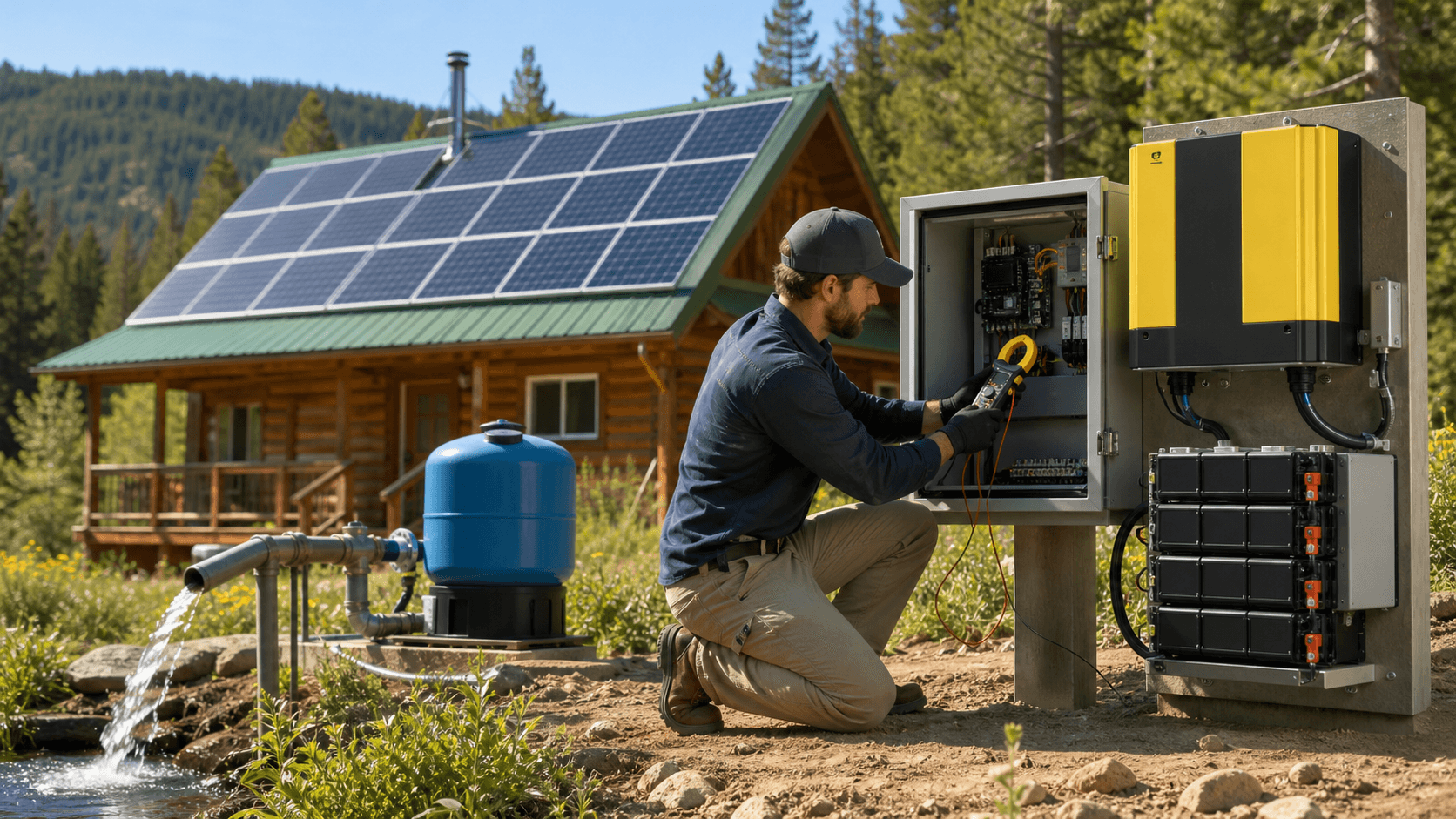
When we help you think through a Sungold Power system package, we look beyond solar panels. A dependable setup must account for the pump's voltage, normal power use, startup surge, daily water demand, battery storage, inverter output, and lower solar production during darker months.
Calculate Your Well Pump's Real Power Demand
Start with the label on your well pump or the owner's manual. Those details tell us what type of system the pump needs and whether it can work with your planned backup equipment. Pay close attention to:
- Pump voltage, usually 120 volts or 240 volts
- Horsepower and running wattage
- Starting watts or locked-rotor amps
- Average pump runtime each day
- Whether the pump serves a shallow or deep well
A smaller 120-volt shallow-well pump used for occasional cabin water may have a lower daily energy need than a 240-volt deep-well pump that supplies an entire household. Still, the smaller pump should not be sized by running watts alone. Motors often pull much more power for a few seconds when they first start.
To estimate daily energy use, multiply the pump's running wattage by the number of hours it runs per day. For example, if a pump runs in short cycles throughout the day, add those cycles together to find total runtime. That gives us a starting point in watt-hours.
The pump is only one part of the water system. Pressure tanks affect how often it cycles. Filtration equipment, water treatment gear, heat tape, water heaters, and other connected loads can add to the demand. We recommend planning for the whole water setup, not just the motor down the well.
Match Inverter Capacity to Pump Startup Surges
An inverter has two ratings that matter for a well pump: continuous output and surge output. Continuous output is the power it can provide during normal operation. Surge output is the extra power it can provide briefly when a motor starts.
A pump may run at a manageable wattage once it is moving water, then ask for several times that amount for a moment at startup. If the inverter cannot handle that brief demand, the pump may fail to start even when the battery bank still has plenty of stored energy.
For a Sungold Power system package, we recommend choosing an inverter that matches the pump's voltage and can support its startup demand with room left over for core cabin loads. Those may include:
- Refrigerator operation
- Interior lights
- Phone and radio charging
- Internet or communication equipment
- Small kitchen and personal-use loads
A soft-start device can lower startup demand on some larger pumps. It may be a helpful part of the plan, but it should not be treated as permission to choose an undersized inverter. Compatibility depends on the specific pump motor and electrical setup.
For any 240-volt pump connection, breaker selection, transfer equipment, or changes to the cabin's electrical system, we recommend working with a qualified electrician. Safe integration matters as much as having enough power.
Size Battery Storage for Realistic Water Needs
Battery storage determines how long you can keep using water when solar production drops, clouds linger, or the grid stays down. It is especially important at cabins where the pump may need to run after sunset or during a storm.
We start with the pump's estimated daily energy use, then add the cabin loads you need to keep operating. From there, build in a reserve for battery losses, colder weather, extra water use, and days when solar panels cannot fully recharge the bank.
Battery capacity is usually measured in kilowatt-hours, while pumps are often listed in watts. The difference is simple: watts describe how much power a device needs at a given moment, while kilowatt-hours describe how much energy is stored or used over time.
A larger battery bank can give you more runtime, but it does not replace a properly sized inverter. Your batteries must store enough energy for your needs, and the inverter must still deliver enough peak power to start the pump.
By October, it is wise to plan for more reserve than you might need in summer. Shorter days, snow on panels, cloudy weather, and winter storms can all slow down solar charging. Extra storage gives the water system more breathing room when conditions are less forgiving.
Plan Solar Array Output for Shorter Fall Days
Solar panels should be sized around the energy your cabin needs to replace each day, not around the best summer production. A Sungold Power system package should recharge the batteries after pump use while also supporting daytime cabin loads.
Local sun exposure matters. A clear, open location can produce more dependable power than a larger array placed where trees block the sun for part of the day. Before settling on an array plan, consider:
- Available southern exposure
- Roof direction and panel tilt
- Tree shade during lower fall sun angles
- Snow buildup and seasonal cleaning access
- Space for future panel additions
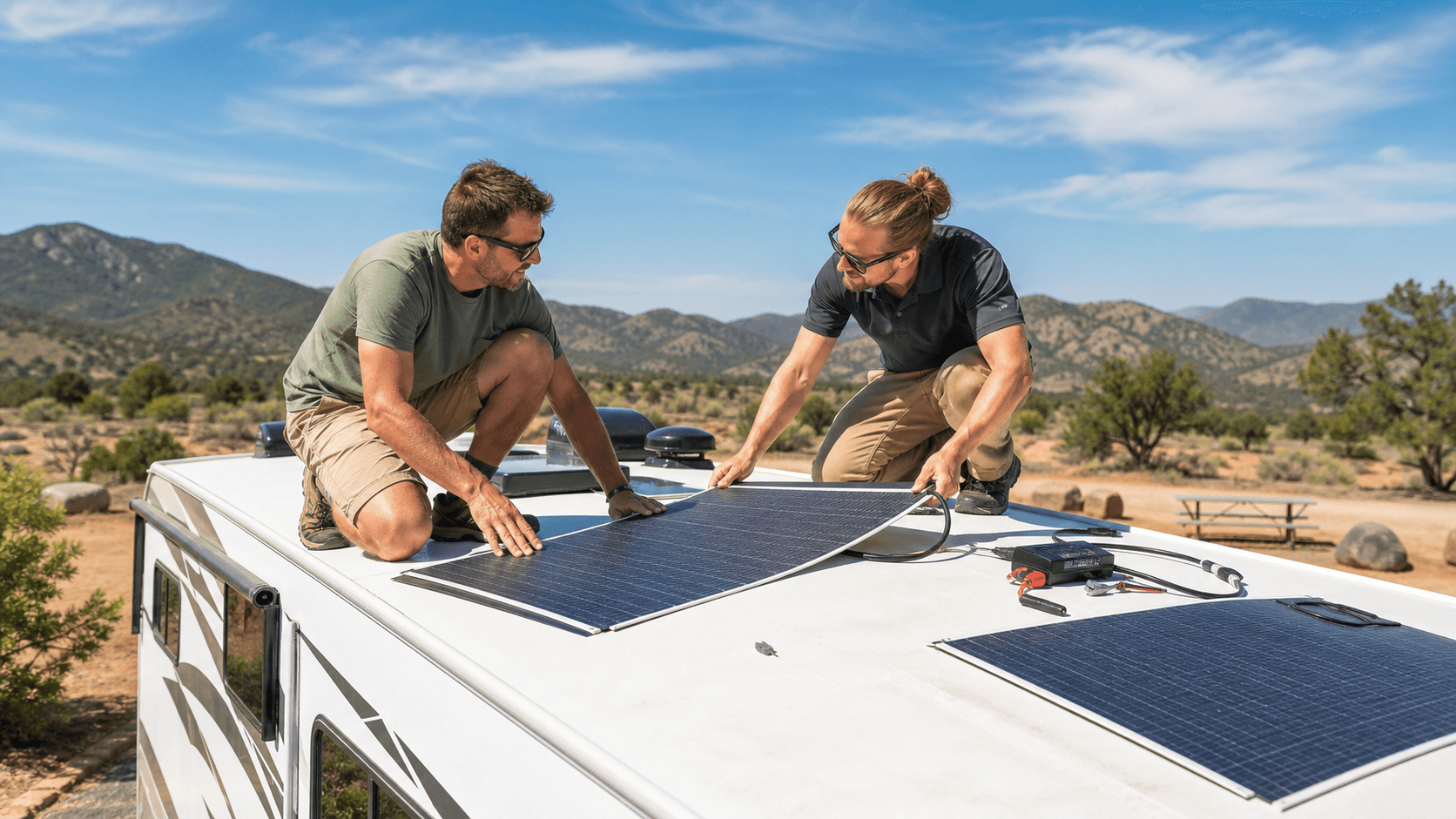
Panels that are hard to reach can become a problem when snow or debris blocks sunlight. We encourage planning for a location where the array can receive reliable sun and remain accessible when seasonal maintenance is needed.
For cabins that must maintain water through several days of poor weather, a backup charging plan is worth considering. A compatible generator input can provide another way to recharge batteries when solar production falls behind.
Build a Sungold Power Package with Room to Grow
The sizing sequence stays the same: identify the pump requirements, estimate daily energy use, choose inverter capacity for startup surge, select enough battery storage, and plan solar output for the season you will actually use the cabin. This approach helps avoid a system that looks adequate on paper but struggles when the pump starts during a winter outage.
Water needs can change over time. A larger pressure tank, added filtration, more people at the cabin, more battery storage, extra solar panels, or new appliances may all affect future power demand. Keep your pump label details, estimated daily water use, and a list of cabin loads together so your system plan can account for both today's needs and tomorrow's additions.
Build a Well Pump System That Fits
Green Vista Living can help you compare a Sungold Power system package with the pump requirements and cabin loads you have documented. We offer practical guidance to help you choose components that support reliable water access without oversizing your off-grid setup. If you would like help reviewing your plans, contact us to discuss your cabin power needs.