Stay Cool When the Grid Fails This Summer
Summer power outages can turn a safe home into a hot, stressful box in just a few hours. When the grid goes down during a heat wave, many of us lean on a single window AC to keep one room cool enough to be safe and comfortable. The problem is, without a plan, that comfort can vanish fast.
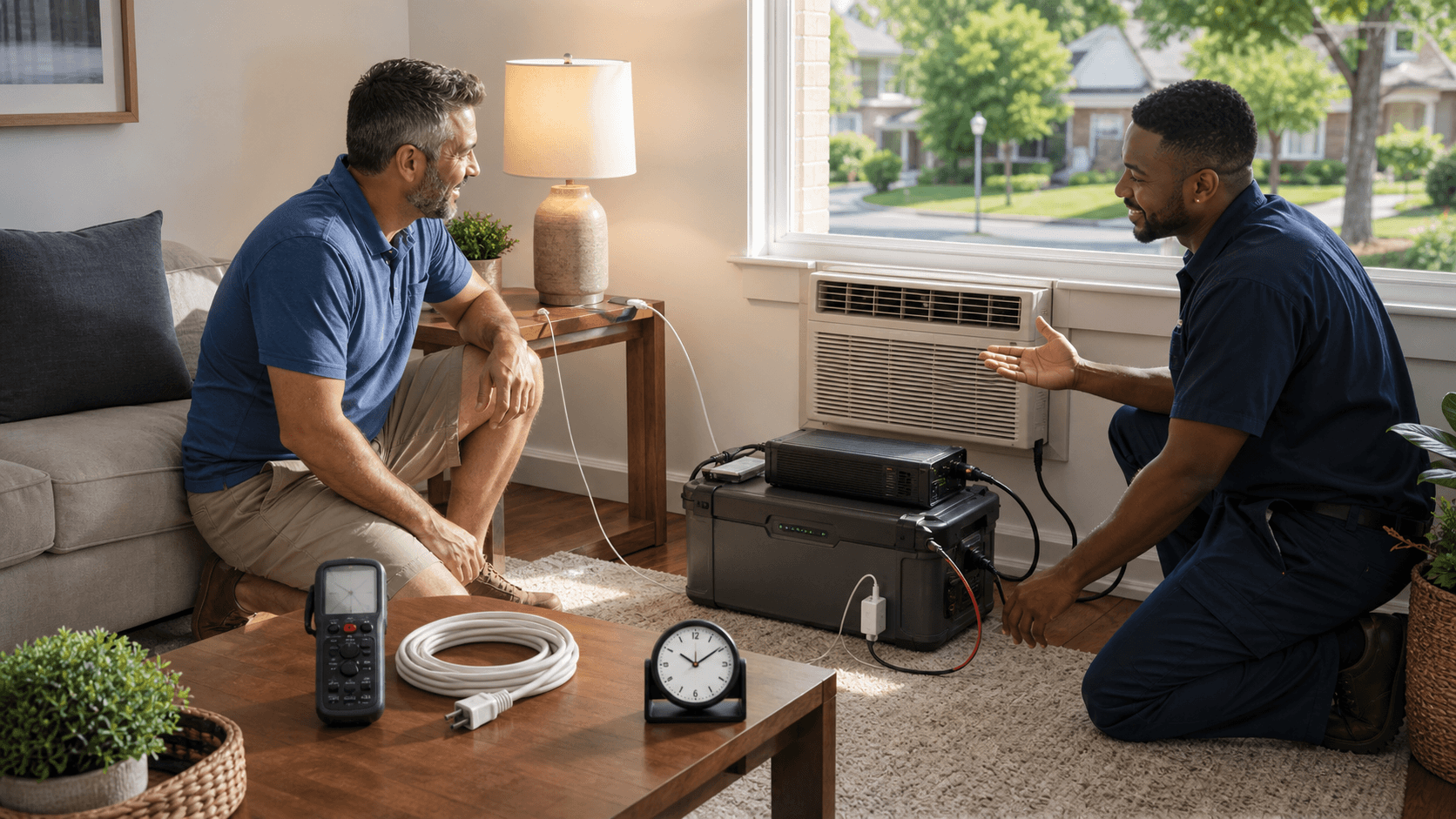
Pairing a small home backup battery with a high-efficiency window AC gives you a simple, focused way to stay cool during blackouts. Instead of trying to run your whole house, you keep one key space livable. In this guide, we will walk through what a small backup battery can really do, how long you can expect a window AC to run, how to stretch that cool air, and how time-of-use rates can help the system pay you back over time. At Green Vista Living, we work with homeowners, cabin owners, and apartment dwellers who want smart, right-sized backup power that matches real life.
What a Small Home Backup Battery Can Really Do
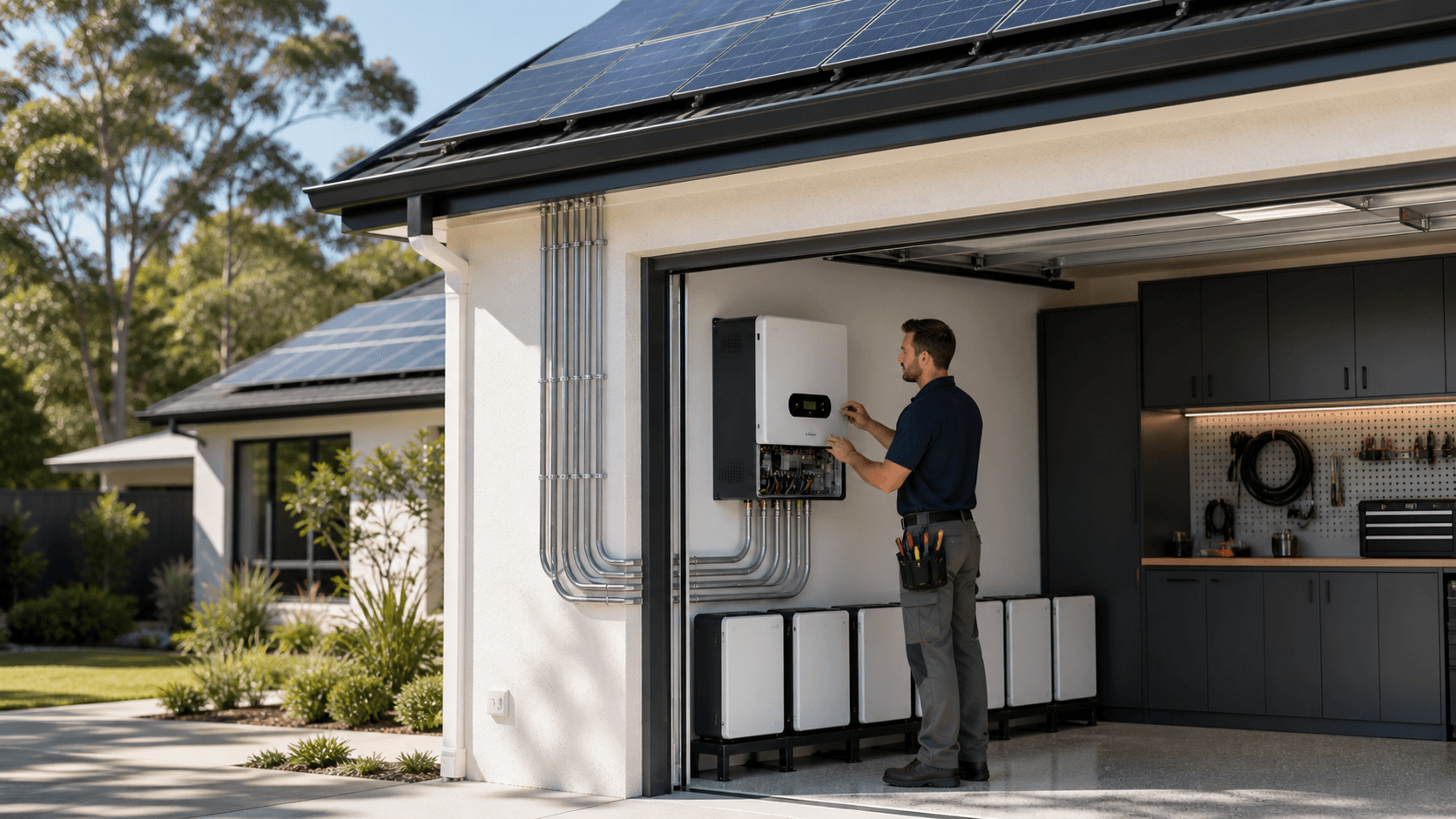
When we say "small" home backup battery, we are talking about compact systems that are easy to add to a home without major electrical work. Many of these units sit in the 1 to 5 kilowatt-hour range. Some are simple plug-in models, almost like a big power station. Others can be wired into a subpanel by a professional.
Key traits of small backup batteries usually include:
- Capacity in the 1 to 5 kilowatt-hour range
- Built-in inverter with a power limit, often around a single circuit or room
- Standard outlets or a small hardwired connection
- Battery chemistry like LiFePO4 that is known for long life and stable performance
With this kind of setup, you are not trying to run central AC for the whole house. Instead, you focus on:
- A single window AC or portable AC in one room
- A few LED lights
- Your Wi-Fi router and modem
- Phone and laptop charging
Larger appliances, like electric ovens, central HVAC systems, or clothes dryers, are usually too heavy for a small home backup battery. The inverter can only deliver so much power at once, and the battery only stores so much energy.
Battery chemistry matters too. Systems that use LiFePO4 often last through more charge cycles and can be safer and steadier in high temperatures than some older chemistries. That can make a big difference if you expect to use your system often in hot weather.
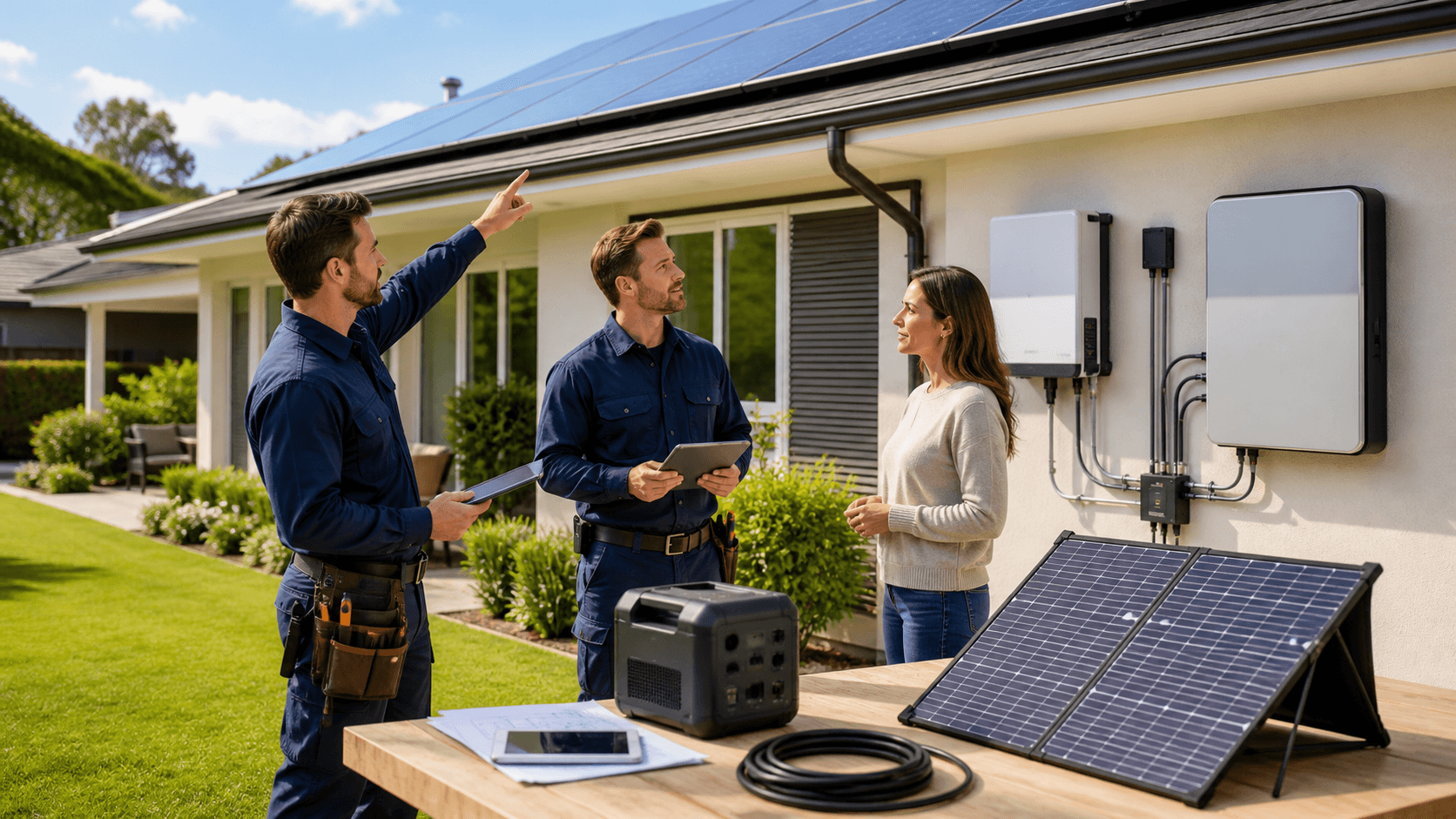
Solar add-ons are another important piece. A modest solar kit feeding your home backup battery can recharge it during the day. That is especially helpful during heat waves, when power outages can last more than a few hours. Sizing the solar correctly means planning for long, sunny, very warm days so your AC has the best chance to keep going.
Calculating Window AC Runtime You Can Trust
To plan for outages, you first need to know how hungry your window AC really is. On the label, you will see the cooling size in BTUs, plus an efficiency rating like EER or SEER, and sometimes the watt draw.
In simple terms:
- Smaller units, around 5,000 BTUs, often need a few hundred watts
- Mid-sized units, around 8,000 to 10,000 BTUs, might sit in the 600 to 1,000 watt range
- Larger window units, up to 12,000 BTUs, can go higher than that
If your window AC uses around 700 watts while running, and your home backup battery has 2 kilowatt-hours of usable energy, the math looks like this: divide 2,000 watt-hours by 700 watts. On paper, you get a little under 3 hours of continuous runtime. A 5-kilowatt-hour battery might give you several more hours.
In real life, you need to account for:
- Inverter efficiency losses, some power is lost converting DC to AC
- Startup surges when the compressor kicks on
- Limits on how deeply the battery can be discharged
- Higher draw in extreme heat, when the AC works harder
Thermostat cycling changes things too. If you cool the room, then let the AC rest while the fan runs, your average draw over time can be lower than the full rated watts. That can stretch runtime by a noticeable amount, especially at night.
For early-summer heat, we usually suggest slightly oversizing your system. Longer, hotter days put more strain on both your AC and your backup battery. Having extra capacity gives you a buffer, so you are not watching the battery level with worry every hour.
Smart Load Shedding so Your Cool Air Lasts Longer
Load shedding is a fancy term for a simple idea: you turn off nonessential stuff so your limited power can focus on what matters. When you run a small home backup battery in a summer outage, every watt you save goes toward more cooling time.
You can sort your home loads into three rough groups:
- Must-have: window AC or key fan, fridge or freezer, modem and router, phone chargers
- Nice-to-have: a few LED lights, a laptop, a small TV or radio
- Postpone: microwaves, toasters, hair dryers, vacuum cleaners, gaming systems
During an outage, many people choose one room as the "cool room." The window AC runs there, and family members and pets gather in that space during the hottest hours. That lets you keep the AC set at a safe, steady temperature instead of trying to cool the whole home.
A few simple habits can stretch runtime further:
- Pre-cool your room before the hottest part of the day
- Close blinds and curtains to block direct sun
- Seal obvious air leaks around the AC and windows
- Shift cooking, laundry, and other heavy loads to cooler times if the power is on
At Green Vista Living, we pay close attention to how each device pairs with a backup system. A well-chosen, efficient window AC, a right-sized fan, and low-draw lighting can add up to much longer comfort on the same home backup battery.
Turning TOU Rates Into Battery Payback
Time-of-use (TOU) rates mean your power price changes based on the hour of the day. Many areas charge more for late afternoon and evening, when people are running AC, cooking, and using more energy. Off-peak hours, like late night or times with a lot of solar on the grid, often cost less.
With a home backup battery, you can practice simple "energy arbitrage." You charge the battery when power is cheaper, then use it when rates are higher. During summer, that can line up nicely with your window AC use.
A basic pattern might look like this:
- Charge your battery overnight when rates are lower
- Run your window AC on grid power in the morning if rates are still low
- Switch your AC and key loads to battery power during peak rate hours
- Top off the battery again later off-peak
Over a full cooling season, shifting a share of your AC use off the highest price hours can bring steady savings on your bill. It will not erase your power costs, but it can help your backup system pull double duty, both as outage protection and as a daily tool.
There are other benefits too, like making your home more resilient, easing your stress when storms or heat waves are on the way, and lowering the demand you place on the grid at the worst moments. Some areas also offer programs or incentives for home batteries that support grid stability, which can add even more value for off-grid or hybrid homes.
Design Your Summer-Ready Backup Cooling Plan Now
Before the next big heat wave, it helps to make a simple plan. Think about how long you want to keep a room cool during an outage, how large your window AC is, and what other loads you truly need. From there, you can match a home backup battery size, inverter power level, and optional solar kit that fits those goals.
Personal needs matter here. Some homes have medical devices that must stay powered. Others may be more focused on pets, a home office, or keeping food from spoiling. Writing down your "must-have" and "nice-to-have" items is a smart first step before choosing equipment.
At Green Vista Living, we focus on off-grid and outdoor living solutions, and we bring that same mindset to small homes, cabins, and apartments that want smart backup cooling. A carefully chosen battery, solar kit, and efficient window AC can turn a scary summer outage into a manageable, planned event, where you stay cool, protect your family, and build long-term comfort and resilience into your everyday life.
Protect Your Home With Reliable Backup Power Today
If you are ready to keep your lights on and essentials running during the next outage, we can help you choose the right home backup battery for your space and budget. At Green Vista Living, we guide you through options, sizing, and installation so your system is dependable when you need it most. Have questions or need a custom recommendation? Just contact us and we will walk you through your next steps.