Build a Cold Plunge That Actually Stays Cold Off-Grid
A cold plunge that runs on solar power sounds simple until you try to keep that water cold every single day. Chillers, pumps, and ice makers pull more power than many people expect, especially when you want steady, year-round use. If we want our system to work on cloudy days, early mornings, and long summer afternoons, we have to plan for it from the start.
In this guide, we will walk through how to think about power use, start-up surge, insulation tricks, and smart thermal storage. Our goal is to help you plan off-grid solar kits that actually match how you use your cold plunge, not just how you hope it will run. By the end, you will have a clear way to turn your cold plunge idea into a realistic solar plan that feels calm and dependable instead of stressful and risky.
Understand Cold Plunge Power Loads Before You Buy Anything
Before buying panels, batteries, or even a chiller, it helps to know what actually needs power. A typical cold plunge setup can include:
- A dedicated plunge chiller or mini-split-style heat pump
- A small circulation pump
- An ice maker or extra freezer for backup cooling
- UV or ozone water treatment
- Control systems and sensors
Each device has two key numbers: watts and hours per day. To build a simple load profile, we list every piece of gear and do this:
- For steady loads (like a pump or controller), use watts x hours they run
- For cycling loads (like a compressor or ice maker), use watts x average hours they actually run, not the whole day
So if a chiller pulls a certain number of watts but only runs half the time, we count the actual run hours, not 24. That alone can change your off-grid solar kit size by a big margin.
Seasonal changes matter too. In warm months, the chiller may run much longer to fight higher air and ground temperatures. In colder seasons, the water stays cool more easily, but you may need:
- Better insulation to keep wind and sun off the water
- Shorter, sharper run times when the sun is high
- A plan for shoulder seasons where nights get cold but days feel warm
All of this feeds into how large your battery bank should be and how many panels you really need, not just on a perfect sunny day, but on your worst typical day.
Plan for Start-up Surge and Compressor Spikes
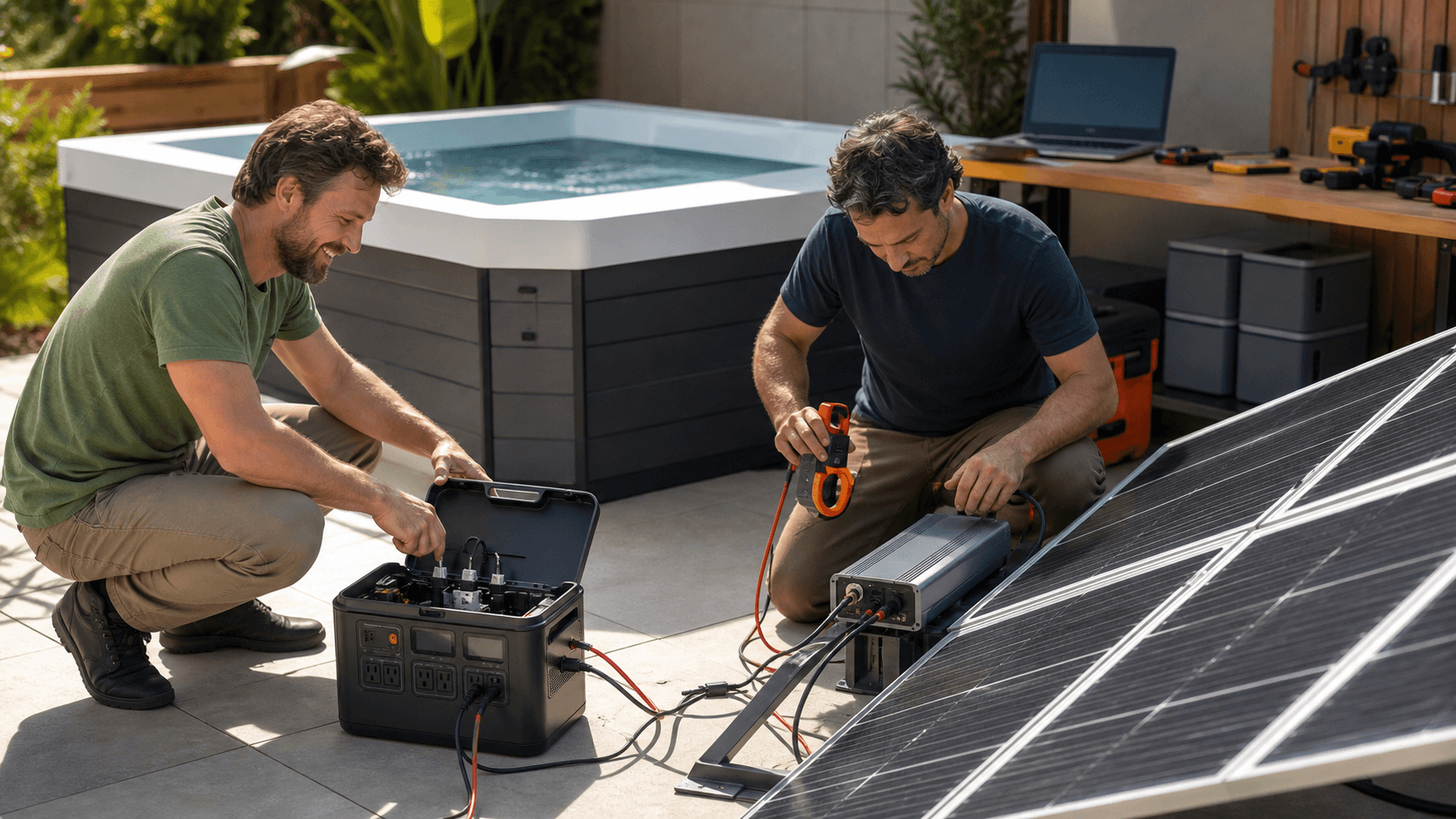
Cold plunge chillers and ice makers use compressors, and compressors love to spike. When they start, they can pull many times their normal running power for a short burst. This is often shown as locked rotor amps, or LRA, on the data label. If your inverter cannot handle that surge, it trips, and your plunge warms up while you reset things.
To size an inverter for start-up surge, we like to:
- Check the nameplate on the chiller or ice maker for LRA or surge data
- Use manufacturer info when possible for start-up watts
- When we are unsure, assume 3 to 7 times the running watts just to be safe
Then we think about what might try to start at the same time. A chiller, plus a pump, plus an ice maker, all kicking on together, can overload a tight system. It is better to pick an inverter with some breathing room than to have a system that keeps shutting down.
There are also tools that help tame surge:
- Soft starters to smooth compressor start-up
- Variable-speed compressors that ramp gently
- Timers or control logic so big loads start at different times
- Setting big start-ups to happen when solar is strongest, not late at night on battery
This kind of planning keeps your cold plunge from becoming a guessing game every time the compressor clicks on.
Use Insulation and Thermal Storage as Free Energy
The coldest, most stable plunges are not just about big chillers. They are about not losing the cold you already paid for. Insulation and smart layout are some of the easiest ways to cut power use without adding more panels or batteries.
For the plunge vessel itself, we aim for:
- Thick insulation under and around the tub walls
- A tight, insulated lid that actually gets used
- A vapor barrier to limit moisture and reduce heat gain
- Wind protection so cold water is not fighting a steady breeze
Now layer in thermal storage. Instead of trying to hold one exact temperature around the clock, we let the system work with the sun. A simple pattern looks like this:
- Over-chill the water a bit during strong midday sun when panels are full
- Let the water slowly warm a few degrees overnight on battery power
- Use insulation and a lid so that warm-up is gentle and slow
By treating your plunge like a cold battery, you store extra cooling in the water itself when solar production is at its best. This is especially helpful at cabins or rural homes where weather can shift quickly and power lines are far away.
Environment and layout also matter. Shaded placement, a small platform or deck under the tub to separate it from hot ground, and a fence or wall as a windbreak can all reduce heat gain. Any exposed plumbing should be insulated too, which cuts temperature creep and helps prevent freezing when nights start getting chilly again.
Size Off-Grid Solar Kits for Year-Round Runtime
Once the loads and insulation are clear, we can size off-grid solar kits with real numbers. The basic energy math starts like this:
- Add up daily watt-hours for every device using your load profile
- Add a buffer for system losses, like inverter and wiring
- Look at your local sun hours for each season
- Size panels for the weakest solar period you care about, not the best day
Battery capacity should be based on how many hours or days you want steady cold plunge use if the weather turns cloudy. Daily users need more storage than someone who plunges only a few times each weekend.
Different use patterns change the right kit size:
- Everyday plunges with saunas or domes nearby often need larger arrays and deeper storage
- Weekend-only setups can lean on solar-heavy charging during the week and less overnight runtime
- Summer-only plunges can focus more on panel size and less on big battery banks, since nights are warmer and demand may be less
We also like to plan a reliability margin. Many people find peace of mind by adding extra solar and battery space so they can grow into the system. That might mean leaving room for a larger chiller later, or for pairing the plunge with a sauna or other wellness gear when the time feels right. A backup input like grid or generator connection can also help during long stormy stretches without needing to rebuild the whole system.
Turn Your Cold Plunge Plan Into a Real Off-Grid Setup
Once you have your load list, surge estimates, and a rough sense of seasonal runtime, you can turn those numbers into a real design. At Green Vista Living, we focus on off-grid and backup power for sustainable outdoor living, so cold plunge setups fit right into what we work with every day.
The next step is to match your wish list to the right mix of panels, batteries, and balance-of-system gear, all sized for how and when you like to plunge. With thoughtful planning, your solar-powered cold plunge can feel simple and steady, ready whenever you step up to the edge and decide it is time to get cold.
Start Powering Your Property With Reliable Solar Independence
If you are ready to cut utility costs and gain energy security, explore our curated off-grid solar kits built for dependable, real-world performance. At Green Vista Living, we design solutions that match your property size, usage, and long-term goals so you can move off the grid with confidence. Have questions about sizing, installation, or components? Reach out through contact us and we will help you choose the right setup for your project.