Off-grid living asks a simple question: how can we get more freedom with less waste? When you live beyond city limits, every tool has to earn its place. That includes how you move yourself, your gear, and your groceries. Folding electric bikes can be a smart way to do that, especially when you want to cut down on fuel, noise, and clutter without giving up range or comfort.
In this guide, we will talk through when folding electric bikes make sense for off-grid life, what to look for, and how to plan your first season with one. If you are thinking about new transport before colder weather hits, this is a good time to rethink what really works for your land, your body, and your energy system.
Why Folding Electric Bikes Fit Off-Grid Life
Off-grid living is about independence, low impact, and smart use of space and resources. Most people who live this way keep a close eye on what they own, what it costs to run, and where it will fit. A tool that does more than one job, takes little room, and runs on your own power system fits that mindset well.
Folding electric bikes bring together three strengths that matter off the grid:
- Portability: you can pick them up, fold them, and stash them
- Power assist: the motor helps you up hills, through sand, or into the wind
- Compact storage: they fit in tight cabins, sheds, and vehicles
On remote land, those strengths solve real problems, from rough access roads to small indoor space. Late summer is a smart time to think about this. The days are still long, the weather is mostly friendly, and you can test new routes before rain, mud, and snow arrive.
At Green Vista Living, we focus on gear that supports resilient, energy-independent living. Folding electric bikes fit right beside solar systems, water filtration, and other tools that help you depend less on outside fuel and more on your own setup.
Solving Real Off-Grid Transport Challenges
Many off-grid homes sit at the end of long gravel driveways or narrow dirt roads. In spring you may deal with deep mud. In winter you may face snow, ice, and frozen ruts. Even in good weather, parking space near a tiny home, cabin, or dome can be tight.
A full-size truck or ATV is helpful, but it comes with heavier upkeep. Fuel storage, oil changes, filters, tires, and repairs all demand time and money. Some people find that their truck mostly sits except for big supply runs, yet they still pay to keep it going.
Folding electric bikes offer a lighter way to fill in those daily gaps. They can give you:
- A quick ride from cabin to mailbox or main road
- An easy way to visit neighbors or nearby farms
- Faster checks on fence lines, water tanks, and garden areas
- Simple access to trailheads or fishing spots without moving a vehicle
One of the biggest wins is energy independence. Instead of planning fuel deliveries or trips to town just for gas, you can charge e-bike batteries from your solar system. That means your daily mobility can run on the same sun that powers your lights and pumps.
Why Folding Electric Bikes Beat Standard E-Bikes
Standard electric bikes can work off grid, but folding models solve some problems that show up more in tiny homes, cabins, RVs, and geodesic domes. In these spaces, every square foot matters. You might not have a garage. You might have just a small deck or shed.
Folding e-bikes give you:
- Easier storage in small entryways or corners
- A way to tuck the bike under a loft or bunk
- Better protection from weather and theft, since you can keep it inside
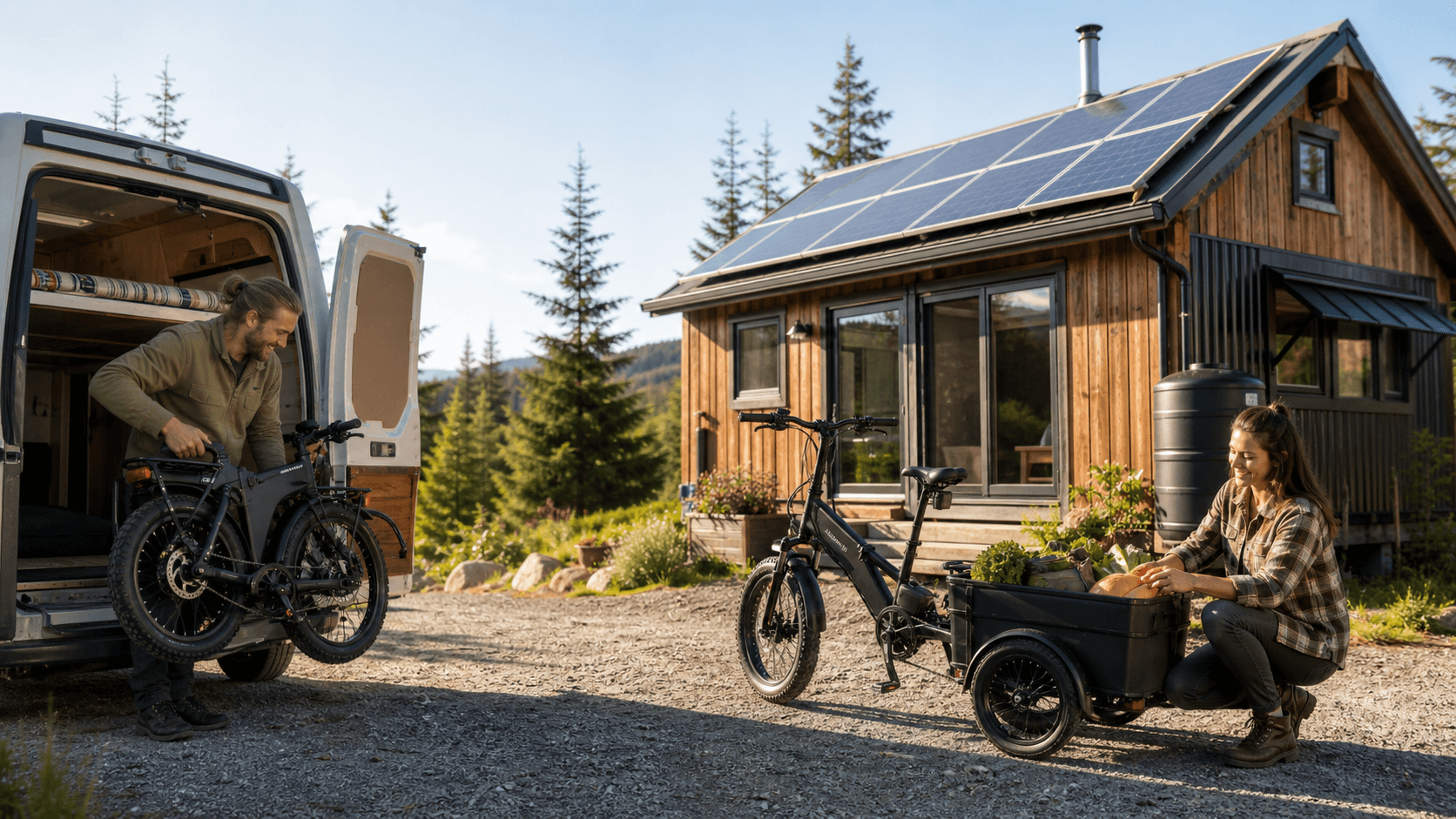
Portability is another big win. A folding electric bike can fit into:
- A small car trunk
- The back of a van or SUV
- The cab or bed of a truck, without a rack
That helps if you split time between town and land, move between seasonal camps, or like to explore different trail systems. One bike can work for commuting, campground exploring, and backroad access to your off-grid spot, without needing extra carriers or storage buildings.
Power, Range, and Charging Off the Grid
Range is one of the first questions people ask about folding electric bikes. The honest answer is that it depends. Mixed terrain, hills, gravel, and soft dirt all use more battery than flat pavement. Strong headwinds or heavy loads do too.
Here are the main pieces that affect how far you can go:
- Battery capacity, larger batteries usually mean more range
- Motor wattage, more power helps on hills but can use energy faster
- Pedal assist level, lower assist settings stretch range, higher ones feel easier but drain quicker
- Rider input, steady pedaling versus relying on a throttle
For off-grid properties, it helps to map your common distances. How far is it to: the main road, the nearest store, your far fence line, the shared well or spring? Match your bike specs to your longest regular loop with a buffer for wind, weather, and extra cargo.
Charging ties directly into your solar power system. Most off-grid setups already have:
- Solar panels feeding a battery bank
- An inverter making AC power for outlets
E-bike chargers usually plug into a regular outlet. You can schedule charging for sunny hours so your main battery bank has plenty of input. In late summer and early fall, solar production is often strong, so you can test how bike charging fits your routine. In winter, shorter days and snow cover may mean:
- Charging less often
- Using lower assist levels
- Planning backup charging from a generator when needed
Key Features That Matter for Remote Properties
Choosing a folding electric bike for off-grid living is not the same as picking one for city streets. Use a simple checklist that fits your land.
For terrain-ready design:
- Fat tires or wider tread for dirt, gravel, and forest roads
- Some suspension, front fork or seatpost, if your roads are rough
- A strong frame that can handle bumps and light hauling
For daily utility, helpful features include:
- Rear racks and pannier mounts for groceries and gear
- Fenders to keep mud and water off you and the bike
- Lights for early mornings, evenings, and shaded tree tunnels
- Trailer or tow compatibility for water, firewood, or tools
User-friendly details matter a lot when you live far from repair shops:
- An easy fold mechanism you can manage in gloves or cold weather
- A weight you can safely lift into a car or up cabin steps
- Water resistant electronics for rain and puddles
- Parts that are simple to work on with basic tools
Since you may ride loaded on steep grades, pay close attention to safety and reliability. Good brakes, stable handling, and support for replacement parts all count more when town is a long drive away.
Planning Your First Season with a Folding E-Bike
Late summer and fall are great times to bring a folding electric bike into your off-grid setup. The idea is to learn the bike before the hardest weather arrives.
You can start by:
- Testing different assist levels on your main hills
- Riding your roughest road when it is still dry
- Practicing folding, lifting, and storing the bike
Next, map your regular routes, such as:
- Cabin to mailbox or main road
- Home to nearest store or pickup spot
- Paths to neighbors, work sheds, and garden areas
- Trails to creeks, lakes, or favorite viewpoints
Once you know your loops, you can build habits for storage and care. Many people keep the bike indoors or in a tight shed, and store the battery where temperatures are more stable. A simple routine helps, like wiping dust and mud, checking tire pressure, and watching brake feel.
As rain and cold arrive, a little extra prep goes a long way:
- Keep the chain clean and lightly oiled
- Let a wet bike dry before folding for long periods
- Avoid leaving the battery in deep cold for days at a time
In families or shared off-grid communities, folding e-bikes can become shared tools. It helps to agree on simple rules, like who rides which routes, where the charger stays, and how low the battery can go before the next charge. A shared schedule can keep one or two bikes serving several people without conflict, and keep your off-grid transport running smoothly all year.
Discover Compact Power And Comfort For Every Ride
If you are ready to simplify your commute or weekend adventures, explore our curated selection of folding electric bikes designed for real-world convenience and performance. At Green Vista Living, we help you choose the right setup so you can ride farther, store your bike easily, and enjoy more time outside. Have questions about models, sizing, or accessories? Just contact us and we will guide you every step of the way.