How a Home Freeze Dryer Transforms Off-Grid Security
Storing food at home is not just about saving a few jars on a shelf. For anyone living off-grid or working toward more independence, long-term food storage is about security, comfort, and peace of mind. When the garden is full, the freezer is packed, and deals at the store are too good to pass up, we need a way to keep it all safe without depending on the power company.
Late summer makes this very clear. The tomatoes are coming in faster than we can eat them, berries are sweet and cheap, and meat sales are tempting. Canning and dehydrating help, but they only go so far when we want food that lasts for years, keeps its flavor, and does not demand constant attention from a freezer or pressure canner. This is where having a freeze dryer at home can change everything.
Traditional methods are still useful. We like a mix of canning, freezing, and dehydrating. But when the goal is real off-grid security, we want food that is:
- Shelf-stable for a long time
- Light and compact
- Packed with nutrition and flavor
- Simple to store without steady power
A home freeze dryer lets us take what we have right now and turn it into long-lasting, shelf-ready meals and ingredients that support real independence.
Why Freeze Drying Beats Canning and Dehydrating for Storage
Canning and dehydrating both use heat. That heat is what makes them work, but it also changes the food. Many people notice that canned vegetables are soft and dehydrated fruit can be chewy and darker. Some delicate nutrients do not love high temperatures, and texture often takes a hit.
Freeze drying works in a different way. It removes water from frozen food under low pressure, so the water turns straight from ice to vapor. The food stays cold through the process, which helps keep:
- Color closer to fresh
- Texture that returns when rehydrated
- Aroma and flavor that feel familiar
Nutrients respond better to this gentle method, so what you store is much closer to what you picked or cooked. When you add water back, freeze-dried meals often look and taste like they just came off the stove.
Shelf life is another big difference. Canned food can last a long time, but jars are heavy and can break. Dehydrated food can be great for snacks but can go stale or lose quality if not packed just right. Freeze-dried food, sealed in mylar with oxygen absorbers and kept in a cool, dark place, can stay stable for many years while keeping its character.
There is also more flexibility. With a freeze dryer at home, you can safely store:
- Complete meals, like soups and stews
- Dairy items like yogurt and cheese
- Eggs, meat, and higher fat foods that can be harder to manage with other methods
That flexibility is a big deal for off-grid living, where every bit of food needs to count.
Building a Year-Round Pantry with a Freeze Dryer at Home
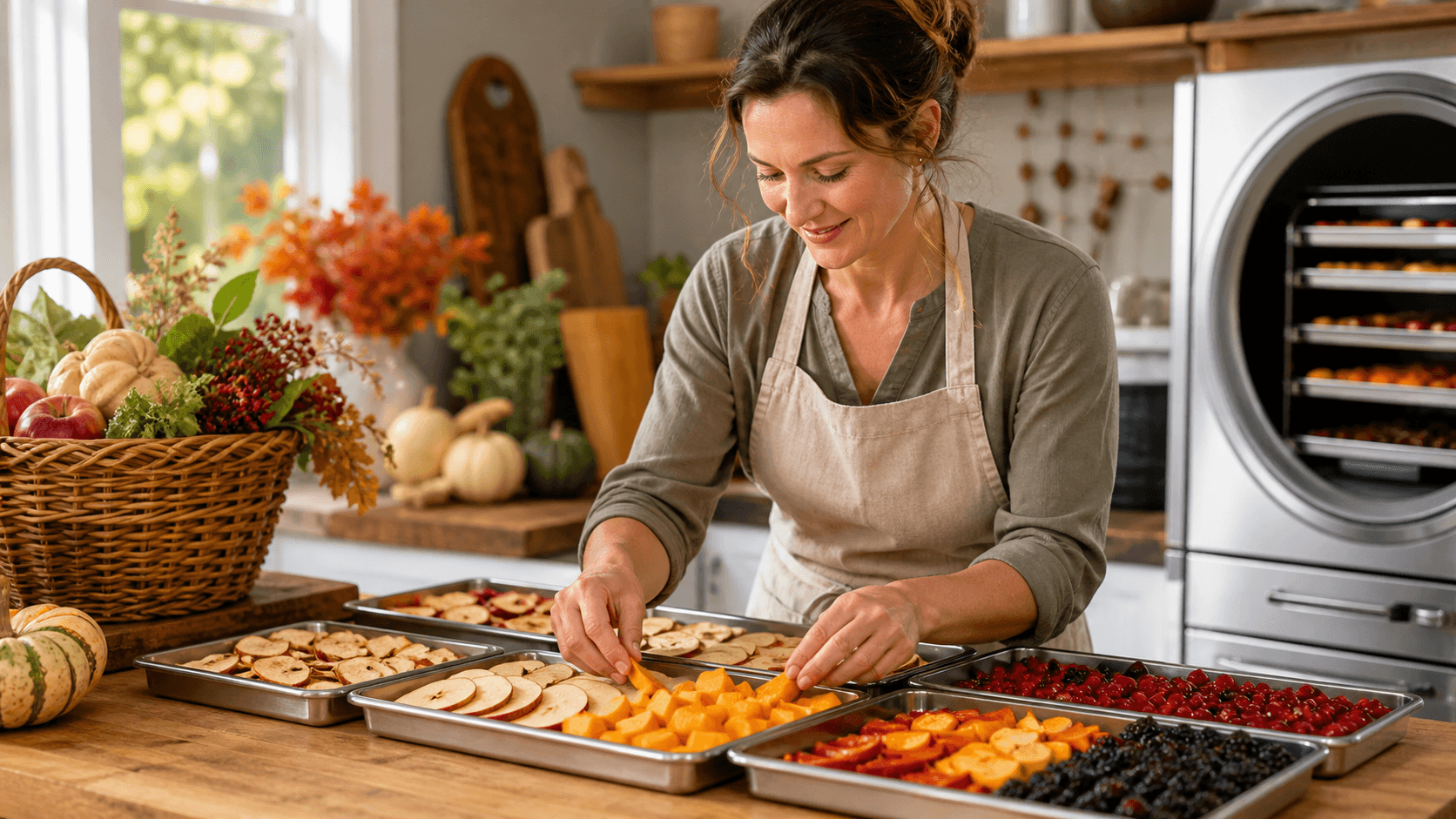
Late summer is one of the best times to lean into freeze drying. Gardens are overflowing, and local markets often have boxes of produce priced to move. Instead of watching food over-ripen on the counter or stressing about freezer space, we can move batch after batch into the freeze dryer.
A simple seasonal strategy could look like this:
- Run trays of tomatoes, peppers, and onions for later soups and salsas
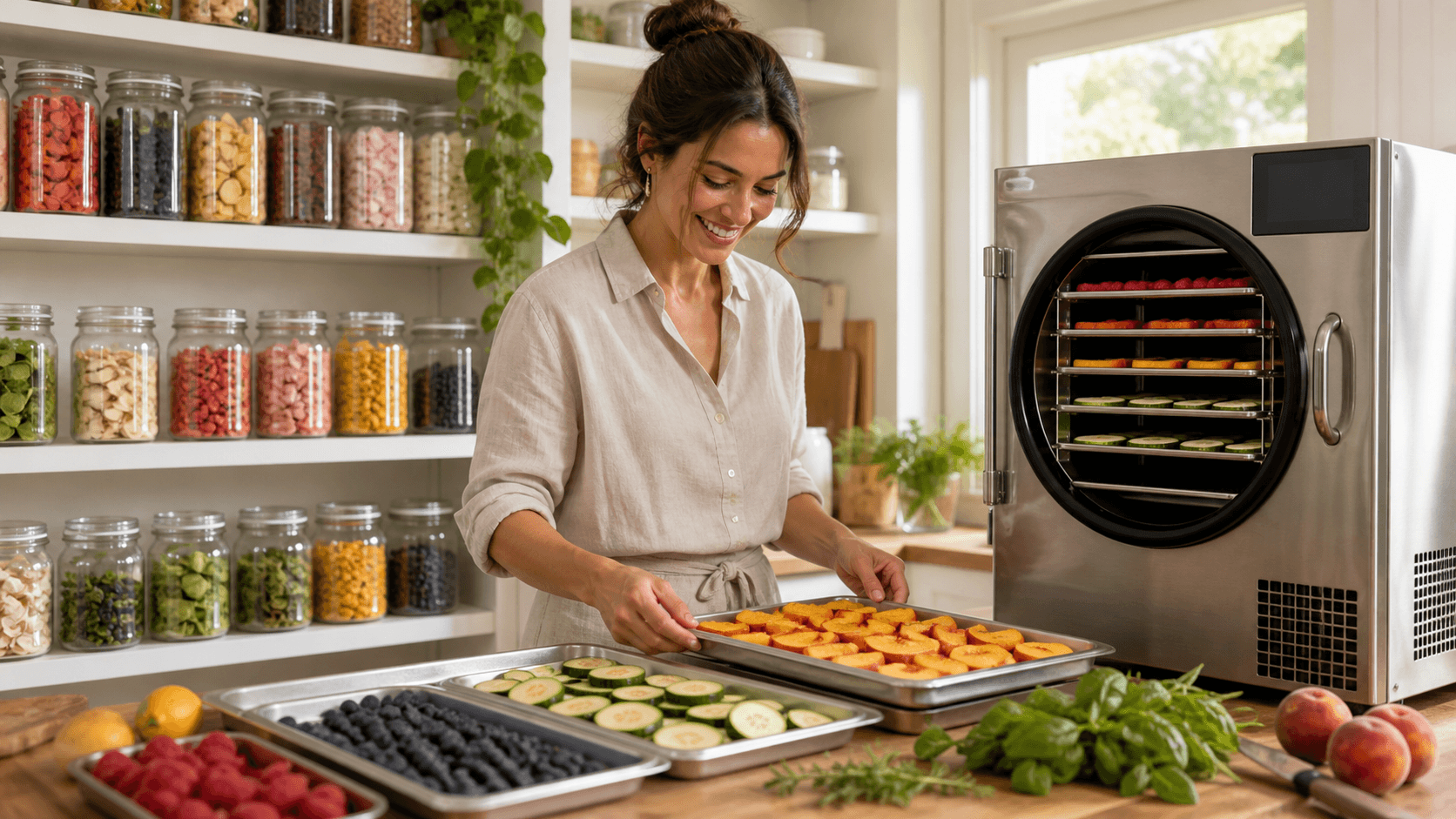
- Freeze dry berries, peaches, and melons for snacks and baking
- Preserve herbs and greens for winter cooking and smoothies
Beyond produce, we can build a pantry of ready meals. On a cool weekend, cook big pots of family favorites. Things like:
- Stews and chilis
- Breakfast skillets with potatoes and eggs
- Casseroles and pasta dishes that kids like
Once cooled and pre-frozen, these go into the freeze dryer. Later, all we need is hot water and a few minutes. That is powerful in an off-grid setup, where fridge and freezer space are limited and energy use matters.
Good storage habits make this pantry work smoothly. Many people like:
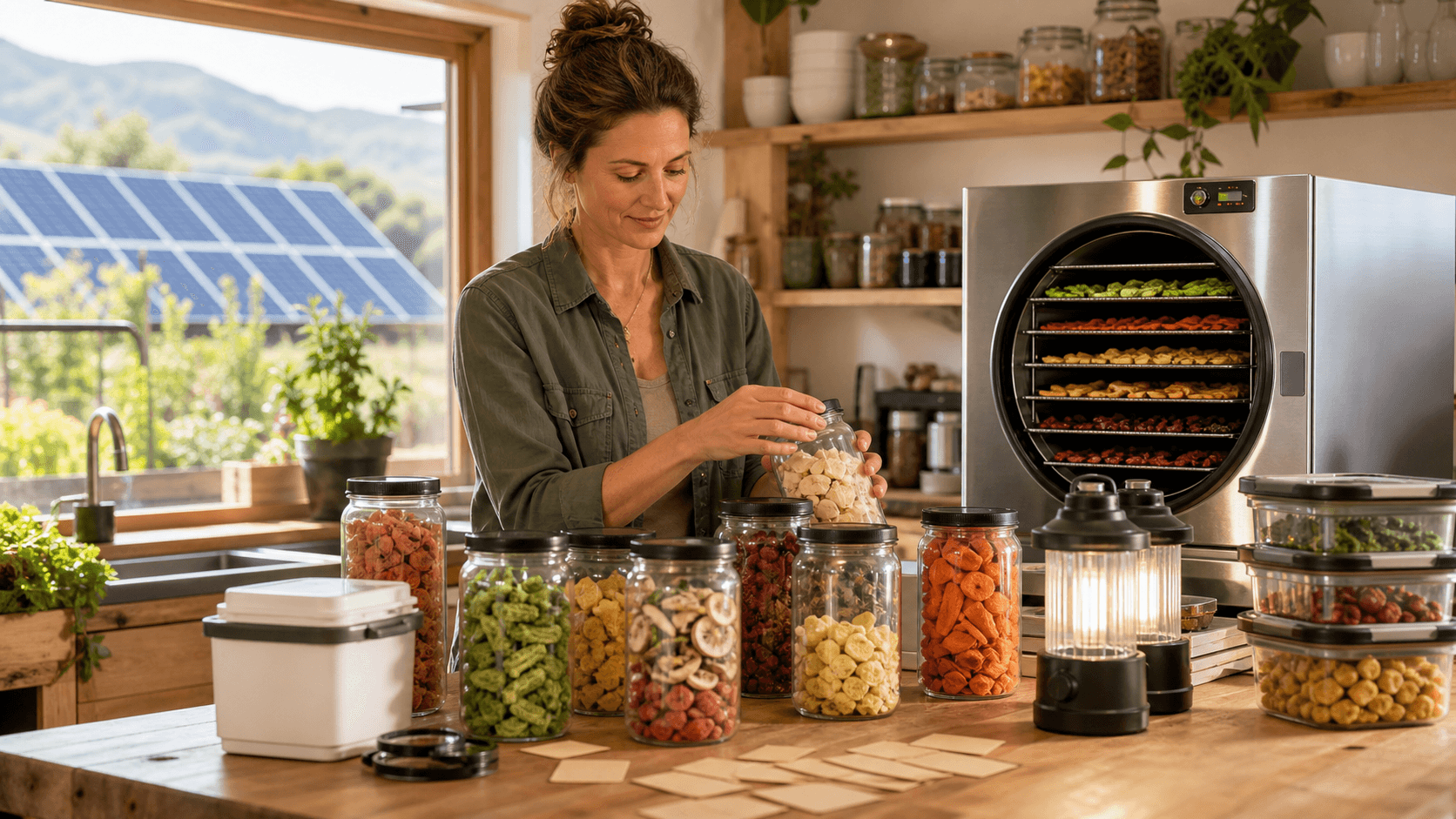
- Mylar bags with oxygen absorbers for long-term storage
- Clear labels with food name, date, and simple prep notes
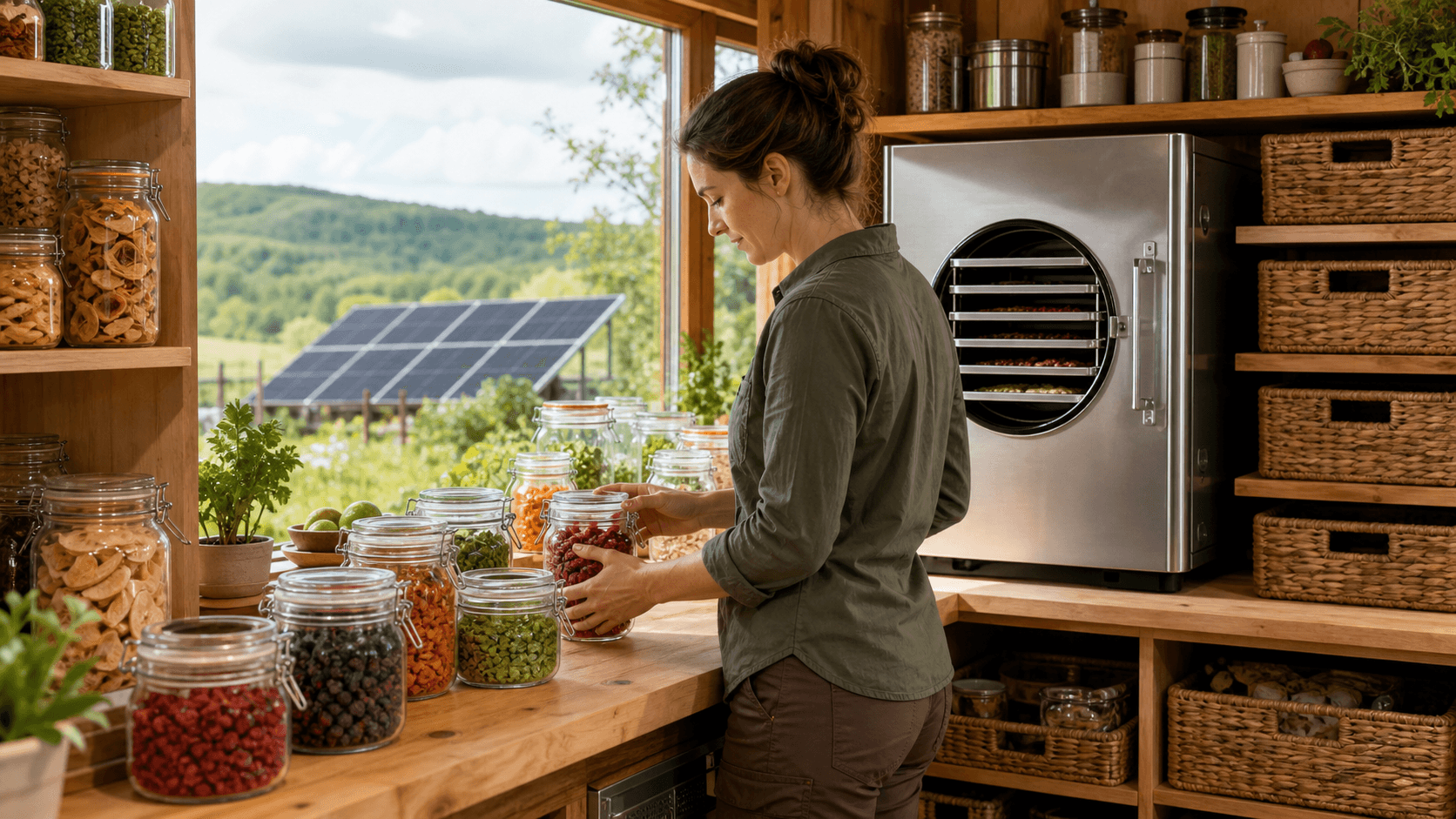
- Totes, shelves, or a small closet or root cellar set aside as a food hub
Little by little, those shelves become a year-round safety net that supports daily life, not just emergencies.
Off-Grid Advantages of a Home Freeze Dryer
For off-grid families and remote cabins, the biggest win is that we can process food on our own terms. A freeze dryer can be part of a home solar power system, so we can turn fresh, frozen, or bulk food into shelf-stable reserves without expecting the grid to stay up.
Freeze-dried food also helps with tight spaces. Jars and bulky freezer bags add up fast, especially in:
- Tiny homes
- RVs and vans
- Small cabins and sheds
Once the water is removed, food gets much lighter and more compact. A large pot of soup can shrink into a stack of flat bags that fit in a single bin.
Diet needs are easier to manage too. When we run the freeze dryer at home, we control every ingredient. That makes it simpler to keep:
- Gluten-free or dairy-free meals on hand
- Organic produce and clean meats we trust
- Recipes that avoid personal allergens or additives
For many off-grid homes, that control is worth a lot. We are not stuck with whatever is in commercial emergency meals. We store what we actually eat and feel good serving.
Real Costs and Payoff of Owning a Freeze Dryer
Owning a freeze dryer is a real commitment, in both money and time, so it helps to look at the full picture. There is the machine itself, the energy to run it, and packaging supplies like mylar bags, oxygen absorbers, and storage bins.
On the payoff side, many people find that a freeze dryer helps reduce food waste. Instead of losing:
- Extra garden produce
- Bulk meat that will not fit in the freezer
- Leftovers that sit too long in the fridge
we can put those items into long-term storage while they are still in great shape. Buying in bulk when prices are good and saving seasonal food for later can support a more steady pantry all year.
There is a learning curve. Expect to spend time:
- Pre-freezing foods for better texture
- Testing how long different foods need in the machine
- Cleaning the oil or filter and wiping down the chamber
Cycle times can run overnight, so many people fold the process into their weekly rhythm. Once the habits form, running a freeze dryer at home starts to feel like doing laundry. It just becomes part of how the household stays ready.
Turn Today's Harvest Into Tomorrow's Freedom
Late summer and early fall are the perfect time to begin. Fruits, vegetables, and seasonal meat specials are everywhere, and the weather often makes it easier to work in cooler mornings and evenings. Those weeks hold a lot of quiet power. Every tray you run is one more step toward a home that is less fragile and more prepared.
At Green Vista Living, we believe food storage, energy independence, and wellness all fit together. A freeze dryer at home sits alongside solar power systems, water filtration, air filtration, and other off-grid tools to support a calmer, more secure life. When the garden is full and the days are still long, turning that abundance into shelf-stable meals is not just smart planning; it is a path toward the freedom to live on your own terms.
Preserve More Food At Peak Freshness Starting Today
If you are ready to take control of your long-term food storage, our freeze dryer at home makes it simple to get started. At Green Vista Living, we help you turn garden harvests, bulk buys, and favorite recipes into shelf-stable meals you can trust. Have questions about sizing, setup, or what you can freeze dry first? Just contact us and we will walk you through your best options.