Home saunas and cold plunge tubs work best when you can count on them every day. If the power drops right before your session, it is more than annoying; it can throw off your whole recovery and wellness routine. That is where home battery backup power comes in. It keeps key parts of your setup running even when the grid goes down.
In this article, we will walk through why saunas and cold plunges need steady power, what a backup battery system actually does, how to size it, and how solar and off-grid setups fit in. Our goal is to help you understand your options so your home spa feels calm and reliable, even during storms and outages.
Enjoy Saunas and Cold Plunges Without Power Worries
More people are turning a spare room, backyard corner, or cabin into a wellness space. Dry saunas, infrared saunas, cold plunge tubs, and contrast therapy are becoming part of daily life for stress relief, sleep support, and training recovery.
When the power is steady, everything feels simple. But when the grid drops because of winter storms, heat waves, or a random outage in the middle of the evening, you can run into problems like:
- Sauna heaters shutting off mid-session
- Cold plunge chillers losing temperature control
- Pumps and filters sitting still with water in the lines
- Digital controls glitching as power flickers
Home battery backup power lets your system stay steady. The batteries take over automatically so your heaters, pumps, and controls keep working. At Green Vista Living, we focus on off-grid-ready saunas, cold plunge systems, and battery solutions that are designed to play nicely together, so your wellness routine stays on track all year.
Why Saunas and Cold Plunges Need Reliable Power
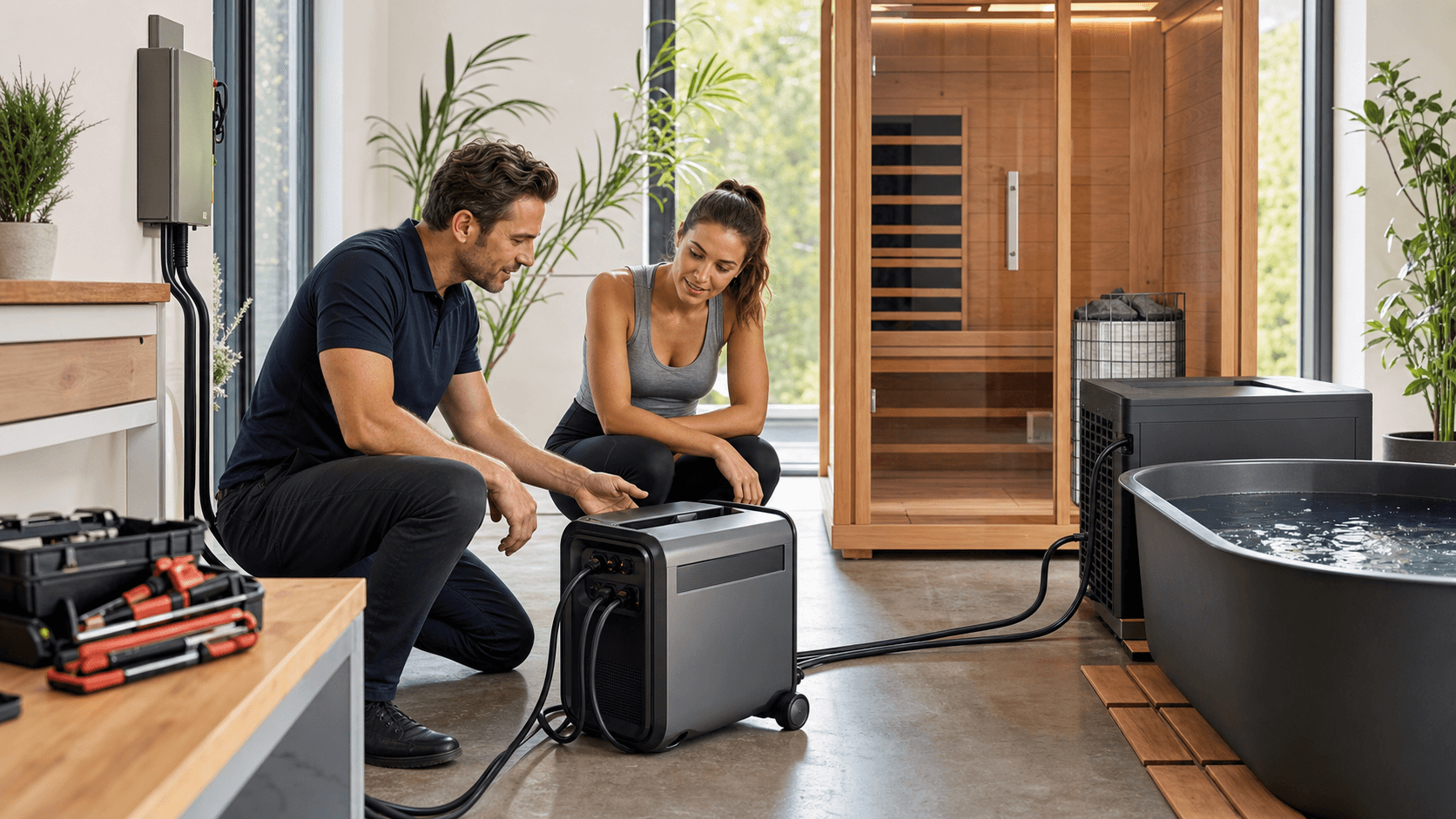
Sauna and cold plunge setups may look simple from the outside, but there is a lot going on behind the scenes. Many systems rely on:
- Electric sauna heaters or infrared panels
- Water chillers and circulation pumps
- Filtration systems and UV or ozone units
- Digital thermostats, timers, and control panels
- Low-voltage lighting and fans
All of these parts expect steady electricity. When the power flickers or drops, you get more than a small inconvenience.
For comfort and performance, you want stable temperature and consistent run times. Heat therapy works best when the sauna reaches the right range and holds it for your whole session. Cold exposure feels good and safe when the water stays in your preferred zone, not suddenly warming up or dropping too low.
There are safety and equipment concerns too. Sudden shut-offs can leave water standing in lines in freezing weather, which can lead to cracked pipes or fittings. In hot weather, stalled pumps and poor airflow can stress equipment. Frequent power flickers can also be hard on sensitive electronics and control boards.
On top of all that, losing power can break the rhythm of your day. Many people build their whole evening around a short, focused sauna or plunge. When that gets cut off, the space feels less like a wellness oasis and more like an expensive room that works only when the grid feels like it.
How Home Battery Backup Power Keeps Your Setup Running
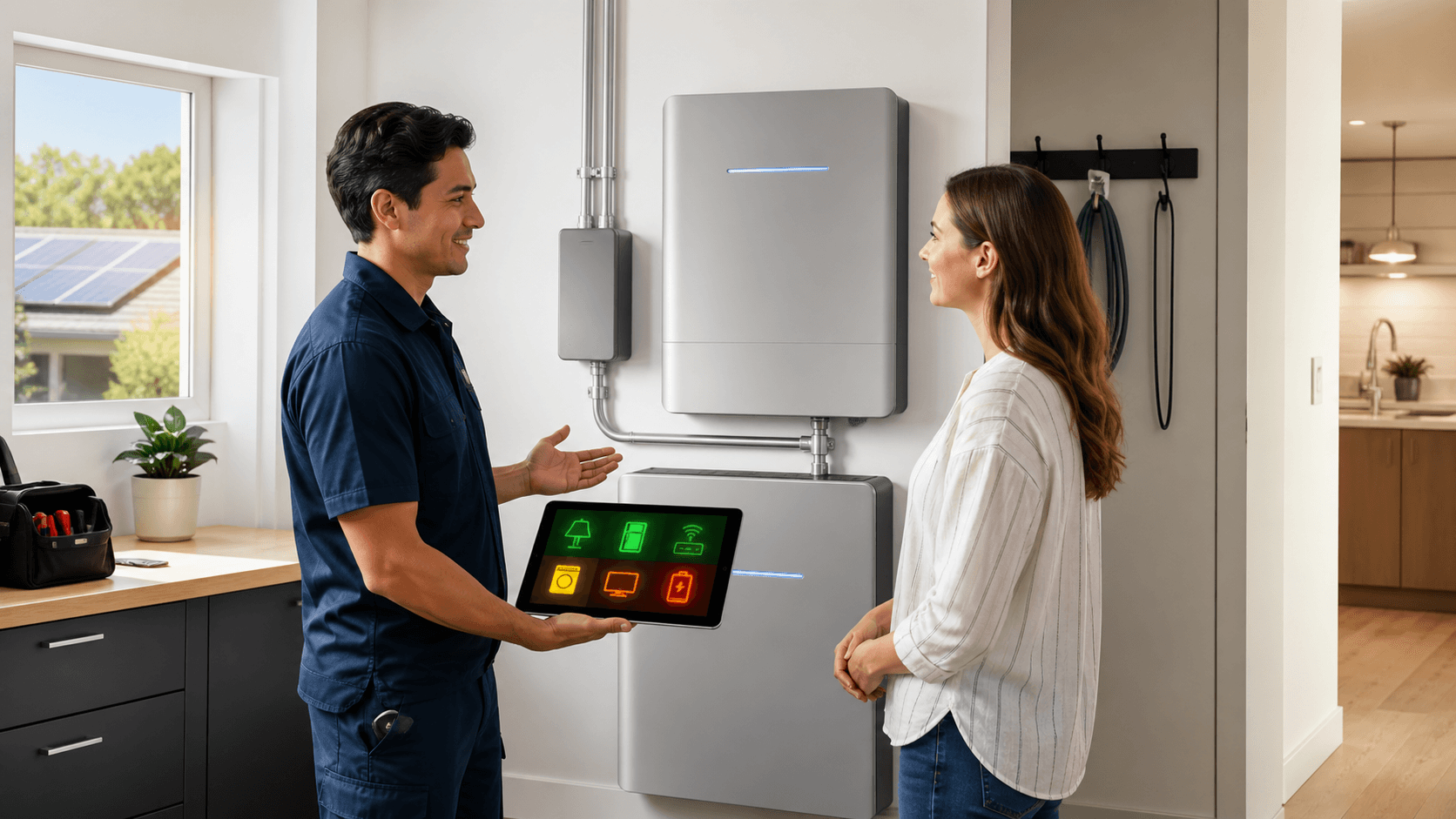
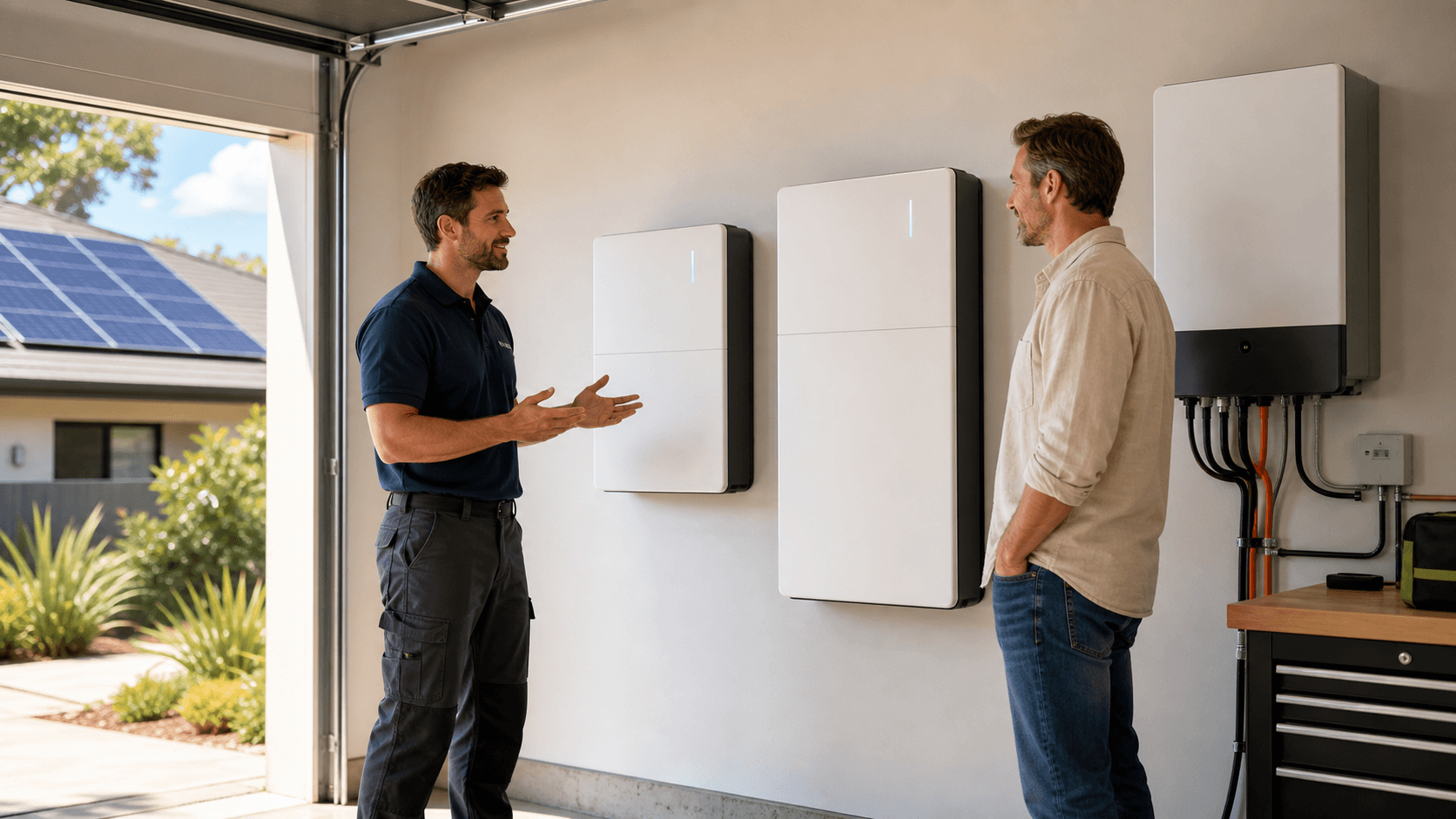
A home battery backup power system is like a quiet, smart battery room for your house. At its core, it usually includes:
- One or more batteries to store energy
- An inverter that turns battery power into regular household power
- A charge source, often the grid, solar panels, or both
When the grid is up, the system charges and waits. When the power goes out, the inverter switches over and your chosen circuits stay live without you having to flip a switch.
For sauna and plunge setups, it often makes sense to put key gear on a dedicated subpanel or critical loads panel, such as:
- The sauna heater or infrared panels
- The cold plunge chiller and circulation pump
- Control systems and sensors
- Basic lighting in the sauna, plunge area, and path between them
Runtime will depend on the size of your battery, the size of your inverter, and how you use the system. Many homeowners want enough power to:
- Run a full sauna session in the evening during an outage
- Keep pumps and chillers going to hold temperature
- Or at least keep things in a safe standby mode until the grid returns
This is especially helpful in late spring and early summer, when lightning, wind, and short but strong storms can knock out power just long enough to ruin your planned session.
Sizing the Right Battery System for Your Sauna and Plunge
To size a system, you start with your energy needs. A simple way is to list each part of your setup and note the wattage on the label or manual, including:
- Sauna heater or infrared panels
- Cold plunge chiller
- Circulation and booster pumps
- Control panels and small accessories
Then think about how long each piece usually runs in a typical day. That gives you a rough idea of your daily energy use in kilowatt-hours.
Next, you match that to battery capacity and inverter size. High-draw loads like electric sauna heaters ask a lot from an inverter, especially during startup. You want an inverter that can handle both the steady load and the short surge when equipment kicks on. Battery capacity decides how long you can run at full power before the system needs to recharge.
Sometimes it makes sense to make smart trade-offs during an outage, such as:
- Shortening sauna sessions a bit
- Pre-heating the sauna when the grid is up
- Adding insulation to the room or plunge tub
- Focusing on circulation and safe temperature range instead of maximum heat or deepest cold
If you see your wellness space growing, it also helps to think ahead. Choosing a slightly larger battery setup can leave room for things like sound systems, low-voltage mood lighting, or nearby wellness gear like red light panels, without having to redesign the power system later.
Solar, Off-Grid Systems, and Seasonal Wellness Routines
Many people pair home battery backup power with solar. Roof or ground-mount solar panels can recharge your batteries during the day so the energy you use for your sauna and cold plunge is less tied to the grid.
This is especially nice for off-grid cabins and backyard wellness retreats. With a well-planned solar and battery combo, your sauna, dome, or plunge tub can work smoothly even if there are no utility lines nearby. The system can keep running through seasons, ready for early morning cold dips or late-night sauna sessions.
As we move from spring into summer, days get longer, workouts tend to get harder, and recovery starts to matter more. Many people use cold plunges more often as temperatures climb. At the same time, storms and heat stress can make the grid less reliable. A good backup system connects those seasonal habits with year-round peace of mind.
One more benefit: batteries are quiet. Unlike loud generators, battery systems and solar inverters usually make very little noise. That helps keep your wellness space calm, whether it is indoors, tucked behind the house, or set near trees and open sky.
Build a Resilient Wellness Oasis with Green Vista Living
A home spa should feel like the most reliable part of your home, not the most fragile. With thoughtful home battery backup power, your sauna and cold plunge can stay ready through storms, grid hiccups, and peak load events. The goal is simple: a space that works every day, so you can keep your wellness habits steady even when the outside world feels a bit shaky.
At Green Vista Living, we focus on systems that support this kind of resilience, from solar and battery kits to off-grid-ready saunas, domes, and water systems that work well together. When you think through your components, power ratings, and typical use, it becomes much easier to sketch out a setup that matches your routine and your climate, and that keeps your wellness oasis calm, quiet, and ready whenever you are.
Secure Reliable Power for Your Home Today
Take control of outages by exploring our home battery backup power solutions designed to keep your lights on and essentials running. At Green Vista Living, we help you choose the right system for your home, budget, and energy goals. If you have questions or want tailored guidance, reach out through contact us and we will walk you through your best options.