A self-composting toilet system can make a remote cabin feel easy and comfortable, even when there is no plumbing. Instead of worrying about septic tanks or long drives to a dump station, you get a clean, odor-free way to deal with waste right where you are. That peace of mind matters most when the days get shorter, the air turns crisp, and you want to squeeze in as many weekend trips as you can before winter.
In this guide, we walk through how these systems work, what types to consider, how to place them in a small cabin, and how to keep things smelling fresh. We will also talk about seasonal use, cold weather, and how to plan a setup that fits your off-grid power and water. By the end, you will have a clear idea of how to turn your cabin plan into a working, reliable system.
Design a Toilet That Works Where Plumbing Cannot
When your cabin sits at the end of a dirt road, up a hill, or on rocky ground, traditional plumbing can be hard or even impossible. A self-composting toilet system turns that problem into a simple, low-maintenance solution. It treats human waste right on site, using controlled composting instead of flushing it away.
Key benefits for cabin owners include:
- No need for septic tanks or leach fields
- Odor-free operation when installed and used correctly
- Lower impact on soil and water around the cabin
- Independence from water lines, pumps, and grid power in many setups
We will look at how to choose the right composting approach, plan space and venting, work with seasonal use, and match your cabin with products that are built for off-grid life.
Know Your Composting Toilet Options
There are three main paths for cabins.
- Self-contained composting toilets
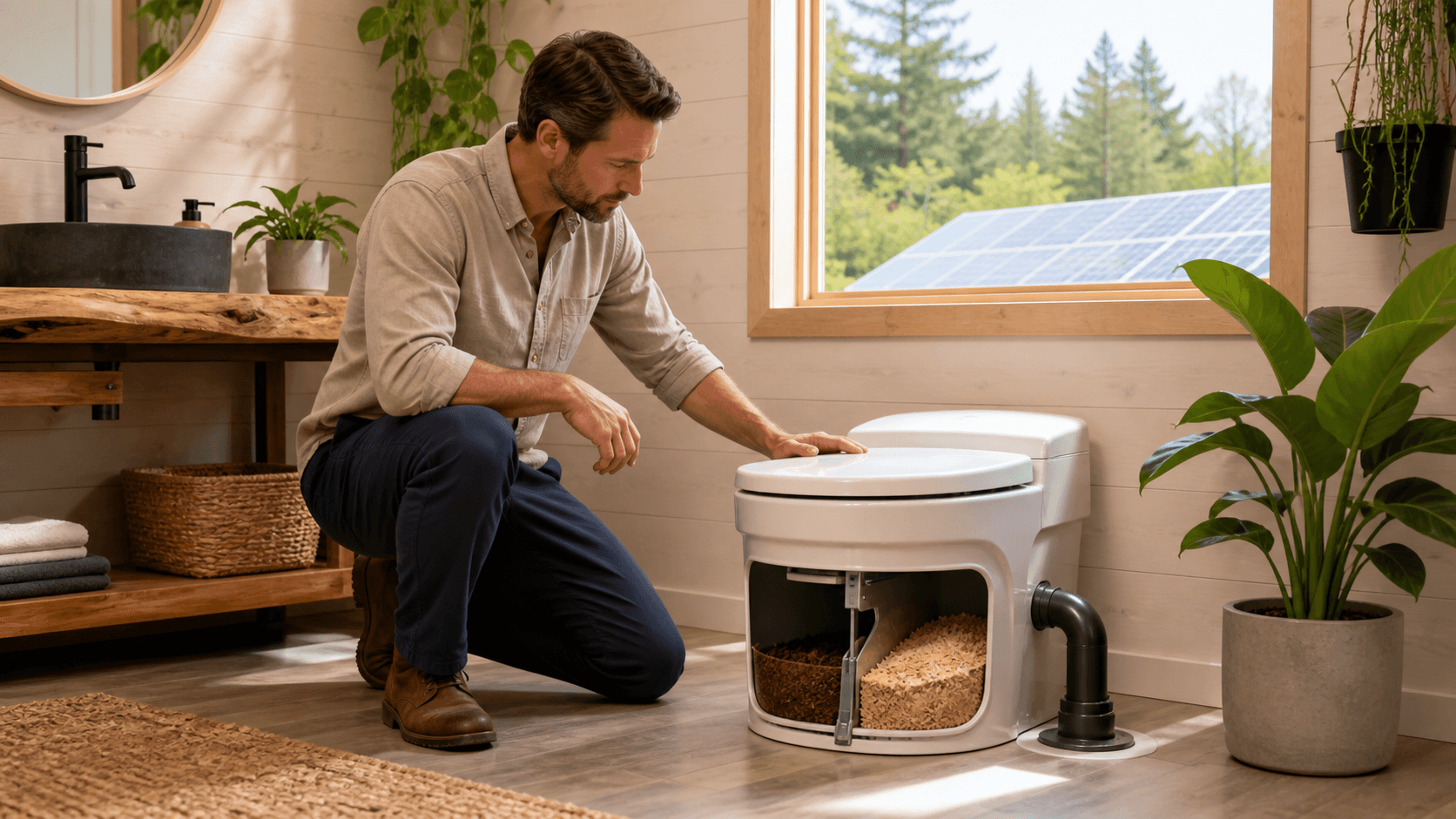
These units keep everything in a chamber inside the toilet body. Some are non-electric, and some use a small fan or heater.
Pros:
- Simple installation in one room
- Good for small cabins and lofts
- Easy to understand and use
Cons:
- Smaller compost chamber, so more frequent emptying
- Needs careful venting and access to remove finished material
- Central or remote composting systems
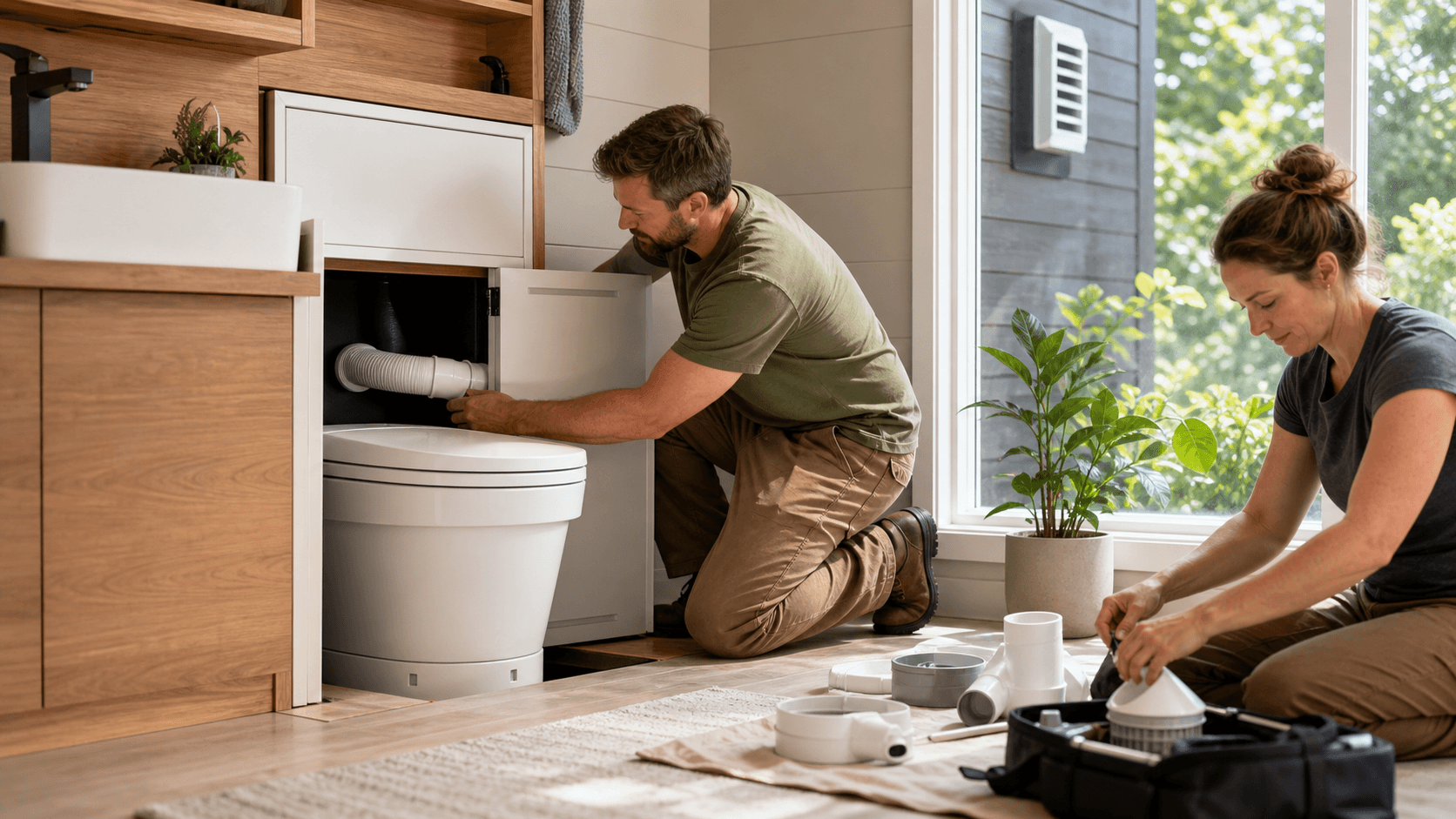
In this setup, the toilet seat is upstairs, and the composting unit sits under the floor, in a crawlspace, basement, or small shed.
Pros:
- Larger chamber that needs emptying less often
- Can handle heavier use if the design matches your needs
- Quieter toilet area, since fans or moving parts are out of the room
Cons:
- More complex planning and installation
- Requires solid structural support and good access under or beside the cabin
- DIY humanure style systems
These use simple containers indoors and separate outdoor compost bins for long-term breakdown.
Pros:
- Flexible placement
- Uses basic materials you may already know
Cons:
- More hands-on handling of waste
- Often less accepted by building departments
- Can be harder to manage cleanly in bad weather
Some rural and off-grid areas prefer certified self-composting toilet systems over full DIY setups. Rules can change between counties, so it is smart to talk with your local office before you commit to a design.
Plan the Ideal Location and Layout
Cabin layout shapes what will work best. A self-contained unit can slide into a tiny bathroom, a corner of a loft, or a bunk room alcove. A central system needs room below the floor or in an attached bath shed, plus support for the weight of the composting chamber.
Think about:
- Floor space around the toilet for comfortable sitting and standing
- Wall space for vent pipes and access doors
- Strong framing where the unit will sit
Venting is a big part of odor control. Most systems need a vertical vent stack that runs up and out through the roof. A small exhaust fan can keep air moving in all seasons, which helps with moisture and smell, especially when the cabin sits closed between visits.
Plan clear access for emptying and checks. That might mean:
- A trap door in the floor
- An exterior panel on the side of the cabin
- A short, safe path to outside compost bins, even when there is snow or mud
Since these toilets do not need flushing water, they fit well with low-flow sinks and off-grid showers. Greywater from sinks and showers usually needs its own plan, such as a simple approved drain field or greywater system.
Build a Comfortable and odor-free System
Comfort comes from more than just the mechanics. Bulking materials like sawdust, coconut coir, or wood shavings help support aerobic composting. They keep the pile fluffy, soak up liquids, and help control odor during humid late summer and early fall.
Good practice includes:
- Adding a scoop of bulking material after each use
- Keeping extra dry material stored nearby
- Checking that the compost surface is not slimy or compacted
Balancing moisture is key. If the chamber stays too wet, it can smell. If it is too dry, composting slows way down. A urine-diverting seat can help send liquid to a separate container or drain, which makes it easier to keep the main chamber at the right level of moisture.
User comfort matters too. Think about:
- Seat height that matches a normal home toilet
- Some insulation around the bathroom walls for shoulder-season visits
- Soft, warm lighting so nighttime trips are not a shock
- Fan and agitator noise levels, especially in small cabins where sound travels
For weekend cabins, simple routines help. On arrival, check the vent fan, bulking material, and chamber level. Before you leave, add a final layer of dry material, make sure the fan is running if it is powered, and close any vents in the room that you normally seal between trips.
Design for Cold Weather and Seasonal Use
Cold slows composting, so you plan for that instead of fighting it. A system in a protected area, such as inside an insulated shed or under the cabin floor away from wind, will stay more stable. Larger chambers hold more heat and can ride through cool nights better than very small ones.
For cabins used mostly spring through fall, it often makes sense to let the system rest in winter. Before the first hard freeze:
- Empty the chamber if it is near full
- Add a layer of dry bulking material on top
- Make sure vents and screens are clear and capped against critters
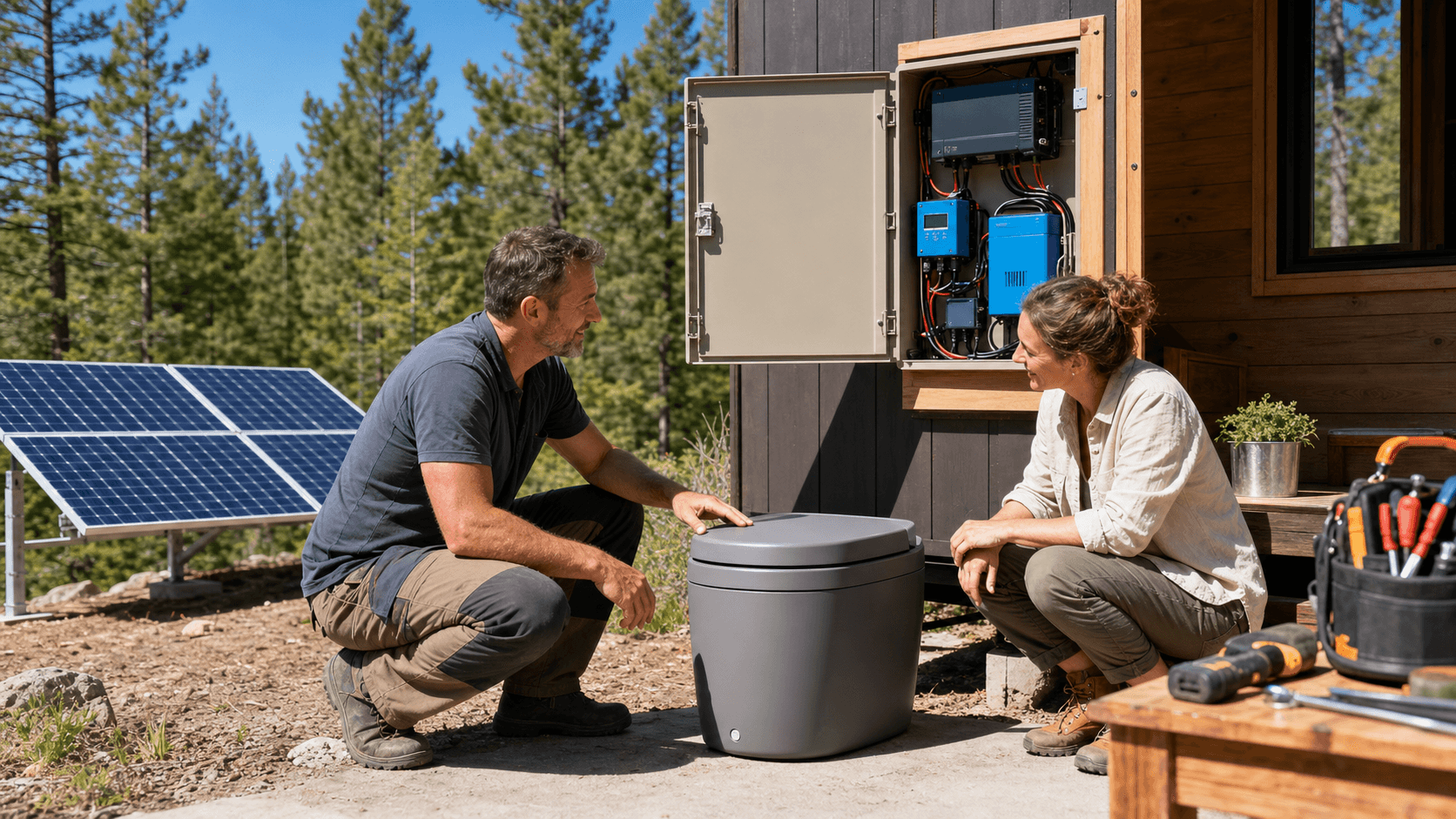
In spring, open things up, check for moisture problems, and start using the toilet again with fresh bulking material. If you rely on vent fans or small heaters, a simple solar power setup may be enough. In very remote or shaded spots, a non-electric system avoids worries about power at all.
Seasonal checkpoints can include:
- End of summer inspection of the compost level and vent pipes
- Fall prep before snow or heavy rain
- Early spring checks for leaks, loose seals, or blocked vents
Turn Your Cabin Plan Into a Working System
Turning your idea into a real self-composting toilet system starts with the cabin itself. Look at your site, your typical group size, and how many months you want to use the place. From there, decide if a self-contained unit or a central system fits your structure and comfort needs.
A simple roadmap looks like this:
- Evaluate space, access, and climate on your land
- Choose the type of system that matches how often the cabin is used
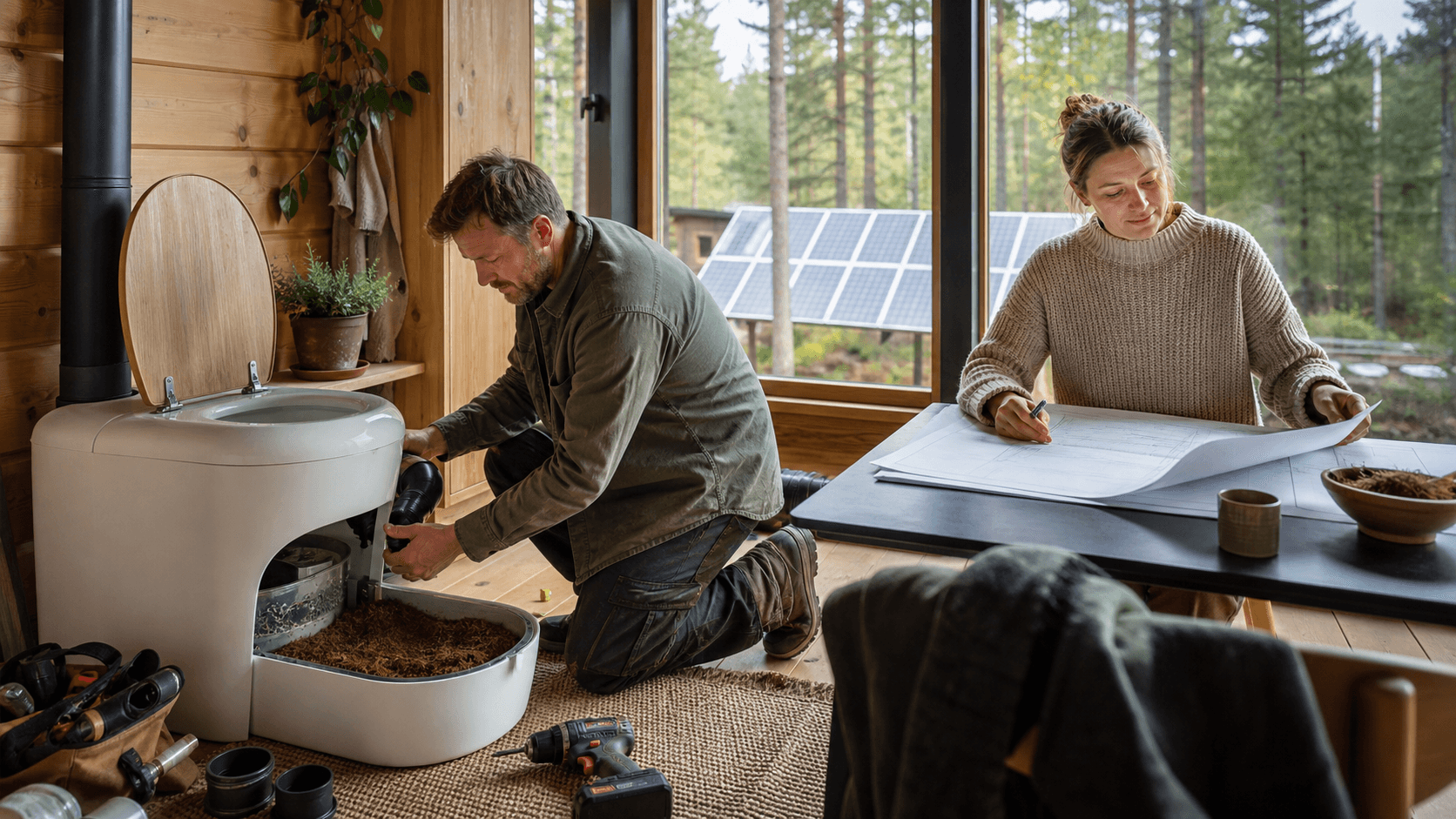
- Sketch out toilet location, vent path, and access for maintenance
- Select a composting toilet, vent parts, and any solar or power accessories that match the design
At Green Vista Living, we focus on off-grid and outdoor living, including composting toilets, solar power, and water filtration that work well together. When you bring all these pieces into one clear plan before the snow flies, you can install, test, and fine-tune now, then enjoy a smooth, low-stress start to cabin season when the weather warms again.
Transform Your Off-Grid Living With Hassle-Free Waste Solutions
Upgrade your cabin, tiny home, or RV with a reliable self-composting toilet system that keeps your space clean and eco-friendly. At Green Vista Living, we carefully select solutions that are easy to install, simple to maintain, and comfortable for everyday use. If you have questions or need help choosing the right setup, just contact us and we will walk you through your options.