A solar-powered toilet can make a remote cabin feel a lot more comfortable. Instead of hauling water, worrying about septic tanks, or dealing with a smelly outhouse, you can have a clean, reliable bathroom that still keeps you off the grid. That matters when you want quiet summer days, starry nights, and less stress about basic needs.
In this guide, we will walk through how different solar-powered toilet systems work, the main choices for remote cabins, and what to think about before picking one. We will keep the focus on simple explanations, real-world tradeoffs, and how everything fits into a full off-grid setup for your retreat.
Enjoy Flush Comfort Off the Grid This Summer
A remote cabin in midsummer can feel perfect. Warm air, tall trees, maybe a lake or river nearby, and no traffic noise. But when the bathroom is just a dark pit toilet or a shaky old outhouse, that comfort drops fast, especially with kids, guests, or older family members.
A solar-powered toilet lets you keep that wild setting and still enjoy a bathroom that feels closer to home. You get real privacy, less smell, and a much easier time hosting friends without long talks about how to use the toilet.
In this article, we will explain:
- Different types of solar-powered toilet systems
- How each one handles waste, power, and water
- What matters most when you choose a setup for your cabin
At Green Vista Living, we work with off-grid owners who want solar, water, and waste systems that all play nicely together. Cabins, tiny homes, and seasonal retreats can all benefit from the right mix.
Why Solar-Powered Toilets Make Sense for Remote Cabins
Remote cabins often sit far from city water and sewer lines. Running utilities out that far can require trenching, pumps, and a lot of disruption to your land. In colder climates, there is also the risk of frozen pipes and lines that split or leak when the temperature drops. A traditional septic system may not be a good fit for rocky soil, steep slopes, or areas with strict local rules.
A solar-powered toilet helps by cutting down or even skipping standard plumbing. Instead of flushing large amounts of water into a big underground tank, the system uses power from the sun to move air, heat, or a small pump. That means:
- Little to no water use
- Far less digging and earthwork
- Less risk of frozen pipes in winter
Because the toilet's power demand is usually low, solar panels and a small battery bank often cover it easily. You also stay independent during power outages and busy summer weekends when nearby areas might be stretched thin.
Summer is usually when cabins get the most use, which matches the time of year with the most sun. With the right battery storage or a hybrid setup that includes backup power, you can often extend use through spring and fall too.
Main Types of Solar-Powered Toilet Systems Explained
Solar power can support a few different toilet styles. Each one handles waste in its own way and comes with tradeoffs.
- Solar-assisted composting toilets
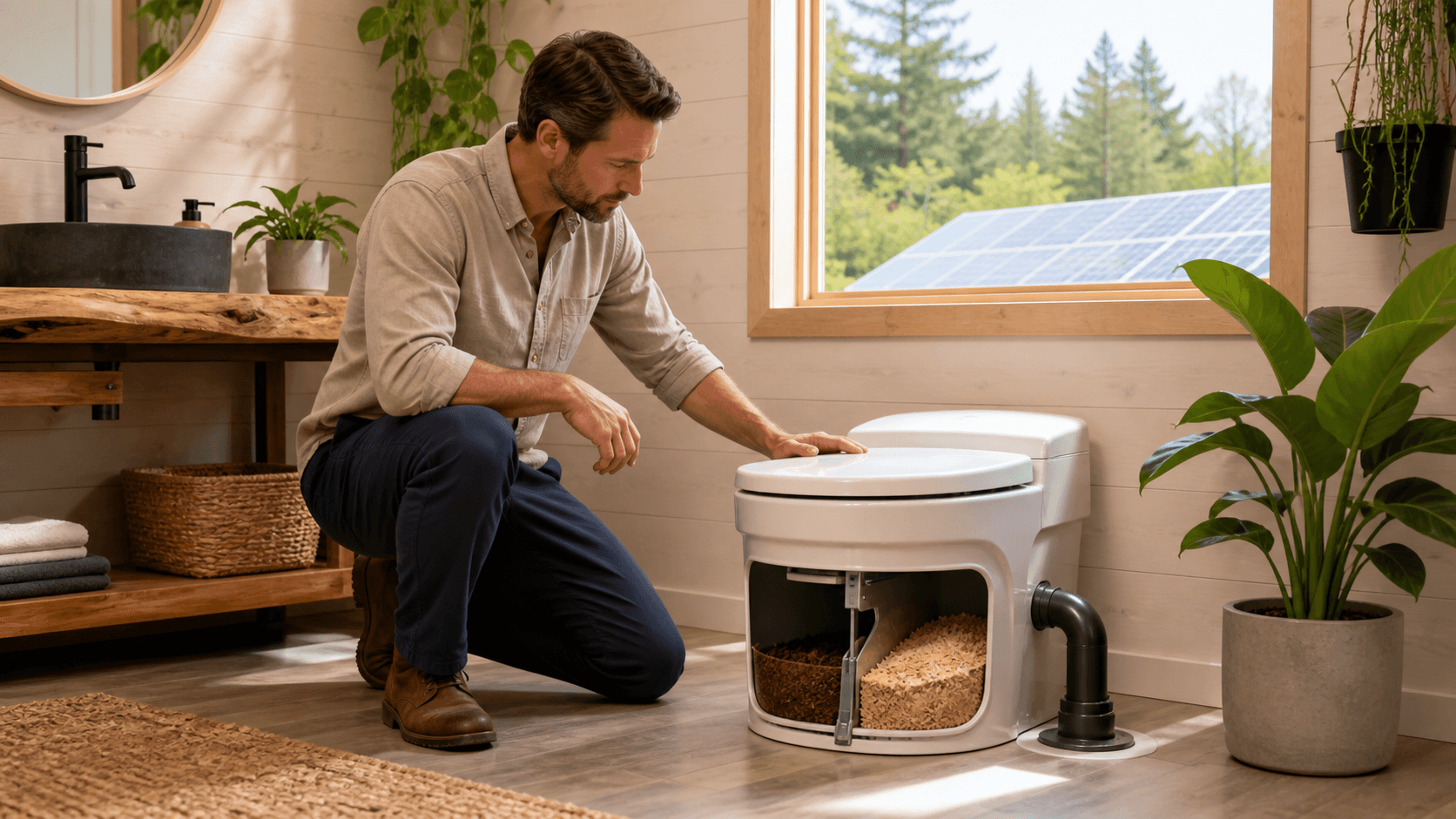
These systems use little or no water. A composting chamber below the seat breaks down waste over time. A small solar-powered fan pulls air through the system, which helps:
- Reduce odors in the bathroom
- Dry out the contents
- Speed up the composting process
Some models also use low-watt heaters powered by solar-charged batteries to keep the chamber warm enough for good composting in cooler weather.
- Solar-incinerating toilets
These toilets collect waste in a small chamber, then use electric heating elements to burn it into a fine ash. Solar panels charge a battery that powers the heating cycle. The ash is light and dry and can be removed in a small container. There is no need for water and no large storage tank, but you do need:
- Enough solar and battery capacity for the heat cycles
- Careful venting to the outside
- Extra attention to safety clearances
- Ultra-low-flow or vacuum flush toilets with solar power
These look and feel more like a standard flush toilet. Instead of a big water flow, they use:
- Very small amounts of water
- A small electric pump or vacuum unit, powered by solar and batteries
- Piping that sends waste to a holding tank or remote septic system
They are often more familiar for guests, but they do depend on both water and power and usually need more plumbing work.
In short:
- Composting: lowest water use, more hands-on maintenance, very low power draw
- Incinerating: waterless, low waste volume, higher power draw, more safety steps
- Ultra-low-flow: most traditional feel, needs water and more plumbing, moderate power use
Key Factors to Choose the Right Cabin Toilet Setup
Before picking a solar-powered toilet, it helps to step back and look at your whole site.
Think about your cabin's conditions:
- How much direct sun does your roof or nearby area get?
- Is there enough safe space for solar panels?
- Do you see heavy snow loads that could cover panels for long periods?
- Are winter temperatures very cold, which can slow composting and affect batteries?
Next, look at how the cabin is used. A weekend-only retreat for two people is different from a busy summer rental with a full guest list. If you often have new visitors, you may want something more familiar and simple to explain, like an ultra-low-flow or very user-friendly composting model.
Power and water also matter. Some cabins already have a solar array and battery bank in place. Others are starting from scratch. Knowing your:
- Battery size
- Daily power use from lights, pumps, and appliances
- Access to a well, rainwater, or storage tank
will help decide if a waterless system or an ultra-low-flow setup makes more sense. Finally, be honest about your comfort level with maintenance. Regular compost turning, adding bulking material, or emptying ash might be fine for some owners and not for others.
Installing and Powering a Solar Toilet System Safely
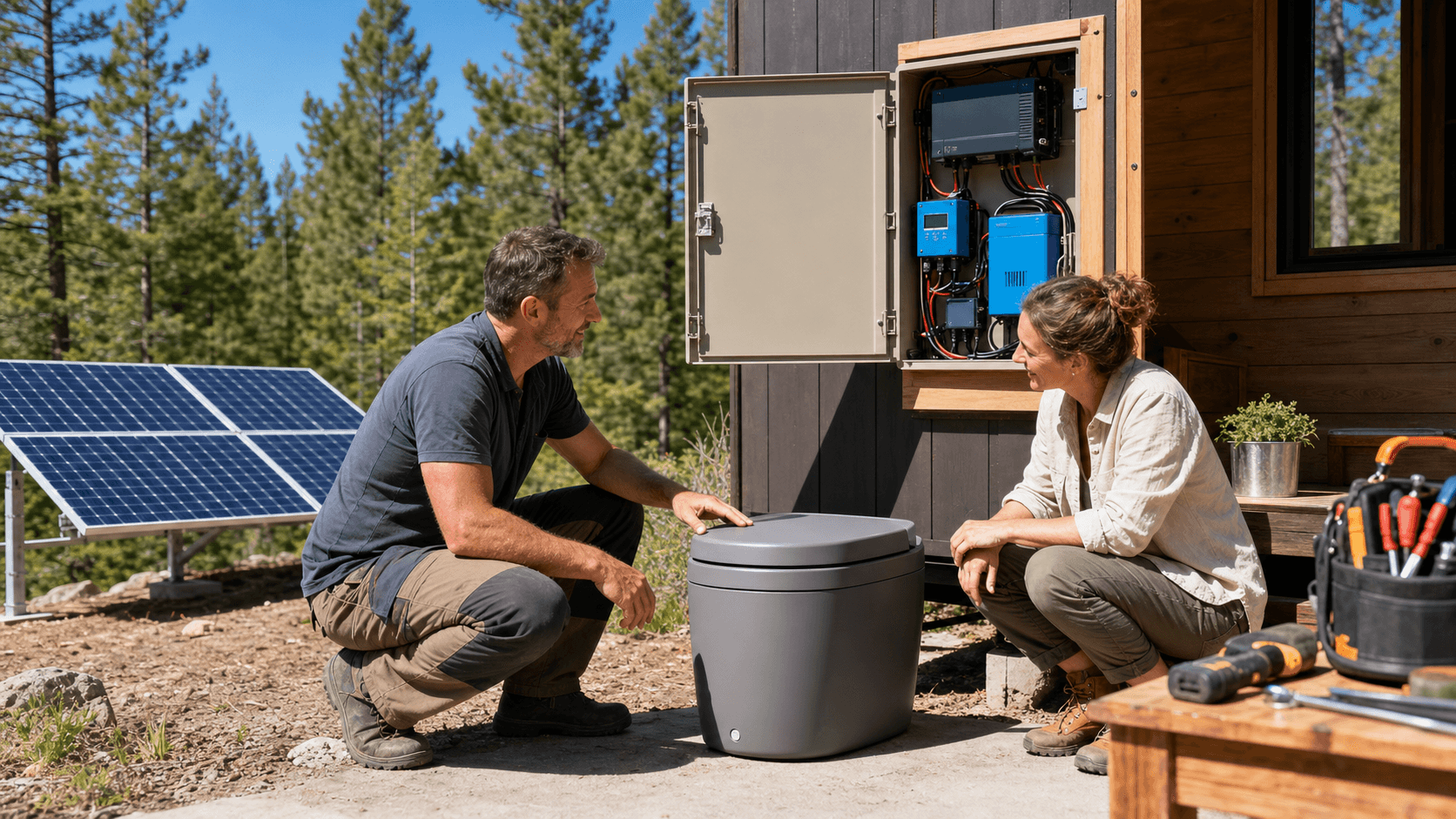
A basic off-grid power setup for a solar toilet usually includes:
- One or more solar panels placed in a sunny, secure spot
- A charge controller that manages panel power going into the battery
- A battery bank sized to keep the toilet running during cloudy stretches
- Proper wiring and protection between components and the toilet
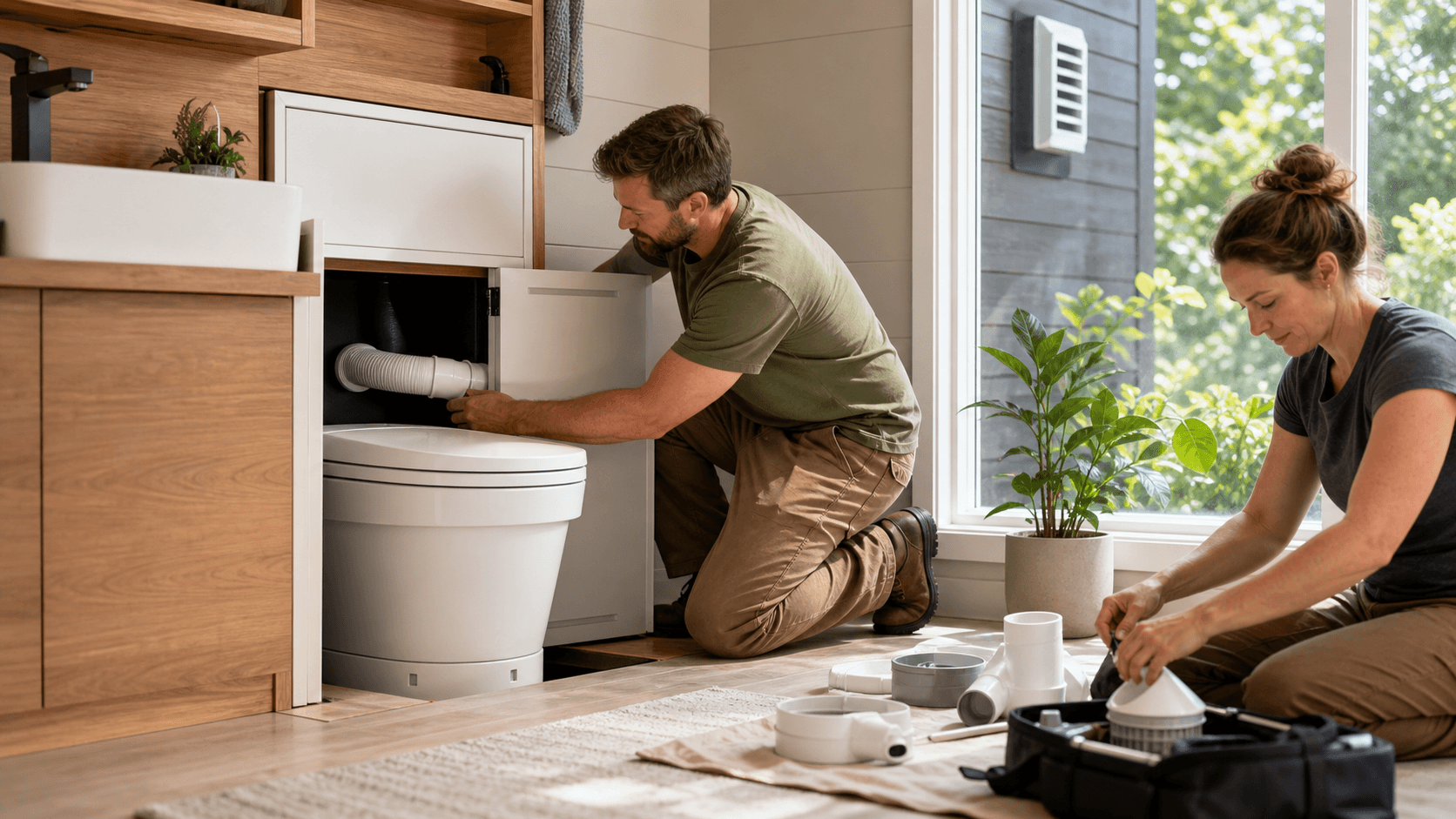
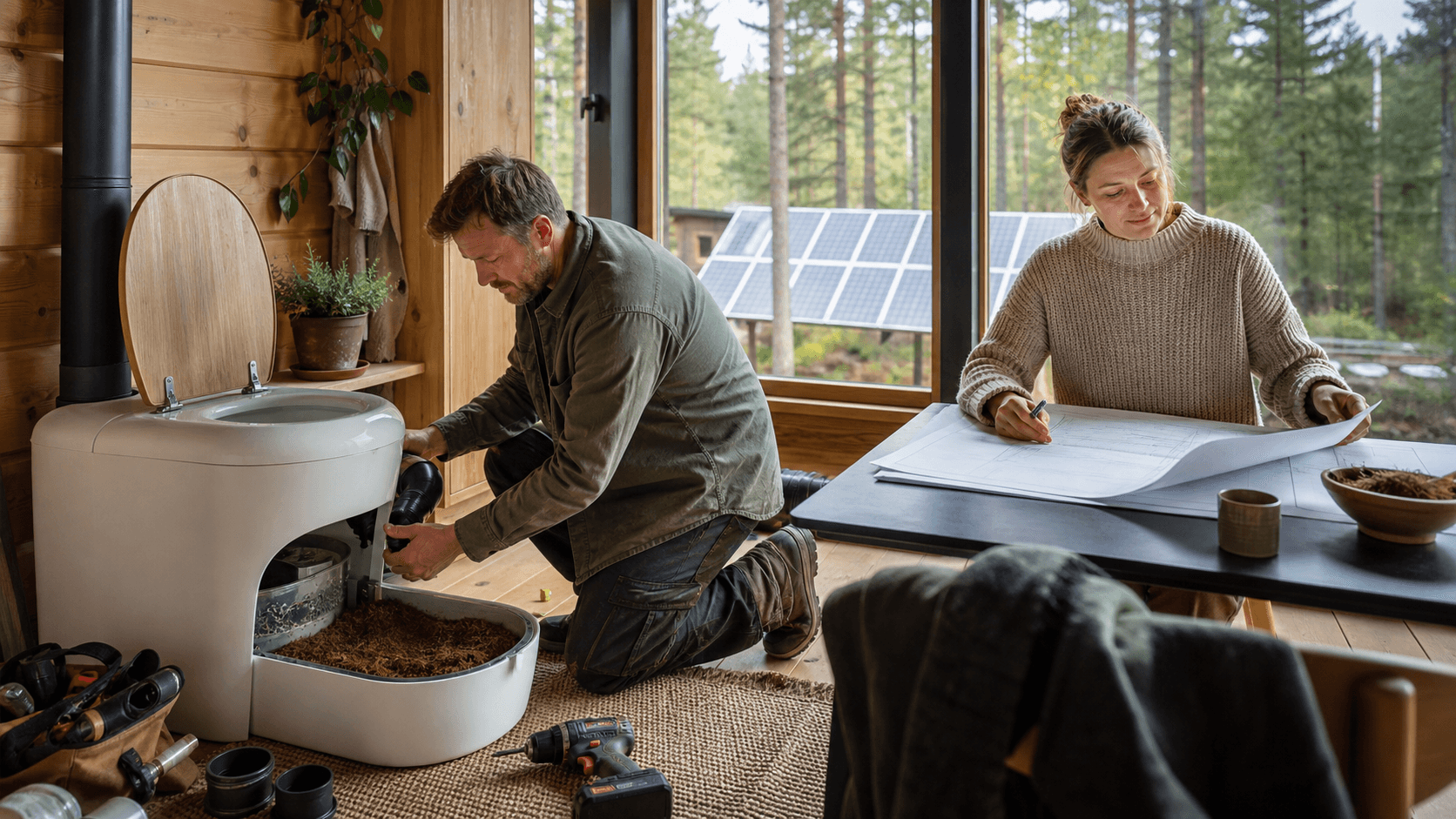
Each toilet type has its own installation best practices. Composting toilets need straight, well-sized vent pipes, protected from snow and debris, to keep airflow steady. Incinerating toilets require fire-safe clearances from walls and floors, correct venting, and careful attention to any surfaces that might get hot. Ultra-low-flow systems use small water lines and waste lines that must be shielded from freezing, leaks, and damage.
Local building and electrical rules always come into play, especially in wildfire-prone forests or sensitive lakeside areas. Manufacturer instructions should be followed closely for both performance and safety. While some cabin owners feel comfortable handling basic mounting and wiring, many parts of the job are better left to a qualified installer, especially when electricity and waste handling are involved.
Seasonal Maintenance Tips for Cabin Solar Toilets
Once your solar-powered toilet is installed, a simple seasonal routine keeps it working well. During summer and peak use, plan to:
- Check waste levels and empty bins or ash trays before they get too full
- Keep vents, fans, and screens clear of spider webs, leaves, or dust
- Wipe off solar panels so they can get full sun
If your cabin sits empty in winter, a short shutdown plan helps a lot. Ultra-low-flow systems might need their water lines drained and protected. Batteries should be kept at healthy charge levels and protected from deep cold when possible. Composting toilets may benefit from a final mix of dry bulking material to keep the chamber stable until spring.
Odor control stays simple if you keep up with small tasks. For composting units, adding dry materials like wood shavings after each use helps balance moisture. With incinerating toilets, sticking to the recommended cycle and emptying ash on a routine schedule makes a big difference. Over time, fans, seals, connections, and heating parts will age, so it helps to keep a short checklist and plan for regular inspections.
At Green Vista Living, we focus on off-grid and outdoor living gear that works together as a complete system, from solar power to water and air treatment to composting toilets and more. Matching your cabin's size, sun exposure, and usage pattern with the right solar-powered toilet can turn a rough outhouse situation into a clean, calm space that fits your retreat.
Upgrade Your Off-Grid Comfort With Clean, Reliable Sanitation
If you are ready to reduce your footprint and simplify life off the grid, we are here to help you choose the right solar-powered toilet for your space. At Green Vista Living, we focus on practical systems that are easy to use, maintain, and integrate with your existing setup. contact us so we can answer questions, walk you through options, and help you move confidently toward a cleaner, more sustainable bathroom solution.