Build a Reliable, Odor-Free Off-Grid Bathroom
A split-system composting toilet can give your off-grid home a real sense of freedom. You use very little water, you rely less on septic or sewer, and you keep waste safely managed right on your land. When it is set up the right way, it can be clean, easy to live with, and almost completely odor-free.
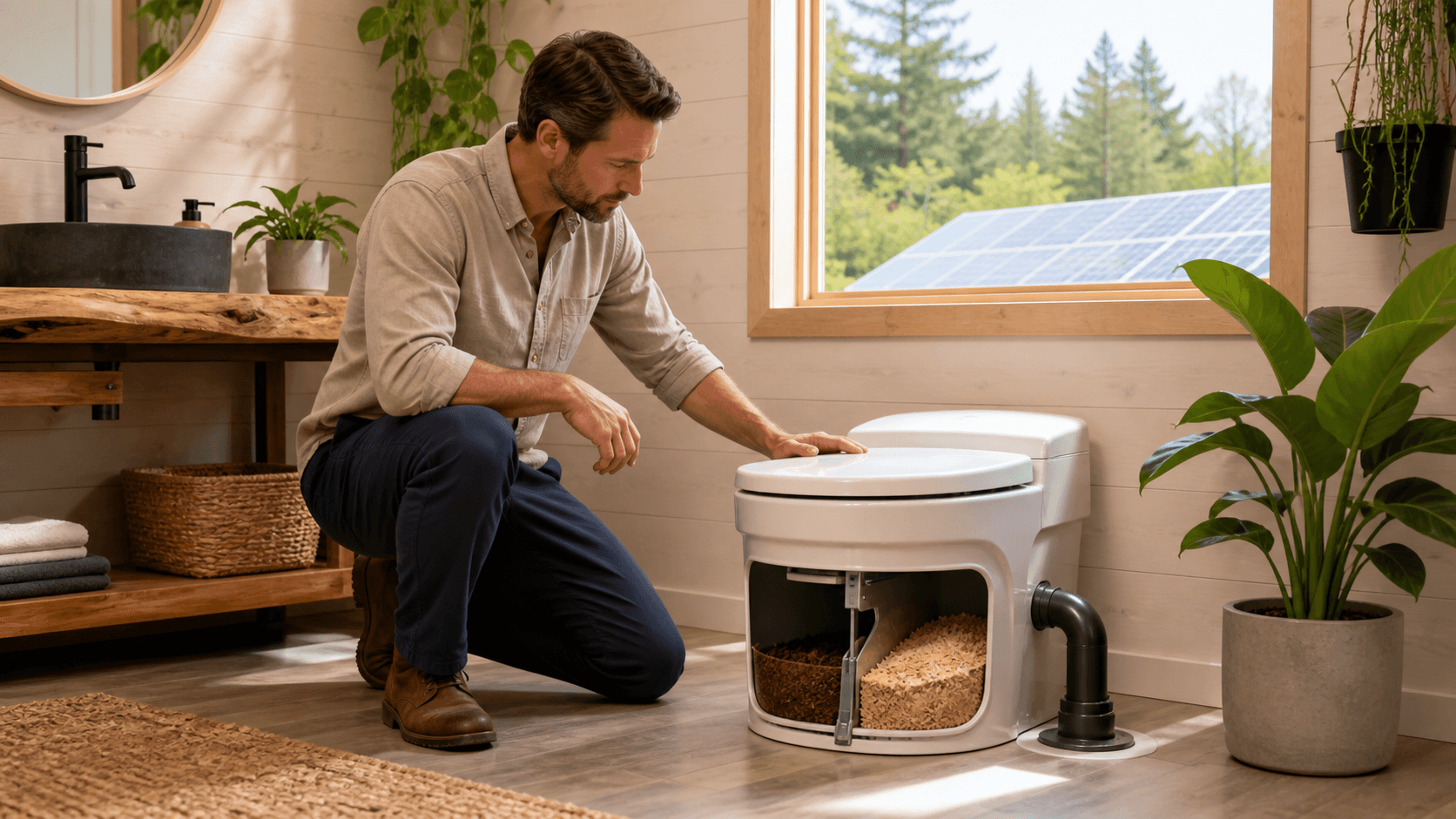
A split-system composting toilet is different from a small self-contained unit. The toilet pedestal sits in your bathroom, and the composting tank lives in a separate space, often below or behind a wall. That larger remote tank gives you more capacity and better long-term performance, which matters a lot for full-time homes and cabins.
To get those benefits, you need a clear installation and maintenance checklist. Good planning cuts down on smells, leaks, and surprises during inspections. Early fall is the perfect time to walk through your setup, before freezing weather makes access hard and before minor summer odor issues turn into bigger problems.
At Green Vista Living, we spend a lot of time helping people sort through these details, so let us walk through the key steps together.
Planning a Split-System Composting Toilet Layout
Good layout is half the battle. Before anything gets installed, think about how waste, air, and people will move through the space.
For site selection and access, focus on:
- A straight or gently sloped chute from the pedestal down to the composting tank
- A composting chamber location you can reach in snow, rain, or mud
- A clear path to an outside wall or roof for the vent pipe
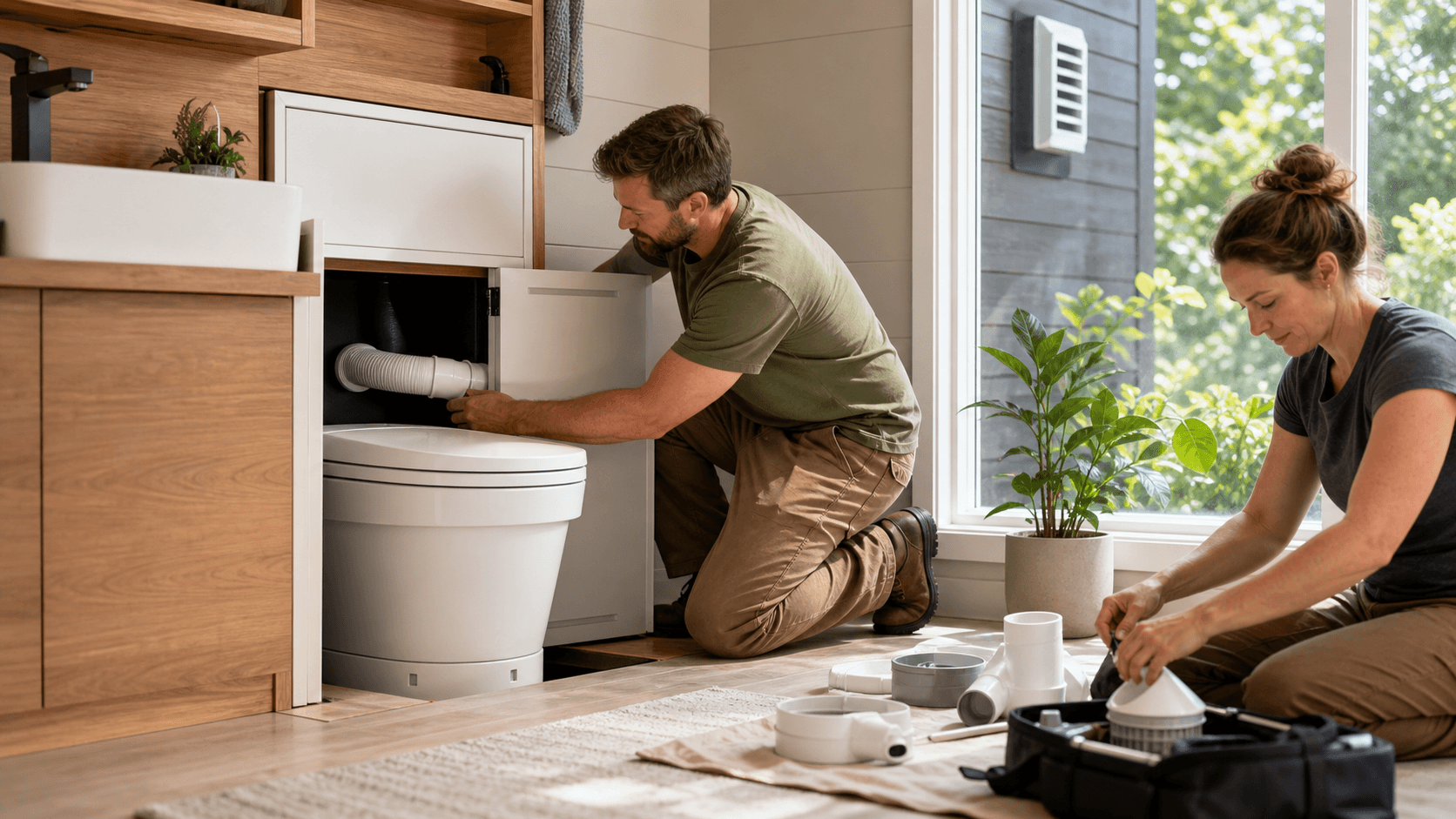
Many owners put the tank in a basement, crawlspace, or small insulated outbuilding. Whatever you choose, you want to be able to open lids, pull bins, and check fittings without crawling over other gear.
Structural and moisture details also matter:
- Make sure the floor under the pedestal can handle the load
- Seal around any floor or wall cutouts so air and moisture do not leak into the house
- Plan simple condensation control, like basic ventilation and, where needed, insulation around the tank space
In off-grid homes, we also like to see drip trays or shallow containment under plumbing runs and tanks. If a fitting ever weeps, you notice it early and it stays in one place instead of soaking into wood.
Then think about power and access for maintenance. Many split-system composting toilets use small fans or heaters. It helps to:
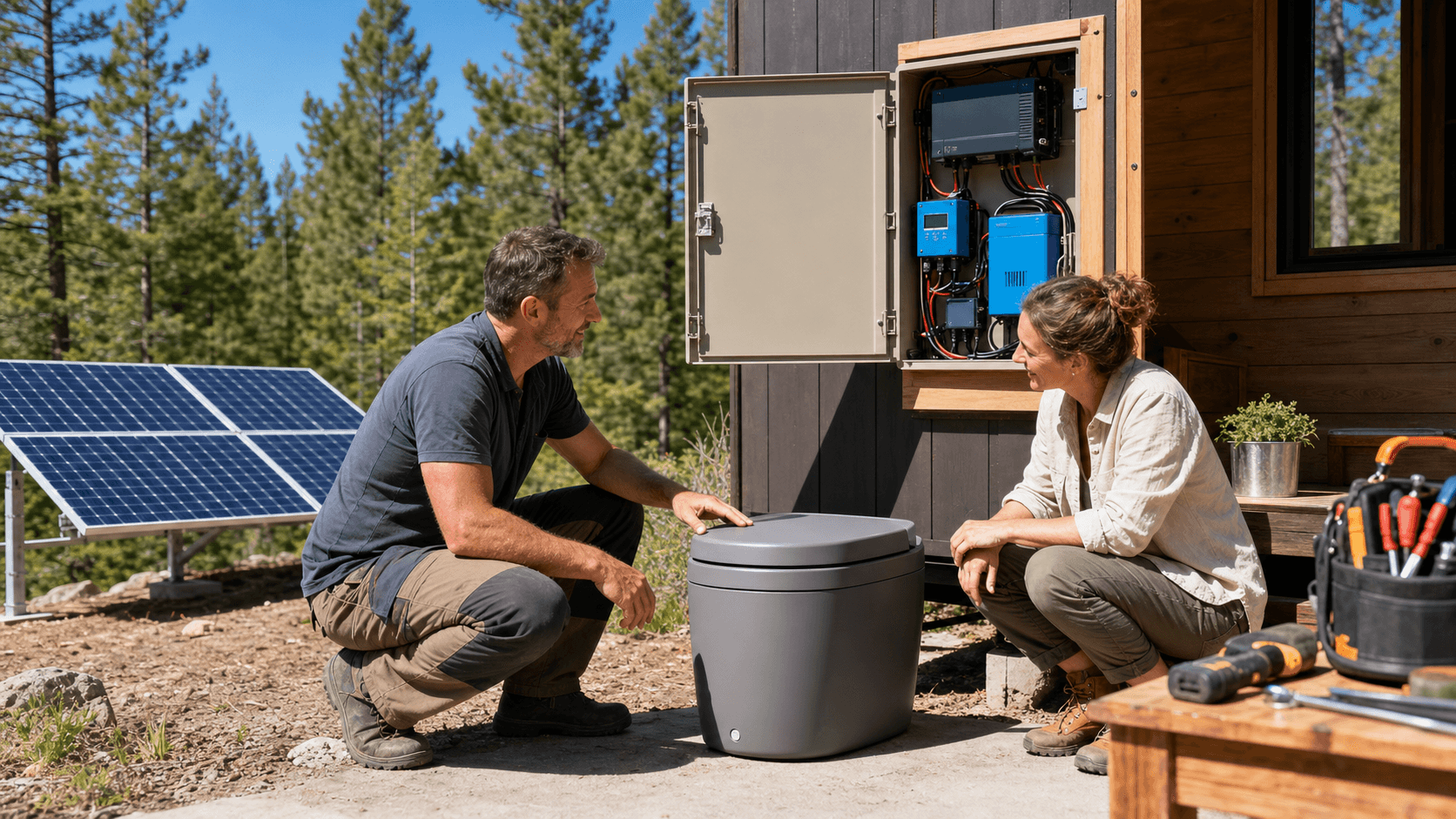
- Give the fan its own circuit or a clear connection to your solar and battery system
- Match loads to your inverter capacity
- Add bright, reliable lighting where you will be working on the tank
That way, when you are doing a winter check in the evening, you are not stuck working by headlamp.
Vent Routing for Odor Control and Efficient Composting
The vent system is the heart of an odor-free split-system composting toilet. If the vent pulls correctly, your bathroom stays fresh and the compost breaks down more evenly.
When designing the vent path, keep it simple:
- Run the vent pipe as straight and vertical as possible up from the composting tank
- Avoid long horizontal runs and extra elbows that slow airflow
- Use smooth pipe with the size the manufacturer recommends
The vent outlet should end above the roofline and away from windows, decks, or outdoor sitting areas. Even with a good fan, there might be times when a light odor drifts, so it is best to keep the outlet off to the side of active spaces.
Fan selection is just as important. Look for a low-watt, continuous-duty fan meant for composting toilets so it can run all the time without trouble. Place the fan where:
- It pulls air from the composting chamber, not from a leak in the line
- You can clean or swap it without tearing apart your setup
- Power wiring stays protected from moisture
In an off-grid home, a DC fan that runs directly from your battery bank can save inverter power and keep air moving even when other systems are off.
Weatherproofing and seasonal performance matter a lot as we move into colder months. Make sure roof penetrations are well flashed and sealed so water and wind do not work their way in. Add:
- Insect screens and small critter guards that do not choke airflow
- A quick seasonal check for spider webs, leaves, or bird nesting material
- Some insulation around exposed vent pipe in very cold spots to reduce condensation and frost
This kind of care keeps the vent clear so your system can breathe all winter.
Urine Diversion Plumbing and Leak Prevention
If your split-system composting toilet uses urine diversion, the plumbing for that stream needs just as much attention as the waste chute and vent.
Start with a clear flow path. Follow the maker's slope and pipe size instructions so the urine drains by gravity the whole way. Decide where it is going, such as:
- A dedicated holding tank
- An approved infiltration bed, where it is allowed
- A tie-in to a greywater system, if codes in your area permit it
Add cleanouts or unions at smart spots so a professional can flush or clear the line when needed.
To cut down on leaks and clogs, use:
- Quality fittings and clamps that handle low pH and nutrient-heavy fluids
- Short, direct runs with gentle bends instead of tight 90-degree elbows
- Regular flushing with manufacturer-approved solutions, often a mild vinegar mix, to limit crystal buildup
In off-grid settings, temperature swings are tough on plumbing. Help your pipes out by:
- Insulating lines in crawlspaces or near exterior walls
- Supporting pipes often so they do not sag and trap urine
- Leaving visual inspection points or small access hatches where lines pass through floors or walls
These small choices make it easier to spot and fix issues before they get messy.
Seasonal Maintenance, Winterizing, and Odor Troubleshooting
Early fall is our favorite time to run through a full system check. Before the first hard freeze, use a simple checklist.
For fall maintenance:
- Check vent pipes and fans for blockages or loose fittings
- Test airflow with a bit of tissue at the pedestal or a light smoke pencil
- Look for staining or damp spots around seals, gaskets, and joints
- Make sure the compost is not too wet or too dry and add carbon material if needed
If your off-grid place is part-time, you might need to winterize the composting toilet. Follow the maker's instructions, but common steps include:
- Keeping a low level of heat and airflow if power is always available
- Or shutting the system down with dry bulking material over the pile
- Insulating or gently heating vulnerable urine lines and exposed tank walls
- Keeping stairs, hatches, and outside doors to the tank area clear and safe so you can reach them in snow
When odors or leaks show up, it helps to troubleshoot in a simple order. For smells, start with the vent. Is the fan running? Is air moving the right direction? Then:
- Check the seal where the pedestal meets the floor or chute
- Inspect the composting tank lid and any access panels
- Look at urine line traps and small vents for blockages
Common causes include poor airflow, too much moisture, too little carbon, or liquids sneaking past where they should be held. For leaks, first figure out the source: solid waste chute, urine line, or condensation from cold surfaces. Place a catch pan, stop any water use that feeds the area, then repair or swap fittings as soon as you can.
Keep Your Composting System Running for the Long Haul
A split-system composting toilet can run smoothly for many years when it is installed with care and checked on a regular basis. One of the best habits is keeping a simple written log. Note pipe routes, vent locations, tank models, and what has been changed or cleaned. Add a basic maintenance calendar for seasonal checks.
At Green Vista Living, we care about helping off-grid homeowners build systems that feel solid, safe, and low stress. A few minutes spent checking vent airflow, compost moisture, and seal integrity can prevent bigger problems like frozen lines, surprise leaks, or stubborn odors. With a thoughtful layout and steady upkeep, your split-system composting toilet can be an easy, reliable part of your energy-independent home.
Transform Your Off-Grid Bathroom Into a Reliable, Low-Maintenance System
Upgrade your setup with a proven split-system composting toilet that keeps odors outside your living space and simplifies long-term waste management. At Green Vista Living, we help you choose a system that fits your cabin, tiny home, or full-time residence so you can rely on it season after season. If you have questions about sizing, installation, or venting layouts, just contact us and we will walk you through the best options for your space.