Late summer and early fall are the sweet spot for upgrading an off-grid bathroom. Roads are still clear, the ground is workable, and you have time to get things set before deep cold, snow, and frozen pipes show up. If your current setup is an old outhouse, a bucket in a shed, or a tired septic that worries you every heavy rain, this is the season to plan something better.
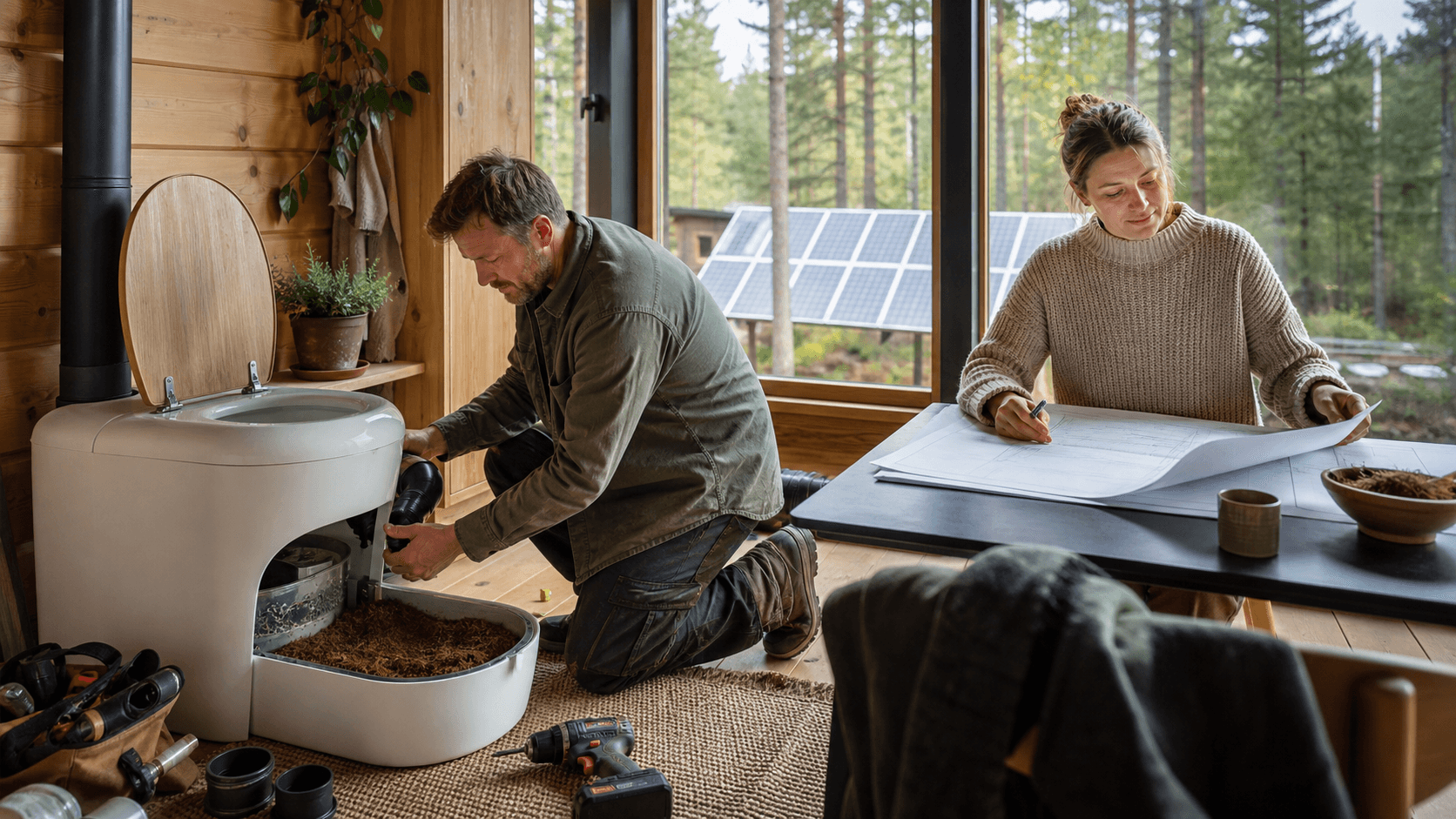
In many modern off-grid homes, the bathroom feels just like a regular house. Solar panels on the roof, a snug wood stove, rainwater catchment, and in the corner, a normal-looking toilet pedestal that connects to a split-system composting toilet out of sight. We will walk through what that is, how it works, why it beats basic systems, and what to think about if you are planning a new homestead, cabin, or backup-ready home.
Smarter Off-Grid Sanitation for Today's Homesteads
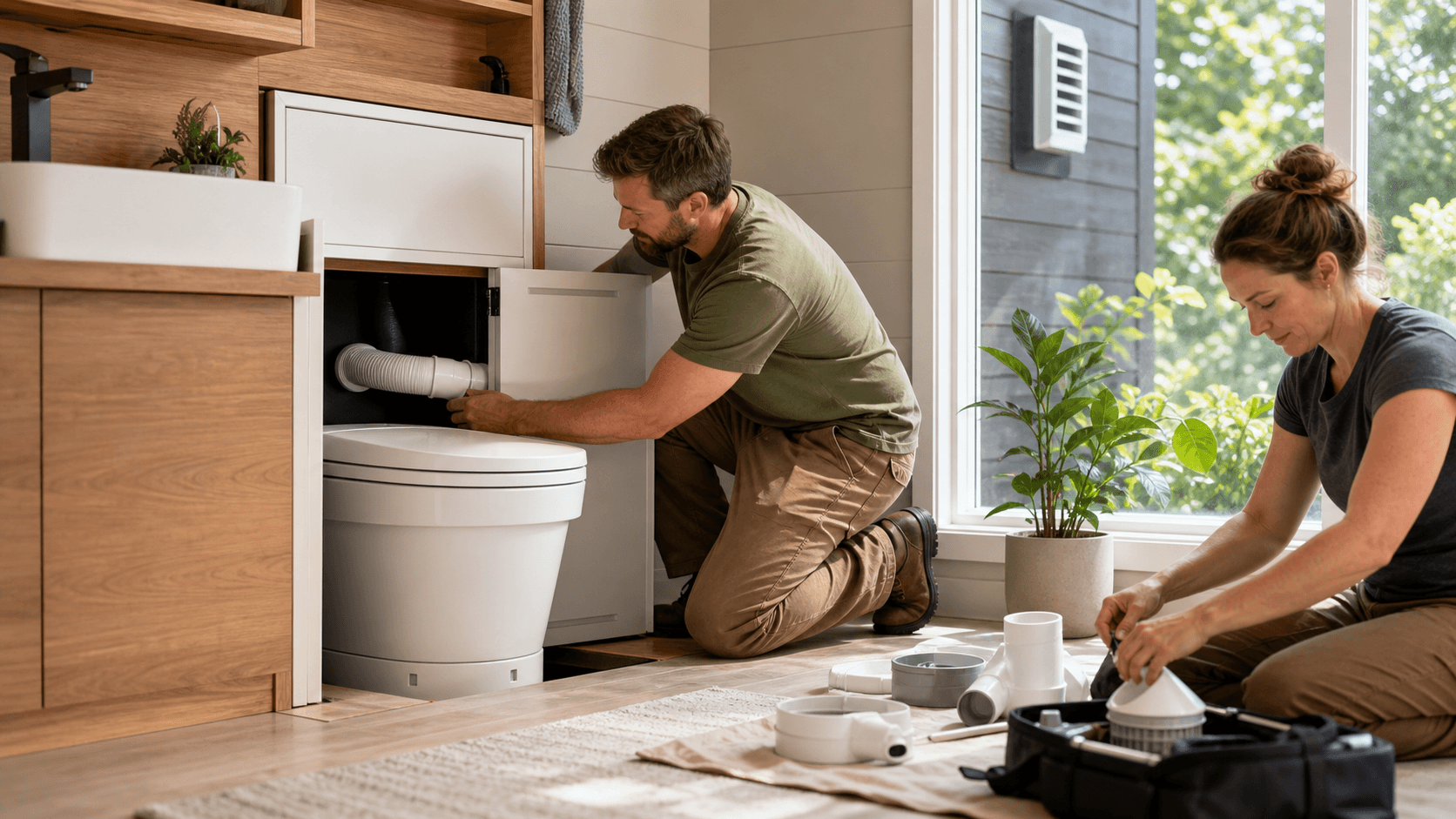
A split-system composting toilet is simple in idea. The toilet you sit on is in the bathroom, but the big composting part lives below or outside, often in a basement, crawlspace, or small shed. Waste drops through a chute to the remote unit, where it breaks down over time.
Compared to a bucket or old-school outhouse, this setup gives you:
- A clean, normal-feeling bathroom
- No trips through snow or rain in the middle of the night
- Better odor control with vents and fans
- A system that fits into the rest of your off-grid plan
Many people planning new cabins or homesteads want all their systems to work together. Power, water, structures, and toilets all affect each other. A split-system composting toilet can be tied into your solar power and building layout so it runs quietly in the background while you focus on the rest of your life off grid.
How Split-System Composting Toilets Actually Work
A split system has two main parts working as a team.
Inside the bathroom, you have:
- A toilet pedestal or bowl that looks simple and clean
- A chute or pipe that leads down or out to the composting unit
- A sealed connection that keeps air flowing in the right direction
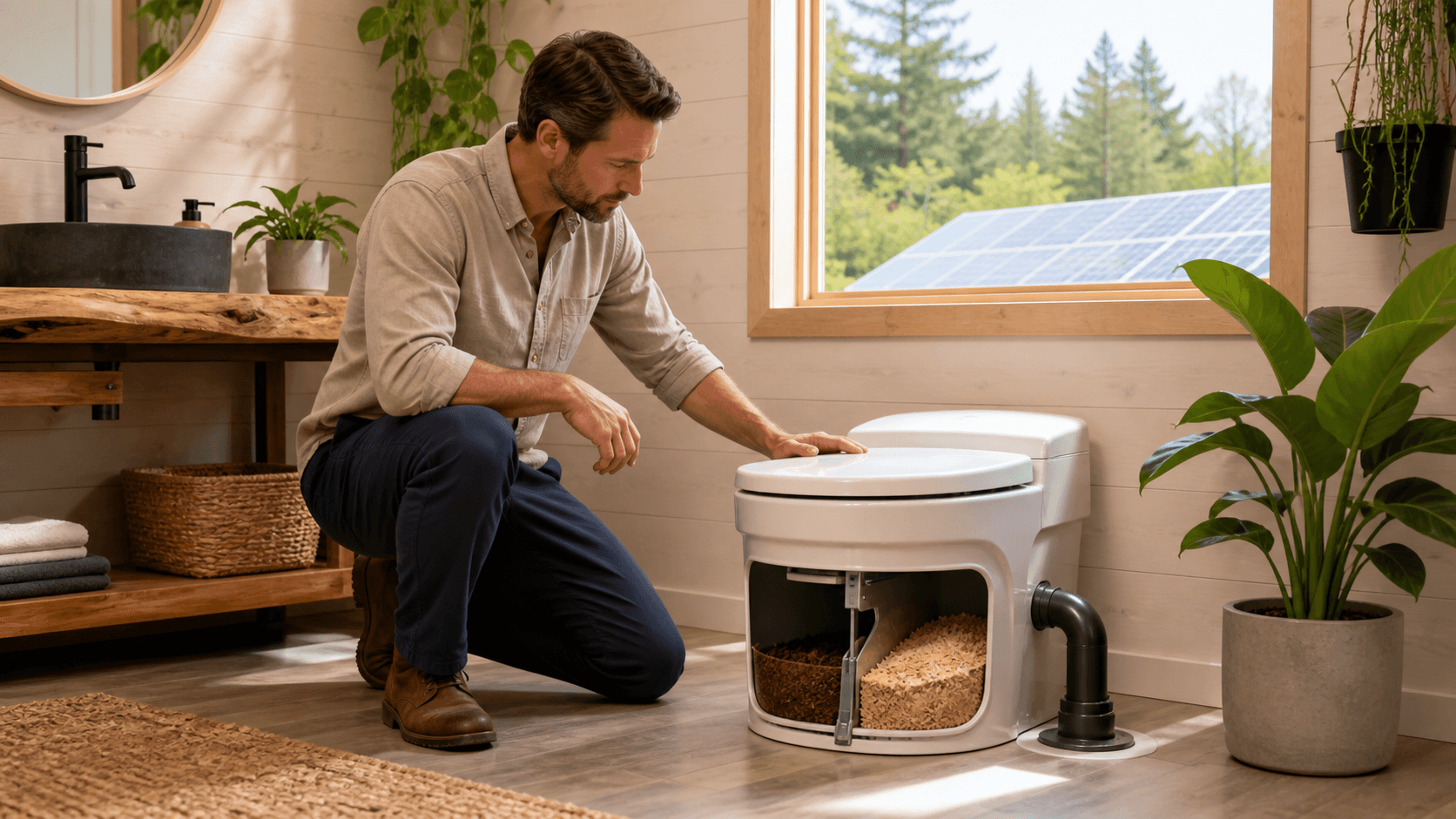
Away from the bathroom you have the composting chamber. This is where the real work happens. When you use the toilet, waste and a bit of bulking material, like sawdust or wood chips, fall into this larger container. Inside that chamber, air, moisture balance, and time turn waste into stable compost.
Key parts of the process are:
- Aeration, so oxygen-loving microbes can do their work
- Moisture control, so the pile is not too wet or too dry
- A long resting time, so material can fully break down
Odor control comes from a smart vent system. A vent pipe runs from the composting unit up and out above the roofline. A small fan, often very low power, pulls air from the bathroom through the toilet and into the chamber, then outdoors. Done right, the bathroom air always feels fresh because air moves in one steady direction.
For off-grid homes, fans can be:
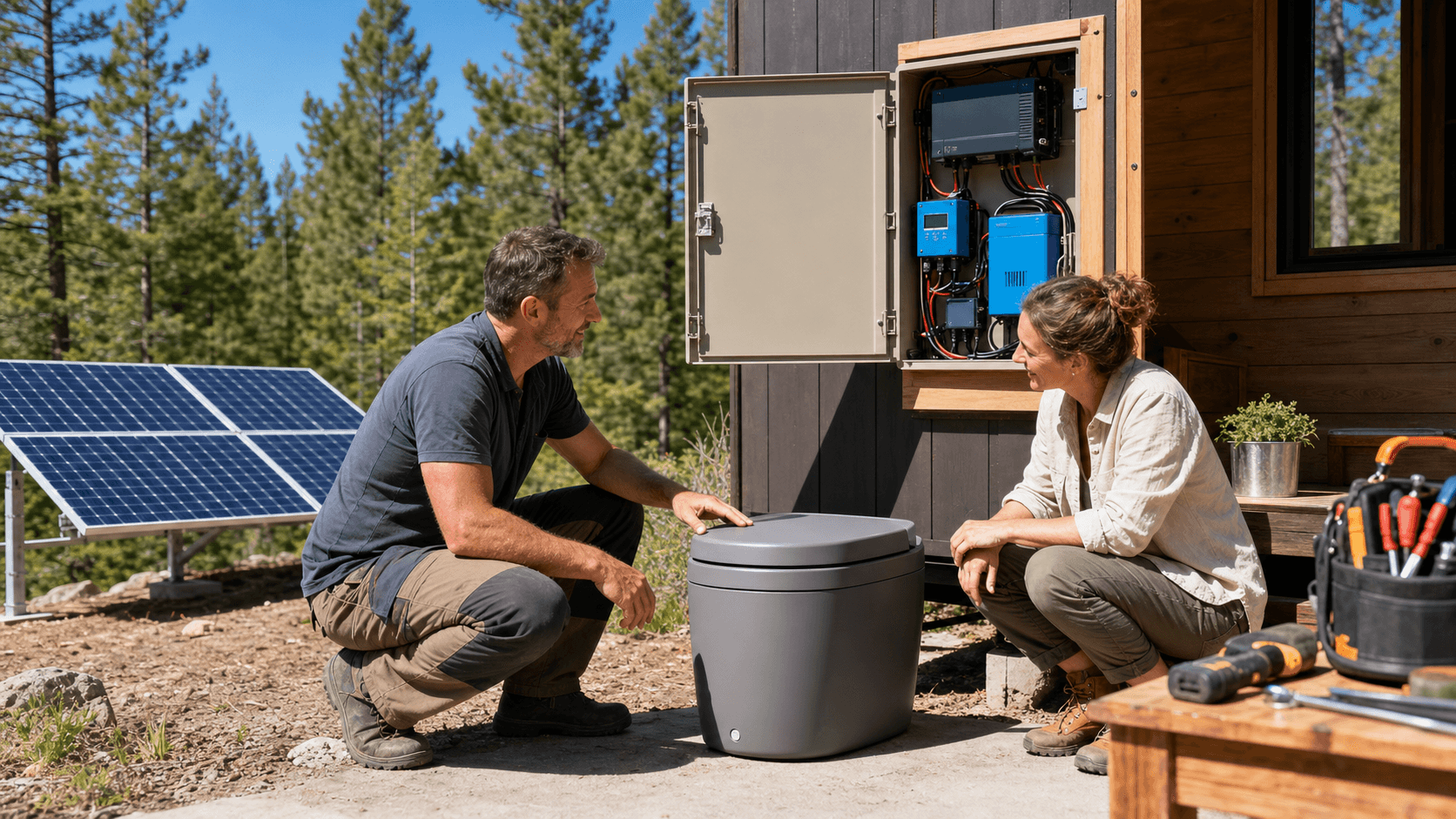
- Tiny DC fans tied into a battery bank
- Solar-powered fans on a small dedicated panel
- AC fans used with an inverter if you already run one
Planning that fan power with your solar system keeps your toilet running quietly every day, even in low-sun seasons.
Key Advantages of a Split-System Composting Toilet
One of the biggest wins is comfort. Your bathroom can have:
- A normal-height toilet pedestal
- Finished walls and flooring
- Good lighting, storage, and even a small sink
All the "business" is handled out of sight, in a service area you only visit for checks and maintenance. That matters for year-round homes, guest cabins, and short-term rentals where people expect indoor comfort.
Performance is another big plus. Remote composting chambers are larger than self-contained units, so they:
- Handle more users per day
- Stay steady during holiday weekends or busy seasons
- Need less frequent attention
Winter reliability also improves when the compost chamber sits in a semi-conditioned area like a basement, insulated crawlspace, or outbuilding with some shelter from wind. The more stable the temperature, the happier the microbes and the more reliable the system in cold weather.
Over the long run, you also gain resilience. A split-system composting toilet can reduce or avoid:
- The need for a full septic system on rocky or steep land
- Worry about septic failures or leach field issues
- Dependence on municipal sewer if you are rural
For many off-grid homeowners, that peace of mind is as important as the comfort.
Choosing the Right Split-System Setup for Your Property
Every property is different, so layout and sizing matter. When you look at your land and buildings, think about:
- Slope: Can you place the chamber below the bathroom to keep gravity on your side?
- Space: Do you have a crawlspace, basement, or spot for a small service shed?
- Access: Can you reach the chamber for inspections without crawling through tight spots?
Capacity ratings, like "users per day," can be confusing. In simple terms, you want a system sized for:
- How many people will use it most days
- How often guests visit
- Whether it is full-time, seasonal, or for short stays
Cold climates, high water tables, and rocky soils all affect design. You might need more insulation around the chamber, a safe spot for leachate to drain, or frost-proof vent and drain runs. Good planning up front means fewer surprises later, especially when snow and ice show up.
It also helps to look at how your toilet system will connect with your solar power and water treatment choices. A well-designed setup keeps fan loads light, supports ventilation in all seasons, and fits the way you already plan to build and live.
Installation, Operation, and Maintenance Made Practical
Installing a split-system composting toilet usually fits into a larger building or remodel project. A typical process includes:
- Framing the bathroom and deciding pedestal location
- Cutting and sealing the chute or pipe to the chamber below
- Setting the composting unit in its service space
- Running vent pipes up through the roof
- Wiring any fans into your power system
Daily use is straightforward. Most systems work best when you:
- Add a small scoop of bulking material after solid use
- Follow any urine diversion steps if your model has that feature
- Give clear, simple instructions to guests so they use it correctly
Good habits prevent clogs, soggy piles, and odors. People often keep a small bin of sawdust or similar material right by the toilet with a scoop and a friendly sign.
Seasonal and long-term care focus on:
- Checking fans and vent pipes for blockages
- Making sure seals and fittings stay tight
- Letting compost rest long enough to finish
- Removing finished material safely when the manufacturer guidelines say it is ready
Basic safety gear, like gloves, a dust mask, and dedicated tools, keeps maintenance clean and simple. Local rules may guide how and where finished compost or leachate can be used or buried, so it is smart to learn those before you start.
Planning ahead, especially in late summer and early fall, gives you time to choose the right split-system composting toilet, fit it into your home layout, and set yourself up for a fresh, low-maintenance winter off grid. With a thoughtful design, your bathroom can feel like any modern home while your system quietly does its work out of sight.
Upgrade Your Off-Grid Comfort With Smarter Waste Solutions
If you are ready to make your cabin, tiny home, or remote retreat more self-sufficient, we can help you choose the right split-system composting toilet for your setup. Our team at Green Vista Living will walk you through sizing, venting, and installation details so your system works reliably from day one. Have specific questions about your floor plan or climate conditions? Just contact us and we will help you plan a clean, low-maintenance solution.