Keep Essential Power Available Through Winter
Cold weather can change how your battery bank behaves when you need it most. For homes, cabins, RVs, and remote properties, battery choice affects more than how long the lights stay on. It can affect whether your system can safely charge, power heavy loads, and recover after a storm or long night.
At Green Vista Living, we encourage you to compare an ECO-WORTHY LiFePO4 lithium battery and a conventional lead-acid battery based on your actual winter setup. Both battery types react to freezing temperatures, but the better match depends on your battery enclosure, daily power needs, charging plan, and the solar energy available during shorter winter days.
Lithium is not automatically a poor choice for winter, and lead-acid is not automatically the safer choice. The details matter, including the battery model, its built-in protections, and whether you can keep the battery within its approved temperature range. Below, we'll explain how cold affects usable capacity, why cold-weather charging needs special attention, and how to prepare a battery bank for the season ahead.
See How Cold Changes Battery Performance
Cold slows the chemical activity inside every battery. As temperatures drop, batteries may deliver less usable capacity, show more voltage sag during a heavy load, and take longer to recharge. That means the amp-hour rating printed on a battery, which is generally based on room-temperature conditions, does not tell the whole winter story.
Charging and discharging are also two different jobs. A battery may still be able to deliver power to your inverter, lights, refrigerator, or other loads when it is cold. Charging can be more limited, especially with lithium batteries. This matters for solar systems because your panels may produce power on a bright winter day while the battery is still too cold to safely accept that energy.
Winter planning should focus on the power you can truly use, not just the battery capacity you own. Before freezing weather settles in, we recommend reviewing:
- Your expected overnight loads, including heat-related equipment, lighting, and appliances
- The reserve power you want available during an outage
- Battery temperature where the bank is installed
- Solar production during cloudy, short, or snow-covered days
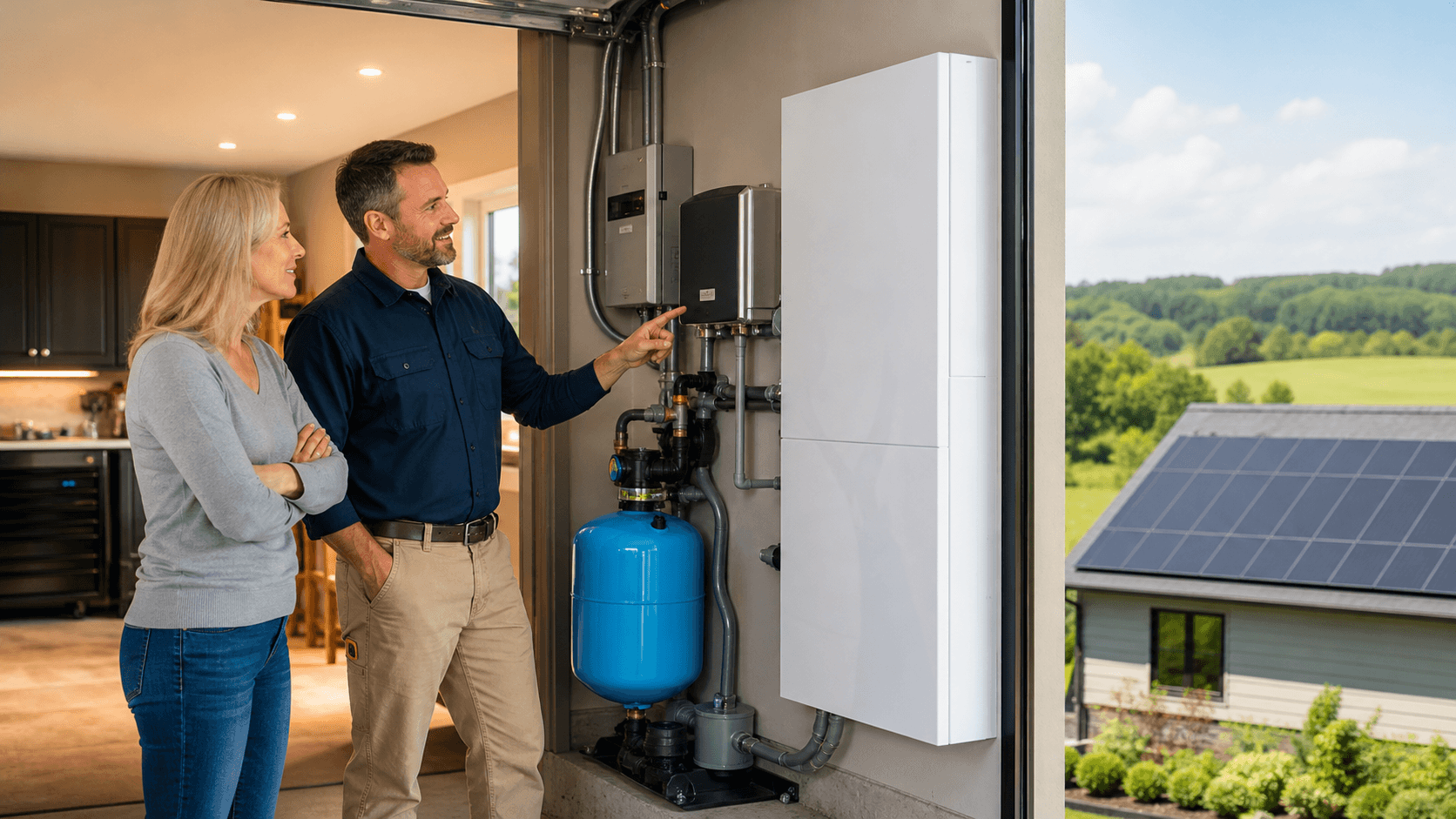
A well pump, furnace blower, refrigerator, and inverter loads can add up quickly. Even holiday travel can change how often a property is monitored or how long it goes without a charging check.
Understand ECO-WORTHY LiFePO4 Battery Cold-Weather Limits
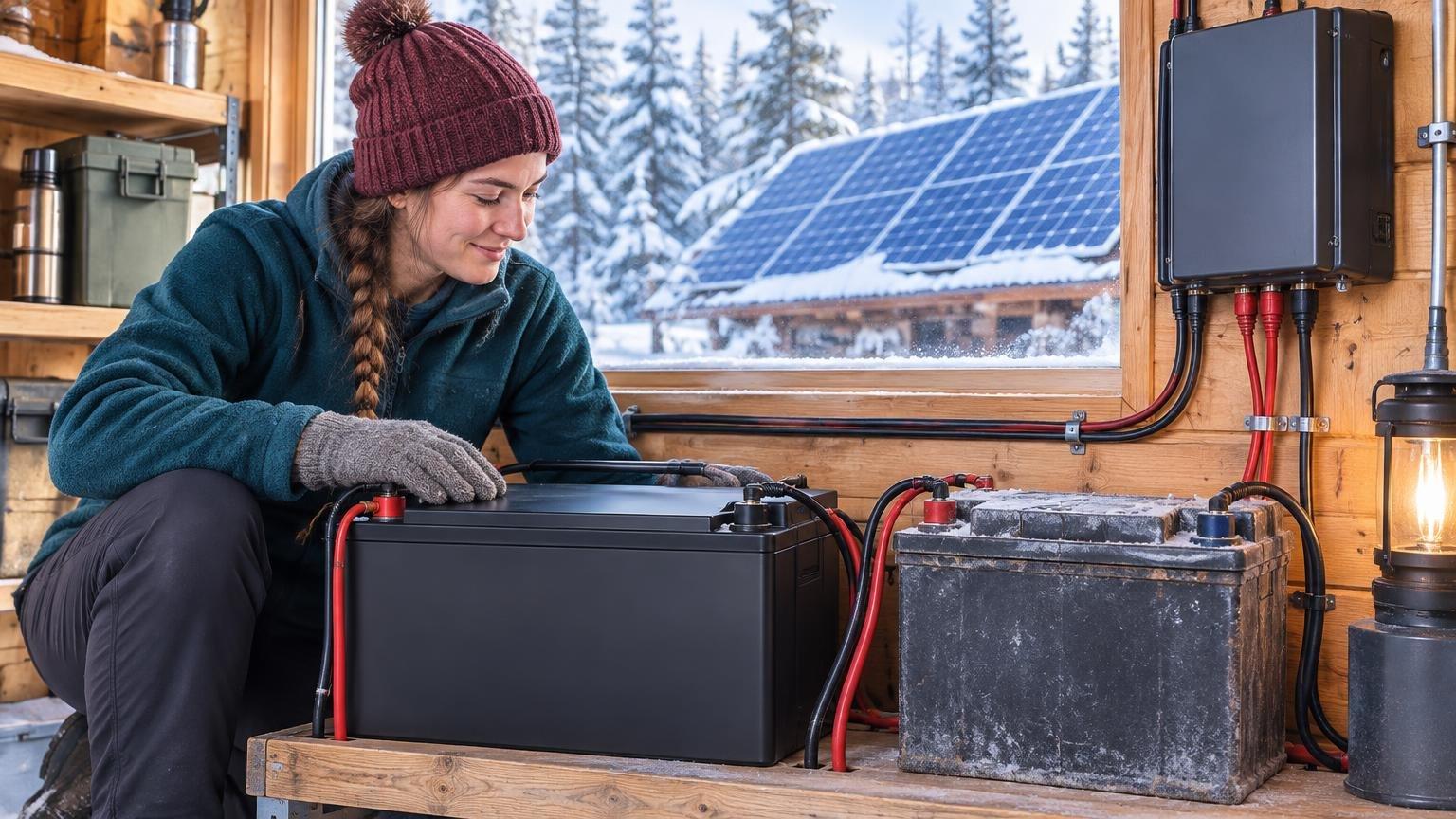
An ECO-WORTHY LiFePO4 lithium battery can be a strong fit for many off-grid and backup power systems. LiFePO4 batteries typically provide deeper usable capacity than lead-acid options, hold voltage more steadily under load, and can recharge efficiently when used within their approved temperature range. They also commonly provide a longer service life when they are correctly installed and maintained.
The cold-weather rule that deserves the most attention is charging temperature. Charging a LiFePO4 battery below the manufacturer-approved range can cause permanent damage. One concern is lithium plating, which can occur when charging takes place while the cells are too cold. For that reason, we always recommend checking the manual for the exact ECO-WORTHY LiFePO4 lithium battery model you plan to use.
Battery management systems, often called BMS units, can add another layer of protection. Some may disconnect charging when temperatures fall too low, but features can differ from one model to another. Do not assume every ECO-WORTHY battery has low-temperature charging protection, internal heating, or the same operating limits.
Before installing a lithium bank, confirm these details for your specific model:
- Approved charging temperature range
- Approved discharging temperature range
- Whether low-temperature charge protection is included
- Whether a compatible heating solution is needed
- Recommended charge-controller and inverter settings
That quick review can prevent a sunny winter day from becoming a battery problem.
Compare Lead-Acid Limits During Winter Outages
Lead-acid batteries have served backup power, RV, marine, and off-grid systems for a long time. They are familiar to many owners and remain a common battery type. Still, cold weather can noticeably reduce the capacity they can provide, especially when the battery is already partly discharged.
Flooded and sealed lead-acid batteries need careful charging management during winter. A battery that remains undercharged becomes more vulnerable to freezing damage because the electrolyte is more likely to freeze as the state of charge drops. In a remote cabin or seldom-used property, that risk deserves attention before temperatures fall.
Compared with lithium, lead-acid batteries are often planned around a shallower depth of discharge to help protect their service life. As a result, a lead-acid bank may need more total battery capacity to provide the same usable energy as a lithium setup. Maintenance needs, replacement timing, and winter performance should all be part of your decision, not just the battery's initial specifications.
Lead-acid can still make sense in the right system, particularly when you have a well-managed charging plan and a protected battery location. The main point is to avoid treating any battery type as maintenance-free during a cold-weather outage.
Prepare an ECO-WORTHY Battery Bank for Winter
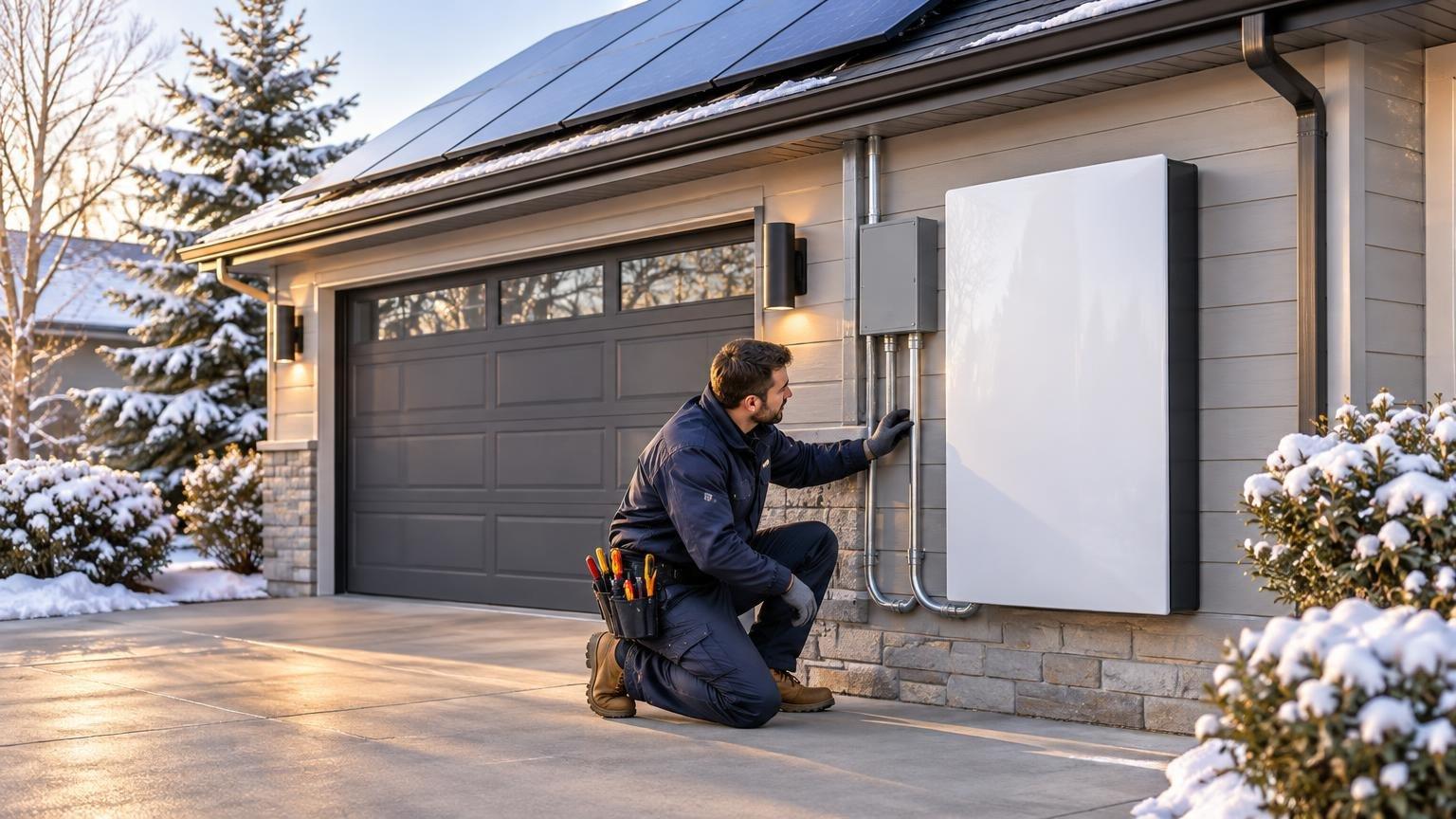
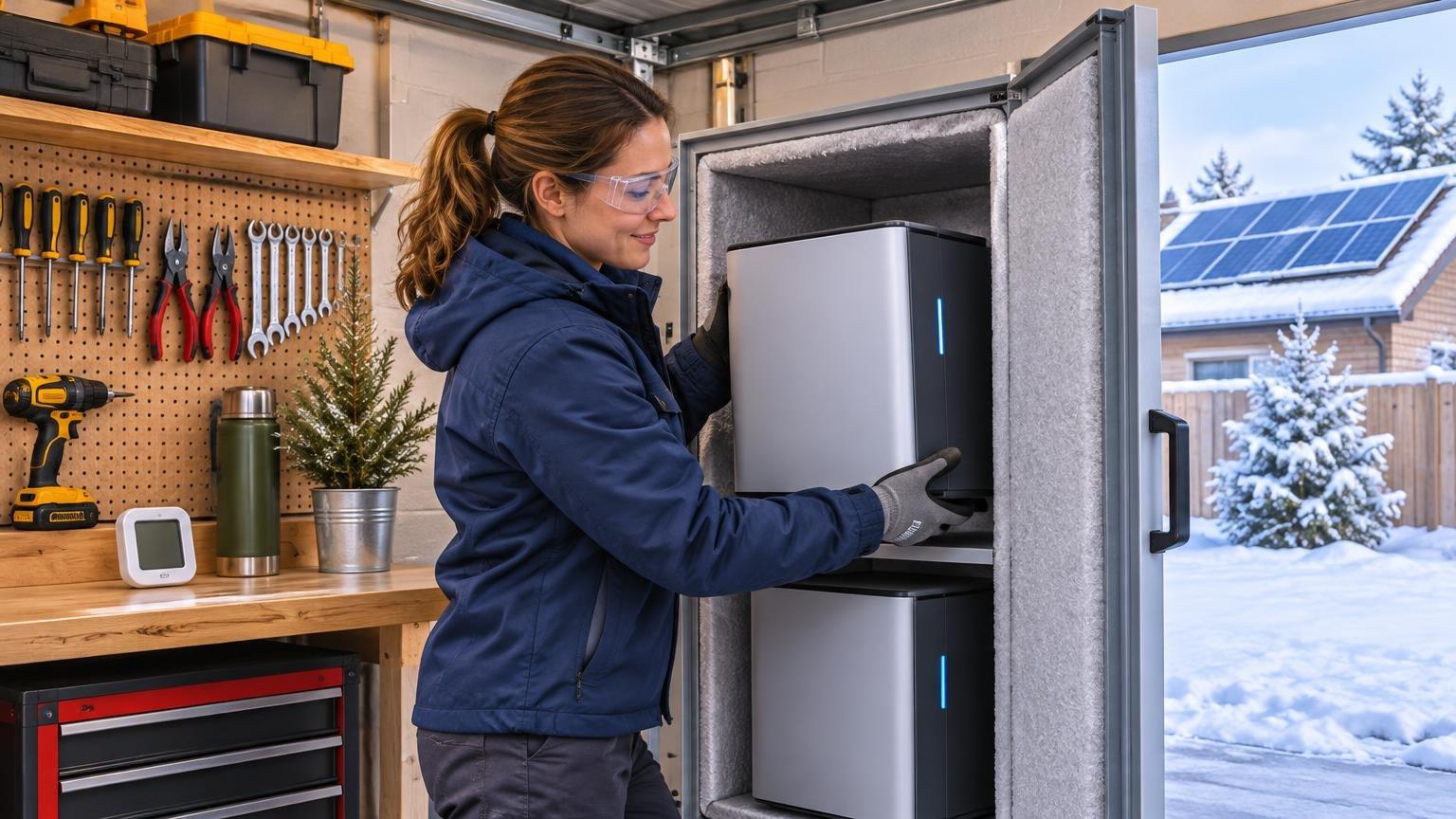
Battery location is one of the biggest parts of winter readiness. We recommend a dry, protected, insulated enclosure that stays within the manufacturer-approved operating range. In colder regions, that may mean a conditioned battery space, a compatible battery heater, or another professionally planned temperature-management approach.
Monitoring makes it much easier to catch trouble before power runs low. A battery monitor, temperature sensor, and properly configured inverter or charge controller can show you state of charge, battery temperature, charging activity, and unexpected power draw. Lithium batteries should use settings that match the manufacturer's guidance, rather than generic lead-acid charging profiles.
Solar production deserves a realistic winter review as well. Snow cover, lower sun angles, and fewer daylight hours can limit the energy reaching your battery bank. We suggest sizing around real seasonal conditions by considering your essential loads, trimming unnecessary overnight use, and maintaining a backup charging plan for extended clouds or storms.
A winter-ready setup is usually built around preparation, not guesswork. Inspect battery enclosures, cable connections, and charging equipment before severe weather arrives. Small concerns are easier to address before the system is supporting your home or cabin through a multi-day outage.
Choose a Winter Battery Plan Before the Next Freeze
The right battery plan begins with your climate, battery location, power needs, and charging options. An ECO-WORTHY LiFePO4 lithium battery may be an excellent choice for winter backup or off-grid power when it is installed in a suitable environment and protected from unsafe low-temperature charging.
Before the next freeze, confirm your battery's temperature limits, check the condition of the enclosure and cables, and review how much reserve capacity you truly have. Planning for lower solar production and higher seasonal loads helps you make better decisions long before winter weather puts your system to the test.
Choose Reliable Power for Every Season
Green Vista Living can help you compare battery options and find an ECO-WORTHY LiFePO4 lithium battery suited to your energy goals. Our team focuses on practical storage solutions that support dependable off-grid and backup power. If you have questions about compatibility, sizing, or system planning, contact us for personalized guidance.