Enjoy Flush Comfort Anywhere Off the Grid
Solar-powered toilet systems let remote cabins feel like real homes. You get a clean, comfortable bathroom without septic tanks, trenching, or smelly outhouses. For many cabin owners, that single upgrade can make longer stays easier and a lot more pleasant for family and guests.
Summer cabin season means long days at the lake, quiet mountain hideaways, and tiny off-grid homes tucked back in the trees. Those spots are beautiful, but plumbing is usually the hardest part. Traditional toilets need water, pipes, and a place for all that waste to go. In many remote places, that simply does not exist.
Modern solar-powered toilet systems fill that gap. They turn sun-powered energy into safe, low-impact waste handling, so you can enjoy flush-like comfort without the usual septic headaches. For people who care about simple, resilient, off-grid living, this kind of setup fits right in with the rest of an independent home.
Why Remote Cabins Need Smarter Waste Solutions
Remote cabins often start with whatever bathroom option seems easiest at the time. That might be an old pit toilet, a small RV toilet, or a simple bucket system. These can work for quick weekend visits, but problems show up fast when more people arrive or when visits get longer.
Common issues in remote cabins include:
- No access to septic or city sewer
- Frozen pipes in winter and leaks when things thaw
- Strong odors from pit toilets and outhouses
- High effort and disruption to add a new septic system
There is also the land itself to think about. Older waste setups can let liquids leak into the soil. If your cabin is near a lake, creek, or shallow well, that can raise real concerns over time. Wet ground, high water tables, and sandy soil can all let waste move farther than you might expect.
With more families using cabins as second homes, local rules around waste are getting stricter in many areas. Solar-powered and other advanced off-grid toilets can help:
- Keep waste contained and treated inside a sealed system
- Cut down on odors that bother guests and neighbors
- Make it easier to meet current health and building codes
When you choose a smarter toilet solution, you are not just avoiding hassle. You are caring for your land and water so the place stays healthy for kids, pets, and wildlife.
How Solar-Powered Toilets Actually Work
Solar-powered toilets sound complex, but the basic idea is simple. They use the sun to power small parts that move air, dry waste, or burn it down to a tiny amount. That way, waste shrinks, smells stay controlled, and you deal with much less volume over time.
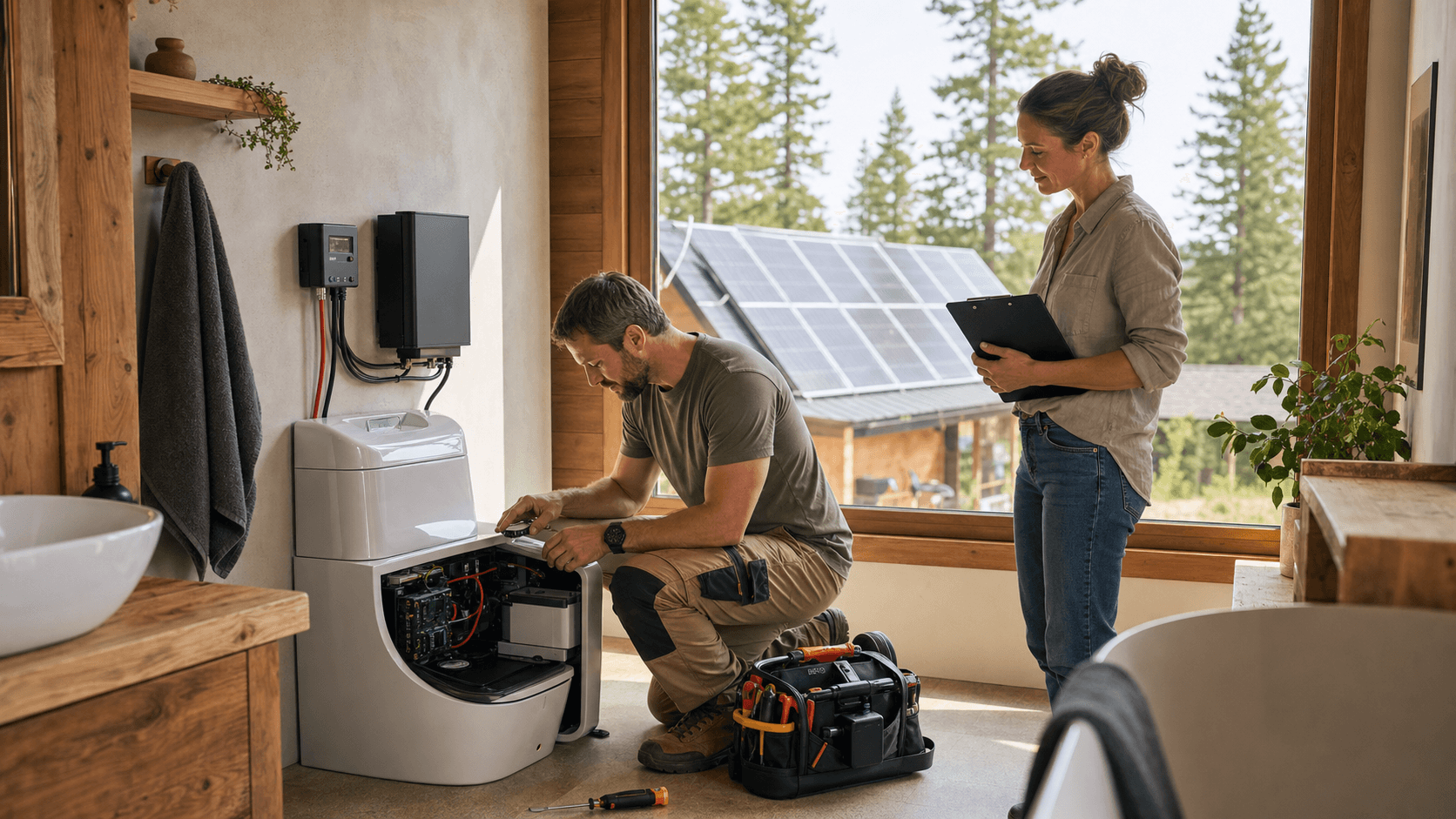
Most systems are built from a few main parts:
- Solar panel that gathers energy from the sun
- Battery that stores power for night and cloudy days
- Ventilation fan to move air and control odors
- Control unit that manages power use and timing
- Waste chamber that handles solids and liquids
Here is how a typical system works in everyday use:
First, you use the toilet just like you would at home, sometimes with a simple low-water flush, sometimes dry. Inside the unit, the control system turns on a fan or heating element. That moving air or gentle heat speeds up evaporation of liquids and helps break down or burn off solids, depending on the design.
Over time, the waste shrinks to a safer final form. In some systems, you end up with dry compost-like material. In others, you get a small amount of sterile ash. Liquids often evaporate out a vent, so they do not build up in a tank.
Solar-powered toilets tend to have very low power draw. Many will run on a small panel and battery setup, or they can tie into a larger off-grid solar system you already use for lights and appliances. When the sun hides for a few days, stored battery power keeps fans and controls running so the toilet still works as expected.
Comparing Solar Toilet Technologies for Off Grid Homes
Not every solar-powered toilet handles waste the same way. The right choice depends on how often you use the cabin, how many people come along, and what kind of climate you live in.
Here are the main styles you will find:
- Solar-assisted composting toilets
- Solar-powered incinerating toilets
- Solar-ventilated dry toilets with urine diversion
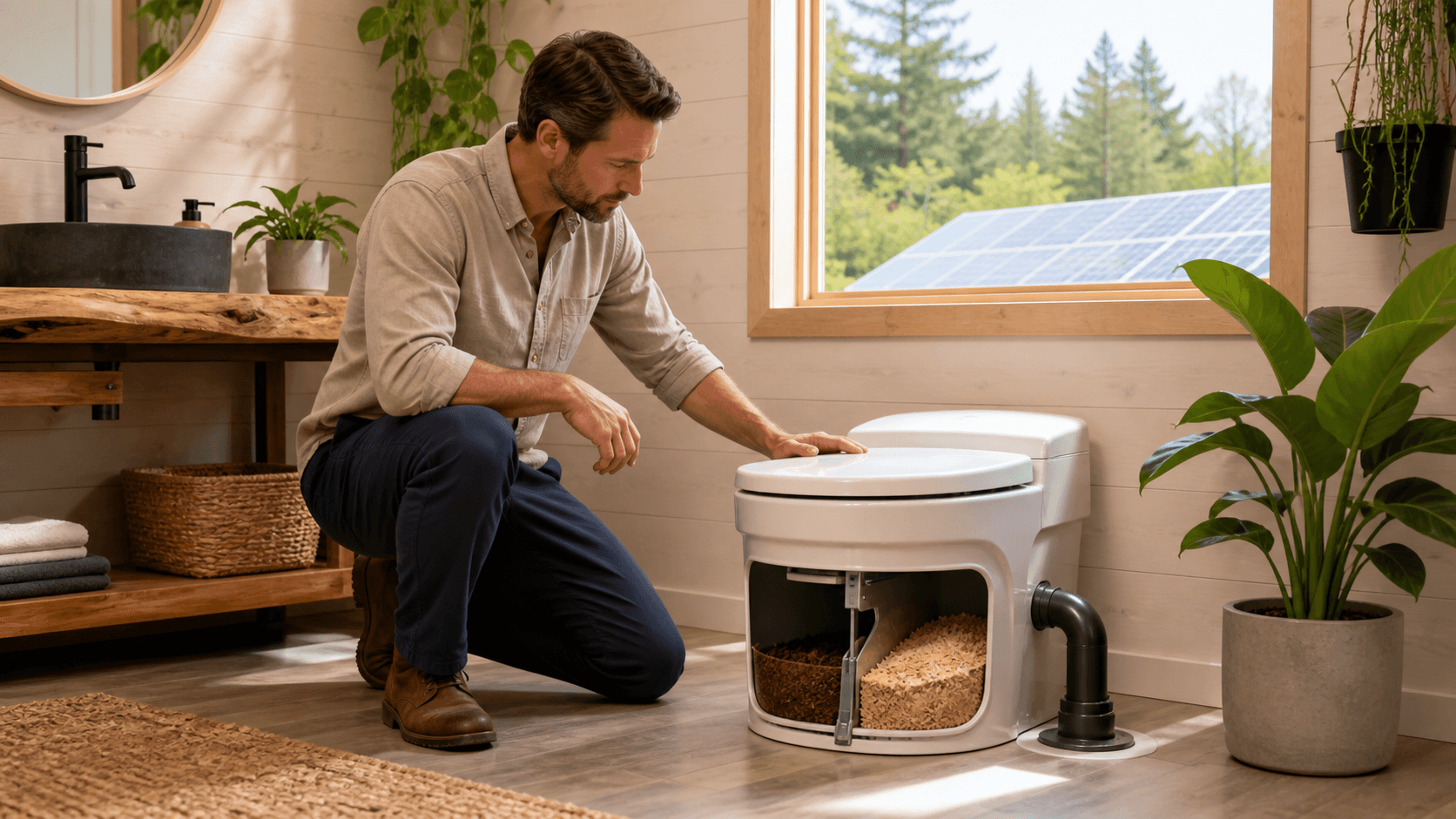
Solar-assisted composting toilets use power to run fans and sometimes small heaters. They help waste break down into a stable, soil-like material inside a chamber. These are a good match if:
- You want very low ongoing power use
- You are fine with checking and emptying the chamber a few times a season
- You like the idea of a natural-style process
Solar-powered incinerating toilets burn waste down to a small amount of ash using electric heat. They can be helpful when:
- You want very little end material to handle
- You expect heavy summer traffic from guests
- You are okay with higher power use during each cycle
Solar-ventilated dry toilets with urine diversion split liquids from solids. Fans move air to keep things dry and reduce smell. This style often works well in tiny homes and geodesic domes because there is no plumbing line full of liquid to freeze in winter.
Climate matters too. In humid summers, good ventilation and steady fan use help keep moisture under control inside the toilet. In cold climates, models with built-in freeze protection, extra insulation, or simple winter settings can keep things working even when outside temps drop below freezing. Small, tight spaces like tiny homes may need careful vent routing so warm indoor air can still move waste gases safely outside.
Sizing, Installing, and Maintaining Your Solar Toilet
Choosing a solar-powered toilet is not only about the style; it is also about matching the system to how your cabin is used. Think about:
- How many people will use the cabin at once
- How many days per year you expect guests
- Whether the cabin is for weekend visits or full-time living
From there, you can size the solar support. Some cabins power the toilet with a dedicated panel and small battery. Others tie everything into a larger solar and battery setup that also runs lights, a small fridge, and maybe water treatment systems. The main goal is to have steady power for the fan and controls, with enough backup to carry you through cloudy stretches.
Site choice matters. You might put the toilet in:
- The main cabin bathroom, for daily comfort
- A small detached bathhouse, for privacy and easy venting
- An add-on space next to a geodesic dome or tiny home
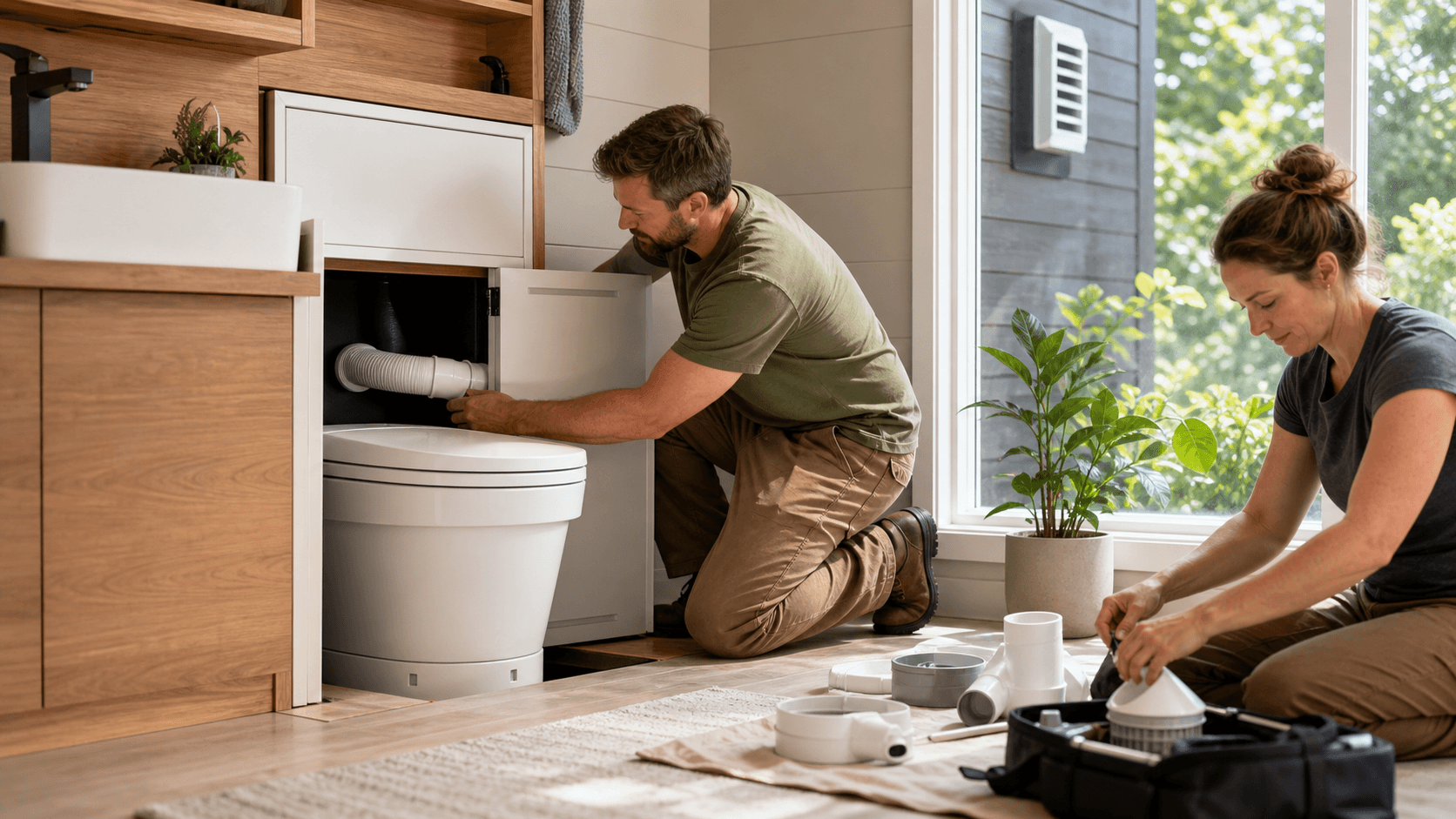
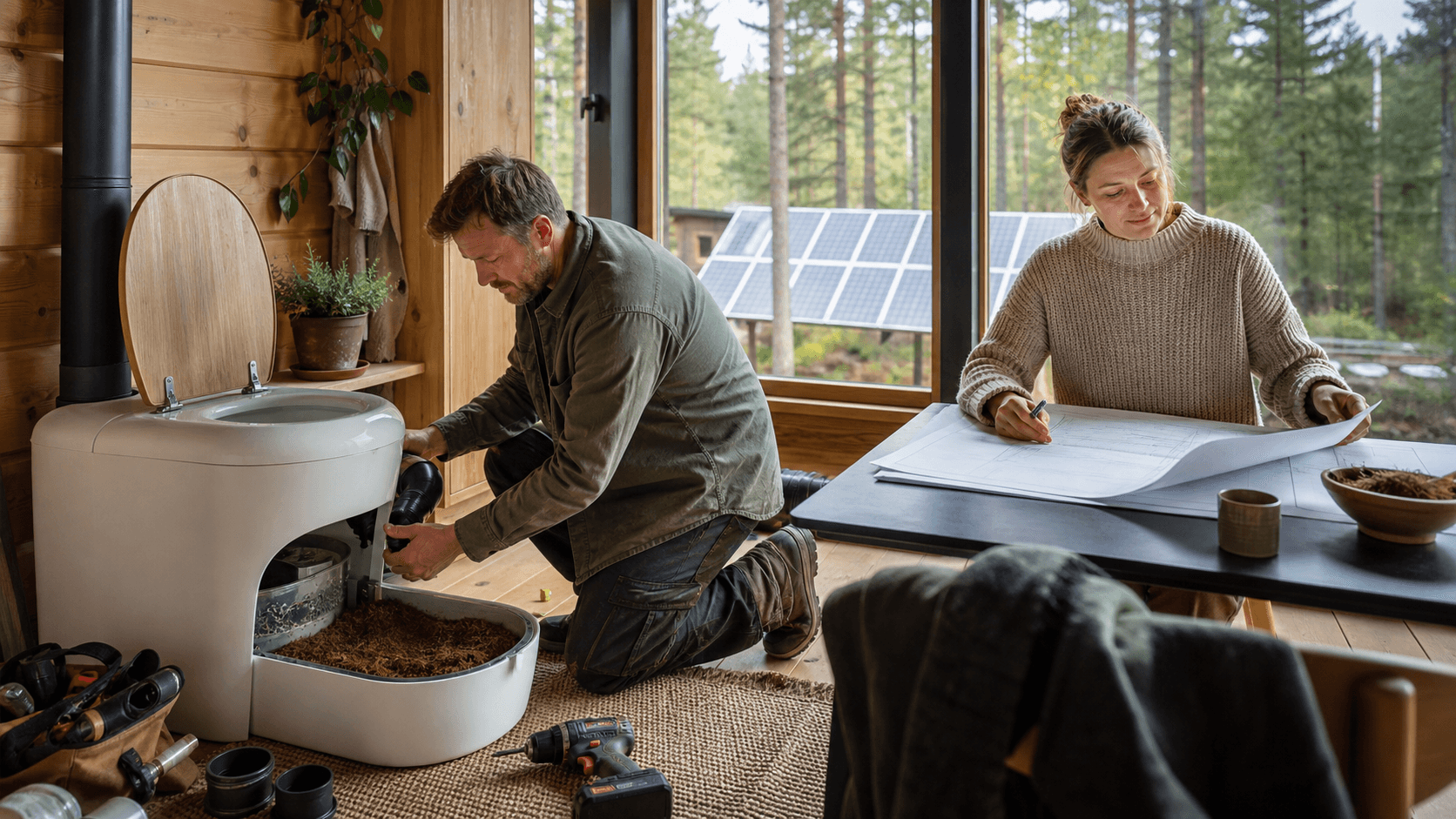
Installers will pay attention to vent runs, clearances from windows, and where to mount the solar panel. Roof or ground mounts can both work, as long as they get good sun and are safe from snow slides, tree branches, and wind.
Maintenance for modern solar-powered toilets is more about light, steady care than big messy jobs. Owners can expect to:
- Empty bins or ash pans as needed
- Check that vent fans are running and vents are clear
- Look over solar wiring and battery connections once in a while
- Use winter settings or shut-down steps before long cold breaks
When small issues show up, like a new odor or a fan that sounds different, it often comes down to a blocked vent, a full chamber, or low battery power. Catching these early keeps the system working smoothly and makes your cabin bathroom feel as comfortable as home.
Build a Cleaner, More Independent Cabin Bathroom Today
Solar-powered toilet systems give remote cabins and off-grid homes something many people thought they had to give up: a clean, quiet bathroom that feels familiar. You get comfort without septic tanks, cleaner summer days for guests, and a much smaller mark on the land you love. When your power comes from the sun and your waste system manages itself in a closed setup, your cabin becomes more independent from outside utilities.
Many cabin owners start by taking a hard look at what they use now. Old outhouses, RV toilets, or aging septic setups can all become stress points when friends visit or the kids bring guests along. A modern solar-powered toilet can be the piece that ties together your solar power system, battery storage, water treatment, and the rest of your off-grid setup into a simple, reliable whole. At Green Vista Living, we focus on those kinds of solutions so cabins and remote homes can stay comfortable, clean, and ready for the next long summer stay.
Power Your Off-Grid Comfort With Clean, Reliable Waste Solutions
Ready to upgrade your property with a sustainable bathroom setup that works anywhere the sun shines? Explore our solar-powered toilet solutions to create a low-maintenance, odor-free system that supports your eco-friendly goals. At Green Vista Living, we'll help you choose the right configuration for your cabin, tiny home, RV, or remote build. If you have questions or need personalized guidance, just contact us and we'll walk you through your options.