Arriving at a remote cabin, and having a clean, odor-free bathroom that actually flushes can feel like a small miracle. When that whole setup runs on sunlight instead of a sewer line or the power grid, it gets even better. A solar-powered toilet gives you comfort, privacy, and peace of mind while keeping your footprint small.
We will walk you through how to plan a solar-powered toilet system for a remote cabin, step by step. We will look at toilet options, how much power you really need, how to size your solar and batteries, and how to handle water, air, and waste so everything works smoothly all year.
Power Independence for Your Off-Grid Cabin Bathroom
A lot of people love their cabins until it is time to think about where the bathroom goes. Digging septic lines or running power poles up a mountain can feel impossible. That is where a solar-powered toilet setup shines.
Some of the biggest wins include:
- No sewer hookup or long trenching
- Less water use compared to a standard home toilet
- No worries about power outages or winter storms
- A cleaner, more comfortable space for family and guests
In this guide, we will focus on building a system that fits your land, your climate, and how often you visit, so that bathroom is ready every time you unlock the cabin door.
Choosing the Right Solar-Friendly Toilet Technology
Not every toilet works well off-grid. The right choice depends on how you like to manage waste, how much power you have, and how often people use the cabin.
Here are the main remote-friendly types:
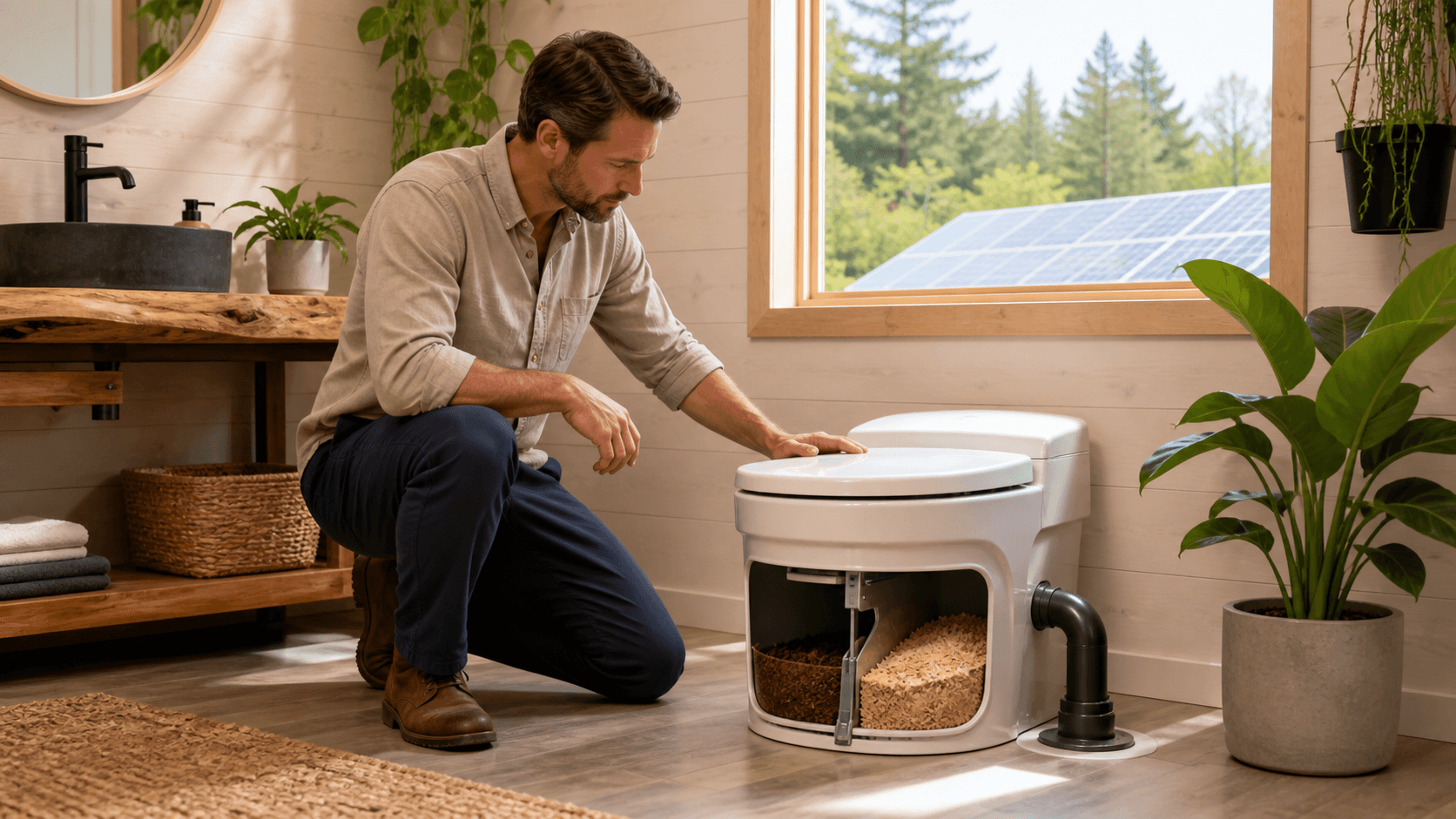
- Composting toilets: Very low water use, often just a fan and mixer. Good match for solar, especially in drier climates.
- Incinerating toilets: Use a heating element to burn waste into ash. Simple to empty, but they draw more power.
- Low-flush toilets with holding tanks: Feel like a normal toilet, use a small amount of water and often a small pump.
- Cassette or RV-style units: Portable tanks you remove and empty at an approved dump point.
For most solar-powered toilet setups, composting and low-flush systems are the easiest pairings. They usually have:
- Lower power needs
- Predictable, short run times
- Simple maintenance once you learn the routine
Think about:
- Climate: Cold, wet locations are harder on compost. Very cold spots may favor low-flush with a holding tank or incinerating units placed in a heated area.
- Use level: Weekend use is gentler on any system. Full-time living needs more capacity and stronger power planning.
- Comfort with waste handling: Some people are fine managing compost, others prefer dealing with a dry ash pan or sealed cassette.
Estimating Power Needs for a Solar-Powered Toilet
Next, you need to know how much energy your bathroom setup will actually draw. It does not have to be perfect, but a rough plan helps a lot.
Common energy users include:
- Small fans in composting toilets
- Heating elements in incinerating models
- Pumps for low-flush toilets or small pressure systems
- LED lights in the bathroom
- Ventilation fans or control panels
To estimate, think in daily watt-hours. For each item:
- Find the power rating (in watts) from the specs.
- Estimate how many minutes or hours it runs per day.
- Multiply watts by hours to get watt-hours.
Add everything together, then add a margin for:
- Extra guests on holiday weekends
- Colder weather that may increase run times
- A bit of future expansion like another light or fan
These numbers will guide your solar array and battery size, especially if you want the system ready for cloudy days and winter cabin trips.
Sizing Your Solar and Battery System for Year-Round Use
Once you know your daily watt-hours, you can pick solar and battery sizes that feel comfortable rather than tight and stressful.
For the solar array, look at:
- Total daily watt-hours needed
- Average sun hours for your location
- Seasonal changes like shorter winter days and more clouds
Many off-grid owners choose to slightly oversize the array so the batteries refill faster and you have a buffer for gray days. A few key tips:
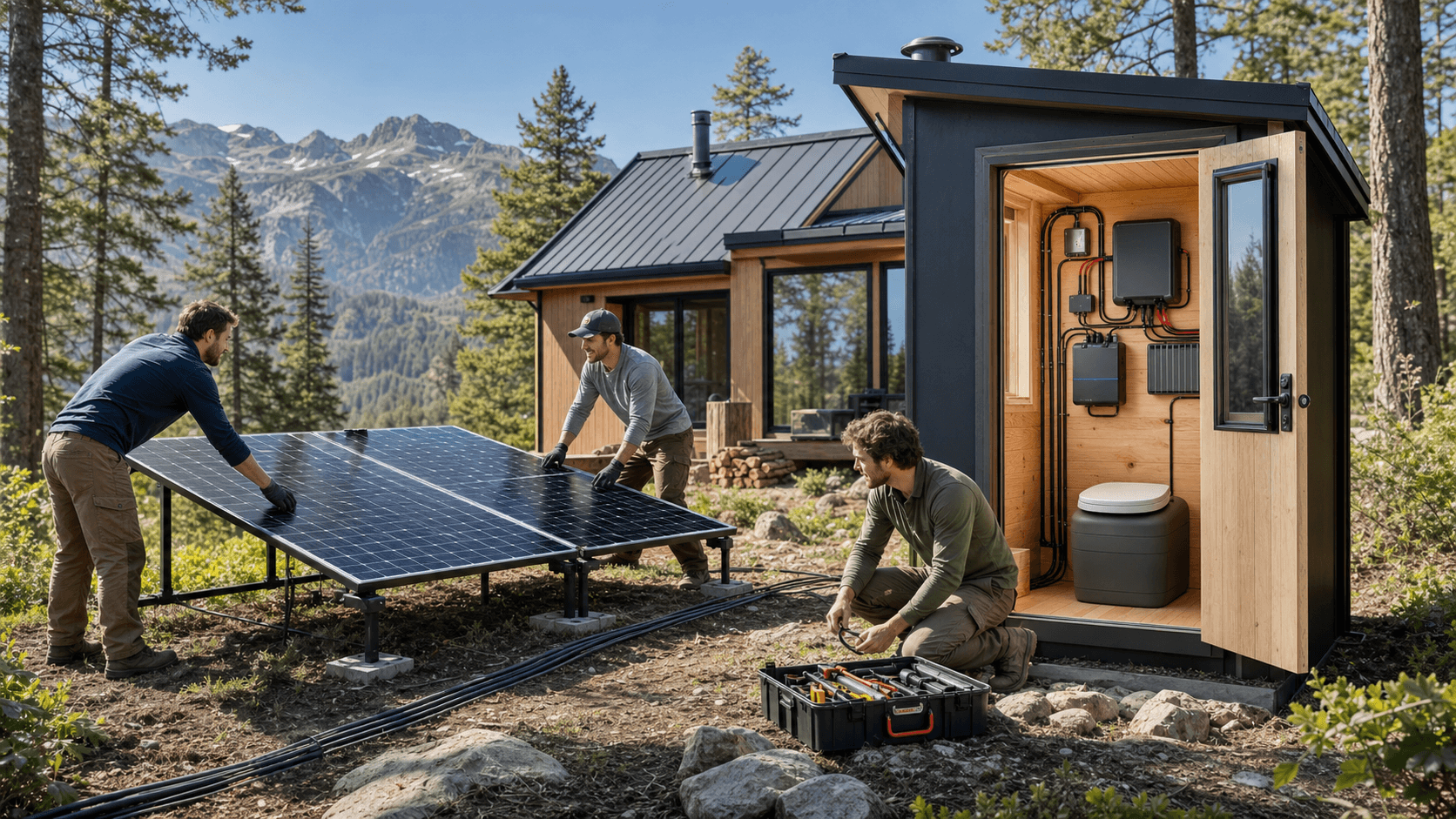
- Mount panels where snow will not bury them, ideally at a tilt that helps shed snow.
- Avoid heavy shade from trees or nearby hills, especially in winter when the sun is lower.
- Keep wire runs between panels, charge controller, and batteries as short and direct as possible.
For batteries, you will choose between:
- Lithium batteries: Lighter, deeper usable capacity, good for frequent cycling.
- AGM lead-acid batteries: Heavier, usually lower usable depth, but familiar and widely used.
Plan for enough amp-hours to run:
- Your toilet system and fans
- Bathroom LED lights
- Any small control gear overnight
Then add a reserve for at least a couple of low-sun days, especially if you like winter holidays at the cabin. Some people also add a small backup generator for those rare long storms.
Water, Ventilation, and Waste Management Essentials
Toilets are only part of the bathroom story. Water and air handling matter just as much as power.
Water planning:
- Dry composting toilets can work with zero flush water.
- Low-flush systems need a small water supply, which might come from a tank or off-grid water solution.
- In freezing areas, keep tanks and lines in insulated or heated spaces so they do not ice up.
Ventilation is key for an odor-free bathroom. Focus on:
- A dedicated vent pipe for composting toilets, run vertical and away from windows.
- A small, high-efficiency fan, often solar-powered or tied into your main system.
- Insect screens and critter-proof caps on all vents.
Waste handling depends on your toilet type:
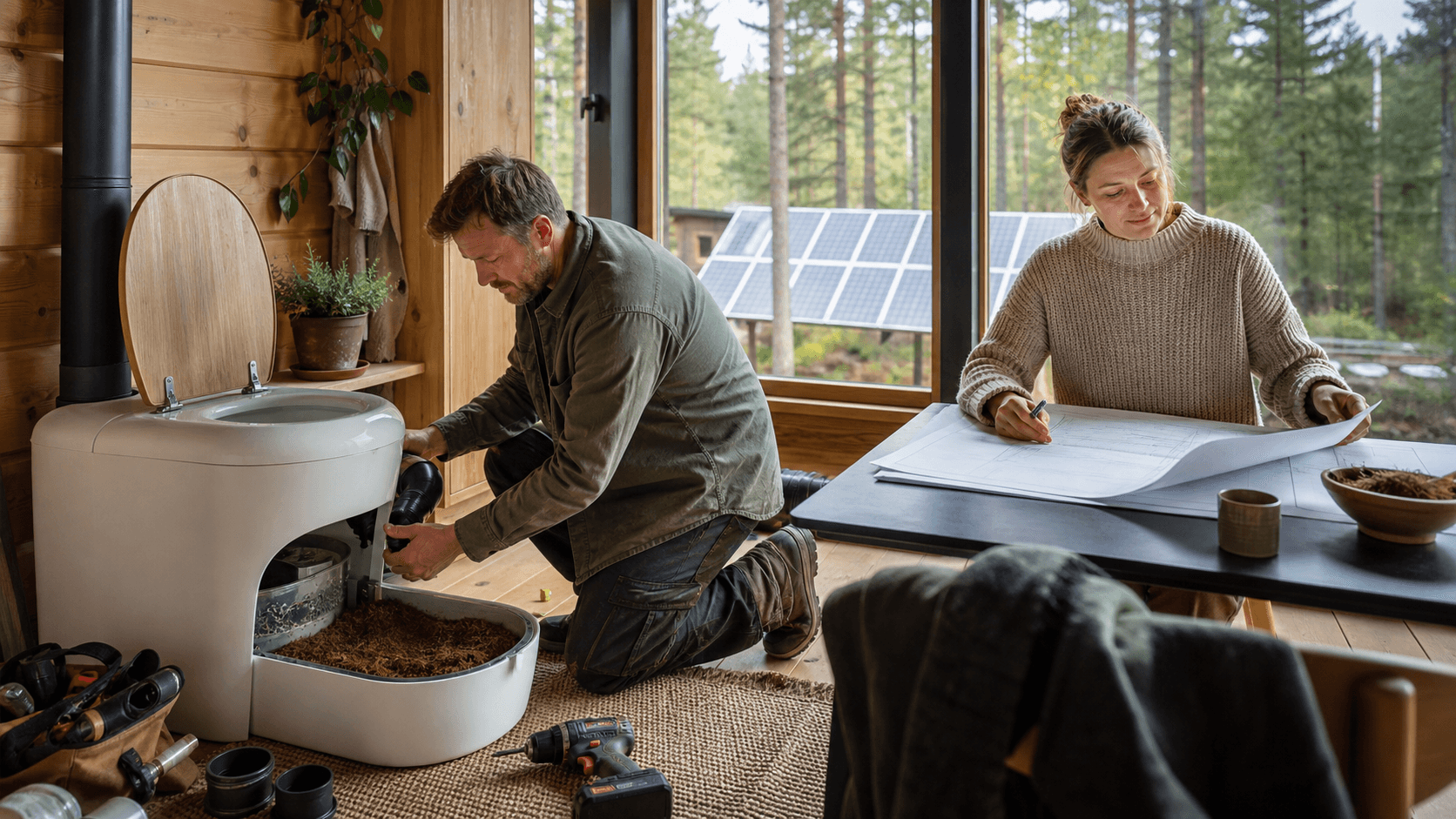
- Composting toilets need regular turning, drying time, and safe removal of finished compost following local rules.
- Incinerating toilets leave a small volume of ash that is simple to bag and dispose of.
- Low-flush and cassette units need holding tanks or cassettes emptied at approved locations.
Always check local codes and environmental rules before choosing your path.
Smart Layout, Installation, and Long-Term Care
The layout can make your solar-powered toilet system easier to install and maintain.
Good layout ideas:
- Place the bathroom close to the cabin core to keep pipe and wire runs short.
- Keep batteries in a dry, ventilated, temperature-stable area.
- Group solar gear like the charge controller and fuses in one accessible location.
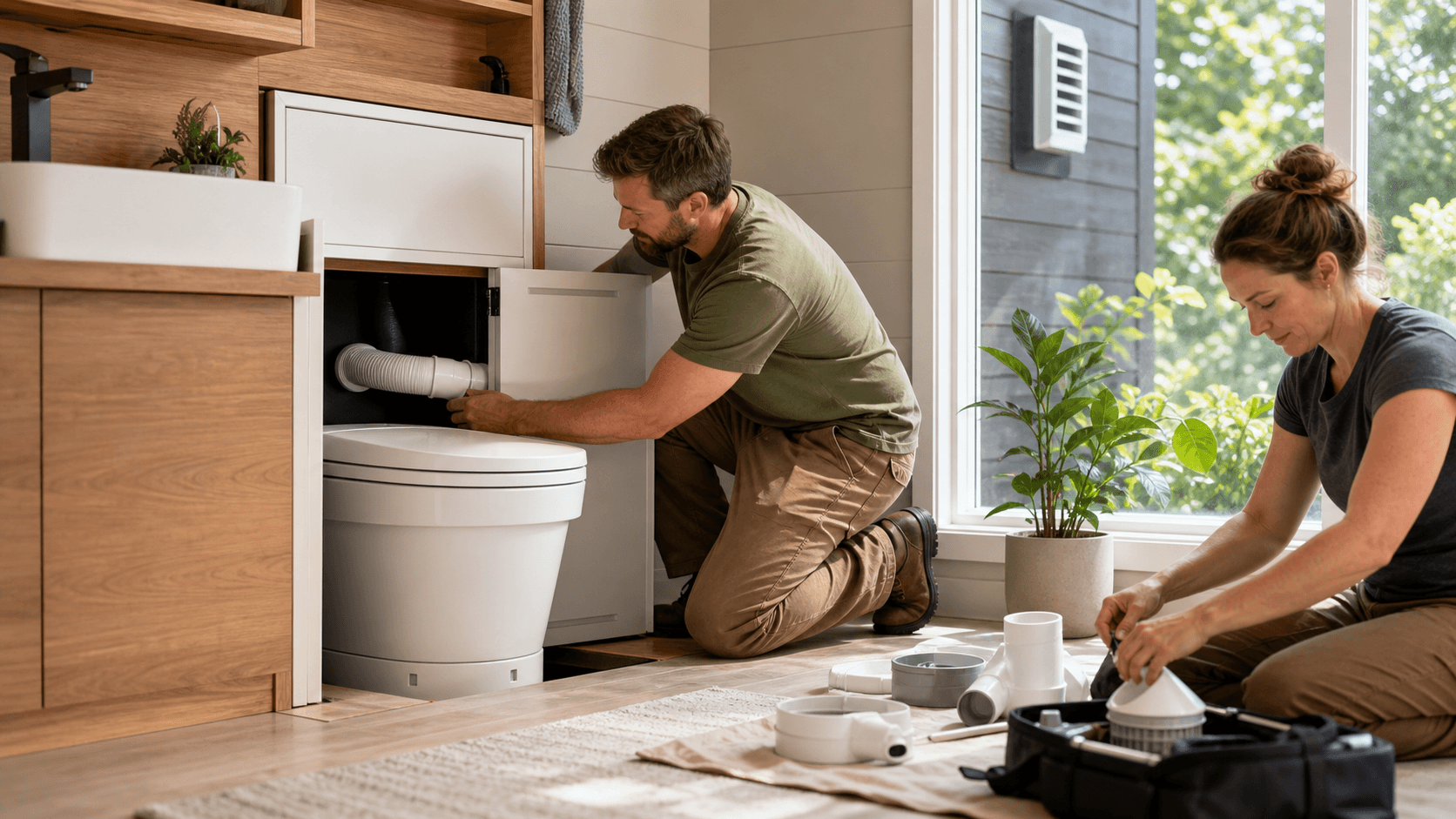
During installation, a qualified professional can help with:
- Correct wire sizing so voltage drop stays low
- Proper fuses and breakers for safety
- Weatherproof junction boxes and tight connections
- Safe clearances around any heating elements or incinerating units
Think ahead about growth:
- Leave extra space on the solar mount for more panels.
- Run a bit of extra conduit or pull string for future wires.
- Plan a battery area with room for another battery if cabin use grows.
To keep things running smoothly, set up a simple seasonal checklist:
- Clear dust, pollen, or snow from panels.
- Check battery terminals and cables.
- Make sure vent pipes are open and screens are clean.
- Test toilet functions before the busy season starts.
If something stops working, start with the basics: power at the batteries, charge controller status lights, fuses, and any reset buttons on the toilet system. Some owners also add small remote monitors so they can check battery levels before heading up to the cabin, plus a simple manual backup toilet option for very remote trips.
A solar-powered toilet can turn a rough cabin into a truly comfortable retreat. With the right technology, a thoughtful solar and battery plan, and smart handling of water, ventilation, and waste, your off-grid bathroom can work quietly in the background so you can focus on fresh air, clear views, and time away. At Green Vista Living, we care about making off-grid systems practical and reliable, and a well-planned solar-powered toilet setup is one of the best upgrades you can give any remote cabin.
Power Your Off-Grid Comfort With a Simple Upgrade
Ready to make your bathroom as sustainable as the rest of your home or cabin? Explore how a solar-powered toilet can cut your water use, simplify waste management, and keep you comfortable off-grid. At Green Vista Living, we'll help you choose a system that matches your space, climate, and daily routine. If you have questions or need a custom recommendation, just contact us and we'll walk you through the options.