A solar-powered toilet lets your remote cabin stay clean, comfortable, and off-grid without giving up normal bathroom life. If your favorite getaway spot has no septic access, you can still have a toilet that feels familiar, stays low odor, and treats waste in a safe, eco-friendly way. This guide walks through why standard septic is so hard at remote cabins, how solar toilets work, and what to think about when choosing a system for your place.
We will also look at power needs, installation basics, and real-world upkeep so you know what daily life with a solar-powered toilet is actually like. Whether your cabin is a simple hunting shack in the woods or a cozy family hideaway by the lake, there is a setup that can fit your space, climate, and comfort level.
Stay Off-Grid Without Sacrifice in Your Remote Cabin
Many cabins sit on rocky land, deep woods, or shorelines where there is no easy way to tie into sewer lines. You go there for peace and space, not to listen to heavy equipment dig up your land for a septic tank. Still, no one wants to hold it all weekend or walk through bugs and mud to a smelly outhouse.
Solar-powered toilet systems give you:
- Indoor comfort that feels close to a normal bathroom
- Lower impact on land and water around your cabin
- A sanitary option that does not rely on septic or sewer
With the right setup, the same solar power that supports your lights, water pump, or small fridge can also run a safe, low-odor toilet system that fits your off-grid lifestyle.
Why Traditional Toilets Fail in Remote Cabins
Standard toilets depend on either city sewer or a full septic system. For many remote cabins, those are not realistic options. Common reasons include:
- Shallow or high water table that will not meet code
- Very rocky or steep land that is hard to dig
- Long distance from any existing utilities
- Local rules that limit where you can put a drain field
When that happens, people often fall back on outhouses or simple pit toilets. Those can work, but they come with big downsides, especially in hot summer months:
- Strong odors that drift into living areas
- Flies, wasps, and other pests you do not want near waste
- Risk that liquids seep into soil and nearby water
- A setup that can be hard for kids, older guests, or renters
As more people use cabins for short-term rentals, family gatherings, and tiny home living, there is growing pressure for cleaner, code-friendly systems that treat waste more safely while still staying off-grid.
How a Solar-Powered Toilet Actually Works
A solar-powered toilet is any toilet that uses solar energy, with battery storage, to run the mechanical parts it needs. Unlike a regular composting toilet that may rely only on gravity and vents, a solar setup powers things like fans, small heaters, or even an incinerator to handle waste and control odor.
Most systems include:
- Solar panels to gather energy from the sun
- Charge controllers to manage power going into the battery
- Batteries to store energy for night and cloudy days
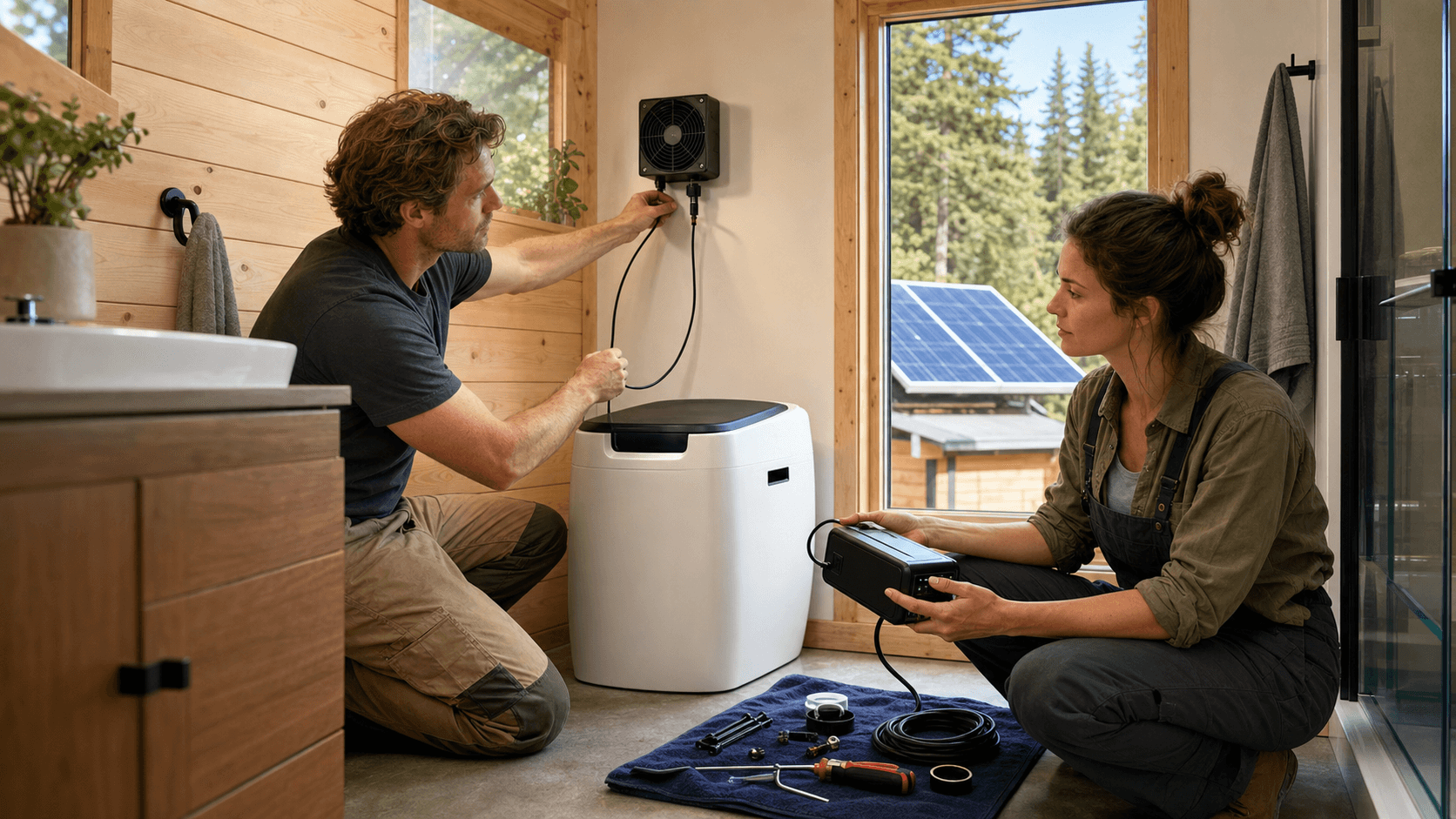
- A vent fan or heater/incinerator to treat waste and move air
- A waste chamber or ash tray where waste ends up
- Vent pipes that direct odors outside
On a normal day, you use the toilet either with a dry drop or a very small flush. The system then:
- Pulls air through the toilet with a fan, sending odors outside.
- Evaporates moisture or heats the chamber to dry waste.
- Either composts the solids over time or burns them to a small amount of ash, depending on the model.
Because air is always moving in one direction, even hot weather does not bring strong smells into the cabin.
Comparing Solar-Powered Toilet Options for Cabins
There are a few main types of toilets that work well with solar power at remote cabins.
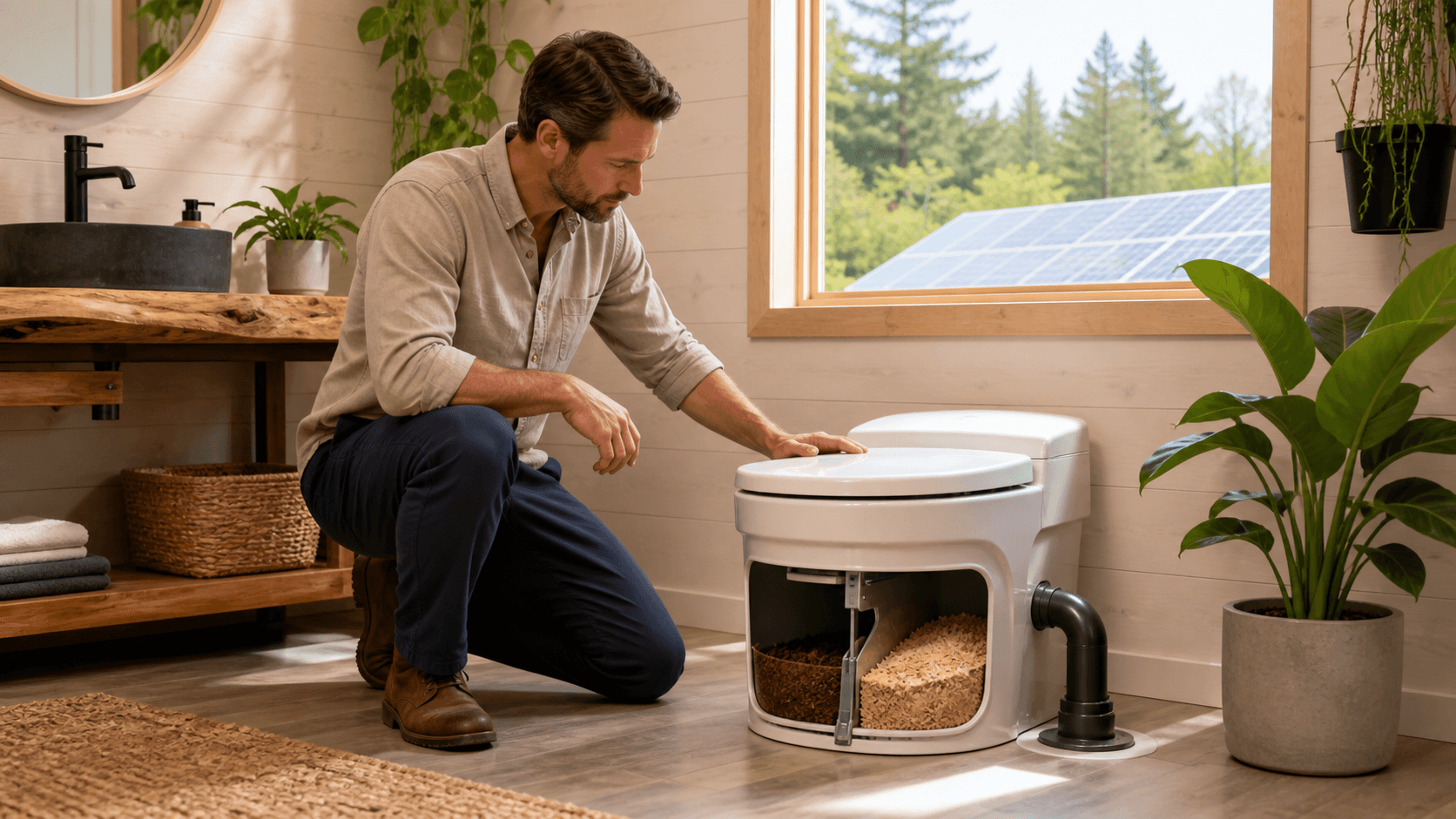
Composting toilets with powered fans:
- Use a constant low-power fan to vent air
- Turn waste into compost over time
- Often need bulking material like wood shavings
- Good for steady, long-term use when well maintained
Incinerating toilets:
- Use electric heat or a burner to turn waste into ash
- Need more power during burn cycles
- Produce very small amounts of dry ash to empty
- Helpful when you do not want to store compost on site
Hybrid low-water toilets:
- Use a small amount of water per flush
- Often separate liquids and solids
- Use fans or small pumps that can run on solar
- Feel closest to a normal flush toilet
For a tiny weekend cabin with two people, a simple composting toilet with a solar fan may be enough. A busy summer family cabin with lots of guests may do better with a higher-capacity composting model or an incinerating toilet. A rental cabin or tiny home that hosts guests who are new to off-grid living may benefit from a hybrid system that feels very familiar to first-time users.
Sizing Your Solar Setup for a Toilet-Only System
The good news is that most solar-powered toilet systems do not need a giant solar array. A small fan or control board usually draws far less power than a fridge or big water pump, especially in long summer daylight.
To size a basic solar system for your toilet, think about:
- How many watts the toilet uses while running
- How many hours per day the fan, heater, or incinerator will run
- How many cloudy days you want your battery to cover
- Where you can mount panels with clear sun exposure
For many cabins, it makes sense to design solar so it can power more than just the toilet. A compact solar and battery kit can support your toilet, a few LED lights, device charging, and maybe even a small water system, all from the same power source.
Installation, Venting, and Cold-Weather Prep
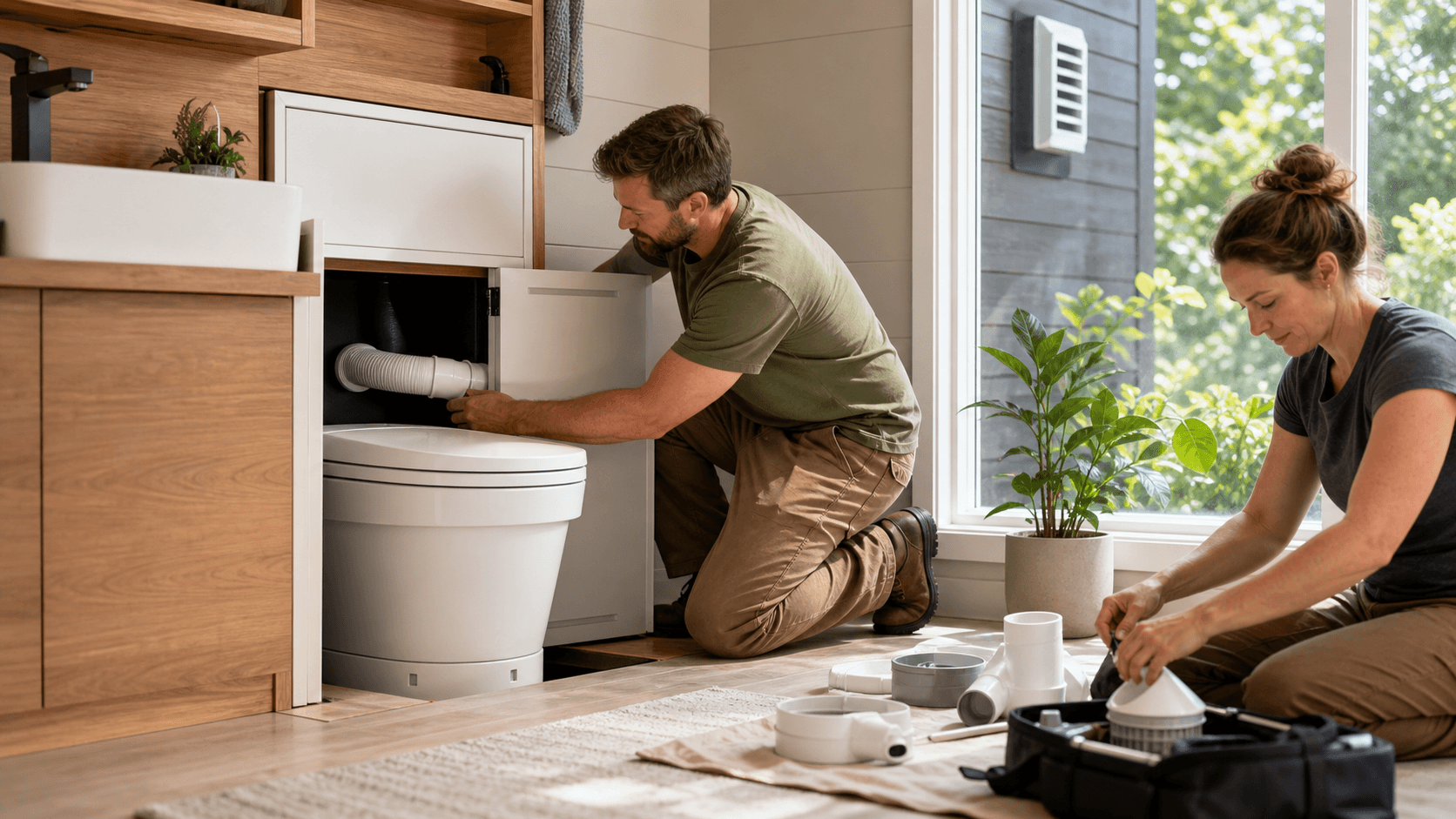
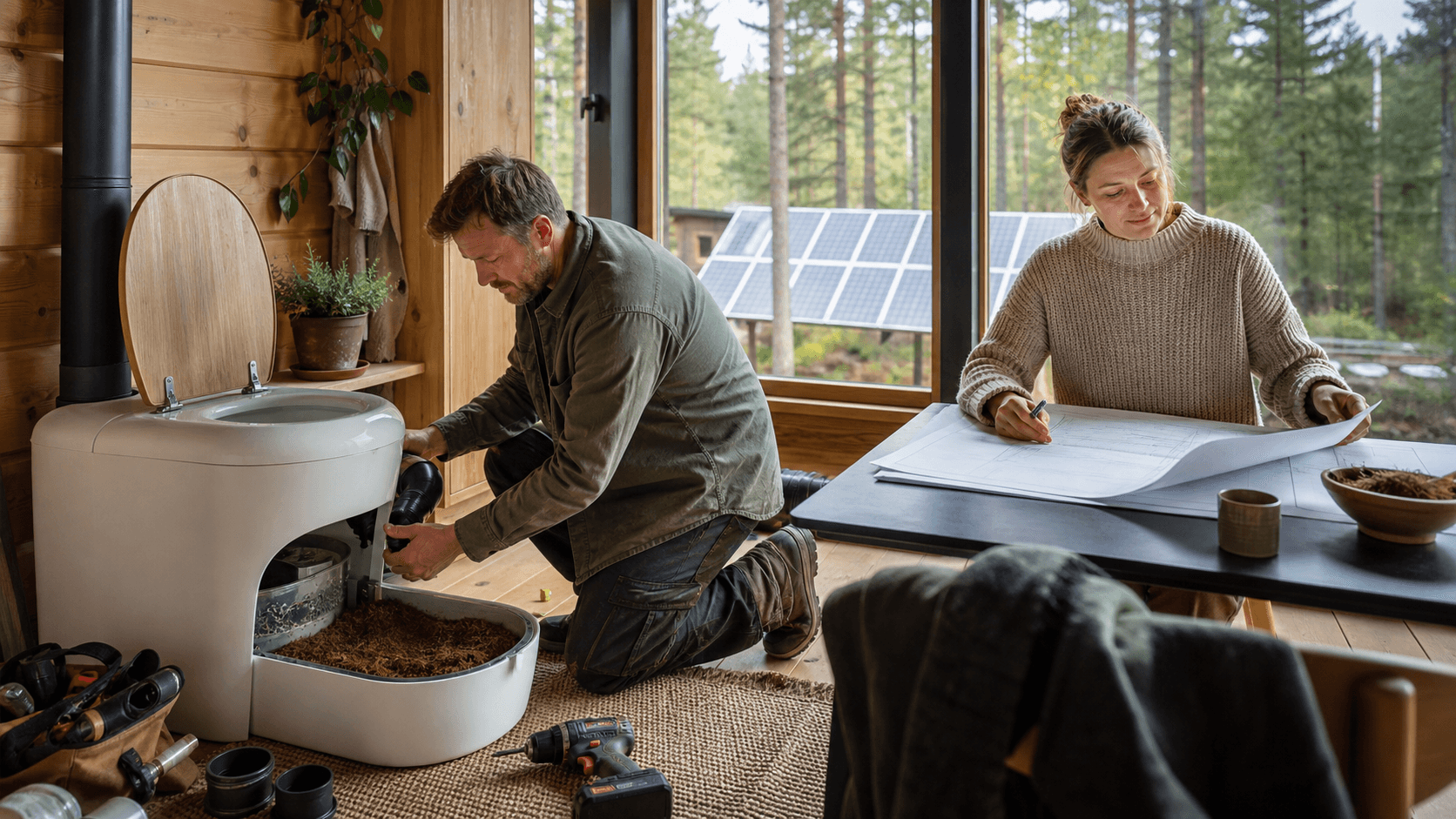
Placing and installing a solar-ready toilet is as much about airflow as it is about plumbing. Basic steps usually include:
- Choosing a stable, level spot inside the cabin
- Anchoring the unit so it does not move
- Routing vent pipes straight up and out with as few bends as possible
- Setting up access panels so you can remove compost or ash
Good venting is key. Tight cabins and geodesic domes often hold moisture and smells longer, so a strong, well-routed vent and fan make a big difference. The goal is simple: air flows from the room, through the toilet, and out above the roofline, not the other way around.
In shoulder seasons or colder climates, you may need to:
- Protect any exposed pipes from freezing
- Add insulation around vent pipes in unheated spaces
- Use battery backup sized for shorter winter days
Planning this ahead keeps your system working whenever you decide to escape to the cabin.
Real-World Use, Maintenance, and Health Benefits
Day-to-day, a solar-powered toilet should feel routine. You sit, use it, close the lid, and let the system do its work in the background. Simple habits keep everything running smoothly.
Typical care includes:
- Emptying compost or ash on a regular schedule
- Adding bulking material for composting toilets when needed
- Wiping surfaces just like a normal bathroom
- Glancing at solar and battery connections a few times per season
The health and comfort benefits are big for such simple routines. You lower the chance of waste getting into groundwater, cut down on flies and rodents, and keep indoor air fresh for kids, older guests, and anyone with a sensitive nose. The best part is that it all still feels pretty normal, even for people who have never used an off-grid bathroom before.
When you are ready to choose a solar-powered toilet for your cabin, think about how many people will use it, what seasons you visit, your local climate, and how much sun your site gets. That way, your off-grid setup will match your real life, not just a plan on paper. Green Vista Living offers a curated selection of composting and solar-ready toilets along with solar kits, battery backup options, water systems, and other off-grid essentials so you can build a complete, sanitary, and comfortable setup that keeps your cabin peaceful and self-sufficient.
Start Powering Your Off-Grid Comfort With Clean Solar Technology
If you are ready to upgrade your sanitation setup, we make it simple to choose a reliable, low-maintenance solar-powered toilet that fits your space and lifestyle. At Green Vista Living, we help you compare options so you can feel confident about performance, energy use, and long-term savings. Reach out to our team with any questions or for personalized guidance through the installation process. If you would like one-on-one support before you decide, just contact us.