When Flushing Thousands Makes Less Sense Than Composting
Watching an old septic system struggle right when summer guests are on the way is stressful. Toilets gurgle, drains slow down, and suddenly you are wondering if the whole party will grind to a halt. At that moment, paying for another big septic project can feel like throwing money into a hole you never see again.
Sometimes, composting toilet systems make more sense than fixing or installing septic. Not just for "hardcore off‑grid people," but for regular cabins, small homes, and vacation spots. Modern composting toilets are clean, odor-controlled, and designed to meet code where allowed. They are a real alternative, not a last resort.
In this article, we will walk through the practical decision points that matter: your land, your budget, your water supply, your permits, and the way you actually live, especially in summer. By the end, you will have a clearer idea of when composting fits better than flushing, and where traditional septic still wins.
When the Land Fights Your Septic Plans
Some properties just do not play nice with septic. You can hit roadblocks like:
- Shallow bedrock that makes trenching tricky
- High water tables that local inspectors worry about
- Heavy clay soils that drain slowly
- Tight or odd‑shaped lots where a leach field eats all your yard
- Steep slopes that make heavy equipment difficult
When these show up, septic often turns into a long chain of extra design work, bigger disturbed areas, and more inspections. You might hear terms like "engineered system" or "advanced treatment unit," which usually means more digging and more moving parts to keep happy.
Composting toilet systems avoid most of that. Since they do not rely on a leach field for toilet waste, you often gain:
- More freedom in where you place your cabin or tiny home
- Less impact on tree roots and garden areas
- Less soil testing and trenching for blackwater
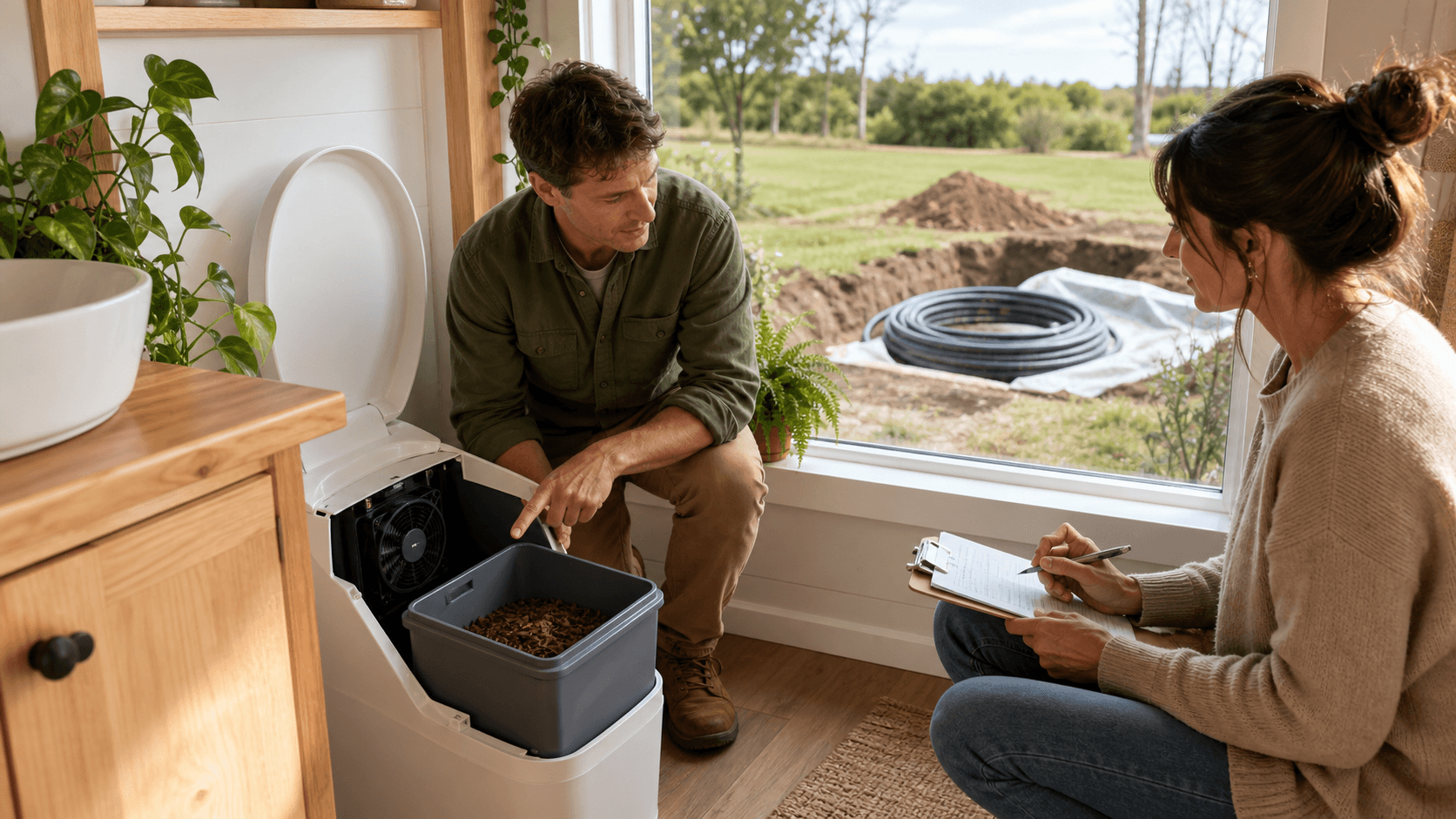
You still need to think about permits. Every area has its own rules, and some places are more open to composting toilets when septic is clearly impractical. A good first step is a simple call to your local building or health department, asking what they allow for primary or secondary toilet systems.
For many landowners, especially near lakes or rivers, there is also the peace of mind side. Less buried pipe and less effluent in the ground can mean less risk to wells and swimming spots, which matters a lot in busy summer recreation areas.
The Real Cost of Septic Versus Composting
Septic looks simple on the surface, but the full picture stretches over years. You pay for:
- Design and soil evaluation
- Permits and inspections
- Excavation, tanks, and lines
- Regular pump‑outs
- Possible repairs and, someday, replacement
Any time you add bedrooms, a rental unit, or a guest cabin, you might be told you need upgrades. Even running new plumbing to a detached studio or sauna can trigger a whole new round of planning.
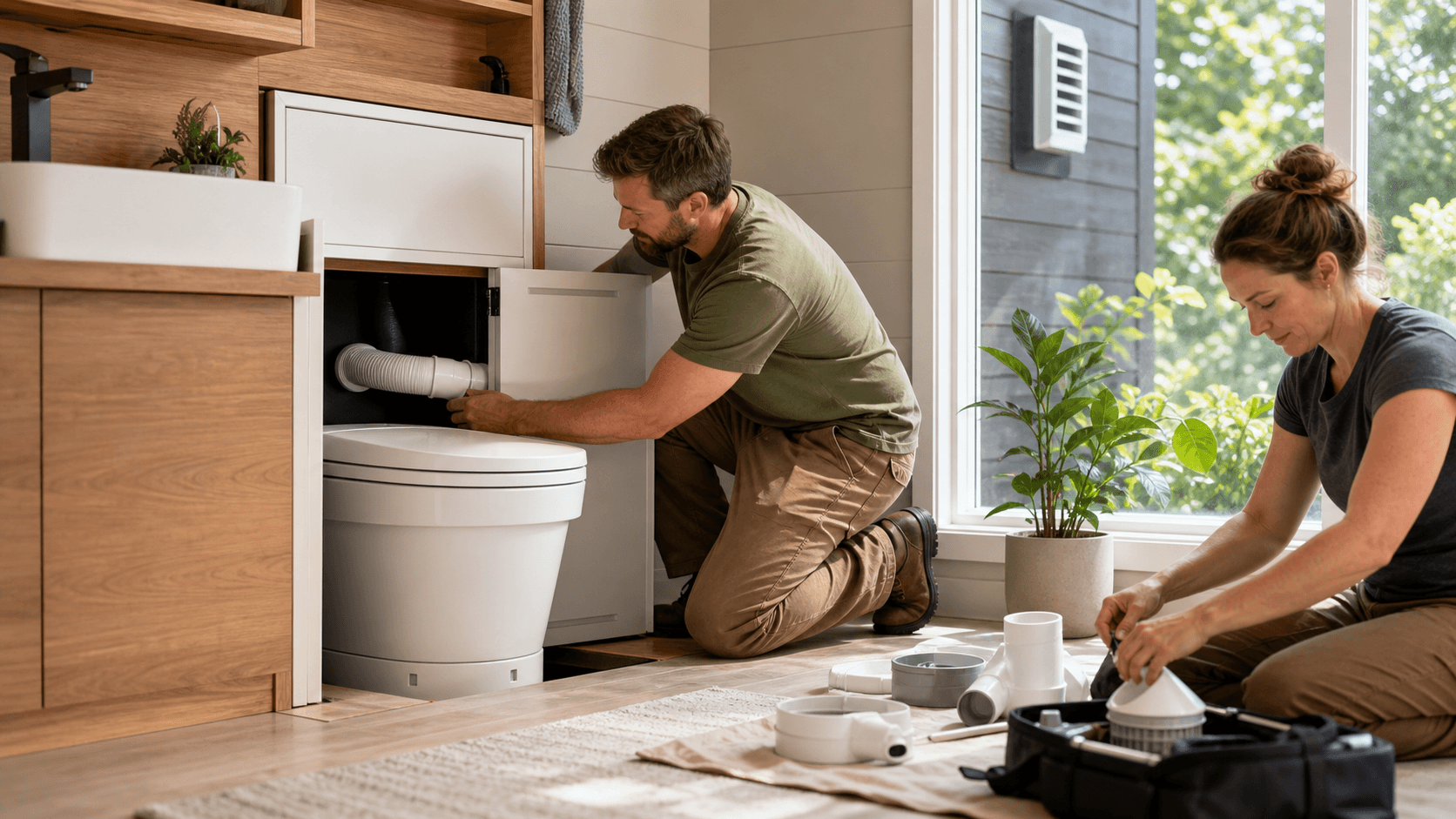
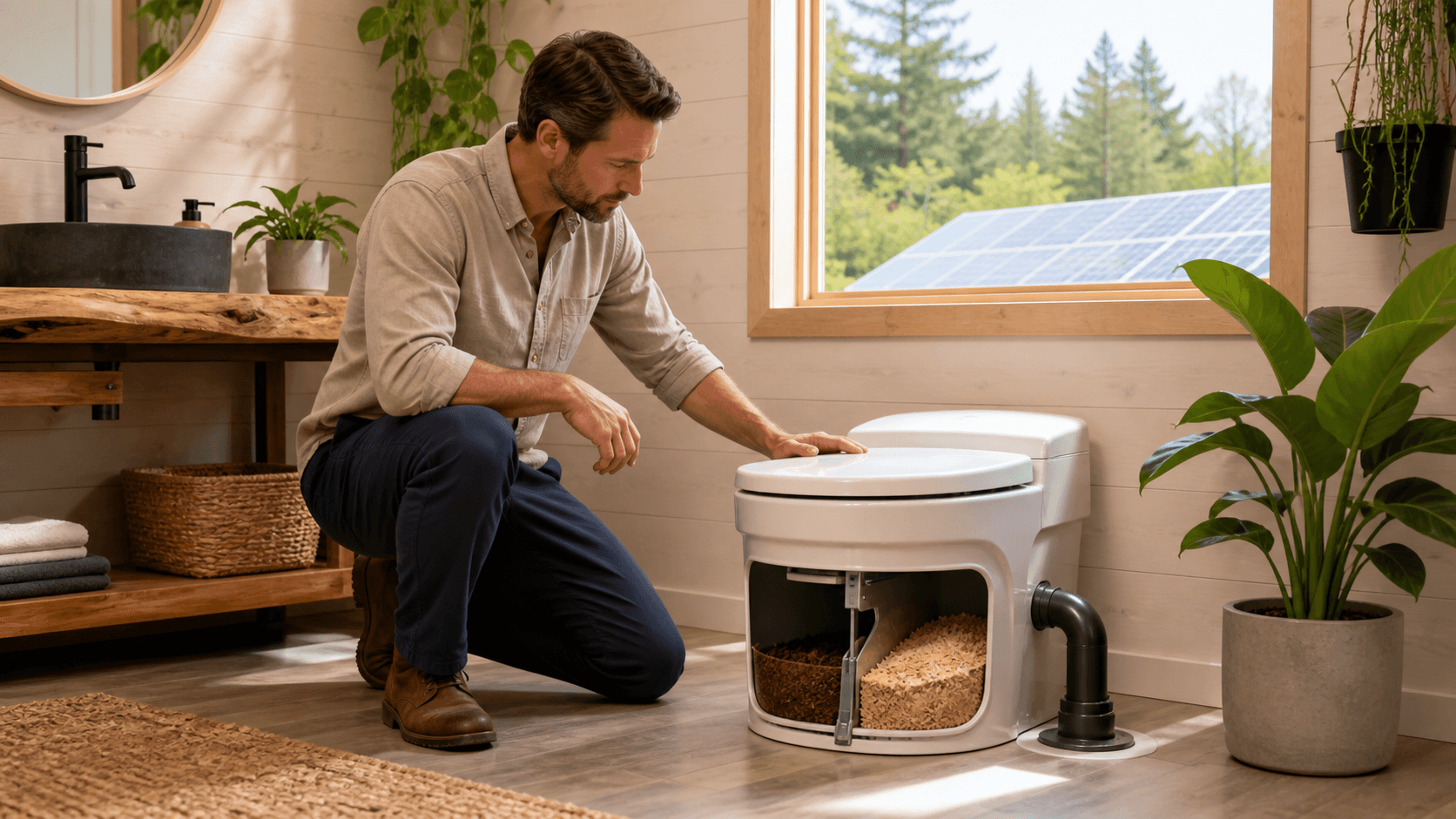
Composting toilet systems come in different styles, from compact self‑contained units that sit right in the bathroom to central systems that serve several toilets. Off‑grid setups can work with or without power, and many use small fans that are easy to run on solar. There is still maintenance, like:
- Adding bulking material such as wood shavings
- Checking moisture levels
- Emptying finished solids at safe intervals
- Keeping fans and vents clear
Where composting tends to pull ahead is on remote or seasonal properties, tiny homes, and accessory buildings. If you would have to trench across long distances, cross driveways, or tear up finished landscaping for new septic lines, skipping those trenches can be a huge relief.
Then there is water. Flush toilets use a lot over a hot summer with constant guests. That can strain shallow wells, pressure pumps, and your patience during dry spells. Composting toilets do not need flush water, which lightens the load so sinks and showers get first claim on what you have.
Lifestyle Clues That Point Toward Composting
Beyond land and money, daily life can quietly point you toward composting toilet systems. They are a natural fit for:
- Full‑time off‑grid homesteads
- Seasonal RV or van setups that stay parked for weeks
- Lakeside cabins and weekend cottages
- Backyard studios, home offices, and guest houses
- Saunas, pool houses, and outdoor changing rooms
Warm weather makes these spaces busy. Kids running in from the lake, friends hanging out by the fire, someone working remote from a loft in the trees. Adding a full septic tie‑in to every small structure can feel like overkill, especially if it means tearing through a yard you love.
A lot of people also care about sustainability and self‑reliance. They want to cut water use during drought, rely less on municipal systems, and reduce what they send into the ground. Composting toilets line up well with those values.
There is also the comfort question. Many people still picture a rough outhouse. Modern composting toilets are very different. With proper venting and a small fan, the air moves up and out, so odors stay away from the room. Daily use feels close to a standard toilet, with a few basic rules.
For families and frequent visitors, clear communication helps. Simple signs, a short "how this works" sheet, and a well‑set‑up bathroom with toilet paper, bulking material, and a waste bin where needed can calm any nerves. Once people use the system a couple of times, it usually becomes no big deal.
Practical Limits and When Septic Still Wins
Composting toilets are not perfect for every situation. There are times when traditional septic is still the better match. Examples include:
- Dense neighborhoods where local rules only recognize septic or sewer
- Large homes with many bathrooms and constant year‑round use
- Households that want the lowest possible daily maintenance
A hybrid approach often works best. Many people keep or install a system just for sinks, showers, and laundry, then handle toilet waste with composting. This can shrink the size and stress on the existing septic and delay future upgrades.
It is also fair to be honest about responsibilities. With composting, someone has to:
- Check moisture and adjust when needed
- Add bulking material regularly
- Empty finished solids on a safe schedule
- Keep vents, fans, and access doors in good shape
In cold climates, vent lines and units need a bit of thought so winter does not slow things down too much. Seasonal owners can close things up at the end of summer, then reopen in spring with a quick check and refresh.
Before you choose, it helps to ask yourself: How much time do we want to give this system? What does our local code allow? Are we planning to sell, rent, or expand later? Honest answers here make the final choice much smoother.
How to Choose the Right Setup for Your Property
If you are starting to think composting toilet systems might fit, a simple framework can help:
- What are your soil and site limits?
- Do you rely on a well or hauled water?
- Is the building full-time, seasonal, or just for guests?
- How many people will use it at peak times like summer holidays?
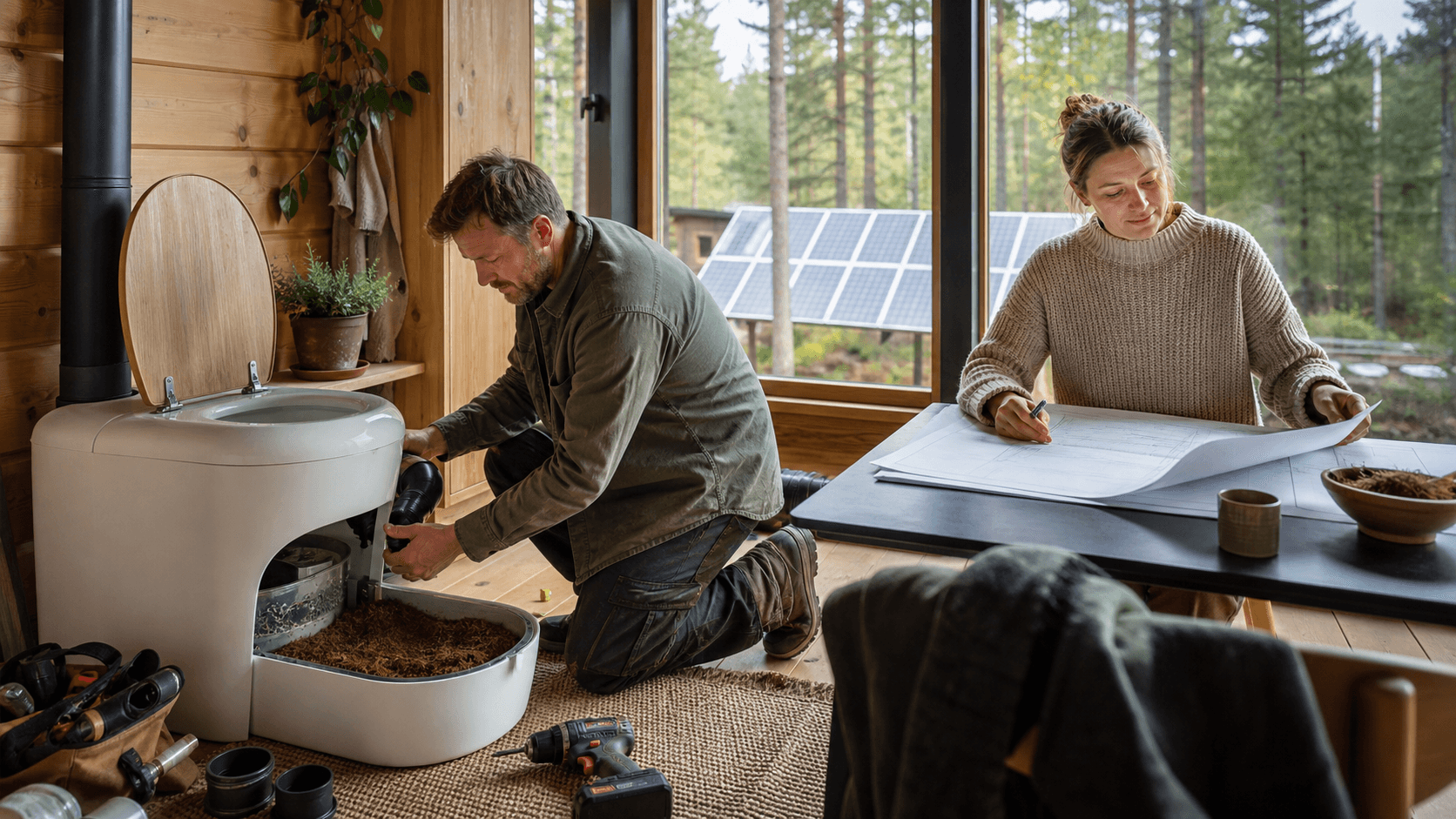
Self‑contained units often shine in tiny homes, cabins, and studios, because they are compact and easier to install. Central systems can serve bigger spaces or multiple bathrooms, especially when you have a dedicated area for the composting unit itself. Electric models usually give faster processing and stronger airflow, while non‑electric models pair well with very remote setups.
Planning the layout is key. Think about where the toilet will sit, where the vent will travel, and how you will safely handle finished material. Local rules shape that final step, so it is smart to confirm what is allowed on your property.
At Green Vista Living, we spend a lot of time thinking about off‑grid bathrooms as complete systems, not just single products. Composting toilets work even better with solar power for fans, smart water treatment for greywater, and small comfort upgrades that keep guests happy.
Summer is the best time to watch how your current system behaves under real use. If you are seeing slow drains, worrying about water levels, or hesitating to invite extra people, that is good information. You can use what you see now to make a calm, clear plan before the next busy season arrives.
Transform Your Off-Grid Living With Smarter Waste Solutions
If you are ready to make your cabin, tiny home, or RV more sustainable and easier to maintain, we can help you choose the right composting toilet systems for your space. At Green Vista Living, we focus on practical, real-world solutions that cut odors, save water, and simplify waste management. Explore options that match your lifestyle, and if you need guidance or have specific questions, contact us so we can help you move forward with confidence.